
Last updated October 9, 2026
Full 25-point door and opener safety check with every visit - springs, cables, rollers, tracks, and your LiftMaster or Chamberlain opener included
You get a price before we start. It does not change when the truck arrives.
 Before
 After
After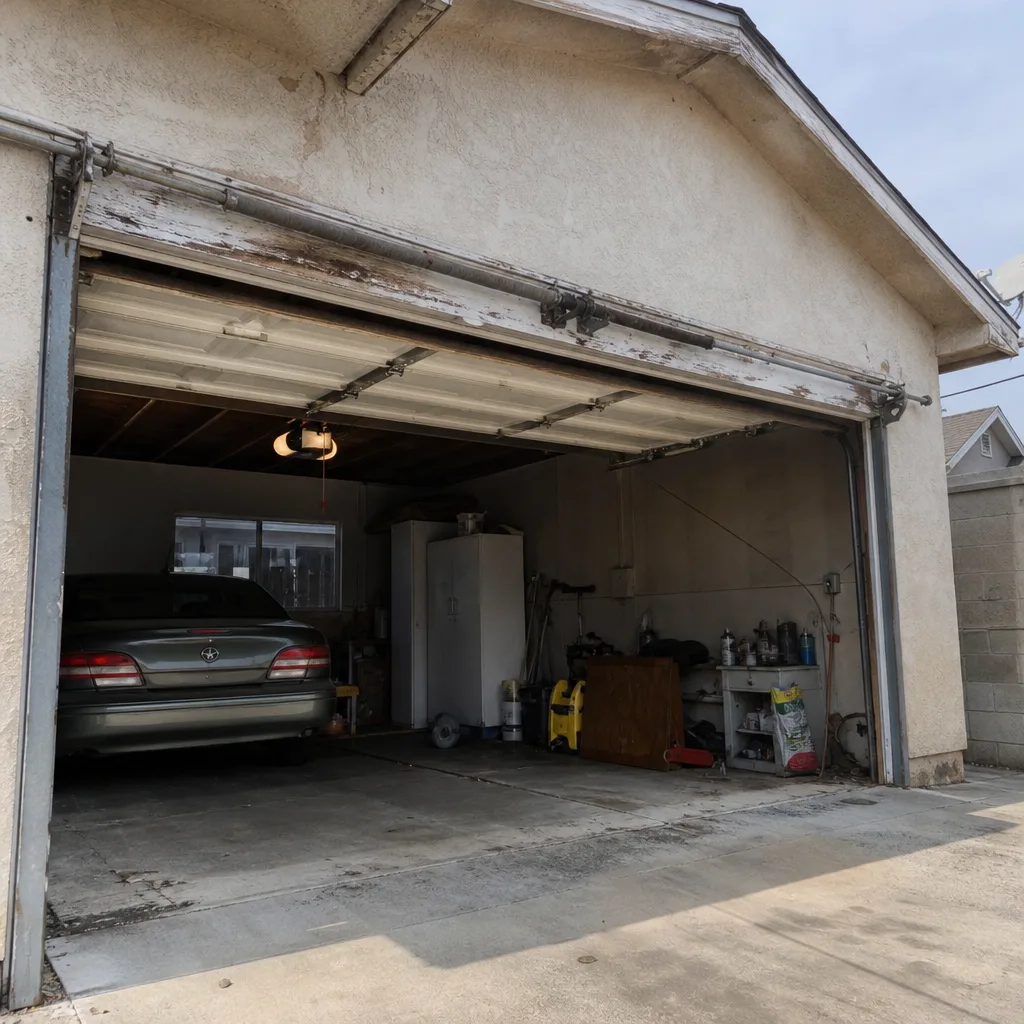 Before
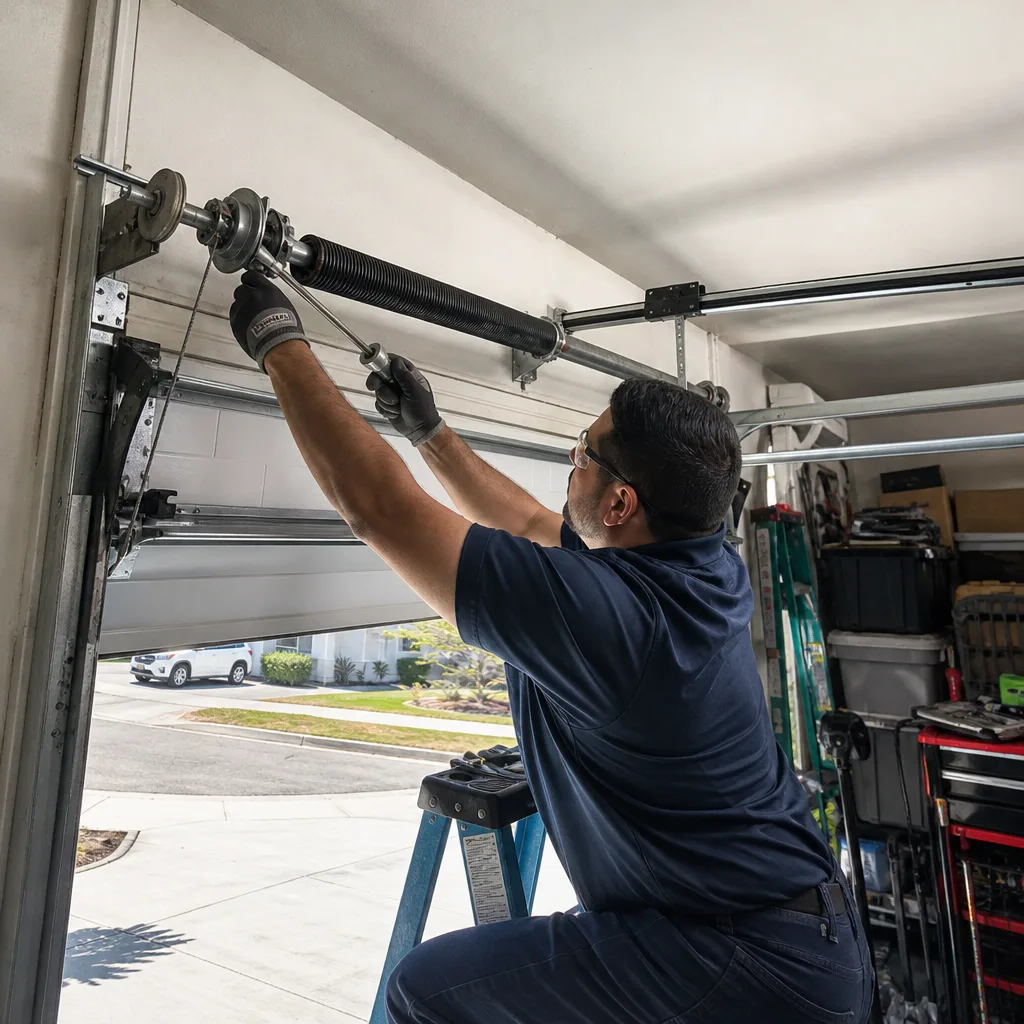 After
After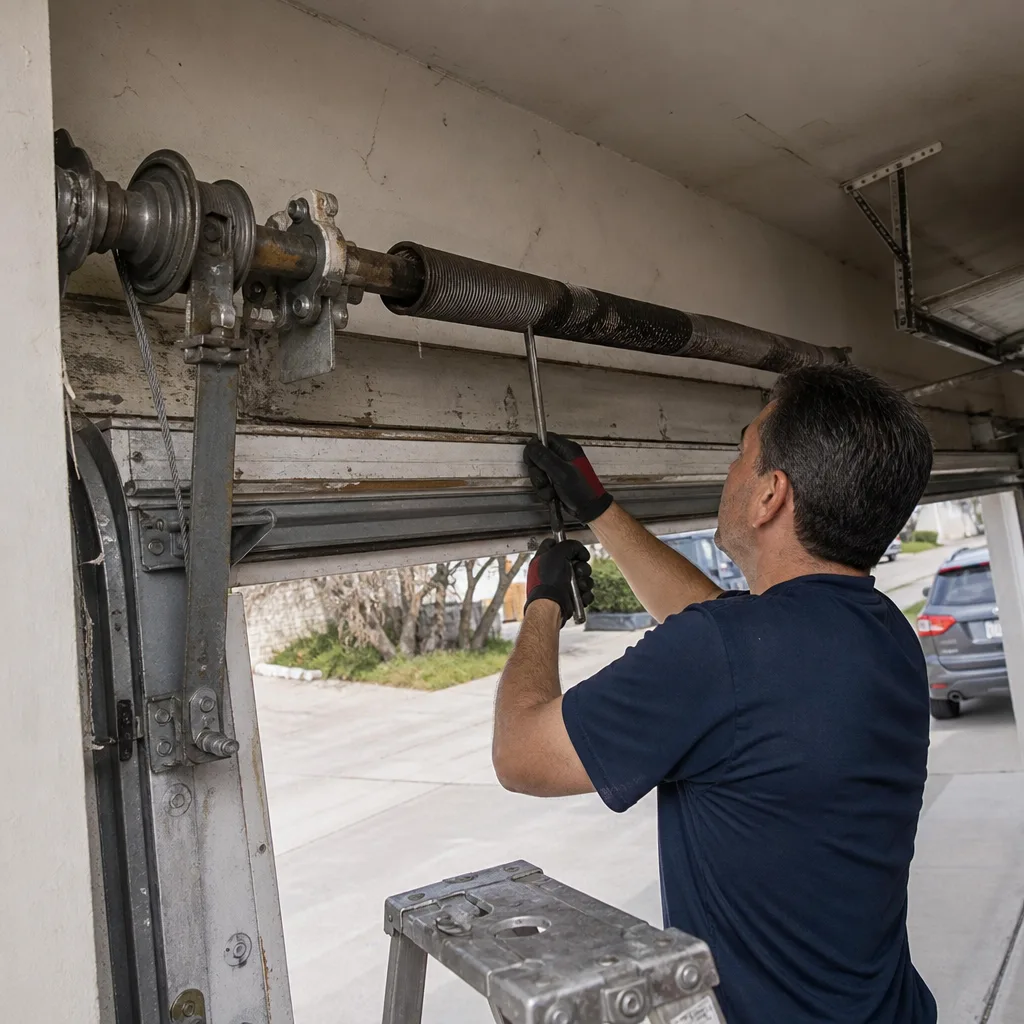 Before
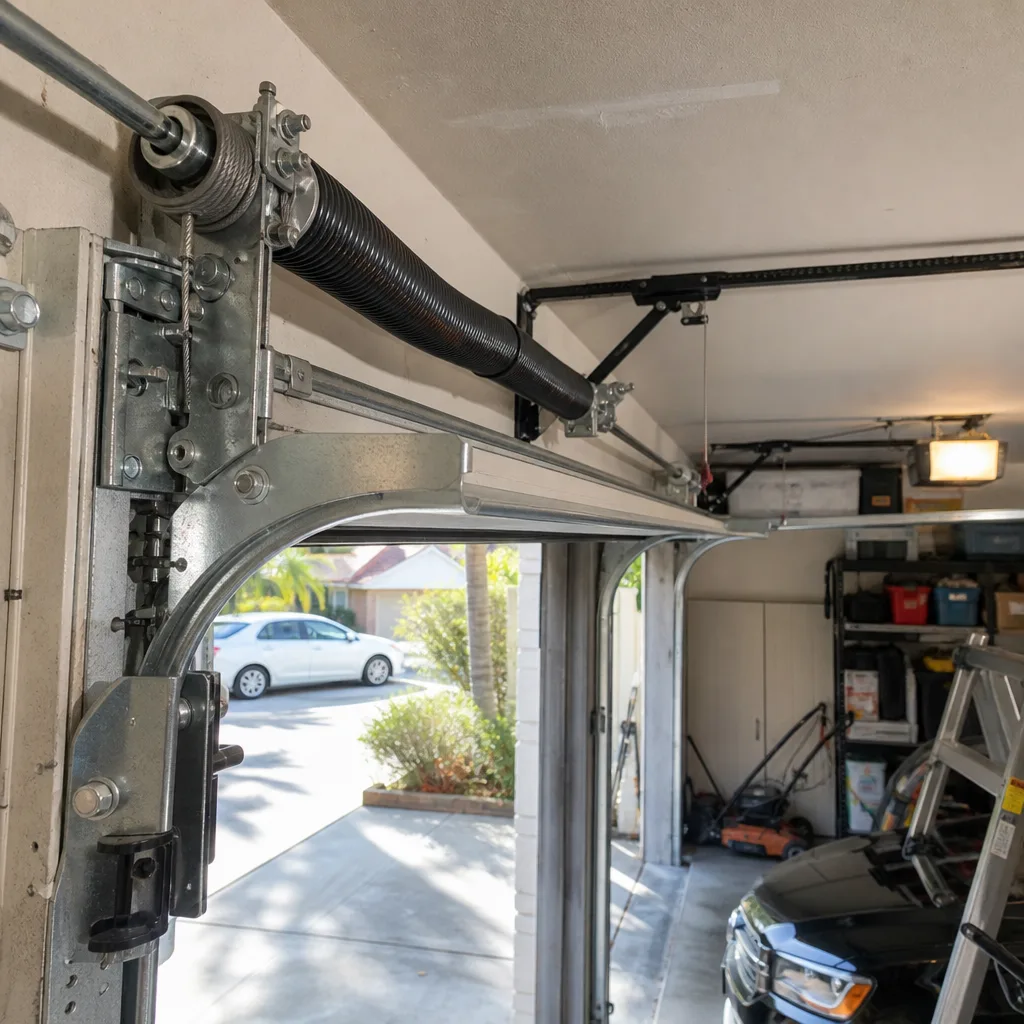 After
AfterGarage Door Opener Repair Warning Signs Every Homeowner Should Know
A grinding noise during the last six inches of closing isn’t a quirk. It’s a worn drive gear telling you it has roughly 200 cycles left before it strips completely. That’s about three weeks of normal use. Most Los Angeles homeowners call us after the failure has already happened. What they don’t realize is that their opener spent those three weeks announcing the breakdown in a language most people never learned to hear. This guide teaches you that language, so you can make a $90 repair on your schedule instead of a $450 emergency replacement on the opener’s schedule. Whether you live in Silver Lake, Sherman Oaks, or West Adams, the sequence is the same: the opener tells you first, every time.
Quick Answer
The clearest warning signs of a failing garage door opener are new or worsening grinding, clicking, humming, or squealing sounds; a door that hesitates before moving; a door that reverses for no reason; a motor unit that vibrates more than it used to; and erratic responses to the remote or wall button. A grinding noise that appears during the last few inches of travel almost always means the drive gear is stripping and will fail completely within weeks, making Garage Door Opener Repair a time-sensitive priority. Catching these signs early typically means a repair under $150; ignoring them usually means replacing the entire opener.
Table of Contents
- The Sound Library: What Your Opener Is Telling You
- Drive Gear Wear: The Most Common (and Most Ignored) Failure
- Logic Board Failure: When the Brain Starts Fading
- Photo-Eye Degradation: The Reversal You Shouldn’t Ignore
- The Slow Start: A $30 Fix Hiding in Plain Sight
- Vibration: The Bearing Failure You Can Feel
- The Three-Minute Monthly Self-Check
- Common Mistakes to Avoid
- When to Call a Professional
- Frequently Asked Questions
- The Bottom Line
The Sound Library: What Your Opener Is Telling You
Garage door openers are not subtle machines. Every moving part makes noise, and every failure mode has a signature. In 24 years of repairing openers across Los Angeles, we have learned that most homeowners can identify the problem with surprising accuracy once they know what to listen for. Here is the four-sound library every homeowner should carry in their head.
- Grinding: A rough, gravelly sound that appears during operation, often worse near the end of travel. This is metal or plastic gear teeth wearing against each other. On chain-drive and screw-drive openers from LiftMaster and Chamberlain, a grinding sound almost always means the main drive gear is losing teeth. This is the highest-urgency sound on this list.
- Clicking: A sharp, rapid click-click-click, usually when the opener tries to start. This is the sound of the motor attempting to engage but the mechanism not catching. It can mean a worn gear, a stripped sprocket, or a failing capacitor. It is less catastrophic than grinding but worth investigating within a week or two.
- Humming: A steady, low hum with no movement of the door. The motor is receiving power and trying to run, but something is stopping the chain, belt, or screw from turning. On Genie openers, this often points to a capacitor that can no longer provide the starting torque the motor needs.
- Squealing: A high-pitched, metallic sound, usually constant while the door moves. This is a bearing or roller crying out for lubrication or replacement. Squealing left untreated becomes grinding, and grinding left untreated becomes a full failure.
Here is the part no competitor will tell you this plainly: none of these sounds fix themselves. A garage door opener is a machine with a finite number of cycles in it. Every time you press the button, you spend one. Listening carefully once a month catches most problems in the $80 to $200 range instead of the $400 to $600 range.
Drive Gear Wear: The Most Common (and Most Ignored) Failure
The drive gear is the part that transfers the motor’s rotation to the chain or belt that moves your door. On most residential openers sold in the last 20 years, this gear is made of a nylon or plastic composite. It is designed to wear out, because a sacrificial gear is cheaper to replace than a burned-out motor. The tradeoff is that it wears out on its own schedule, and that schedule is predictable.
Here is the failure sequence we see repeatedly in Los Angeles garages, where doors cycle multiple times a day as people come and go for work, school runs, and the constant rhythm of city life (for a printable version, see our Garage Door Repair Maintenance Checklist for Los Angeles Homeowners):
- Week 1-2: The Grind Begins. A grinding sound appears during the final third of the door’s travel, particularly the last six inches of closing. It is quiet enough to dismiss as “the door being quirky.” It is not quirky. It is gear teeth starting to wear flat.
- Week 3: Hesitation. The door pauses for a fraction of a second mid-travel, then continues. The worn teeth are slipping past each other instead of meshing cleanly.
- Week 4: The Jump. The door shudders or jumps slightly during the same section of travel where the grinding was heard. By now, several gear teeth are gone entirely.
- Week 5: Failure. The opener runs but the door does not move, or the door moves an inch and stops. The gear has stripped completely. The motor is fine, but the drive train is dead.
The difference between week one and week five is roughly $110. A drive gear replacement for a LiftMaster or Chamberlain opener in the Los Angeles market typically runs between $90 and $180 including the part and labor. A full opener replacement, which becomes necessary if the motor has also been damaged by running against a stripped gear for too long, typically runs $350 to $600. The sequence announces itself. You just have to listen.
Logic Board Failure: When the Brain Starts Fading
Every modern opener has a logic board, a small circuit board that interprets signals from your remote, your wall button, and the safety sensors, then tells the motor what to do. When the logic board starts to fail, the symptoms look scattered and confusing, because the board is misfiring in unpredictable ways. Here is the sequence, mapped out from hundreds of Los Angeles service calls.
Stage 1: Erratic behavior. The opener works fine, then does not respond to the remote for an hour, then works again. The wall button works when the remote does not, or vice versa. This is the board starting to misinterpret signals.
Stage 2: Intermittent response. You press the button three times before the opener responds. The door starts to close, stops, and reopens with no obstruction in the way. Neighbors in the Hollywood Hills and Studio City report this stage most often, likely because the constant temperature swings of canyon-adjacent garages stress the board’s components.
Stage 3: Complete failure. The opener does not respond to any input. The remote’s LED lights up, the wall button clicks, but nothing happens. The motor is not dead. The brain is.
Logic board replacement on a Chamberlain or Genie opener typically runs $120 to $250 in Los Angeles, depending on the model. On openers older than 15 years, replacement often makes more sense than repair, and a new opener installation starts around $350. The key diagnostic: if the failure is erratic rather than consistent, the board is fading. If the failure is consistent, the problem is usually mechanical.
Photo-Eye Degradation: The Reversal You Shouldn’t Ignore
The photo eyes are the two small sensors mounted near the floor on each side of your garage door opening. They project an invisible beam between them. If anything breaks that beam while the door is closing, the door stops and reverses. This is a safety feature, not a nuisance, and it is required by federal law on every opener sold since 1993.
Photo-eye degradation follows its own quiet sequence, and Los Angeles conditions speed it up. Dust from the Santa Ana winds, cobwebs, and the fine grit that blows into every garage in the San Fernando Valley gradually coat the sensor lenses. Alignment drifts as the brackets get bumped by bikes, trash cans, and car bumpers. Here is the progression:
- Occasional reversal. The door reverses once every few weeks, with no visible obstruction. The lens coating or misalignment is just starting to interfere with the beam.
- Frequent reversal. The door reverses several times a week, always at the same point in its travel. The beam is now being broken intermittently.
- Won’t close at all. You hold the wall button down continuously and the door closes, but it will not close with a normal button press. The beam is permanently broken, and the opener has disabled normal operation as a safety measure.
Photo-eye repair is usually the cheapest fix on this list. Cleaning and realigning the sensors typically runs $60 to $100 in Los Angeles, and many homeowners can do the cleaning part themselves with a soft cloth and patience. If the problem is a failed sensor unit rather than alignment, replacement runs $75 to $150. The danger is in the DIY workaround: never bypass the photo eyes. That beam exists because children have been killed by garage doors that closed on them. If the problem will not resolve with cleaning and realignment, call a professional.
The Slow Start: A $30 Fix Hiding in Plain Sight
There is a symptom almost no one notices until we point it out: the opener takes longer to start moving than it used to. When you press the button, there should be an immediate response. The motor engages and the door moves. If there is now a two-second delay, or the door starts slowly and then picks up speed, you are watching capacitor degradation in real time.
The capacitor is a small cylinder inside the motor housing that stores the burst of electrical energy the motor needs to start turning. It is the automotive equivalent of the battery in your car: without a good one, the starter cannot turn the engine over. Capacitors degrade with age and heat, and Los Angeles garages get hot. A garage in the San Fernando Valley can hit 110 degrees in August, and heat is the capacitor’s enemy.
The numbers: a capacitor replacement on a LiftMaster, Chamberlain, or Genie opener typically costs $30 for the part and $80 to $130 total with labor in the Los Angeles market. If the capacitor is not caught early and fails completely, the motor will not start at all, and repeated attempts to start a motor with a dead capacitor can damage the motor windings, turning a $100 repair into a $400 opener replacement.
How to spot it: pay attention next time you press the button. The door should begin moving almost instantly. If there is a beat of silence, a hum, and then movement, that hesitation is the capacitor struggling to deliver the starting jolt. That is the early warning. Do not wait for the hum to become the only response.
Vibration: The Bearing Failure You Can Feel
Every opener has bearings inside the motor and along the drive shaft. These bearings let parts spin smoothly against each other. When a bearing starts to wear, it does not make noise at first. It vibrates. The vibration transfers through the motor housing and into the metal rail that holds the opener to your garage ceiling.
Here is the self-check: with the garage door closed, press the button and place your hand flat on the motor housing while the door moves through its full travel. A healthy opener vibrates slightly, evenly, like a car idling at a stoplight. A failing bearing vibrates unevenly, with rough spots or a chattering feel at specific points in the travel. You can also place a hand on the rail itself. Excessive vibration in the rail usually means the chain or belt tension is out of spec, which wears bearings faster.
In our experience across Los Angeles, from Atwater Village to Mar Vista, vibration is the warning sign homeowners ignore the longest because it is silent. There is no grinding, no squealing, nothing alarming. Just a subtle rattling that feels like the house settling or the neighbor’s laundry running. By the time the bearing fails audibly, it has usually taken the drive shaft or the motor with it.
Bearing replacement is not a DIY job. It requires opening the motor housing, which means working with mains voltage and precision parts. The repair typically runs $120 to $200 in Los Angeles. A full motor replacement runs $250 to $400. The feel test costs nothing and takes ten seconds. Do it once a month.
The Three-Minute Monthly Self-Check
Here is a simple protocol-one of more guides & resources we publish for homeowners-that catches roughly 80% of developing opener failures before they become emergency calls. It takes three minutes, requires no tools, and uses your eyes, ears, and hands. Set a recurring phone reminder for the first of the month. Your opener has a cycle counter in its head. You should have one too.
- Listen (60 seconds). Open and close the door one full cycle. Stand near the opener. Listen for grinding, clicking, humming with no movement, or squealing. Compare what you hear to what the opener sounded like a month ago. New sounds are the signal.
- Watch (60 seconds). Open and close the door again while watching the movement. Look for hesitation on start, a slow start, a pause mid-travel, a shimmy in the chain or belt, or a door that reverses unexpectedly. Watch the chain tension when the door is mid-travel: it should not sag more than half an inch.
- Feel (30 seconds). With the door moving, place one hand on the motor housing. Feel for rough spots, chattering, or uneven vibration. Compare the vibration to what you felt last month.
- Check the sensors (30 seconds). Look at both photo eyes. Wipe the lenses with a soft, dry cloth. Make sure both small indicator lights are glowing. If one is dark or flickering, the sensor is dirty, misaligned, or failing.
That is the whole protocol. No tools, no disassembly, no risk. The goal is not to fix anything. The goal is to notice when something changes. Openers fail on a schedule, and that schedule is announced through sound, feel, and movement. This check turns you from a person who reacts to failures into a person who schedules repairs.
Common Mistakes to Avoid
- Ignoring a new sound because “it still works.” This is the most expensive mistake on this list. A grinding drive gear still opens the door right up until the day it doesn’t. By then the repair window has closed and you are buying a new opener instead of a new gear.
- Lubricating the drive gear because it’s grinding. Grinding is not a lubrication problem. It is a tooth-wear problem. Adding grease to a stripped gear does nothing except make the grinding quieter for a week while the gear finishes destroying itself. In Los Angeles, we see this at least once a month: a homeowner sprays the gear, thinks the problem is solved, and calls us two weeks later for a full opener replacement.
- Bypassing the photo eyes. Twisting the sensors to face each other, taping them together, or rewiring them to defeat the safety reversal is dangerous and illegal. The photo eyes exist because garage doors have killed people. If your door will not close because of a sensor issue, fix the sensor. Do not disable it.
- Replacing the remote batteries when the wall button is also failing. If both the remote and the wall button are acting up, the problem is not the remote battery. It is the logic board, the power supply, or the capacitor. Replacing batteries in that scenario burns time and money while the real problem worsens.
- Tightening the chain without checking the sprocket. A sagging chain is often a symptom of a worn sprocket, not a loose chain. Over-tightening a chain on a worn sprocket accelerates the sprocket failure and can bend the motor shaft. If your chain sags more than half an inch, have someone assess the sprocket before adjusting tension.
- Waiting until the opener dies to shop for a replacement. The worst time to buy an opener is the day yours fails. You pay retail price, wait for installation, and may have to leave your garage door open or manually locked overnight in a city where a closed garage door is a real part of home security. When your opener passes the 12-year mark, start researching replacements while it still works.
When to Call a Professional
Here is the line: if the problem involves the motor housing, the drive gear, the logic board, or any part that requires opening the opener or working with wiring, call a professional. These components carry mains voltage, spin under load, and are engineered to fail in a controlled way. Opening them without training is how fingers get broken and houses get shocked.
If your opener is making a grinding noise, hesitating on start, vibrating roughly, reversing erratically, or failing to respond consistently, you are past the point of troubleshooting. Doyle Garage Door Repair offers free estimates in Los Angeles. Call (910) 858-8029 and describe what you are hearing and feeling. We will tell you over the phone whether it sounds like urgent repair or scheduled maintenance, and if a visit makes sense, the price is written down and handed to you before any work begins.
Frequently Asked Questions
Most opener repairs in Los Angeles run between $90 and $250 depending on the failing part. A drive gear replacement typically costs $90 to $180, a capacitor replacement $80 to $130, a logic board $120 to $250, and photo-eye repair or replacement $60 to $150. A full opener replacement, when repair is no longer practical, typically runs $350 to $600 installed. For an exact quote on your opener, call (910) 858-8029. Estimates are free, and the price is written down before any work starts.
Yes, in most cases. A gear replacement, capacitor swap, or sensor realignment is usually a 45-to-90-minute job, and we stock the common LiftMaster, Chamberlain, and Genie parts on our trucks. If your opener has failed and you need the garage secured tonight, call (910) 858-8029 and we will tell you honestly whether we can get to you today. A live person answers the phone day and night, weekends and holidays included.
Because the drive gear is wearing down but has not yet lost enough teeth to stop transferring power. The grinding is the sound of partially stripped teeth slipping against each other. The opener still works because enough intact teeth remain to move the door. That window closes quickly, usually within two to four weeks of normal use, which is why we tell Los Angeles homeowners to treat a new grinding sound as an urgent repair, not a curiosity.
In most cases, the photo-eye safety sensors are dirty, misaligned, or failing. Dust from Santa Ana winds and everyday Los Angeles grit coats the sensor lenses, and the brackets shift as the door vibrates. The opener interprets the interrupted beam as an obstruction and reverses. Cleaning the lenses with a soft dry cloth and checking that both indicator lights glow solves most cases. If the problem persists, the sensor unit itself may need replacement, which runs $75 to $150.
A well-maintained opener in Los Angeles typically lasts 12 to 15 years. Heat and cycle count are the two factors that shorten that lifespan, and both run high in this city. A garage in the Valley that reaches 110 degrees in summer and cycles four to six times a day will wear out an opener faster than a coastal garage in Santa Monica that cycles twice a day and stays cool. The three-minute monthly self-check described above is the single best thing you can do to extend the life you get.
The decision comes down to age and failure point. If your opener is under 10 years old and the failure is a single component like the drive gear, capacitor, or photo eye, repair usually makes sense at $90 to $250. If the opener is over 15 years old, or the failure involves multiple components like a stripped gear plus a worn motor bearing, replacement at $350 to $600 usually delivers better value. We will tell you honestly which path makes sense for your specific opener and budget. Call (910) 858-8029 for a straight answer and a free estimate.
The Bottom Line
A garage door opener does not fail suddenly. It fails on a schedule it announces through sound, vibration, hesitation, and erratic behavior for weeks before the final breakdown. Grinding means the drive gear is stripping. Hesitation on start means the capacitor is fading. Vibration you can feel means the bearings are wearing. Reversal that gets more frequent means the photo eyes are degrading. A three-minute monthly check, using your ears, eyes, and hands, catches most of these problems in the $90 to $250 range instead of the $400 to $600 range. If you hear or feel something new, do not wait for it to confirm itself. Call a professional who will tell you what is wrong, write the price down before any work starts, and stand behind the repair in writing.
Doyle Garage Door Repair has been repairing garage door openers in Grandview and across Los Angeles since 2001, and our work is backed by the 365-Day Done Right Promise: if it fails within a year, we come back and make it right at no charge. We also provide garage door repair and garage door installation for every major brand, including LiftMaster, Chamberlain, Genie, and Clopay. To learn more about who we are and how we work, visit the Doyle Garage Door Repair home page or call us directly at (910) 858-8029.
Written by Aaron Teague, Owner at Doyle Garage Door Repair, serving Los Angeles since 2001.