
Last updated October 9, 2026
Full 25-point door and opener safety check with every visit - springs, cables, rollers, tracks, and your LiftMaster or Chamberlain opener included
You get a price before we start. It does not change when the truck arrives.
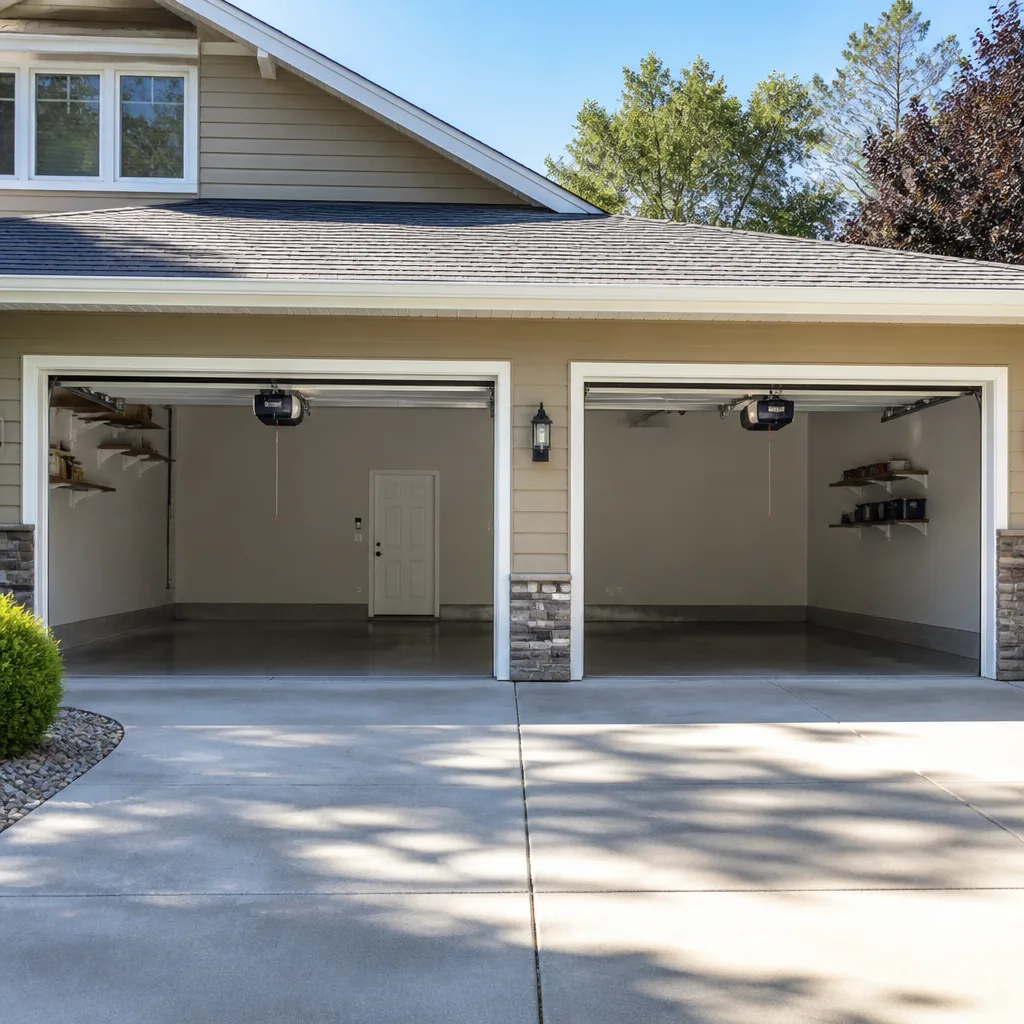
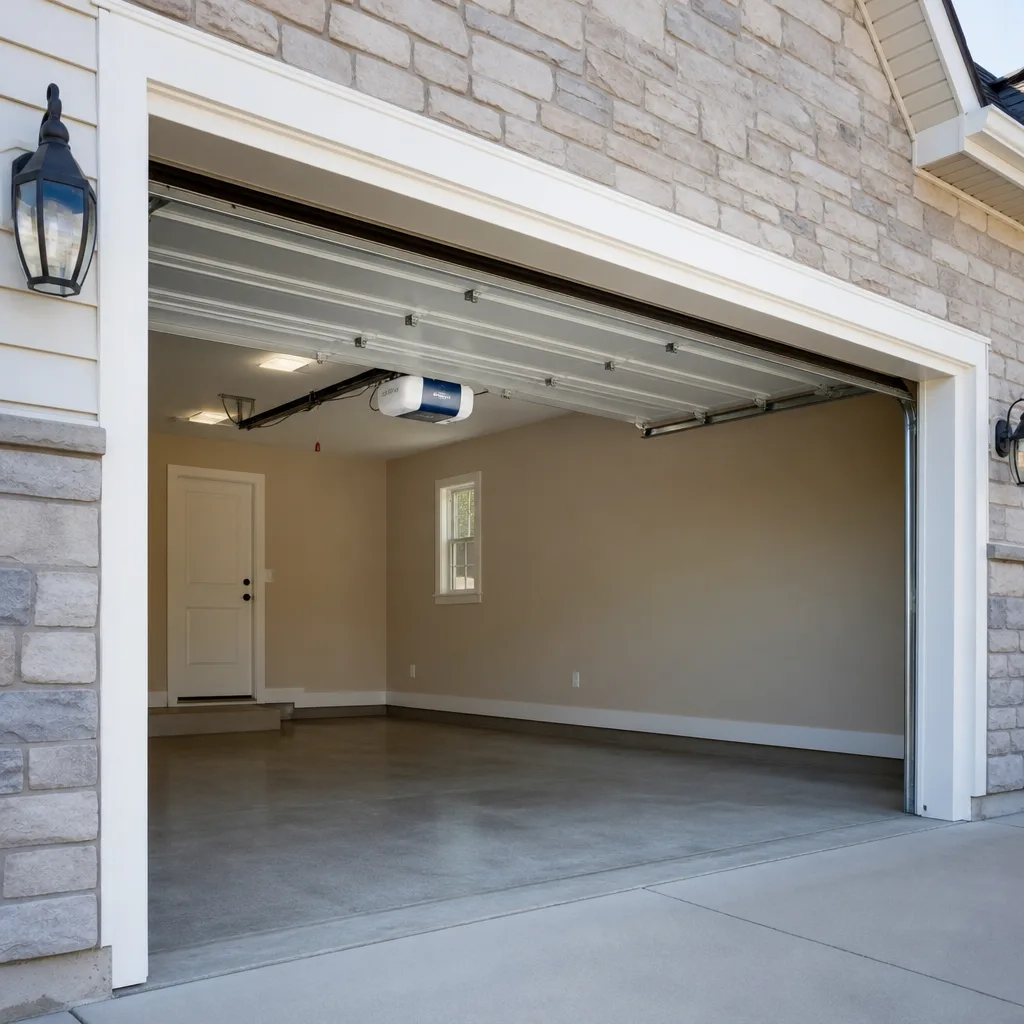
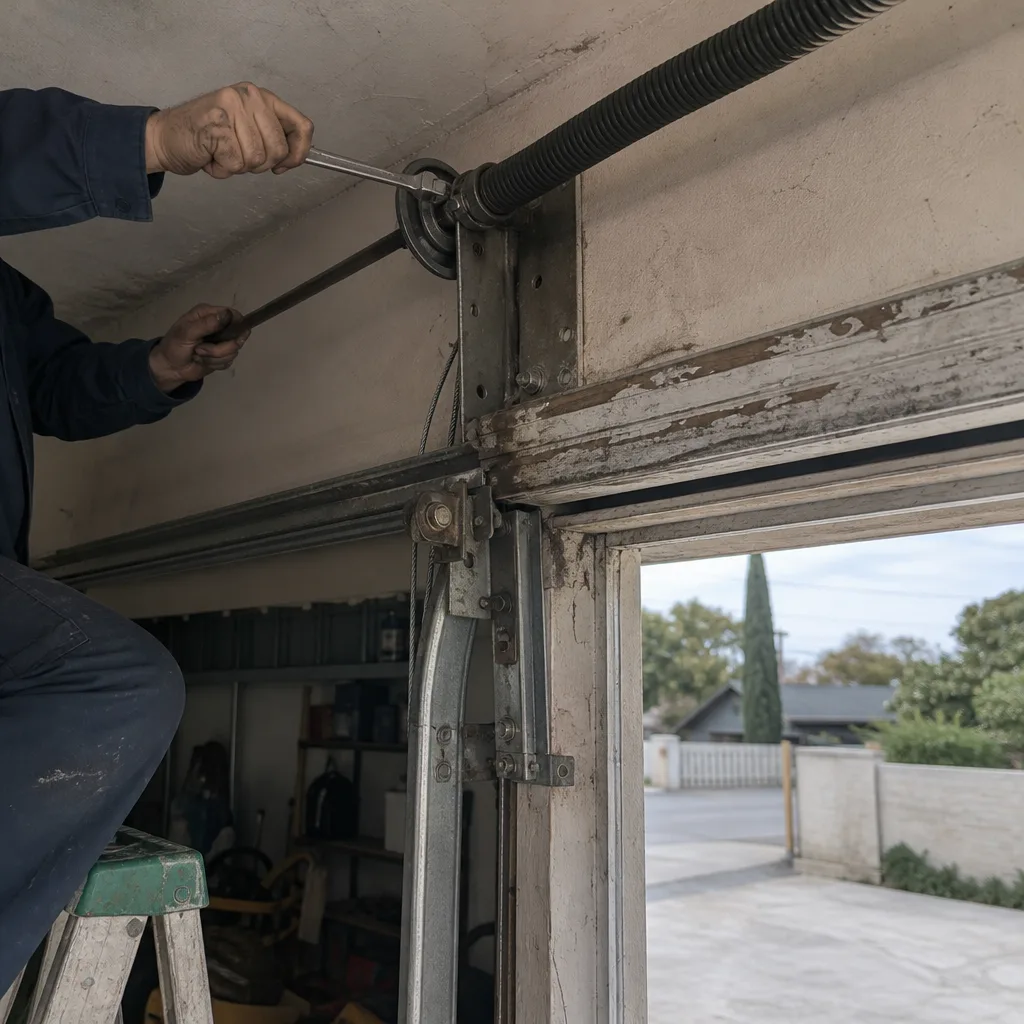 Before
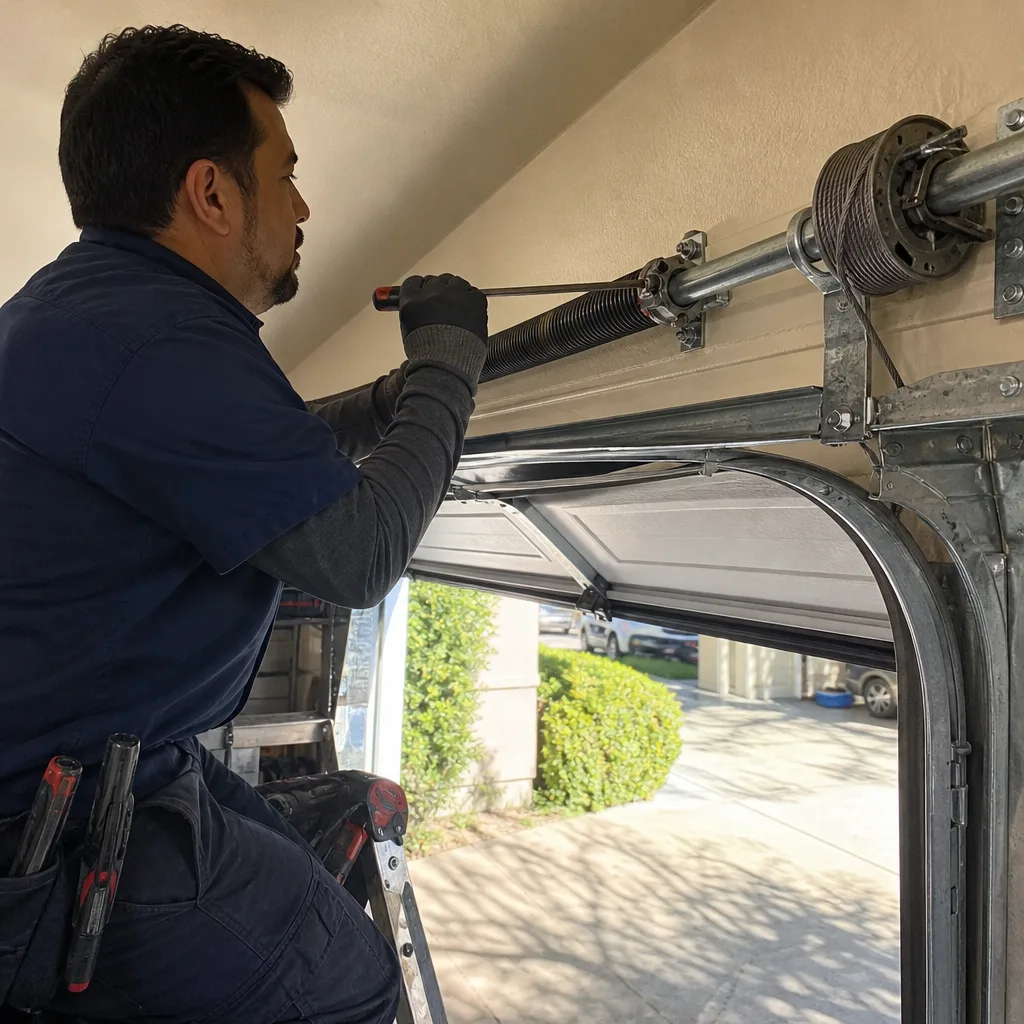 After
After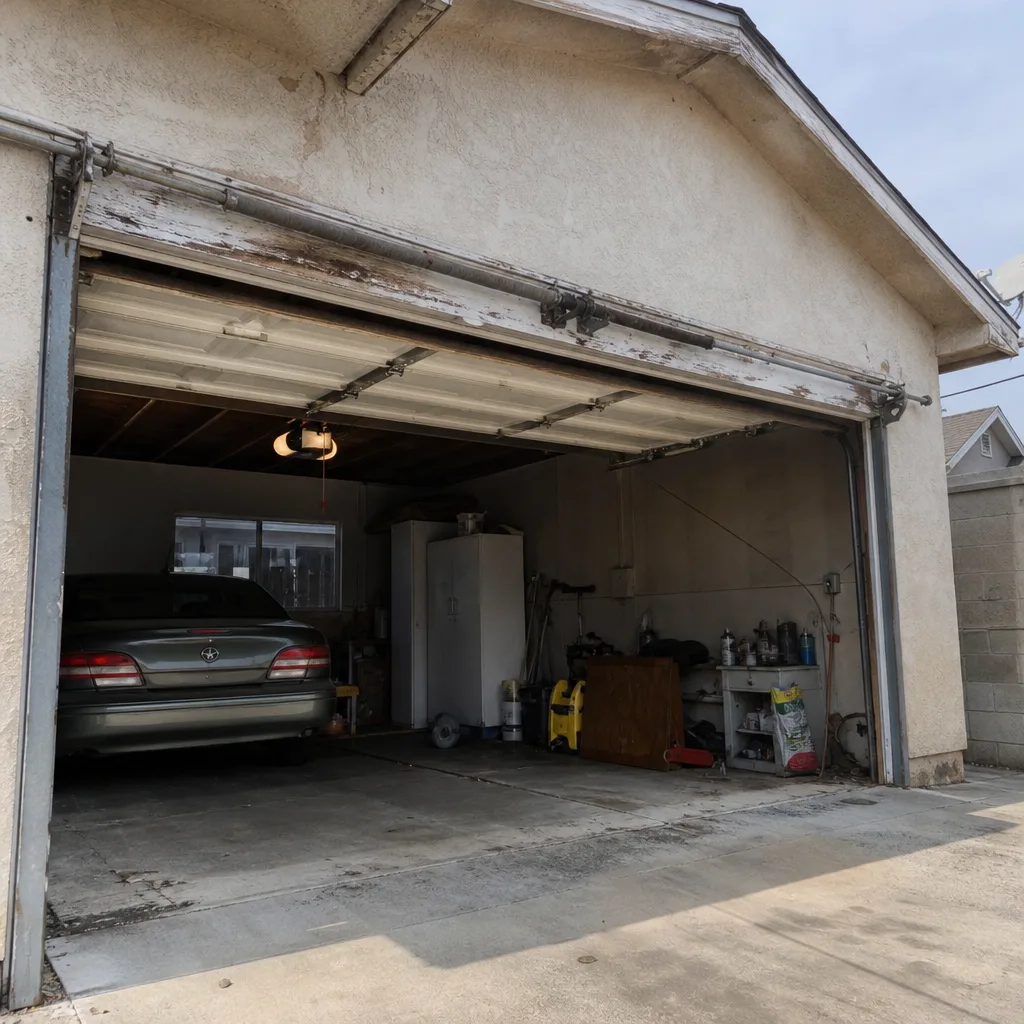 Before
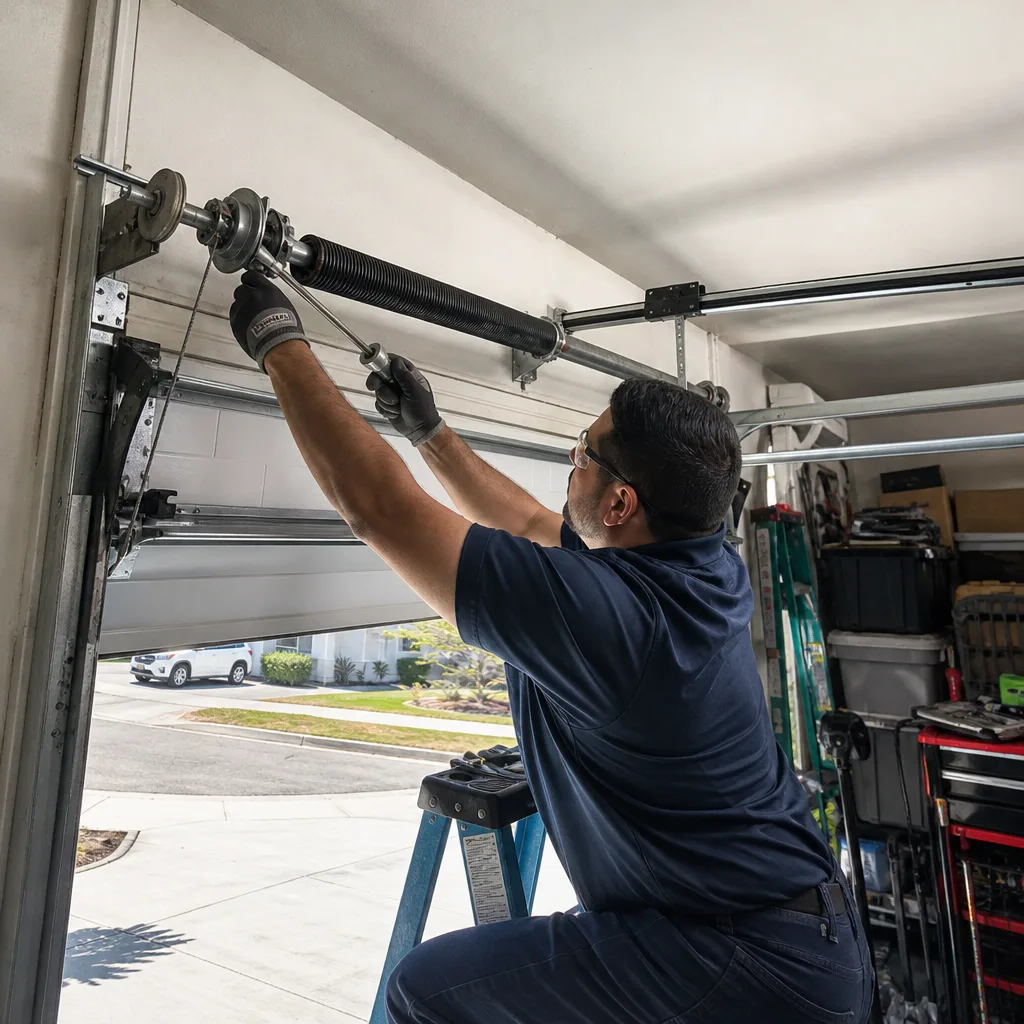 After
After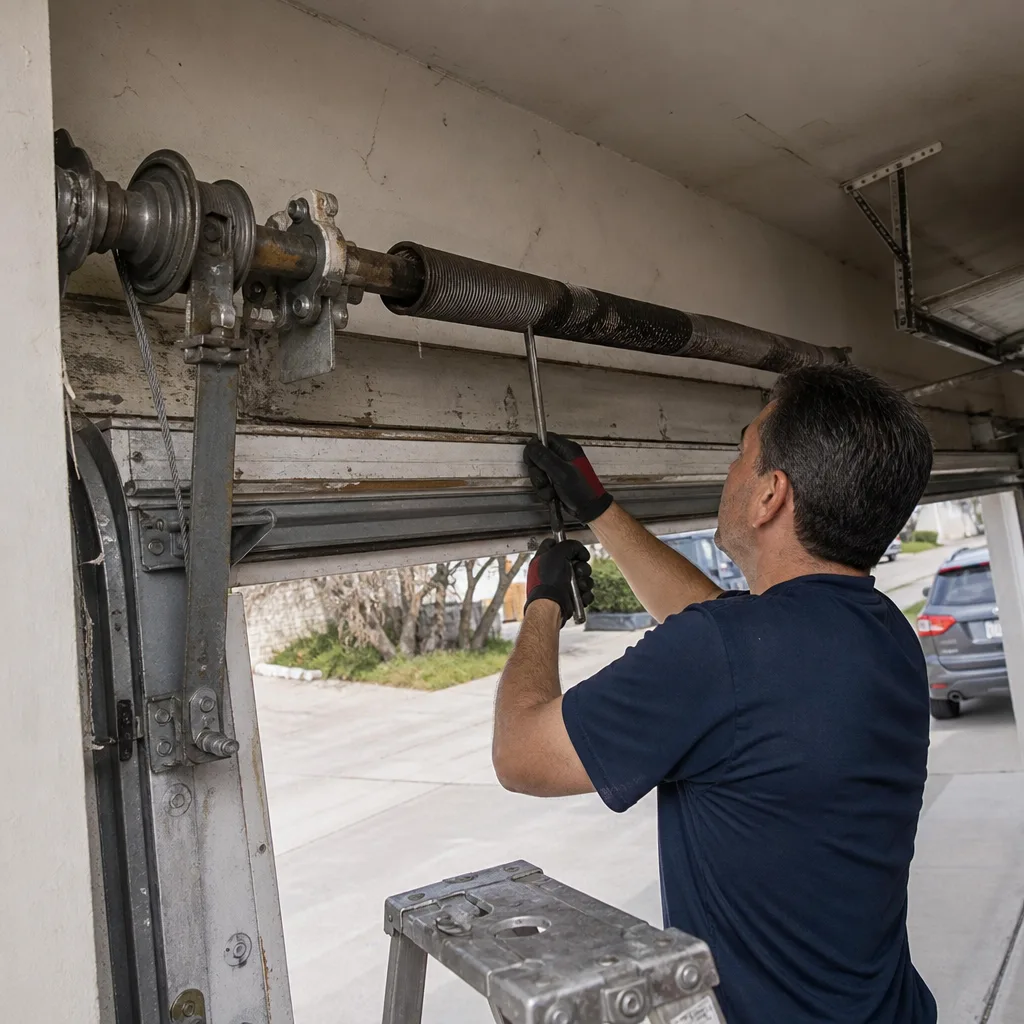 Before
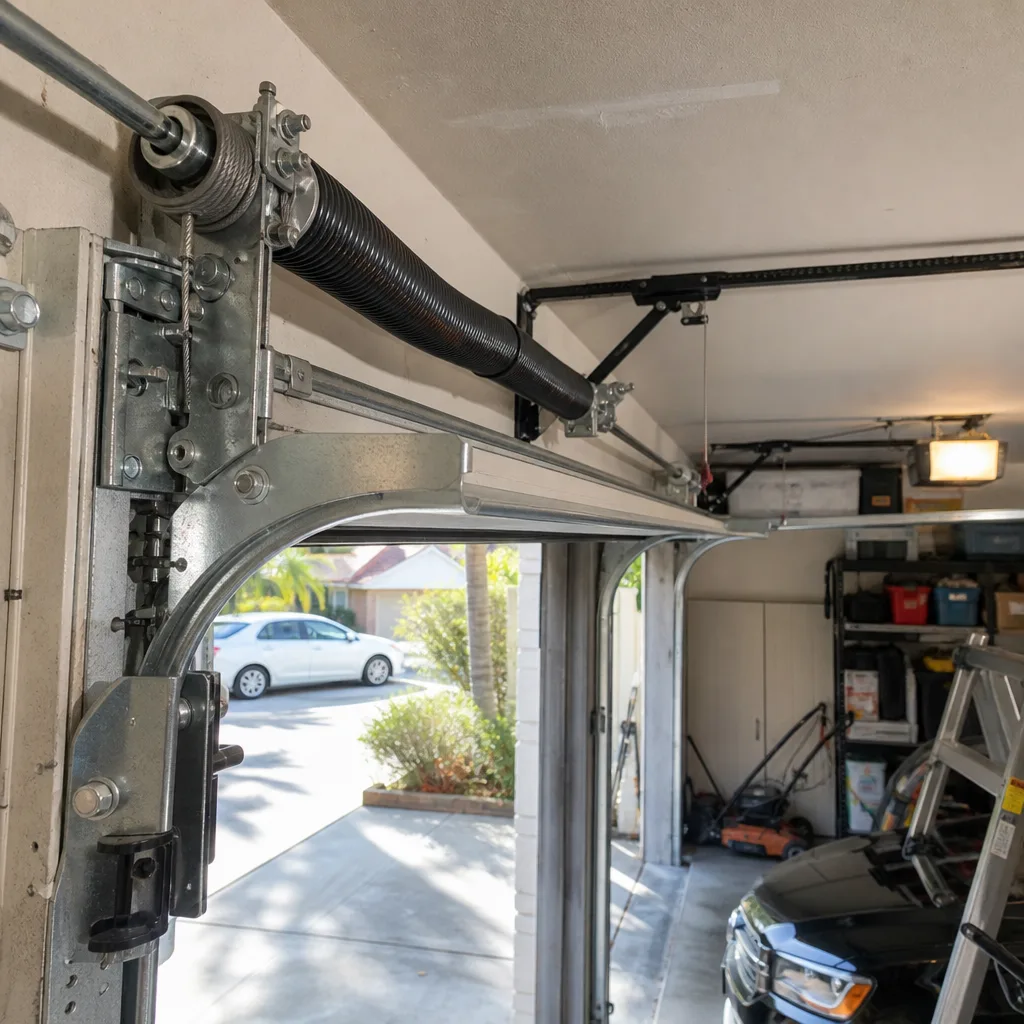 After
AfterGarage Door Repair Maintenance Schedule: What to Do and When
A torsion spring rated for 10,000 cycles doesn’t fail at cycle 10,001. It fails six months earlier, when nobody lubricated it through two Central Texas summers and the metal fatigued unevenly. That’s the entirely preventable $300 repair most maintenance schedules never mention. We’ve rebuilt enough garage doors across Los Angeles to know that the difference between a door that lasts 15 years and one that dies at 8 isn’t luck. It’s whether anyone actually checked the right components at the right time. This guide spells out exactly what to do, when to do it, and what you’re preventing each step of the way.
Quick Answer
A complete garage door maintenance schedule runs on three intervals: monthly balance and safety checks that take under two minutes, seasonal lubrication tied to temperature changes (April and October in Los Angeles), and an annual professional inspection that catches cable fraying, spring fatigue, and track misalignment before they become breakdowns. Most homeowners can handle the monthly and seasonal items themselves. The annual inspection is where a trained technician earns the visit.
Table of Contents
- Monthly Checks: The Two-Minute Routine
- Spring and Summer: Heat Is Your Door’s Biggest Threat
- Fall and Winter: Temperature Swings and Storm Season
- The Lubrication Rules Nobody Explains Correctly
- The 30-Second Balance Test
- Cable Inspection: The Component Everyone Forgets
- The Annual Professional Inspection: What It Should Include
- Common Mistakes to Avoid
- When to Call a Professional
- Frequently Asked Questions
Monthly Checks: The Two-Minute Routine
Once a month, walk out to your garage and spend 120 seconds looking at three things. You don’t need tools. You don’t need to touch anything under tension. You need eyes and ears.
- Watch the door travel. Hit the opener button and watch the door go up and down. Does it hesitate anywhere? Does it jerk? Does one side lag slightly behind the other? A door that moves smoothly is doing fine. A door that stutters is telling you something is wearing unevenly.
- Listen. A properly maintained garage door is quiet. Grinding means dry metal contacting dry metal. Squealing often points to rollers. Rattling usually means a hinge or bracket is loose. Each sound points to a specific fix, and catching them early keeps small problems from becoming spring killers.
- Look at the weatherstripping. The rubber strip along the bottom of the door and the seals around the sides crack with age. In Los Angeles, the dry heat accelerates this. Cracked seals let in dust, moisture, and pests, and they make your door work harder against uneven contact with the ground.
If all three checks pass, you’re done. Most months, that’s all there is to it. The point isn’t to obsess. The point is to notice differences early, because garage doors rarely fail without warning. They warn you for weeks or months first, in small ways most people never register.
Spring and Summer: Heat Is Your Door’s Biggest Threat
Los Angeles summers don’t just make your garage uncomfortable. They change the chemistry of your door’s components. Grease thins, rubber weatherstripping hardens and cracks, and the metal in torsion springs expands and contracts daily as the garage heats to over 100 degrees and cools overnight. Over multiple seasons, that expansion cycle is what fatigues a spring faster than its rated cycle count suggests it should.
Here’s what the warm months require:
- April: This is your first lubrication of the year. By late April, Los Angeles temperatures are consistently warm enough that old grease has thinned and begun dripping away. Apply lubricant to rollers, hinges, and the torsion spring itself (more on exactly what to use below).
- June through August: Listen more carefully during these months. Heat expansion makes small misalignments louder. If you hear a new squeak in July, don’t wait until October to address it. Heat is when dry components wear fastest.
- Late September: Inspect the weatherstripping thoroughly. A full summer of direct sun has done its damage. If the bottom seal is cracking or flattened, replace it before winter rains arrive.
One Los Angeles-specific note: if your garage faces south or west, the afternoon sun beats directly on the door for hours. That radiant heat ages weatherstripping noticeably faster than on north-facing garages. In our experience, south-facing doors need their bottom seal replaced roughly twice as often.
Fall and Winter: Temperature Swings and Storm Season
Los Angeles doesn’t get a brutal winter, but the swing between warm days and cold nights puts real stress on metal components. A torsion spring doesn’t care about the average temperature. It cares about the 30-degree difference between 2 p.m. and 2 a.m., repeated daily for months.
October through February maintenance should focus on:
- October: Second lubrication of the year. This prepares the door for the damp winter months when bare metal is more likely to develop surface rust. Pay particular attention to the torsion spring coils, which need a thin, even coat to prevent the corrosion that accelerates fatigue.
- November: Check every hinge and bracket bolt. Cold causes metal to contract slightly, and a bolt that was snug in August can be loose enough to rattle by November. A loose bracket under spring tension is a serious hazard.
- December through February: After any heavy rain, open and close the door once and listen. Moisture is the enemy of dry-weather-maintained doors. If you hear grinding, it’s a sign that lubrication has been diluted and something is running metal-on-metal.
The winter schedule is really about protection. Summer wears things out through heat. Winter tries to rust whatever summer weakened. A door that got its April and October lubrication is prepared for both.
The Lubrication Rules Nobody Explains Correctly
Most maintenance guides say “lubricate your door twice a year” and stop there. That advice is incomplete enough to be dangerous, because using the wrong product on the wrong component causes faster wear, not slower. Here’s the breakdown that actually matters:
| Component | Use | Never Use | Why |
|---|---|---|---|
| Rollers (metal) | White lithium grease | WD-40, silicone spray | Lithium grease is thick enough to coat the bearing without flinging off. WD-40 is a solvent, not a lubricant. It strips existing grease. |
| Hinges | White lithium grease | Anything wet that drips | Hinges need a grease that stays put under repeated flexing. |
| Torsion spring | Lithium grease or dedicated spring lubricant | WD-40, penetrating oil | The spring coils rub against each other thousands of times per cycle. Oil doesn’t stay between the coils. Grease does. |
| Weatherstripping and seals | Silicone spray | White lithium grease, petroleum products | Silicone keeps rubber flexible without degrading it. Petroleum-based products break rubber down over time. |
| Track (the metal rails) | Nothing. Clean and leave dry. | Any lubricant | Tracks are not friction points. Lubricating them attracts dust and turns the track into a gritty paste that grinds rollers down. |
If you take one thing from this entire section, make it the track rule. We see more doors damaged by well-meaning homeowners lubricating tracks than by neglect. The rollers, hinges, and spring need lubrication. The track needs to stay clean and dry, period.
The 30-Second Balance Test
A balanced garage door is one where the springs are doing their job and the opener isn’t working harder than it should. When a door is out of balance, the springs are typically losing tension, which means they’re fatiguing toward failure. The test takes 30 seconds and requires no special tools.
- Close the door completely.
- Pull the red emergency release handle hanging from the trolley carriage, the mechanism that connects the door to the opener rail. This disconnects the door from the opener.
- Lift the door by hand to about waist height using the bottom handle or the door edge.
- Let go.
Here’s what the result means:
- Door stays in place: Springs are correctly tensioned. Your door is balanced. Reconnect the opener (the trolley carriage re-engages automatically on most models when you cycle it once).
- Door drifts up or down more than a few inches: The springs have lost tension. This means the opener motor is compensating for spring fatigue every single time it operates. The components are wearing faster, and the springs are closer to failure than your calendar suggests they should be.
- Door drops quickly or is hard to lift: The springs may have already failed, or have lost so much tension that the door’s full weight is now on you. Do not attempt to force it. Lower the door carefully if you can, and call a technician.
One important note: this test tells you about balance, which is driven almost entirely by spring condition. It does not tell you about cable health. Those are separate inspections, and the cable check requires getting more specific about where to look.
Cable Inspection: The Component Everyone Forgets
Your garage door has two steel cables, one on each side, that run from the bottom of the door up to a drum mounted on the torsion spring shaft. These cables carry the door’s weight whenever the springs release tension, and they are under enormous load every time the door moves. When a cable snaps, the door can slam shut with the full force of its own weight. On a 150-pound double door, that’s not a “call the repair guy” moment. That’s a “hope nobody was underneath it” moment.
Yet cables are the component homeowners never look at, because they don’t know where to look.
Here’s the inspection, once a month:
- Close the door.
- Look at the cables running along each side of the door. They should be straight, taut, and smooth.
- Look specifically at the top of each cable where it wraps around the drum. This is where fraying starts, because the cable bends at this point on every cycle.
- Run your eyes along the full length. Look for any strands of wire that have broken and are sticking out from the cable body, known in the trade as “birdcaging” because the frayed section puffs out like a birdcage.
- Check the bottom brackets where the cable attaches to the door. These brackets corrode over time in coastal Los Angeles air, and a corroded bracket is a failure point waiting to happen.
If you see fraying, broken strands, or rust on the cable body, stop using the door and call a professional immediately. A frayed cable is not something to “keep an eye on.” Every cycle you run on a compromised cable is a cycle where the remaining strands carry more load than they were rated for. Failure compounds fast.
The Annual Professional Inspection: What It Should Include
Even if you handle every monthly and seasonal check yourself, an annual professional inspection is worth the visit. A trained technician sees things in ten minutes that a homeowner walking the same space would never register, because the technician knows what “starting to fail” looks like before it becomes “failed.”
A proper annual inspection should cover:
- Spring measurement and cycle assessment. A technician can measure spring wire diameter and coil gap to assess how much life remains. Standard springs are rated for roughly 10,000 cycles, which translates to 7-12 years in most Los Angeles homes. A spring at 80% of its rated life needs monitoring. A spring at 90% is a candidate for proactive replacement.
- Cable and drum inspection under tension. This is the one thing you genuinely cannot do yourself safely. The technician can see how the cable sits in the drum grooves and whether the drum itself is showing wear.
- Track alignment check. Tracks shift slightly over years of vibration and settling. A track that’s out of alignment by an eighth of an inch creates resistance the opener compensates for, and that resistance becomes a repair bill eventually.
- Opener force settings and safety sensors. Modern LiftMaster and Genie openers have adjustable force settings. A technician can verify that the opener isn’t pushing harder than it should, and that the safety reversal sensor stops the door when it should.
- All hardware torque. Every nut, bolt, and bracket gets checked. Under-torqued hardware vibrates loose. Over-torqued hardware shears.
Most importantly, the inspection should produce something written. A technician who can’t tell you specifically what was checked and what condition each component is in didn’t actually do the job. At Doyle Garage Door Repair home service calls, the written inspection report is standard, not an add-on. It gives you a baseline, so next year’s inspection can be compared against this year’s and real wear trends become visible instead of guessed at.
Common Mistakes to Avoid
- Using WD-40 on the spring. WD-40 is a water displacer and solvent. It strips lubricant, then evaporates, leaving the spring drier than before you “lubricated” it. This is the most common mistake we encounter, and it directly shortens spring life.
- Greasing the track. Tracks are not friction surfaces. Any lubricant on the track collects dust and creates a grinding paste that destroys rollers and makes the opener work harder. Clean tracks with a dry cloth and leave them alone.
- Ignoring spring condition because the door still opens. Springs don’t fail all at once from a standing start. They lose tension gradually, and the opener compensates until it can’t. By the time a door won’t open, the spring has been telling you for months that it’s dying.
- Skipping the balance test because it “seems fine.” The balance test takes 30 seconds and catches spring fatigue earlier than any other DIY check. Skipping it means you find out about spring wear when the spring snaps while the door is open.
- Never looking at cables. Cables don’t fail loudly until the moment they fail, and when that moment comes, the door is a falling weight. The monthly cable glance is the cheapest insurance you can buy for your garage.
- Using petroleum-based grease on rubber weatherstripping. Petroleum breaks rubber down. Lithium grease is for metal. Silicone spray is for rubber. Mixing these up means replacing seals you wouldn’t otherwise need to replace.
- Assuming a “maintenance-free” opener means the whole door is maintenance-free. Belt-drive openers like modern LiftMaster and Chamberlain models genuinely need very little attention. The door they operate needs constant attention. The opener can’t compensate for a worn-out door forever, and eventually the opener motor burns out trying.
When to Call a Professional
Some maintenance tasks are inspect-only, not do-it-yourself. Cables under tension, torsion springs, and anything involving the spring shaft should be left to a trained technician, because the stored energy in a wound torsion spring is enough to cause serious injury. If your balance test shows a drifting door, if you find frayed cables, if you see a visible gap in the spring coil where the metal has separated, or if the opener is straining audibly, stop using the door and make the call. Garage Door Repair in Grandview service includes the written inspection report, and the technician confirms what you’re seeing before any work is quoted. If you’re anywhere in Los Angeles, Doyle Garage Door Repair offers free estimates, and you can reach a live person at (910) 858-8029 any hour, day or night.
Frequently Asked Questions
Twice a year is the right interval in Los Angeles: once in April before the summer heat thins out old lubricant, and once in October before winter moisture invites rust. Use white lithium grease on metal components like rollers, hinges, and the torsion spring, and silicone spray on rubber weatherstripping only. If your garage faces south or west and takes direct afternoon sun, you may want to add a third light application in July. Call (910) 858-8029 if you’re unsure whether your door is currently lubricated properly.
A professional tune-up and inspection in Los Angeles typically runs $89 to $149 when no parts need replacing. If the inspection turns up worn components, common replacements add to that: weatherstripping usually $15 to $40 installed, rollers $10 to $25 each, and a full spring replacement $250 to $400 including parts and labor. At Doyle Garage Door Repair, the written price is confirmed before any work starts, and the inspection itself includes the full written report whether or not you proceed with repairs.
Standard torsion springs are rated for roughly 10,000 open-close cycles, which in a typical Los Angeles household using the door three to four times daily translates to 7 to 12 years. Garage doors that face direct sun see their springs fatigue faster because of the daily thermal expansion cycle. High-cycle springs rated for 25,000 to 50,000 cycles cost more upfront but routinely double or triple the lifespan in exchange.
No. Torsion springs store enough energy to cause severe injury or death if they release while under tension, and the winding process requires specialized bars and specific training. The spring itself is inexpensive; the labor to install it safely is what you’re paying for. This is the one component where a professional is always the answer.
You can safely handle monthly visual inspections, the balance test, lubrication, weatherstripping replacement, and tightening visible hinge bolts. You should never handle anything involving spring tension, cable replacement, drum work, or track realignment. These components are under load even when the door is closed, and a mistake with any of them is dangerous. When in doubt, the inspection is free.
Yes. Our technicians are factory-trained on LiftMaster, Chamberlain, Genie, Wayne Dalton, Craftsman, and Raynor equipment. If your opener needs new limit switches, a replacement trolley carriage, or a full swap, Garage Door Opener Repair in Grandview service covers it with the same written price and written guarantee as every other job. For a new door or full replacement, see Garage Door Installation in Grandview.
The Bottom Line
Garage door maintenance isn’t complicated, but it is specific. Lubricate the right components with the right products twice a year. Run the 30-second balance test monthly, and glance at your cables while you’re doing it. Never put anything on the track. Watch the weatherstripping after every summer, because Los Angeles sun destroys rubber faster than most climates. And once a year, have a professional look at the components you can’t safely inspect yourself, with a written report you can compare year over year. A garage door that gets this schedule rarely surprises anyone. The $300 spring failure, the snapped cable, the burned-out opener motor: these are almost always preceded by months of warnings that a simple routine would have caught. The routine is the preventative. The written report is the proof. And the door that lasts 15 years instead of 8 doesn’t get lucky. It gets maintained.
If you’re in Los Angeles and want a Garage Door Repair baseline inspection or a second opinion on what you’re seeing, call Doyle Garage Door Repair at (910) 858-8029. Estimates are free, the price is written down before any work begins, and a real person answers the phone every time.
Written by Aaron Teague, Owner at Doyle Garage Door Repair, serving Los Angeles since 2001.