
Last updated October 9, 2026
Full 25-point door and opener safety check with every visit - springs, cables, rollers, tracks, and your LiftMaster or Chamberlain opener included
You get a price before we start. It does not change when the truck arrives.
 Before
 After
After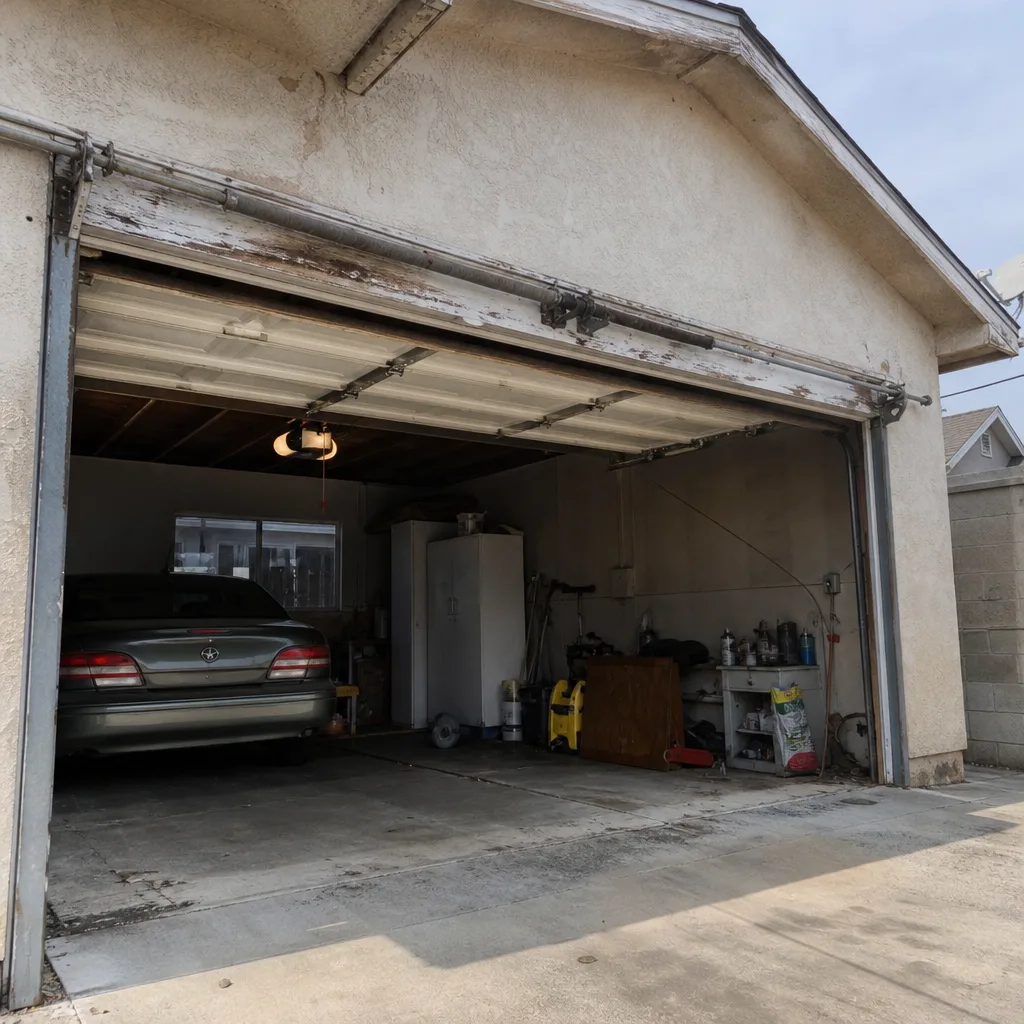 Before
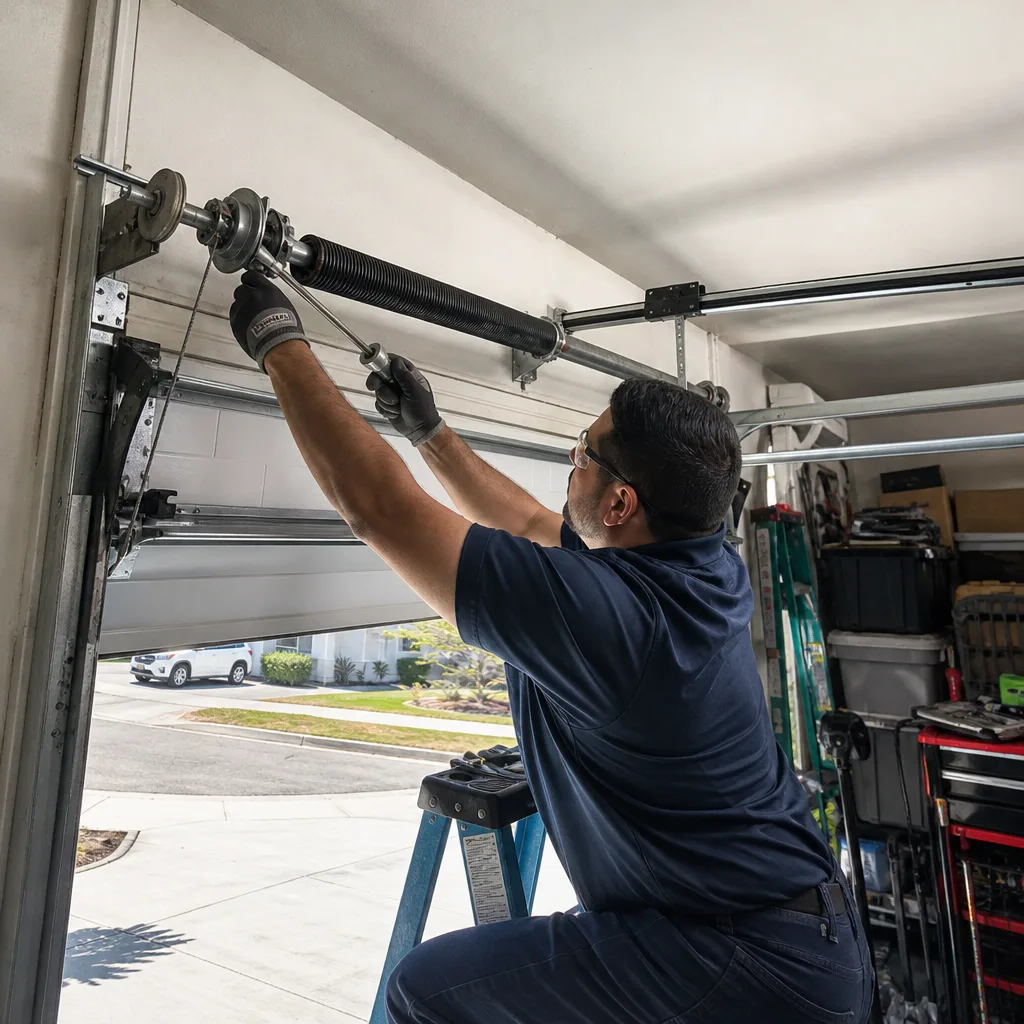 After
After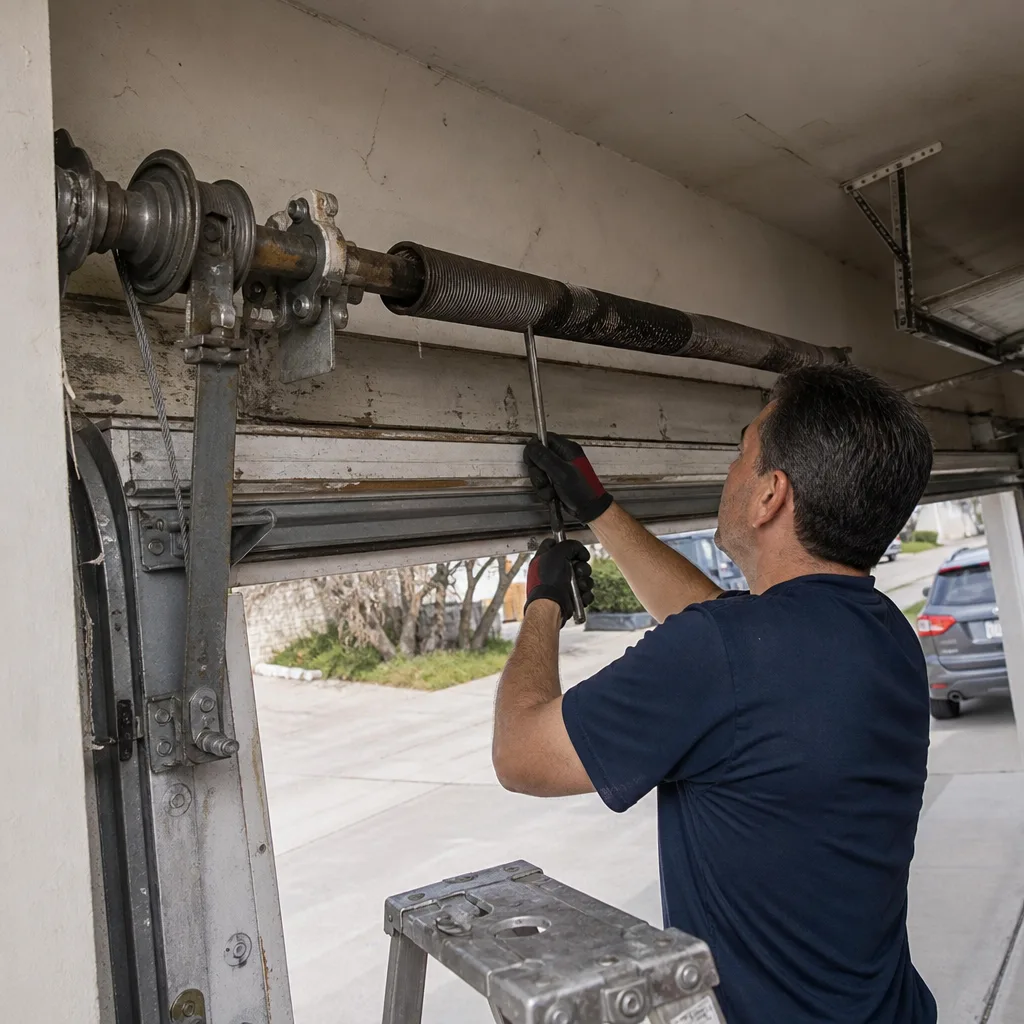 Before
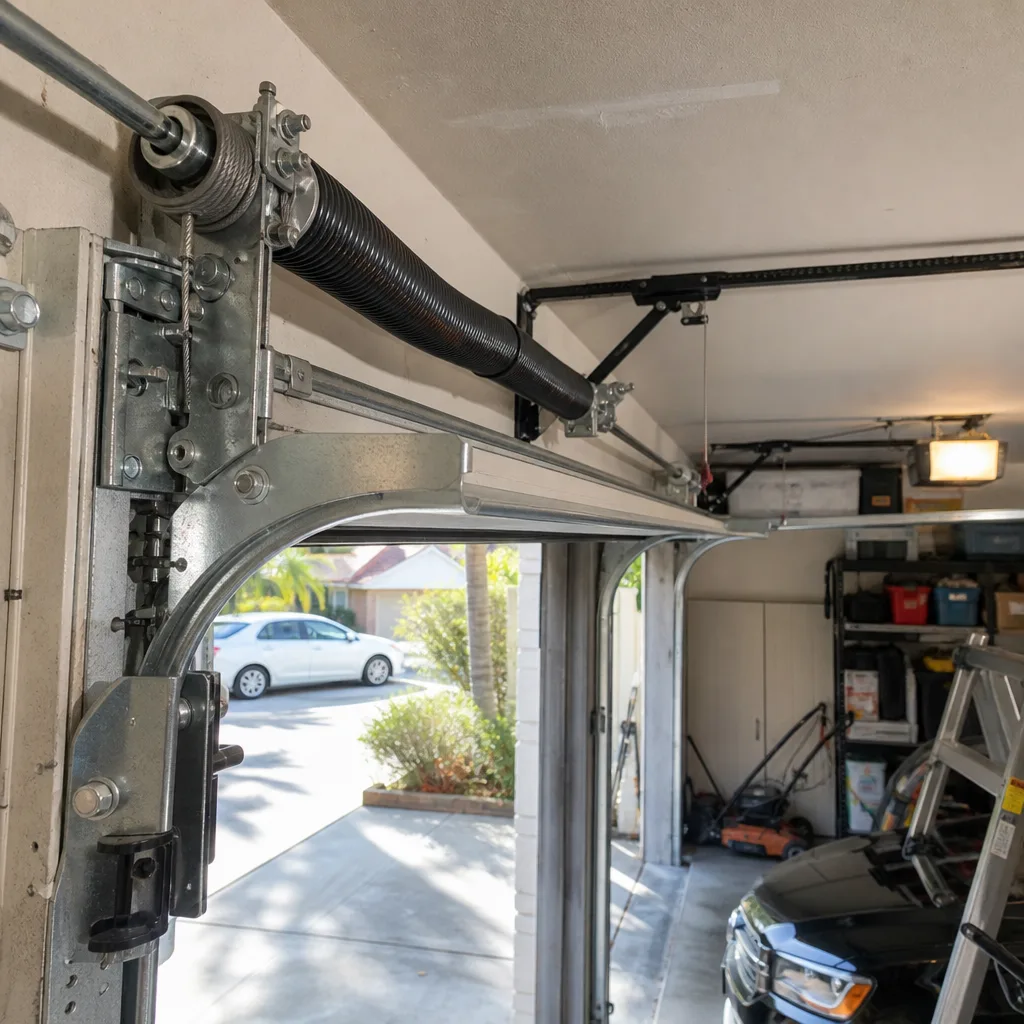 After
AfterGarage Door Repair Maintenance Checklist for Los Angeles Homeowners
A garage door in Phoenix or Chicago fails in cold. A garage door in Los Angeles fails in heat and grit, and the checklist your neighbor downloaded from a national home-improvement site was written for neither. We’ve been repairing doors across Los Angeles since 2001, and the failures we see follow a pattern: sun-baked springs, ash-clogged seals, and frames that shifted during a quake nobody remembers feeling. This guide is the Garage Door Repair Maintenance Schedule: What to Do and When we wish every homeowner had before calling us. It’s built for the actual conditions here, not a generic four-seasons template, and it will save you money whether you do the work yourself or call us when something’s beyond a homeowner’s reach.
Quick Answer
A Los Angeles garage door maintenance checklist should be built around four local threats: UV degradation of springs and seals, wildfire ash infiltration after Santa Ana wind events, seismic micro-shifts that pull the door out of true, and grit from hillside and canyon exposure. The core monthly tasks are a two-minute balance test, a visual inspection of the torsion spring and cables, lubrication of roller stems and hinges with a UV-stable lubricant, and a weather-seal check. The core seasonal tasks are an ash-season cleaning protocol after wind events and a post-earthquake frame measurement check. Doing this consistently extends a door’s life by years in this climate and catches most $300-plus repairs while they’re still $40 adjustments.
Table of Contents
- Why LA Garage Doors Fail Differently
- The Monthly Two-Minute Balance Test
- The Ash-Season Cleaning Protocol (Santa Ana Response)
- UV-Specific Lubrication: What Actually Survives LA Sun
- The Post-Earthquake Frame Check (Measurements That Matter)
- Torsion Spring Tension: How to Check It Without Touching It
- The Written Record Template That Protects Your Guarantee
- Common Mistakes to Avoid
- When to Call a Professional
- Frequently Asked Questions
Why LA Garage Doors Fail Differently
Los Angeles does not have a garage door season. There’s no first hard freeze, no thaw cycle, no salt on the roads. What we have is a combination of ultraviolet exposure, airborne grit, and seismic settling that works on your door every single day of the year. In our experience, the typical LA garage door gets more total sun-hours on its springs and seals than a garage door in Seattle gets in five years. That UV radiation is the primary killer of torsion springs in this market. The spring’s metal fatigues faster when the coil is heated and cooled daily, and the protective coatings on rubber seals crack and flake long before the seal is mechanically worn out.
On top of the sun, we have the air itself. Los Angeles sits in a basin that collects particulate matter, and when Santa Ana winds blow in from the desert, they carry fine dust and, increasingly, wildfire ash that settles on every horizontal surface including your garage door’s weather seal, tracks, and spring assembly. Ash is mildly acidic and abrasive. It doesn’t just sit there; it works into the seal rubber and the roller bearings. And then there’s the geology. Southern California experiences thousands of small seismic events a year. Most are too small to feel, but they cumulatively shift door frames and loosen bolts in a way that a homeowner in Ohio never has to think about. This is not fearmongering. It’s the actual failure pattern we see service after service, and the rest of this guide is organized around it.
The Monthly Two-Minute Balance Test
This single test tells you more about your garage door’s health than anything else you can do without tools, and it’s the one thing we encourage every Los Angeles homeowner to do monthly, no exceptions. The balance test works because of how a properly adjusted door behaves. A door in good adjustment, when disconnected from the opener and lifted by hand to waist height, stays put. It doesn’t climb up on its own and it doesn’t sink. If it moves in either direction, the spring tension is no longer matched to the door’s weight, and that imbalance is what forces your opener’s motor to work harder, what wears out gears prematurely, and what eventually snaps a cable or a spring.
How to Perform the Balance Test Safely
- Close the garage door completely.
- Pull the red emergency release handle. This disconnects the door from the opener trolley. The handle hangs from a rope near the opener rail, usually red, and pulling it takes the motor out of the equation. Do not do this while the door is open; perform the test with the door closed.
- Lift the door manually by its handle or bottom edge to about waist height.
- Let go. Count to five.
- Observe. If the door stays within a few inches of where you released it, the spring tension is within a reasonable range. If it drops more than a few inches, the springs are losing tension and need attention sooner than later. If it rises on its own, the springs are over-tensioned, which strains the opener and the door’s hardware.
- Reconnect the opener by pulling the red handle back toward the door until it clicks, then run the opener one full cycle to verify it re-engaged properly.
The whole test takes two minutes. The information it gives you is worth hundreds of dollars, because a spring losing tension is a $40-to-$120 adjustment if caught early and a $180-to-$340 broken spring repair if you wait for it to snap. In Los Angeles, where a failed spring can leave your car trapped in the garage on a morning you’ve already budgeted an hour for the 405, the monthly balance test is cheap insurance. For readers in Grandview specifically, we’ve written a more detailed breakdown of this procedure on our Garage Door Repair in Grandview page.
The Ash-Season Cleaning Protocol (Santa Ana Response)
When the Santa Anas blow, the hills burn, and the ash that settles on your car also settles on your garage door. It’s easy to see the ash on paint. What most people don’t see is what happens to the weather seal and the bottom rubber in the weeks after a wind event. Ash is mildly corrosive, and when it sits on rubber, it accelerates the drying and cracking that LA’s sun is already causing. The bottom rubber seal, which runs along the bottom edge of the door and keeps water, dirt, and rodents out, is particularly vulnerable. A cracked bottom seal lets grit into the garage, lets the door sit unevenly, and eventually lets water in during the winter rains.
Ash-Season Cleaning Steps (Do These After Any Significant Wind or Fire Event)
- Wipe down the top of the door panel edges, the horizontal ribs of the door, and the weather stripping with a damp microfiber cloth, not a pressure washer. Pressure washing forces ash and grit past the seals and into the roller tracks and hinges, where it grinds against moving metal.
- Run the damp cloth along the bottom rubber seal and the door’s bottom edge. You’re looking for black residue on the cloth, small cracks in the rubber, or any spot where the seal isn’t making full contact with the concrete. Ash that has worked into a crack will leave a gray smudge you can feel with a fingernail.
- Clean the vertical and horizontal tracks with a dry cloth first, then a lightly damp one. Do not oil the tracks. Oil attracts dust and ash and accelerates the problem you’re trying to solve.
- Listen to the door for one full cycle. If you hear grinding, it’s often ash in a roller bearing. This is a repairable condition, but not a put-it-off condition. Ash in a bearing will score the roller and the track.
This protocol matters more in Los Angeles than anywhere else in the country because of the convergence of wind, fire, and rubber. A homeowner in the Valley doing this once after each Santa Ana event will get three to four extra years out of their bottom seal and weather stripping. You’d be surprised how many service calls we run where the only problem is a bottom rubber that looked fine from ten feet away but was cracked through underneath. For information about how a bad seal affects the rest of your door’s operation, see our Garage Door Installation in Grandview guide, which covers seal and track condition as part of the installation assessment.
UV-Specific Lubrication: What Actually Survives LA Sun
The standard advice from national garage door resources is to lubricate your door with white lithium grease every six months. White lithium grease is a fine product in most parts of the country. It is not the right product for Los Angeles. White lithium grease breaks down under sustained high UV exposure and high ambient heat, and when it breaks down, it leaves a sticky residue that collects dust and turns into a grinding paste inside your roller bearings and hinge pins. We’ve seen doors in exposed west-facing garages in Los Angeles where lithium-greased rollers seized within eighteen months. That’s not normal wear; that’s the wrong lubricant for the climate.
What to Use Instead
- For roller stems and hinge pins: Use a synthetic silicone-based spray lubricant with a stated UV-stability rating. Silicone does not attract dust the way grease does, and it maintains its viscosity at the surface temperatures an LA garage door reaches in August, which can exceed 130 degrees on a dark-colored door facing west.
- For the torsion spring: A light coat of garage-door-specific spray lubricant, applied to the coil itself, not soaked. The spring needs enough to prevent surface rust, but not so much that it drips and collects dust. In LA, the dust is the enemy more than the rust.
- For the opener rail (if chain or screw drive): Use the lubricant specified by the opener manufacturer, usually a thin lithium or synthetic formula applied in a thin bead. Do not use silicone on a screw-drive rail; it will break down the polymer interface.
- Never use WD-40: It’s a solvent and a water displacer, not a lubricant. It will strip whatever lubrication is already there and leave the part drier than before.
The LA schedule we recommend is every four months for doors that face south or west and every six months for doors that face north or east or are shaded by a tree or overhang. The difference is sun exposure, not time elapsed. In our service experience, the four-month schedule for exposed doors reduces roller replacements by roughly half. If your rollers have been running dry for a while, or if you hear grinding even after lubrication, the bearings may already be scored, and that’s usually a replacement rather than a lubrication issue. We stock sealed-bearing nylon rollers and factory rollers for Amarr and Wayne Dalton doors, and we can swap a set during a routine service visit in Los Angeles without a second trip.
The Post-Earthquake Frame Check (Measurements That Matter)
Most earthquakes in Los Angeles are too small to feel, but they still move things. A door frame can rack, or shift out of square, by a quarter-inch over a couple of years of minor seismic activity, and that quarter-inch is enough to change how the door sits against the weather seal, how smoothly it travels in the tracks, and how much strain the opener motor experiences on every cycle. The good news is that checking for frame racking takes five minutes and requires nothing more than a tape measure and a level.
How to Check Your Door Opening for Seismic Racking
- Measure the width of the door opening at the top, middle, and bottom. All three measurements should be within a quarter-inch of each other. If the top is narrower than the bottom by more than a quarter-inch, the frame has racked and the tracks are no longer parallel to the door.
- Measure the height of each side of the opening from floor to header. The left and right should match within a quarter-inch.
- Place a four-foot level against the vertical track on each side. The track should read level, or very close. Even if the wall is out of plumb, the track should be shimmed to compensate. If the track itself is out of level, the door will bind as it travels.
- Close the door and look at the gap between the door edge and the weather seal on both sides and the top. The gap should be even all the way around. Uneven gaps on one side after an earthquake, or even after no quake you noticed, often mean the frame shifted.
- Run the door up and down one full cycle and watch the door’s edges as it travels. A door that’s starting to rub a track or that shifts noticeably left or right mid-travel has a frame or track issue that isn’t going to fix itself.
If you find a discrepancy beyond the quarter-inch tolerance, don’t try to fix the frame by adjusting the door. Frame racking is a structural condition that needs either re-shimming of the track or, in more significant cases, a contractor’s assessment of the framing itself. But knowing the measurement before you call means you can describe the problem accurately to whoever shows up. It also means you can verify that the repair actually addressed the racking and not just the symptom of a noisy door. For readers in Grandview, where we have detailed neighborhood-level information about frame conditions and door adjustments, our Garage Door Opener Repair in Grandview page covers how opener travel limits interact with frame changes.
Torsion Spring Tension: How to Check It Without Touching It
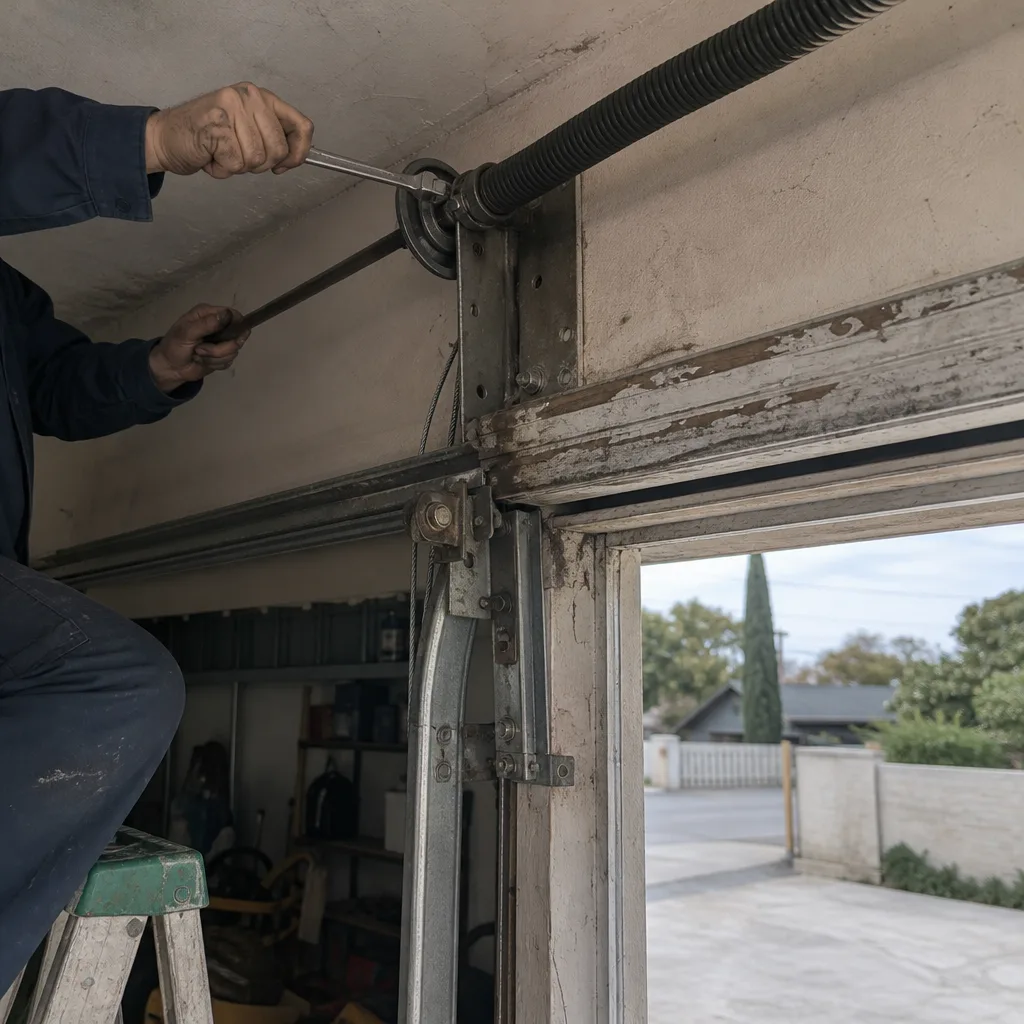
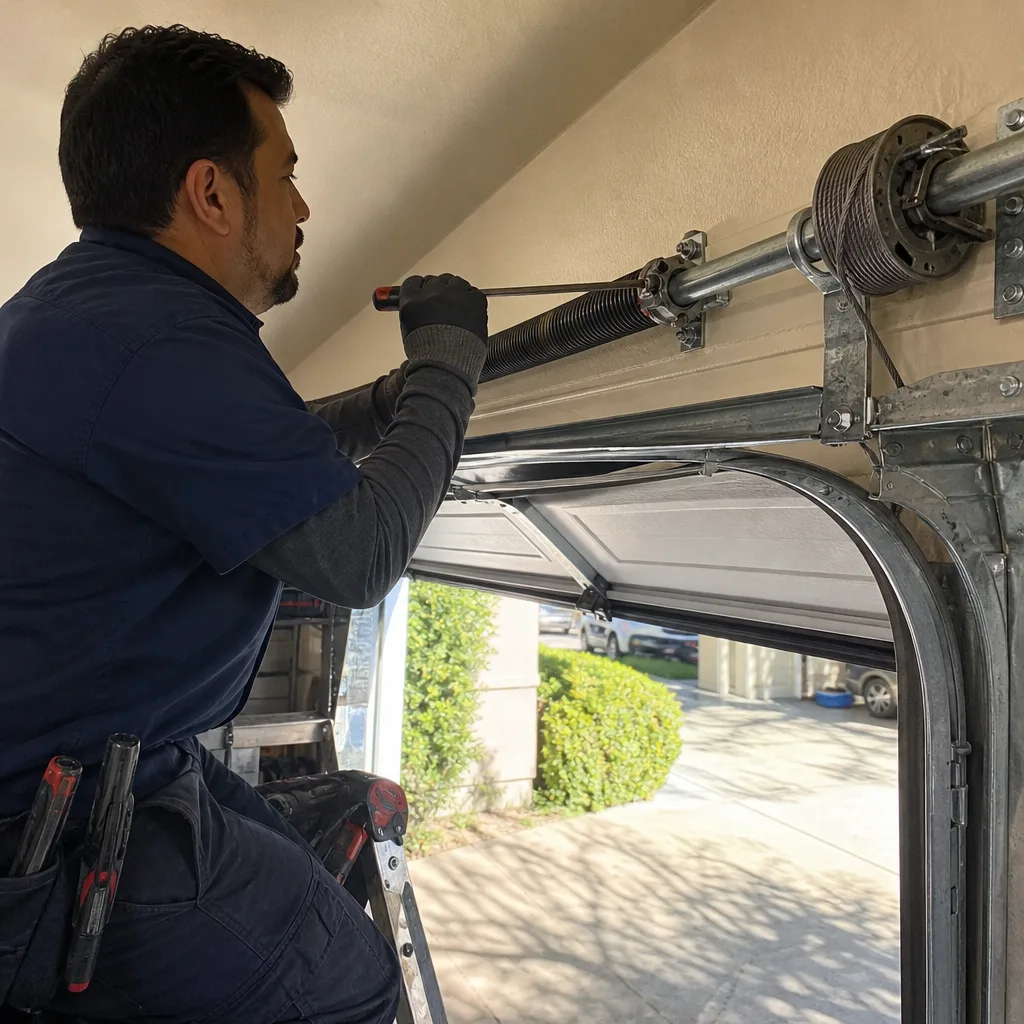
Let’s be direct about this. A torsion spring, the large coil mounted above the door that does most of the lifting, is under enough tension to cause serious injury or death if it releases unexpectedly. No homeowner should ever attempt to adjust, remove, or wind a torsion spring. That is not a DIY job. What every homeowner should know, however, is how to assess whether their spring tension is correct without ever touching the spring itself. The method is entirely visual and behavioral, and it will tell you most of what you need to know.
The Safe Visual Spring Check
- Look at the gaps: With the door closed, visually inspect the torsion spring. A healthy spring has evenly spaced coils with consistent gaps between them. If you see coils touching in one section and spread apart in another, that’s uneven fatigue, a sign the spring is nearing the end of its serviceable life.
- Look at the set screws and winding cones: These are the metal fittings at the ends of the spring. They should be free of rust streaks and should not appear to have shifted. A cone that has moved relative to the spring is a tension change you cannot see directly but can infer.
- Run the door and watch the spring: Open and close the door one full cycle while watching the spring. It should wind and unwind smoothly with no jumping, no visible hesitation, and no squeaking that sounds like metal on metal. A spring that creaks loudly or jumps is telling you something is wrong internally.
- Do the balance test: The two-minute balance test described earlier in this guide is, in effect, a safe proxy for spring tension. A door that falls or rises in the test has a spring tension problem. You have identified the problem without ever placing a hand on the spring, which is exactly the right way to do it.
- Date and time of each maintenance task.
- What you did: balance test, lubrication, seal cleaning, track cleaning, frame measurement.
- What you observed: any change from the previous check, any noise, any gap in the seals, any measurement that’s moved.
- Products used: the name of the lubricant or cleaner, so you know what’s been applied in the past.
- Any repair work done and by whom: if you had a professional service, record the date, the technician’s name, and the written price quoted and charged.
- Lubricating the tracks: Tracks do not need oil, grease, or silicone. Oil on tracks collects dust and grit, and in Los Angeles, the dust load means that oiled tracks will be grinding within weeks. Rollers ride on bearings, not on oiled steel.
- Using white lithium grease on exposed doors: It degrades under LA sun and heat, becomes sticky, and then becomes a grinding compound. Use a UV-stable synthetic silicone on roller stems and hinge pins.
- Ignoring the balance test for months: A spring losing tension will not announce itself until it breaks. The monthly balance test is the early warning system, and skipping it because the door “seems fine” is how a $50 adjustment becomes a $340 spring replacement.
- Pressure-washing the door after a fire event: It seems like a thorough cleaning, but it drives ash and grit into the seals, tracks, and bearings. Use a damp cloth and manual cleaning instead.
- Pulling the emergency release while the door is open: If the spring is broken or weak, an open door with the release pulled can slam shut with enough force to seriously injure someone. Always perform the balance test from the closed position.
- Adjusting the opener force settings to compensate for a binding door: If the door is sticking because of a frame shift or a track problem, cranking up the opener force masks the issue and strains the opener motor, gears, and the door itself. The binding has a cause; address the cause.
- Not keeping the written repair documents: In Los Angeles, where many homes change hands every few years, the garage door’s service history is often lost between owners. Keep the receipts, the guarantee documents, and your own maintenance notes. They have real value when you sell the home or when the next problem arises.
Spring repair is not a call you want to delay once you’ve identified a problem. A broken torsion spring in Los Angeles typically costs between $180 and $340 to replace, including the spring and labor. That’s a predictable expense. What’s unpredictable is the damage to the door, the tracks, and potentially a car if the spring breaks while the door is partway up and the door slams down. We regularly replace springs on doors from Amarr, Wayne Dalton, and Craftsman, and because every our Garage Door Repair services in Los Angeles includes a written price before work begins and a 365-day written guarantee afterward, the spring question never becomes a billing question.
The Written Record Template That Protects Your Guarantee
Here’s a habit that pays for itself on the very first repair call. Every time you do maintenance on your garage door, write down what you did, when you did it, and what you observed. It doesn’t need to be elaborate. A simple dated note in a notes app or in a dedicated notebook is enough. The reason is twofold. First, if you ever need to make a warranty claim on a door or opener, a dated maintenance record is often the difference between a claim being honored or denied. Second, when you call us for service, a maintenance record lets our technician arrive already knowing the door’s history, which shortens the diagnostic time and reduces the chance of a return visit.
What to Record
For the written guarantee specifically, keep the paper document. Every repair we do in Los Angeles comes with the 365-Day Done Right Promise in writing: 365 days from the date of repair, and if the repair fails, we come back and make it right at no charge. There is no phone call where you have to argue your case; the paper says what it says. But the paper only helps you if you know where it is. Staple it to the inside of the garage cabinet door, keep a photo of it on your phone, or file it with your home records. The guarantee is stronger than anything else in the garage door trade in Los Angeles, and it’s only as good as your ability to put your hand on it.
Common Mistakes to Avoid
When to Call a Professional
Some jobs on a garage door are genuinely dangerous, and no checklist makes them safe for a homeowner. Torsion spring replacement, cable replacement, and any work involving the opener’s electrical connection to the wall panel or the outlet should only be done by someone trained for it. If your balance test has been failing for two consecutive months, if the door makes a sharp banging sound during travel, if a cable is frayed, or if the frame measurements are outside the quarter-inch tolerance, those are professional calls. Our technicians in Los Angeles carry the springs, cables, and rollers for most common Amarr and Raynor doors on the truck, which means most repairs are completed in a single visit. Doyle Garage Door Repair offers free estimates in Los Angeles – call (910) 858-8029 and a live person will answer. For Garage Door Repair Troubleshooting: Common Problems and How to Fix Them, see our guide. Not a voicemail tree. Not a callback request. A person, day or night, weekends and holidays included.
Frequently Asked Questions
Monthly for the two-minute balance test, every four to six months for lubrication depending on sun exposure, and after every significant Santa Ana wind or fire event for seal cleaning. The balance test is the non-negotiable monthly task; it catches the problems that turn into emergency calls.
A tune-up in the Los Angeles market typically runs between $90 and $175, depending on the number of rollers being lubricated or replaced and the condition of the door. The price is written down and handed to you before any work starts, so there’s no invoice surprise. Call (910) 858-8029 for a free estimate specific to your door.
We answer calls live 24 hours a day, including weekends and holidays. Same-day service is available for most repair calls in Los Angeles, and when we say same-day, we mean a specific technician with a name and a photo is coming to your address. You’ll know who’s arriving before they ring the bell.
Watch for uneven coil gaps, a door that fails the balance test, or a spring that creaks and jumps while the door travels. Any of these means the spring is losing tension. A torsion spring replacement in Los Angeles typically costs $180 to $340, and the repair includes a written 365-day guarantee.
Yes. Ash is mildly corrosive and abrasive, and it accelerates the cracking of weather seals and bottom rubber, especially in combination with LA’s UV exposure. Cleaning the seals after wind events costs nothing and meaningfully extends seal life.
It means that every repair we perform in Los Angeles is guaranteed in writing for 365 days from the date of the repair. If the repair fails during that year, we come back and make it right at no charge. The guarantee is printed on every repair document we issue, and it’s not something you have to ask for or argue about. Call (910) 858-8029 for an exact quote on any repair, and the written price is yours before any work begins.
The Bottom Line
A garage door in Los Angeles lives a harder life than most people realize. The sun beats on the springs and seals every day. The Santa Anas bring ash and grit. The ground shifts beneath the frame in small, cumulative increments. The maintenance checklist that works in Chicago or Phoenix does not work here, because the failure modes are different. What does work is simple: a monthly balance test, UV-stable lubrication on a sun-informed schedule, seal cleaning after wind events, frame measurements after seismic activity, and a written record that protects your guarantee. Do these things and your door will outlast the national average by years. For more guides & resources, explore our blog. Skip them and the repair call is not a question of if, only of when.
Call (910) 858-8029 for a free estimate. A live person answers, day or night.
Written by Aaron Teague, Owner at Doyle Garage Door Repair, serving Los Angeles since 2001.