
Last updated October 9, 2026
Full 25-point door and opener safety check with every visit - springs, cables, rollers, tracks, and your LiftMaster or Chamberlain opener included
You get a price before we start. It does not change when the truck arrives.
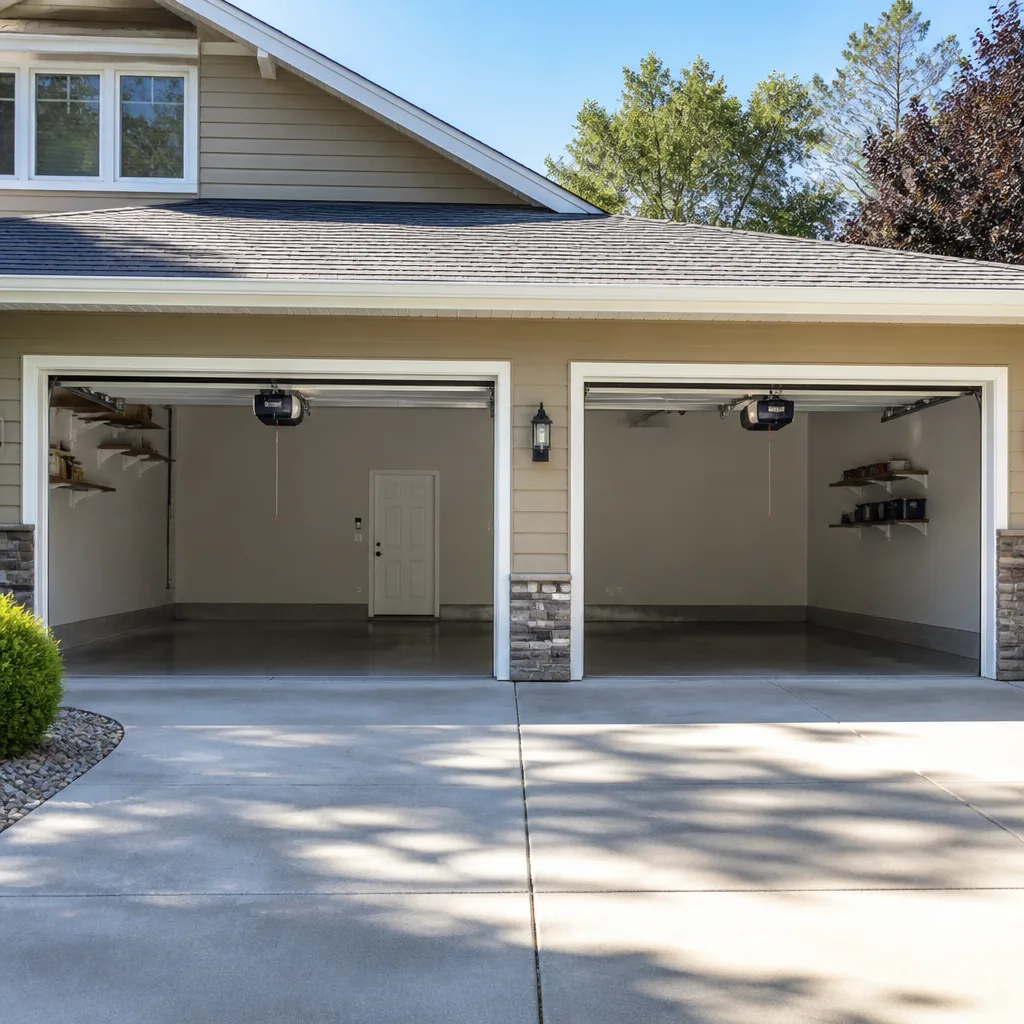
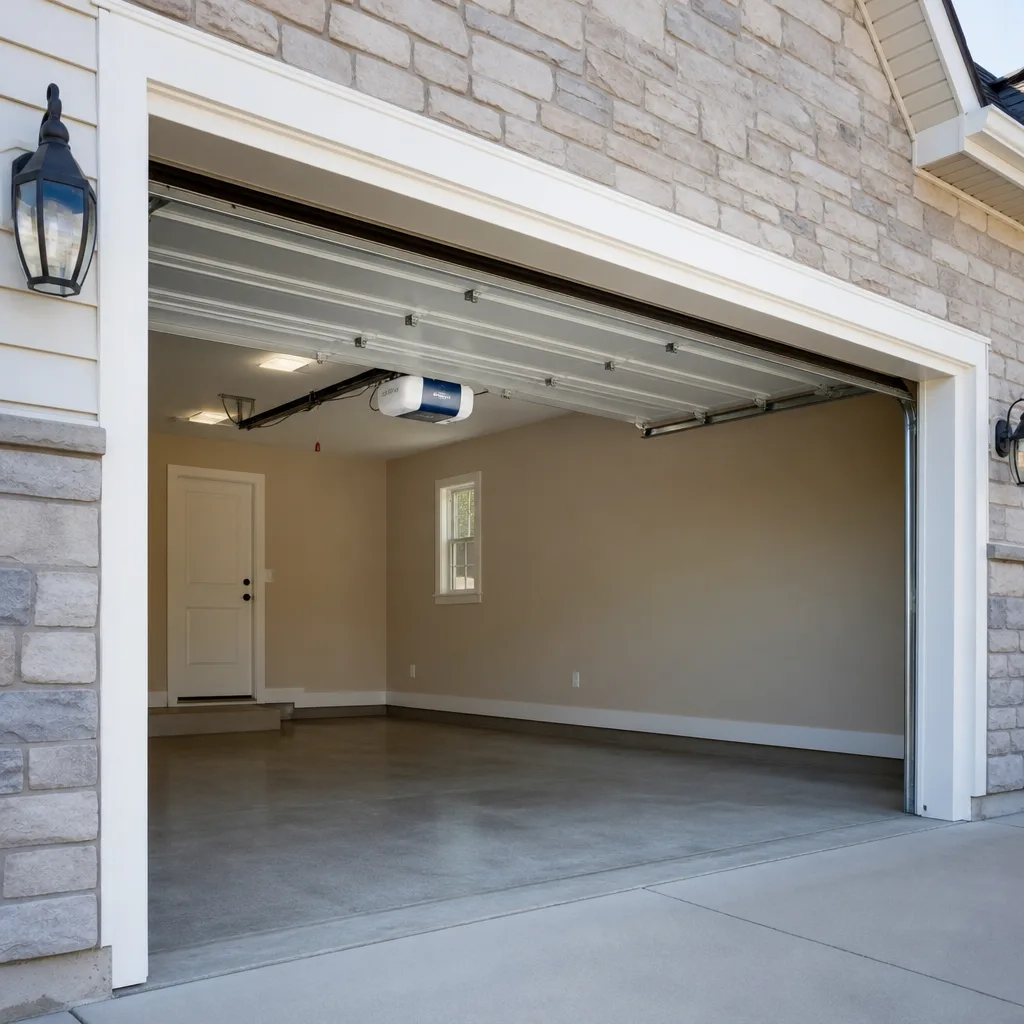
 Before
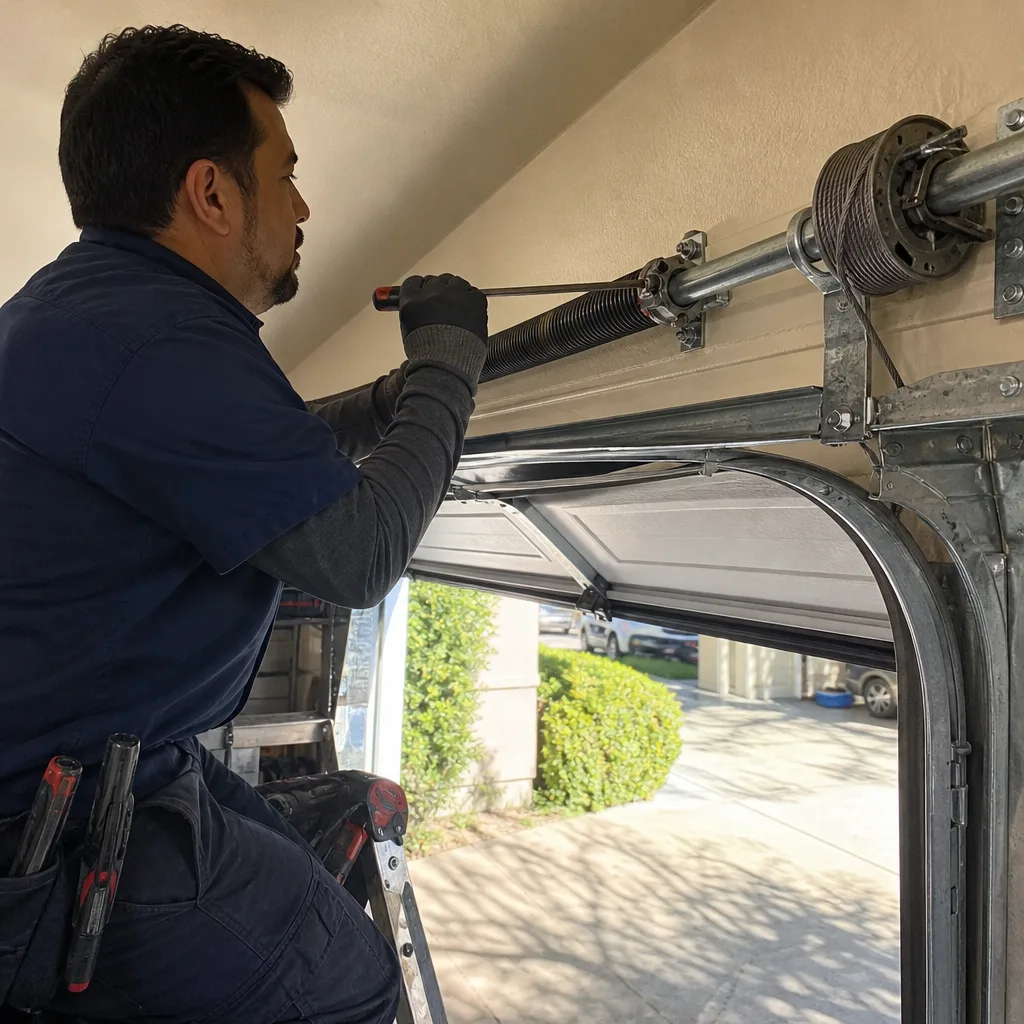 After
After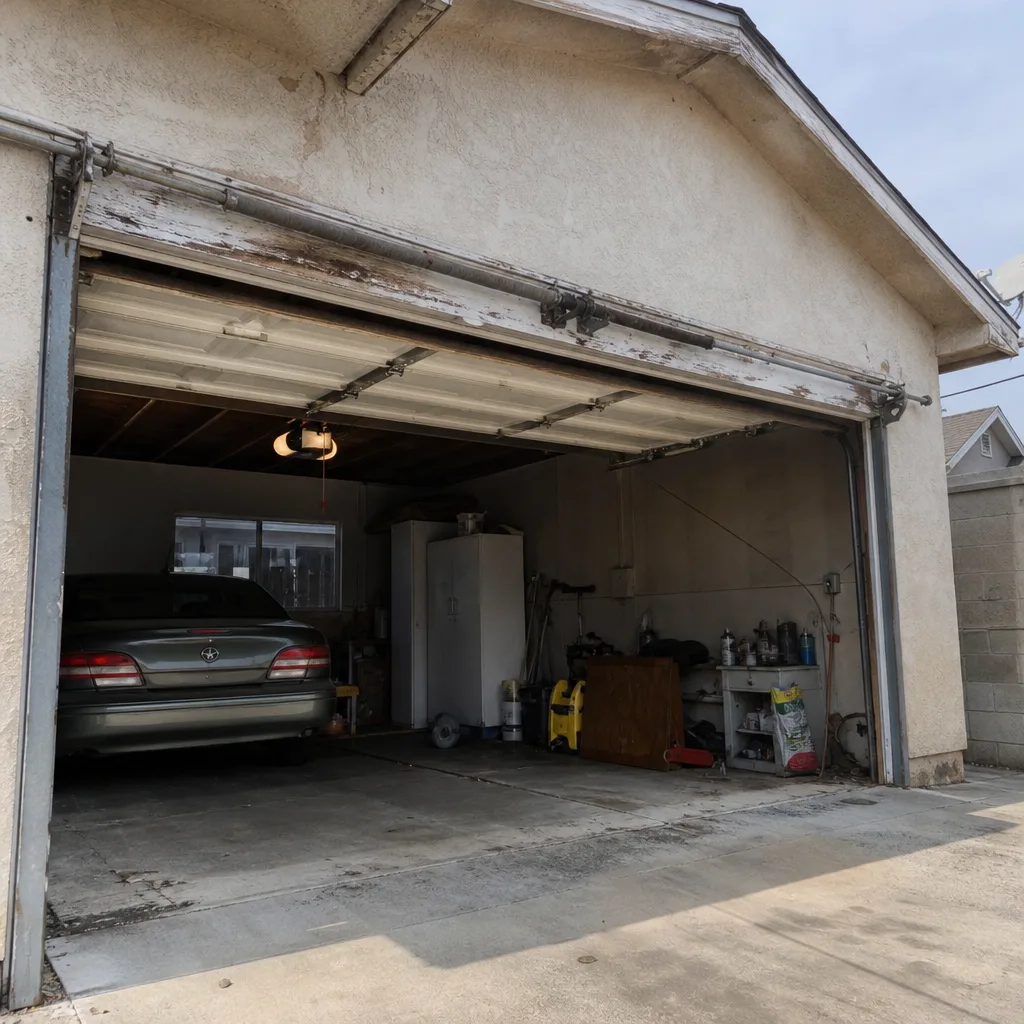 Before
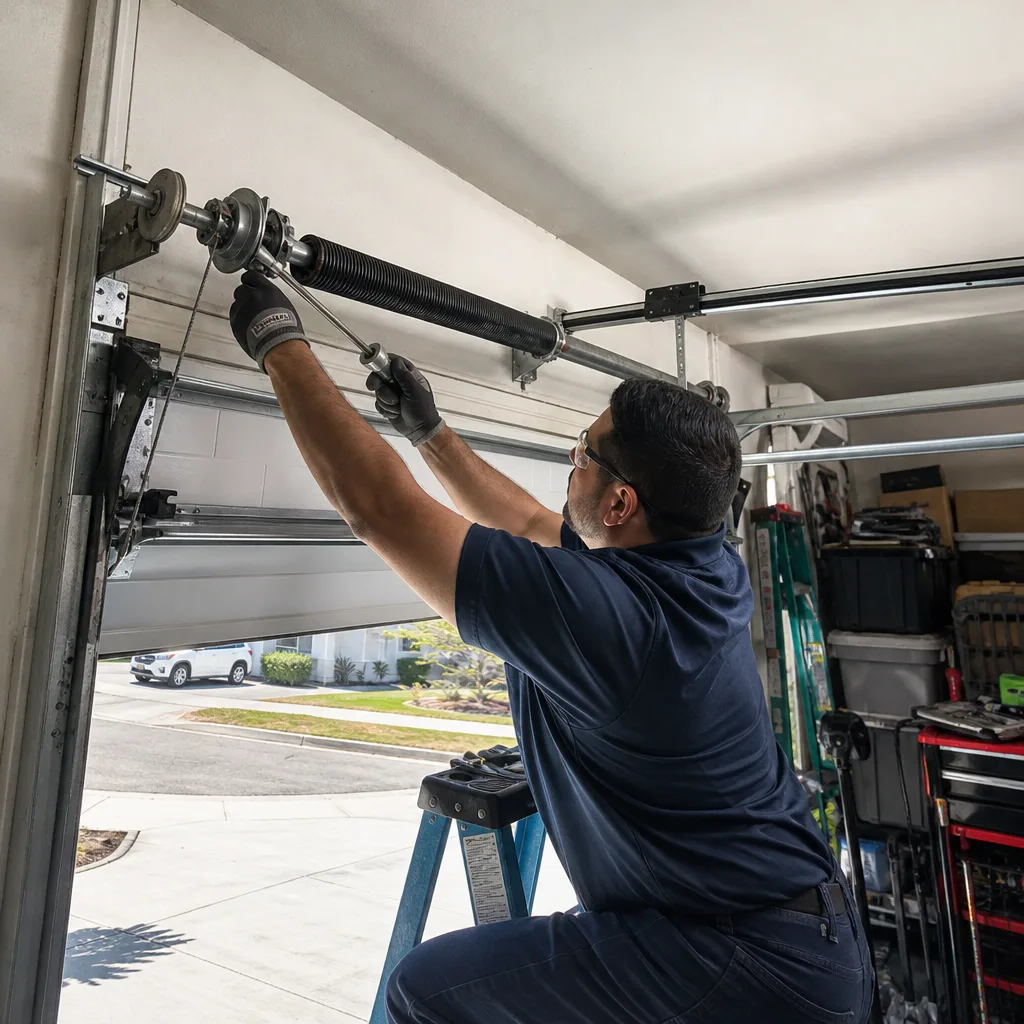 After
After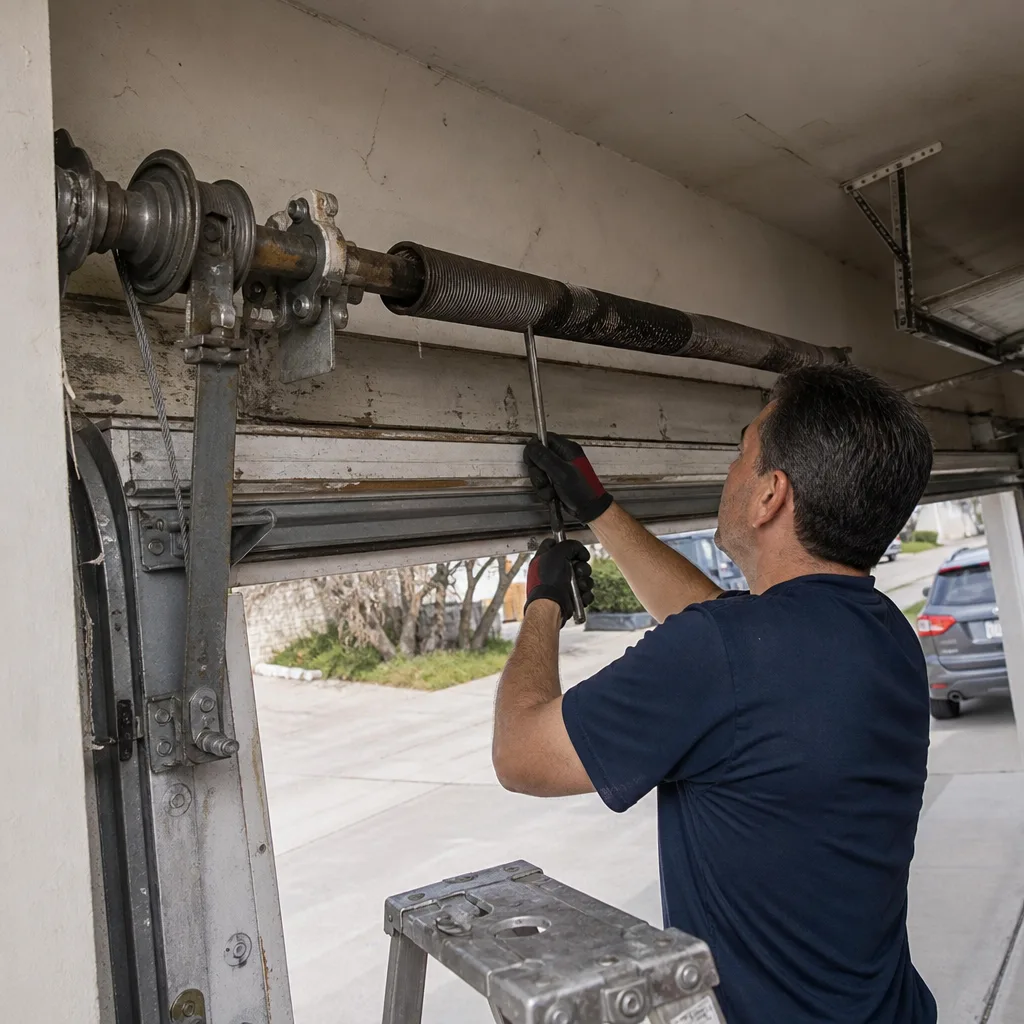 Before
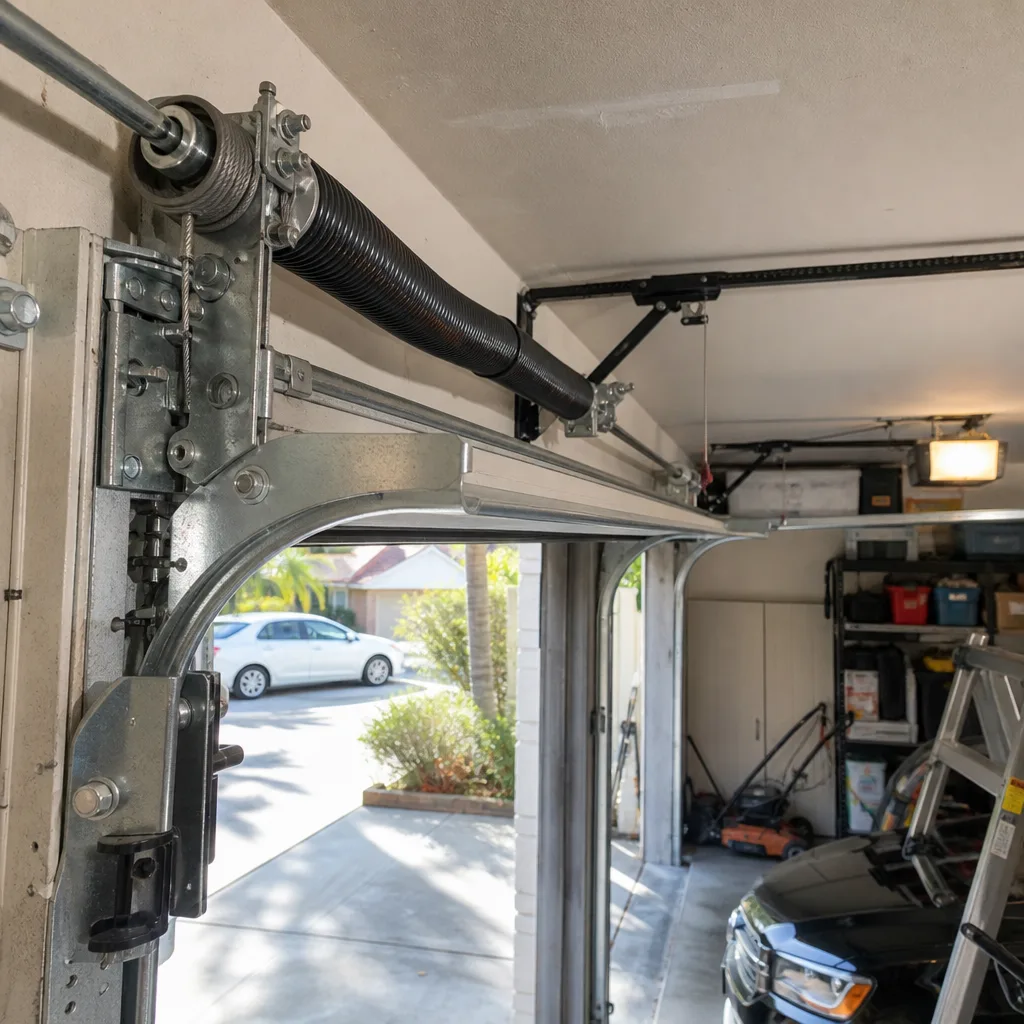 After
AfterDIY vs Professional Garage Door Repair: What’s Safe to Do Yourself
A fully wound torsion spring stores roughly the same kinetic energy as a car moving at highway speed. That’s not a scare tactic. It’s the actual physics behind why emergency rooms see garage-door-related injuries every year from capable, experienced DIYers who understood tools perfectly well but underestimated stored mechanical energy. This guide will walk you through the genuine dividing line between what’s safe to handle on your own and what belongs in Garage Door Repair services. We’ll cover specific tasks, real costs in the Los Angeles market, and the three repairs that look easy on YouTube but require calibration equipment most homeowners don’t own.
Quick Answer
The dividing line isn’t skill level. It’s stored energy. Any task involving a torsion spring, extension spring, cable drum, or tensioned cable belongs on the professional side of that line, regardless of how handy you are. Safe DIY tasks include sensor realignment, weather seal replacement, remote reprogramming, and manual lock adjustments. Everything else carries enough stored-force risk that the smart move is a trained technician with the right winding bars and calibration tools.
Table of Contents
- What’s Genuinely Safe to Do Yourself
- The Physics Problem: Stored Energy in Garage Door Systems
- Why Torsion Springs Are Never a DIY Job
- The Real Cost Math: DIY Savings vs Mishap Expenses
- Three Repairs That Look Easy on YouTube (But Aren’t)
- Why Homeowners Turn to DIY in the First Place
- Common Mistakes to Avoid
- When to Call a Professional
- Frequently Asked Questions
- The Bottom Line
What’s Genuinely Safe to Do Yourself
Let’s be fair to the DIY approach. Some garage door maintenance tasks are genuinely safe for a careful homeowner. These are the jobs that involve no stored mechanical energy, no high-tension components, and no risk of the door coming down unexpectedly. In Los Angeles, where many homes have attached garages and homeowners use them as workshops, gyms, and storage spaces, these small tasks can keep a door running smoothly between professional tune-ups.
Here’s the honest list of tasks you can handle with basic household tools and a close read of your owner’s manual:
- Photo-eye sensor realignment: The small sensors on either side of the door track, about six inches off the ground. If one gets bumped by a bike or a garbage can, the door refuses to close. Loosening the wing nut, aiming the sensor until the indicator light turns solid, and retightening takes five minutes. No stored energy involved.
- Weather seal replacement: The rubber strip along the bottom of the door (called the bottom gasket or astragal) cracks and dries out in Los Angeles sun. Replacing it is a slide-out, slide-in job that costs $20 to $40 in parts.
- Manual lock adjustment: If the slide bolt or T-handle lock sticks, a little graphite lubricant and tightening the mounting screws usually solves it. This is simple hardware, not spring or cable work.
- Remote and keypad reprogramming: If your opener remote stops working, the fix usually involves holding the “Learn” button on the motor unit and pressing the remote button. LiftMaster, Chamberlain, and Craftsman units all use similar procedures outlined in the manual. No tools beyond a step stool.
- Track lubrication: Spraying a garage-door-specific silicone lubricant on the rollers, hinges, and bearing plates. Note: this is lubrication, not repair. If a roller is worn or a hinge is cracked, that’s a replacement job with the door under tension. Lubricate, yes. Replace hardware, no.
- Visual inspection: Walking the track, looking at the cables, checking the spring for rust or gaps. Looking costs nothing and can catch problems early.
The common thread here: none of these tasks require you to touch a spring, a cable, a cable drum, or any component under load. If you can see the part moving when the door moves and it’s not the track itself, odds are it carries tension.
The Physics Problem: Stored Energy in Garage Door Systems
Your garage door weighs somewhere between 130 and 350 pounds, depending on whether it’s a single-car steel door or a double-wide wood door. That’s dead weight. The reason you can lift it with one hand is the spring system, which stores and releases mechanical energy every time the door moves.
Here’s the part most homeowners don’t realize: the spring doesn’t just hold that energy. It holds it in a wound coil that wants to release it all at once. A torsion spring, the kind mounted on a metal shaft above the closed door, is wound tight enough to lift that 350-pound door. The winding process puts the spring under roughly 7 to 8 turns of tension. At full wind, that’s enough stored force to send a steel winding bar through drywall, across a garage, or through a person.
In Los Angeles, this matters more than in some other markets because garage doors here tend to be heavier than average. Homes built in the 1980s and 1990s in neighborhoods like Sherman Oaks, Encino, and the San Fernando Valley often have solid wood or wood-overlay doors that weigh significantly more than the lightweight aluminum doors common in newer construction. More door weight means more spring tension to counterbalance it.
The extension spring system found on older Los Angeles homes, particularly in the Craftsman bungalow belt from Highland Park to West Adams, uses a different mechanism but carries the same risk. These springs stretch along the horizontal track on each side of the door. When one snaps without a safety cable running through it, the broken end whips through the air. A safety cable, installed through the center of the spring, catches that broken end. Many older homes in Los Angeles don’t have safety cables because they weren’t code-required when the doors were installed.
Why Torsion Springs Are Never a DIY Job
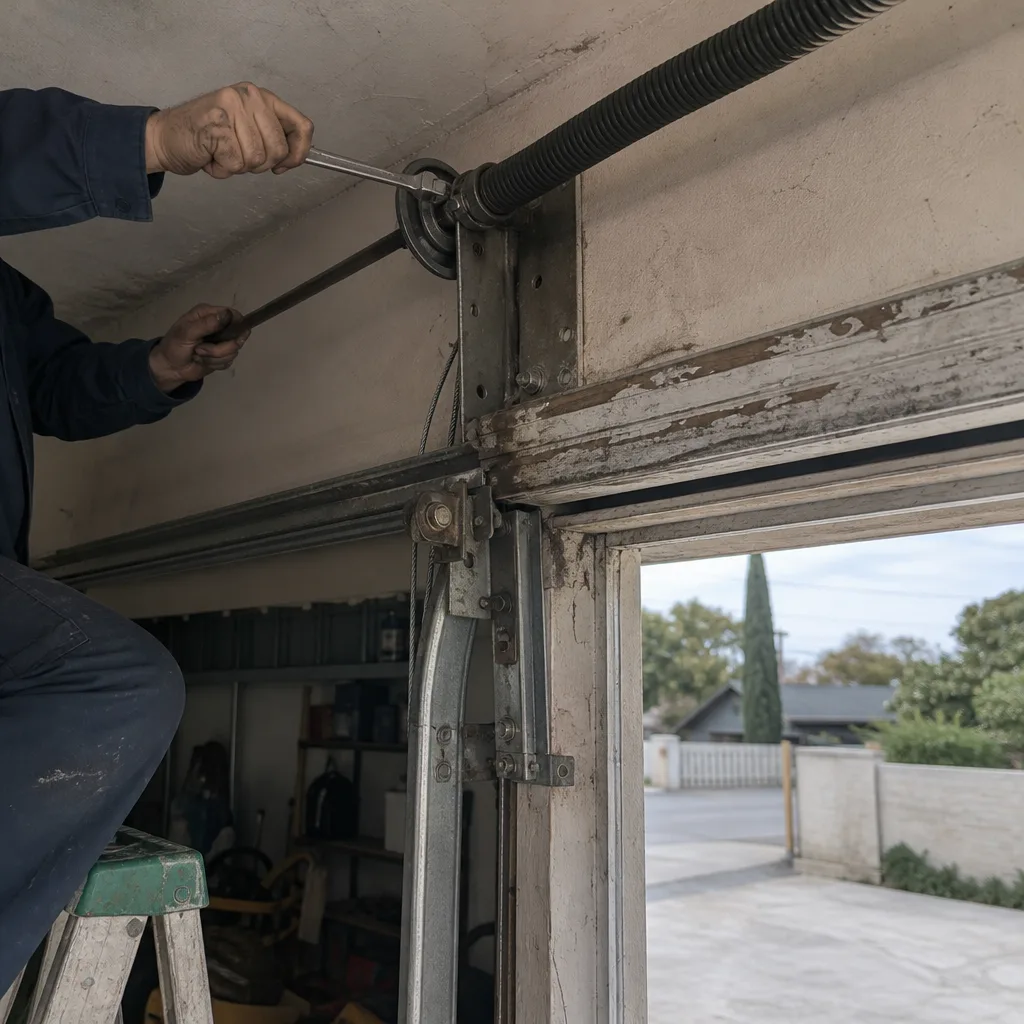
A torsion spring replacement requires a set of winding bars, not a screwdriver. Those bars are hardened steel rods, roughly 18 inches long and half an inch in diameter, made specifically to fit into the winding cone holes on the spring. You insert one bar, apply torque, insert the second bar, remove the first, and repeat. Each quarter turn adds tension. Release that tension all at once and the bar becomes a projectile.
What actually happens when tension releases unexpectedly: the bar spins with the force of the unwinding spring. If you’re holding it, that force transfers to your wrist, elbow, shoulder, or face. Broken fingers, wrist fractures, lacerations, and concussions are the common outcomes. Emergency room visits from garage door springs in the Los Angeles area happen every year, and the patients are rarely careless people. They’re often engineers, mechanics, and experienced tradespeople from other fields who understood tools but miscalculated the energy release.
The professional method uses the same winding bars but paired with training on where to stand, how to grip, and what to watch for. We position ourselves outside the plane of the winding cone. We keep both hands on the bar at all times. We count quarter turns and verify the spring settles before moving to the next. It’s not that a homeowner can’t learn these things. It’s that learning them through trial and error is how injuries happen.
There’s also the sizing issue. Torsion springs are rated by wire gauge, inside diameter, length, and wind direction (left-hand vs. right-hand). Installing the wrong spring means the door doesn’t balance correctly, and that unbalanced condition puts strain on the opener motor, the cables, and the door panels themselves. A spring that’s too strong can make the door fly up on its own. A spring that’s too weak makes the opener work harder and burn out sooner. We carry multiple spring sizes and can match the spring to the exact door weight and track configuration in one visit.
The Real Cost Math: DIY Savings vs Mishap Expenses
Let’s put numbers on this. A do-it-yourself sensor realignment saves you a $75 to $100 service call in Los Angeles. That’s real savings, and it’s a genuinely safe job. A weather seal replacement saves you somewhere in the $120 to $160 range, since the part runs $20 to $30 and professional replacement includes the labor of pulling the old gasket out of the track. Again, a safe job with real savings.
Now let’s look at the other side. A torsion spring replacement in the Los Angeles market typically costs between $180 and $340, depending on the door weight, spring size, and whether you’re replacing one spring or two. The spring itself is only $50 to $90 of that. The rest is the installation, which includes winding the spring under controlled conditions, balancing the door, and testing the full cycle.
What does a mishandled torsion spring cost?
- Emergency room visit: Even with insurance, a typical ER copay for an injury in Los Angeles runs $150 to $500. Without insurance, a wrist fracture can run $3,000 to $8,000 by the time imaging and casting are done.
- Broken winding bar through drywall: You’re patching and repainting a garage wall, or replacing a car windshield if you parked too close. Windshields in Los Angeles run $250 to $600 installed.
- Door panel damage: An unbalanced door can slam down and dent panels, crack a section, or bend the track. Panel replacement runs $200 to $500 per panel, and matching an older door’s color and emboss pattern is often impossible, meaning you may live with a mismatched panel or replace the whole door at $1,200 to $2,500.
- Opener damage: A badly balanced door can strip the gears inside the opener motor. Opener gear replacement is $100 to $200 if caught early, but a full opener replacement runs $325 to $500 in Los Angeles.
- Lost time: A spring job that goes sideways is a multi-day project, not an afternoon. You’re without a functional garage door, which in Los Angeles means a car parked on the street, where parking tickets run $73 to $93 in the city of Los Angeles.
The math is lopsided. The upside of DIY on a safe task is $75 to $100 saved. The downside of DIY on a spring or cable job is hundreds, possibly thousands, and that’s before any injury. We tell customers this not to push them toward professional service, but because we’ve seen the aftermath. We’ve repaired doors where homeowners attempted spring work and stopped midway through, leaving the door half-wound and unbalance. We’ve replaced panels where the door came down hard enough to split the steel. None of those homeowners saved money.
Three Repairs That Look Easy on YouTube (But Aren’t)
There’s no shortage of garage door repair videos online, and some are genuinely good. For more guides & resources from our team, visit the blog. The problem is that video editing compresses time. A 20-minute limit-switch adjustment video may have taken three hours to shoot, with the technician checking and rechecking the calibration between cuts. What looks like one smooth motion is actually iterative work with the right tools.
Here are the three repairs we see most often attempted after a YouTube deep dive, and what the video usually doesn’t show:
- Limit switch adjustment. The limit switch tells the opener where “closed” and “open” are. When it’s off, the door either slams into the ground, reverses immediately, or stops 6 inches short of the floor. The adjustment looks simple: turn a small dial or screw until the door stops in the right place. What the video often skips is that limit switches on modern LiftMaster, Chamberlain, Genie, and Raynor openers are calibrated in relationship to the force setting. Over-adjust the limit and the door hits the ground harder than intended. Under-adjust and it leaves a gap. The proper adjustment involves a force-check (the opener should reverse if it meets resistance at the floor, and the door should stop within 2 inches of the floor without slamming). It’s iterative, and it’s done with the door cycling repeatedly under load.
- Cable drum re-winding. The cables run from the bottom brackets of the door up to drums on the torsion shaft. If a cable comes off the drum, the door lifts unevenly or binds on one side. Re-seating the cable requires taking tension off the torsion spring first, which means the spring work we just discussed. The cable itself is under the full weight of the door during any repair attempt. Skip a step and that cable snaps or whips. We’ve replaced cables on Los Angeles doors where the homeowner attempted a re-wind, got the cable crossed on the drum, and created a permanent wear point that ate through the cable within weeks.
- Track alignment. The vertical and horizontal tracks guide the rollers. If a track is knocked out of alignment, the door shudders or stalls. The fix involves loosening the track brackets, realigning, checking the vertical track is plumb and the horizontal track is level, and re-tightening. Videos show this with a bubble level and a wrench. What they don’t always show is that track alignment problems often trace to worn rollers or a stretched cable, not the track itself. Realigning a track without addressing the underlying cause means the problem returns and the door may now be binding in a new way.
All three of these exist in a gray zone. The adjustment itself isn’t as dangerous as a spring replacement. But doing it wrong creates an unsafe door that can fail when a car is half in or half out of the garage, or when a child is under the door. We believe calibration work belongs with someone who has the tools and does it regularly.
Why Homeowners Turn to DIY in the First Place
If you look at the reasons people attempt garage door repair themselves, almost none of them are actually about saving the $75 service fee. The most common reasons we hear, in order:
- They don’t know who will show up. Opening the door to a stranger is a genuine concern, especially for people home alone, parents with young children, and older homeowners. A generic “technician will arrive between 8 and noon” means a stranger at the door with no way to verify they’re actually from the company you called.
- They don’t know what it will cost. Nobody wants a verbal estimate that balloons into a bigger invoice after the work starts. The garage door industry has a reputation for “well, while I’m here…” upsells, and homeowners have learned to be wary.
- They think the job is smaller than it is. “It’s just a spring” or “the door just hums” sounds like a quick fix. Without trade knowledge, the scope is invisible.
This is where we built Doyle Garage Door Repair to be the alternative. Every technician is background-checked and identity-verified under the Threshold Standard. We send the technician’s name and photo before the visit, so you know exactly who will be at your door and can verify that the person standing there is the person in the photo. The price is written down and handed to you before a single bolt is turned. There is no verbal estimate, no invoice surprise, and no upsell pressure.
We also back every repair with our 365-Day Done Right Promise: if it’s not done right, we make it right. The guarantee is in writing, on every job, and if the repair fails within 365 days, the second visit is free. No argument required. That’s the longest, most clearly stated guarantee in the trade, and we put it in writing every time because we know trust isn’t built with slogans.
Our company was founded in 2001 as part of the Threshold Group family of home-service companies. Each location is independently owned and operated under the Threshold Verified standard, combining local service with a verification process that no standalone shop can match. You can read more about our approach on our Doyle Garage Door Repair home page or explore our specific services for Garage Door Repair in Grandview, Garage Door Installation in Grandview, and Garage Door Opener Repair in Grandview.
Common Mistakes to Avoid
- Using screwdrivers instead of winding bars. A screwdriver in a winding cone hole will bend, snap, or slip out. It’s roughly the equivalent of using a butter knife as a pry bar. The tool is wrong, and the failure mode is violent.
- Standing in the path of the winding bar. Even with proper bars, anyone winding a spring must stand outside the bar’s arc. If you’re watching a video and the person is standing directly facing the winding cone, close the video. They’re demonstrating unsafe technique.
- Replacing one spring on a two-spring door. When a door has two torsion springs and one breaks, both springs have the same age and wear. Replace both. Replacing only one leaves a mismatched door that cycles unevenly and stresses the opener.
- Disconnecting the opener without locking the door. If you pull the emergency release cord while the door is up, a door with a broken spring will come down fast. Secure the door with locking pliers on the track before doing anything else.
- Ignoring a fraying cable. A cable with visible strands breaking is a warning sign. It will snap eventually, and if there’s no safety cable, the broken end becomes a hazard. In Los Angeles, many doors from the 1990s and earlier lack safety cables entirely.
- Lubricating a spring yourself without checking for damage first. Lubrication is safe. But if the spring is cracked or shows a gap in the coil, spray lubricant won’t fix it. The spring is actively failing and will snap.
- Assuming the problem is the opener when it’s the spring. If the opener hums but the door doesn’t move, the problem is often a broken spring, not a dead motor. Replacing the opener won’t fix a door that has no lifting assistance. You’ll spend $325 to $500 on an opener and the door still won’t open.
When to Call a Professional
Call a professional when the task involves anything under tension: a broken spring, a frayed cable, a cable off the drum, a door that’s off balance. Call a professional when the door slams, shudders, or won’t stay open. Call a professional when you’ve already tried the safe DIY fixes and the problem persists. A garage door is the largest moving object in most homes, and when it fails, it fails with weight behind it. If you’re in Los Angeles and not sure whether your issue falls on the safe or professional side of the line, call us and describe what you’re seeing. We’ll tell you honestly whether it’s something you can handle or something we should send a technician for. Doyle Garage Door Repair has served Los Angeles since 2001, and we offer free estimates over the phone. Call (910) 858-8029 and a live person will answer, day or night, weekends and holidays included.
Frequently Asked Questions
Spring replacement in the Los Angeles market typically runs $180 to $340, depending on door weight, spring size, and whether one or two springs need replacing. The price you’re quoted is the price you’ll pay, because we put it in writing before any work starts. Call (910) 858-8029 for an exact quote based on your door.
You should not, regardless of your experience level with other tools. A torsion spring stores enough energy to cause serious injury if released improperly, and proper replacement requires hardened steel winding bars, correct sizing, and training on safe technique. The risk-to-savings ratio makes this the single worst DIY job in the average home.
The safest tasks are sensor realignment, weather seal replacement, manual lock adjustment, remote reprogramming, and track lubrication. None of these involve stored energy or tensioned components, and all can be done with basic household tools in under an hour.
If the opener runs but the door doesn’t move, it’s usually the spring. If the opener makes no sound at all, it’s likely electrical or the opener. If the door opens partway and stops, it could be the limit switch or the spring. The simplest test: pull the emergency release and try lifting the door by hand. If it’s very heavy, the spring is broken. If it lifts easily, the issue is in the opener. Call (910) 858-8029 and describe what you see. We’ll help you narrow it down before anyone comes out.
Yes. Every technician at Doyle Garage Door Repair undergoes a background check and identity verification under the Threshold Standard. Before the visit, we send the technician’s name and photo. When they arrive, they wear a clean uniform and show a photo ID badge at the door. You’ll know exactly who to expect and can verify they are who we said they are. This applies to every job, no exceptions.
No. The price is written down and handed to you before any work begins. It covers the repair as quoted, with no hidden fees and no “while I’m here” add-ons. If the technician finds something else that needs attention, that’s a separate conversation with a separate written quote. You decide what gets done. And every repair includes our 365-Day Done Right Promise in writing: if it fails within 365 days, we come back and make it right at no charge.
The Bottom Line
The DIY vs. professional question is simpler than most guides make it. If the task doesn’t touch a spring, a cable, a drum, or the opener’s calibration, you can probably handle it with basic tools and a close reading of your manual. If it does touch any of those things, you’re dealing with stored energy that can cause serious injury, door damage, or both. The safe tasks save you $75 to $160. The dangerous tasks, mishandled, cost hundreds or thousands and can put you in an emergency room. Doyle Garage Door Repair has served Los Angeles since 2001 with written pricing, a written guarantee on every repair, and technicians whose name and photo you receive before you open the door. When in doubt, call (910) 858-8029. A real person answers, 24/7.
Written by Aaron Teague, Owner at Doyle Garage Door Repair, serving Los Angeles since 2001.