
Last updated October 9, 2026
Full 25-point door and opener safety check with every visit - springs, cables, rollers, tracks, and your LiftMaster or Chamberlain opener included
You get a price before we start. It does not change when the truck arrives.
 Before
 After
After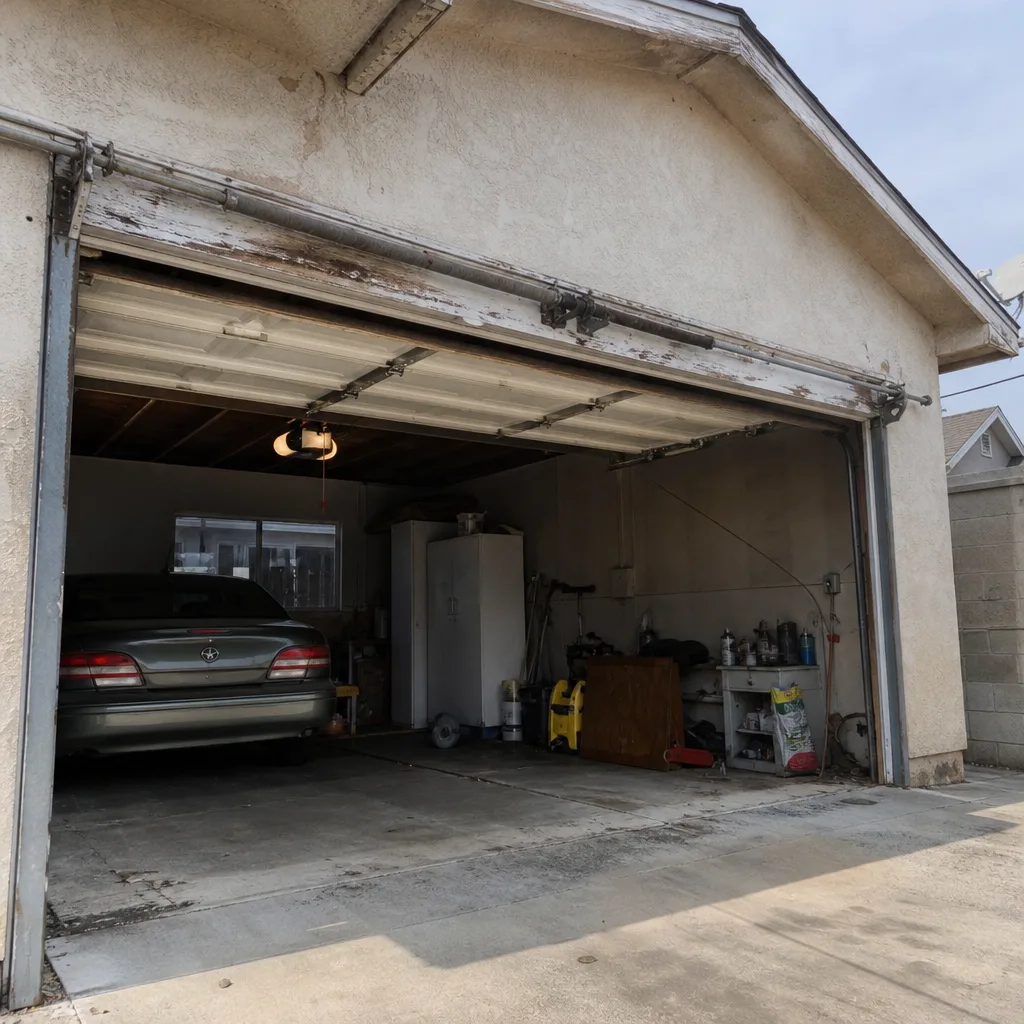 Before
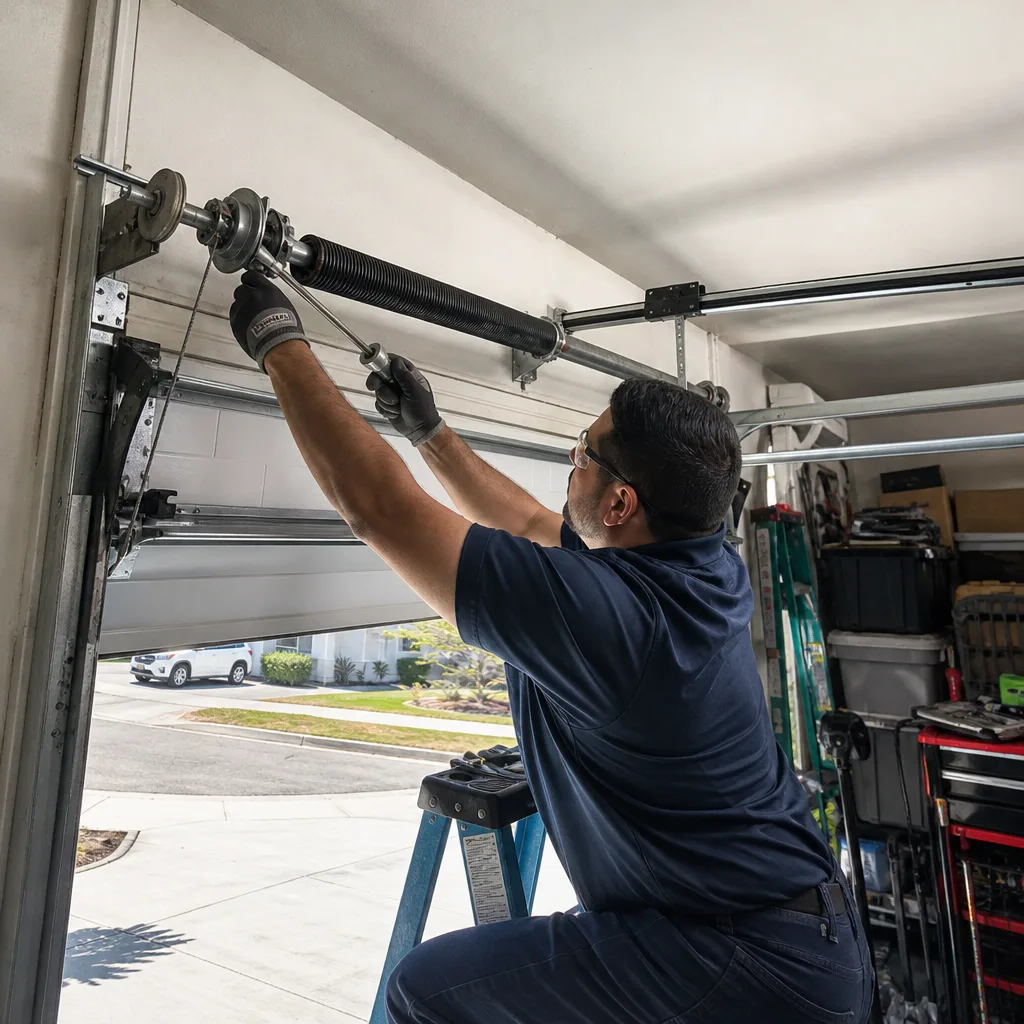 After
After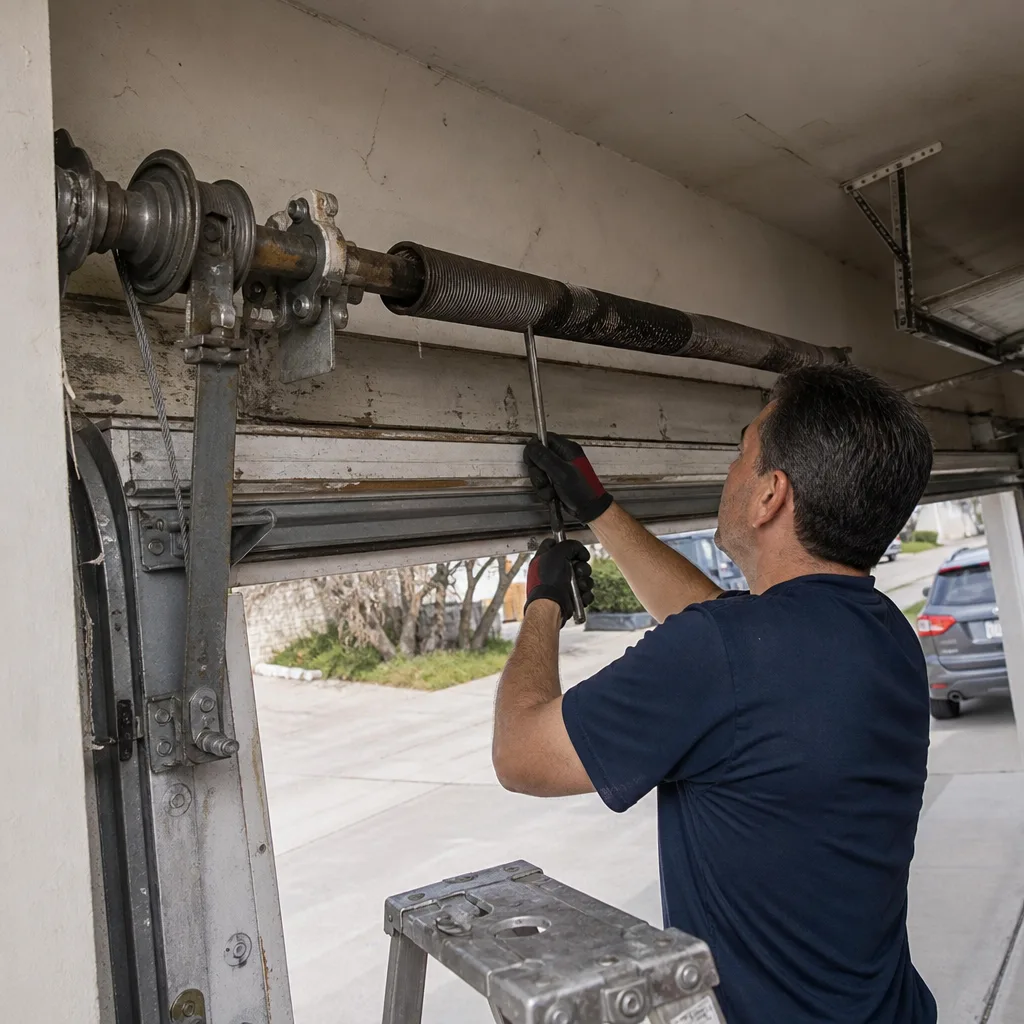 Before
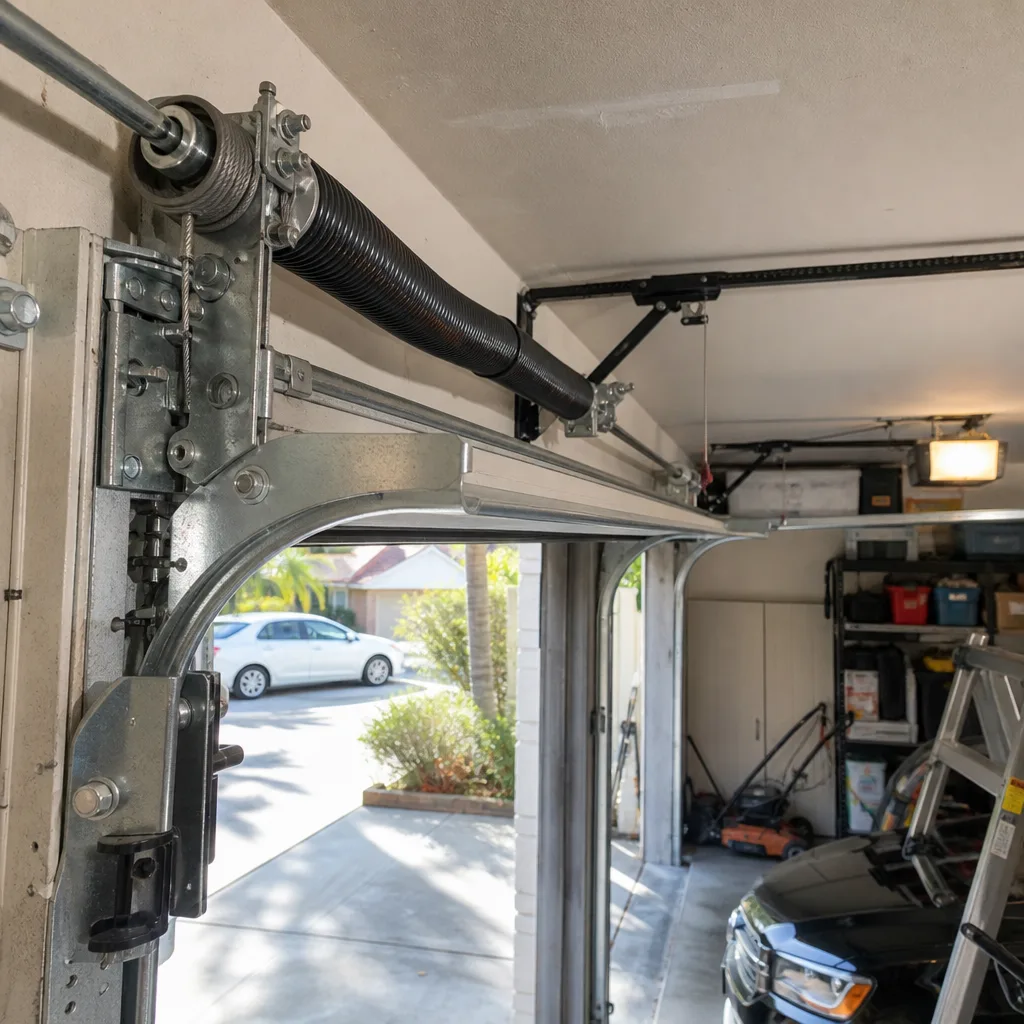 After
AfterGarage Door Emergency Preparedness Guide for Los Angeles Homes
In Los Angeles, most homeowners think of garage door emergencies as a snapped spring on a Tuesday morning. But the real test comes when the power is out, an evacuation order is on your phone, and the only thing between your car and the street is a 400-pound door that refuses to move. During the 2019 Kincade Fire, residents in evacuation zones reported being unable to quickly open their garage doors manually to get vehicles out, not because the door was damaged, but because they had never located or pulled their manual release cord. This guide walks you through exactly what to do before, during, and after the emergencies that Los Angeles actually faces: power shutoffs, earthquakes, wildfires, and the ordinary mechanical failures that become crises at the wrong moment.
Quick Answer
Garage door emergency preparedness in Los Angeles means three things: knowing how to operate your door manually with the red emergency release cord, verifying that your opener works during a power outage (via battery backup if you have one), and ensuring your door’s frame and springs can withstand seismic activity. Most Los Angeles homes fail at least one of these. The manual release procedure takes under a minute to learn and could be the difference between evacuating safely and being trapped in your own garage.
Table of Contents
- The Manual Release: What It Is and Why You Need to Know It Before Dark
- Earthquake Preparedness for Your Garage Door
- Battery Backup Openers: California’s 2019 Mandate and What It Means for You
- Wildfire Evacuation Protocol: Practicing the 2 a.m. Test
- Post-Emergency Inspection: What to Check After a Quake or Fire Event
- What to Do When the Power Is Out and You Need the Door Open Now
- Safety Rules That Apply to Every Situation
The Manual Release: What It Is and Why You Need to Know It Before Dark
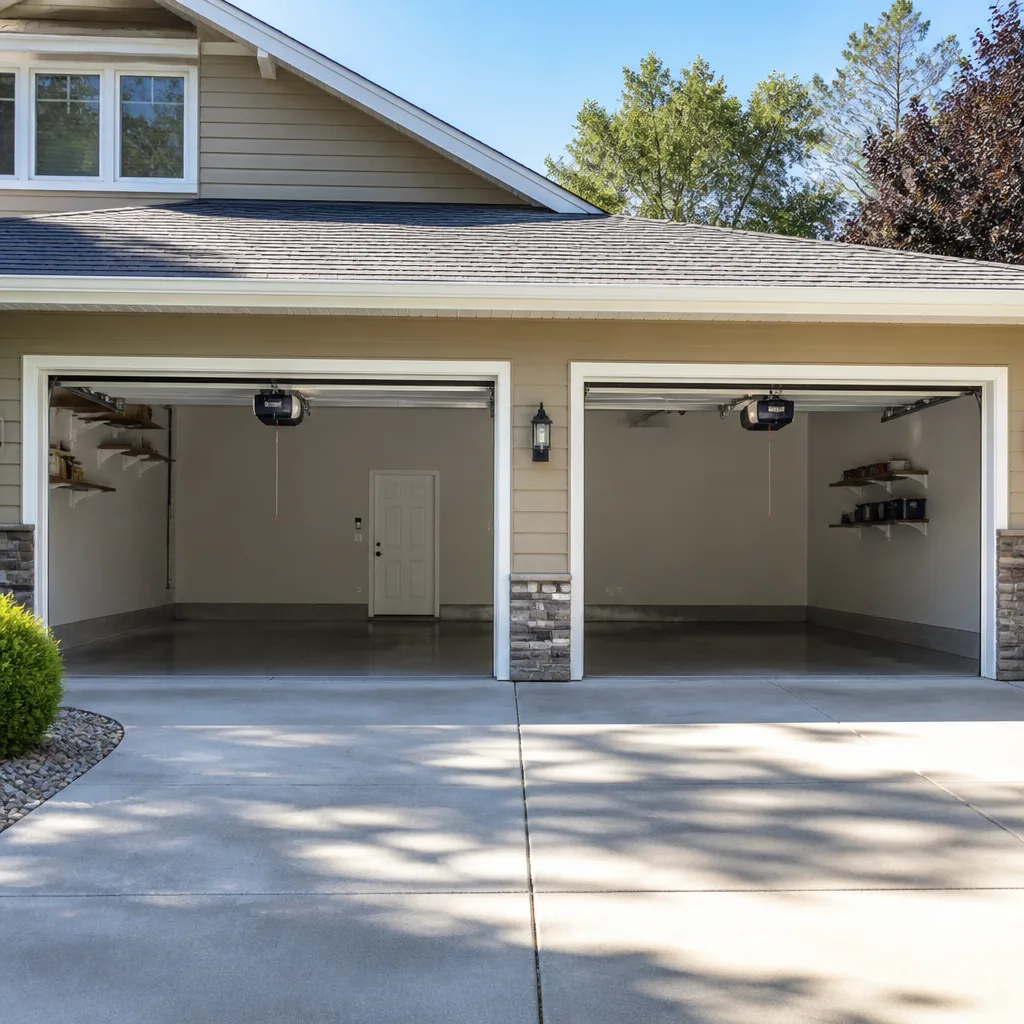
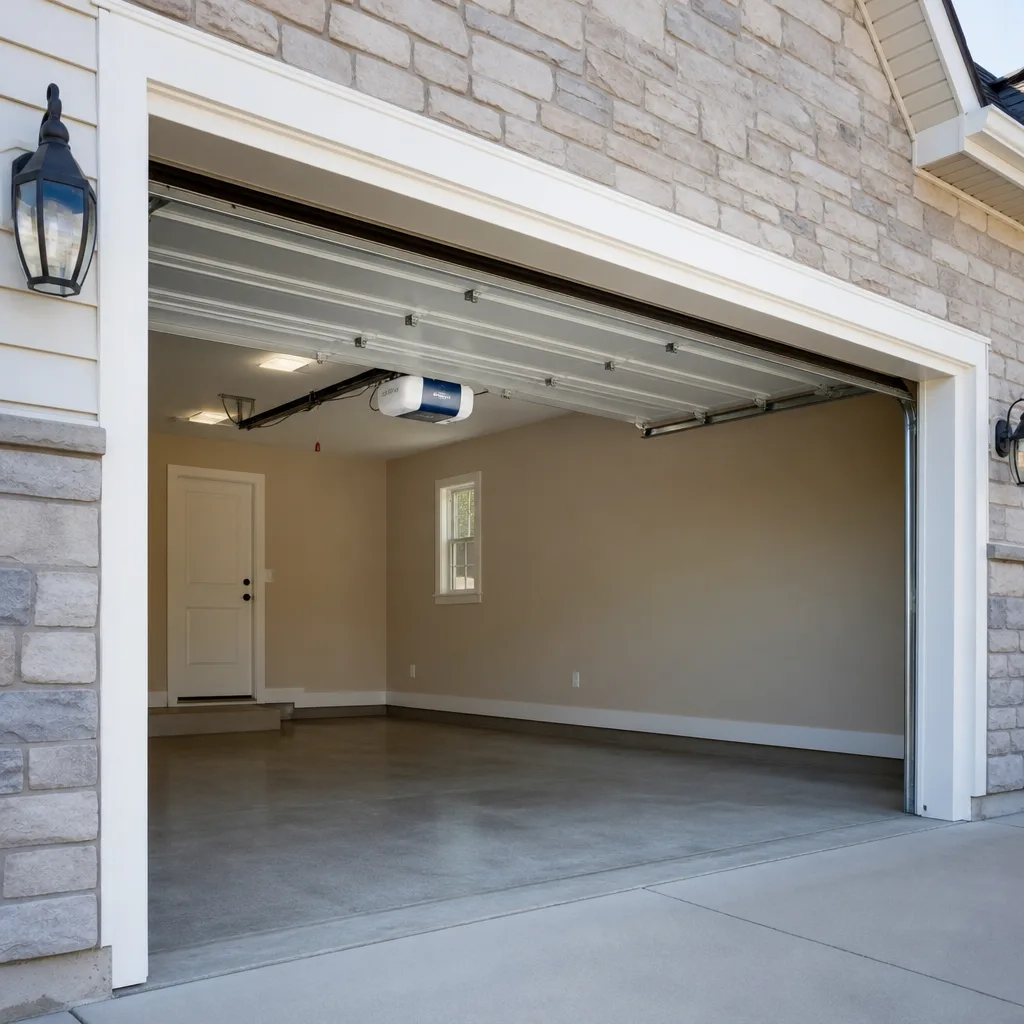
Every automatic garage door opener has a manual release mechanism, a red cord or handle hanging from the trolley carriage mounted on the rail above your door. Pulling that cord disengages the carriage from the drive belt or chain, converting your automatic door into a manual one. It is designed to work without electricity, without the opener, and without any tools. Yet in our experience across Los Angeles, most homeowners have never pulled it once.
The trolley carriage is the sliding component that travels along the overhead rail. When engaged, it locks onto the drive mechanism, whether that’s a belt, chain, or screw, so the opener motor can move the door. When you pull the red cord, it releases that lock and allows the door to slide freely on its tracks by hand. This is not a repair. It’s a designed feature, but it only works if you know where the cord is and what pulling it feels like.
How to Operate the Manual Release Safely
- Close the door fully first. Releasing the door mid-open can cause it to slam down, especially if the springs are worn or unbalanced.
- Locate the red cord. It hangs from the trolley carriage on the rail above the center of the door. In most Los Angeles garages, it’s within reach of an adult standing on a step stool.
- Pull the cord down and toward the door. You’ll hear a click as the carriage disengages from the drive belt.
- Lift the door by hand. Use the handle or the bottom edge. A properly balanced door should lift smoothly and stay open around waist height without sagging. If it feels heavy or drops, the springs need attention.
- To re-engage, pull the cord again toward the opener motor. Then run the opener once. The carriage will click back onto the belt or chain automatically.
Practice this once during daylight while the door is closed. Then do it again with the door full open so you know how it behaves in both positions. In Los Angeles, where garage doors face temperature swings from the coast to the Valley, springs lose tension over time. A door that felt fine last year may be dangerously unbalanced today. If you test the manual release and the door doesn’t hold position or feels heavier than expected, that’s a spring or cable issue, not a technique issue.
If this is the first time you’re learning about the red cord, you’re not alone. We’ve walked hundreds of Los Angeles homeowners through this over the phone, often during an active power outage, and the most common reaction is surprise that the feature existed all along. Learn it now so you’re not learning it at 2 a.m., and explore more guides & resources to stay prepared.
Earthquake Preparedness for Your Garage Door
Los Angeles sits on a network of faults, and while most homeowners bolt down water heaters and anchor bookshelves, the garage door is routinely overlooked. That’s a problem because seismic activity affects the garage door in two ways: racking the frame and derailing the door.
Racking happens when the ground shifts enough to twist the wooden or metal frame surrounding the garage door opening. Even a few millimeters of movement can pull the vertical tracks out of alignment. When tracks are no longer parallel, the door’s rollers bind, the door jams, and manual operation becomes impossible, not because anything broke, but because the geometry is off. In the Northridge earthquake, this was a common failure point in older Los Angeles homes with wood-framed garages.
Derailment is the second risk. During shaking, the door can jump its tracks if the rollers are worn or the horizontal track supports are loose. Most Los Angeles garages built before the 1990s use track brackets that are adequate for everyday use but not engineered for lateral movement.
The One-Time Structural Upgrade That Prevents It
A seismic bracing kit, also called a garage door track reinforcement kit, stiffens the horizontal tracks and ties them more securely to the ceiling joists. It adds cross-bracing between the two horizontal rails and reinforcing brackets at the points where the vertical tracks meet the horizontal curve. The kit costs a fraction of what a new door costs, installs in about an hour, and dramatically reduces the chance that an earthquake will leave your garage door inoperable. Clopay and Amarr both offer factory-compatible bracing kits for their track profiles, and aftermarket kits fit most standard 7-foot and 8-foot residential doors.
At minimum, check the track brackets on your door once a year. You’re looking for loose lag screws, gaps between the track and the wall, or visible rust at the bracket points. If the track moves when you push on it, it needs attention before the next big one. In our experience, Los Angeles homeowners who do this once during a spring-balance inspection rarely have to think about it again.
Battery Backup Openers: California’s 2019 Mandate and What It Means for You
Since July 2019, California law requires that all newly installed residential garage door openers include a battery backup system. This applies to openers sold and installed in the state, including Los Angeles. The law was passed in response to wildfire-related power shutoffs, when utility companies cut power preemptively and thousands of residents couldn’t get their garage doors open to evacuate.
Genie and other major manufacturers now offer battery backup models that sit inside the opener housing or in a separate battery unit mounted nearby. When utility power drops, the opener automatically switches to battery. Depending on the model, you can expect 20 to 50 open-and-close cycles on a full battery charge, which is more than enough for an evacuation. When power is restored, the battery recharges.
How to Verify If Your Current Opener Qualifies
If your opener was installed before 2019, you likely do not have battery backup. If it was installed after 2019, check for a battery icon on the wall control panel or a backup battery indicator light on the motor housing. You can also unplug the opener and try running it. If it opens, you have backup power. If it doesn’t, you don’t.
For older openers without backup, a standalone battery backup unit can be added to certain LiftMaster and Chamberlain models. Not every opener is compatible, so check the rating sticker on your motor housing before buying anything. If your opener is more than 15 years old, an upgrade to a modern battery-backup model may be the simpler path. New openers also include auto-reversing sensors and encrypted remotes, which matter for older garage doors that never had them.
Wayne Dalton and Genie battery backup openers are common in Los Angeles homes built since 2020. If you’re unsure what you have, a quick phone call with a photo of the motor housing can usually settle it.
Wildfire Evacuation Protocol: Practicing the 2 a.m. Test
Los Angeles wildfire evacuations don’t happen on a schedule. They happen when wind shifts, when a fire jumps a freeway, when a text alert arrives at 2 a.m. In that moment, the person who needs to open the garage door is not necessarily the person who normally parks in it. It might be a teenager, a visiting relative, or a neighbor collecting your dog while you’re stuck at work.
This is why every household member, not just the primary driver, should practice the manual release before an emergency requires it. The procedure takes under a minute. Hand a step stool to each person who can safely reach the cord, walk them through the steps, and have them open and close the door manually once. Do this twice a year, ideally when you reset smoke alarm batteries or change clocks.
The 2 a.m. test specifically means this: you are woken from deep sleep by an evacuation alert. You have no power. Your phone flashlight is dim. Your hands are shaking. Can the garage door open? If you’ve practiced the manual release, yes. If you haven’t, you’re fumbling for a cord you’ve never pulled in the dark while a fire approaches.
Keep a dedicated flashlight in the garage, mounted near the service door. A headlamp is better because it leaves both hands free. If your household includes someone who cannot comfortably reach or operate the manual release, designate a neighbor or relative as the backup plan and make sure they’ve practiced too. In a real evacuation, division of labor works. One person loads the car. One person is responsible for the door.
We’ve heard from Los Angeles customers who drove through evacuation zones during the Woolsey Fire. The ones who evacuated smoothly had one thing in common: a household that had rehearsed the basics. The manual release is not complicated, but it is unforgiving if you meet it for the first time during an emergency. Our Garage Door Opener Repair in Grandview team has guided numerous homeowners through this exact scenario over the phone, sometimes while their street was already under an evacuation warning.
Post-Emergency Inspection: What to Check After a Quake or Fire Event
After the immediate danger passes, the garage door needs a careful look before you resume powered operation. Here’s the checklist we use when a Los Angeles homeowner calls us after an earthquake, a close wildfire, or a prolonged power outage. For ongoing care, see our Garage Door Installation Maintenance Schedule: What to Do and When.
- Check the door’s balance. Disconnect the opener using the red cord and lift the door by hand. It should move smoothly and stay put at mid-height. If it drops past that point, the torsion spring, the large coil mounted above the door that does most of the lifting, has lost tension or broken.
- Inspect the vertical and horizontal tracks. Look for new gaps between the track and the wall, bent sections, or loose brackets. A quake can shift a track by half an inch, which is enough to bind the rollers.
- Examine the cables. The two steel cables on either side of the door should be taut and seated in their drums. A frayed or slack cable is a serious hazard and a sign that the door is unsafe to operate.
- Test the safety sensors. The two photo-eye sensors near the floor should have solid indicator lights and reverse the door when you wave an object across the beam. Smoke particles from a nearby fire can coat the lens and disable the sensor. Wipe them clean.
- Run a full open-and-close cycle. Watch and listen for grinding, uneven movement, or a door that hesitates at the same point every time. Any new noise is worth investigating before it becomes a mid-cycle failure.
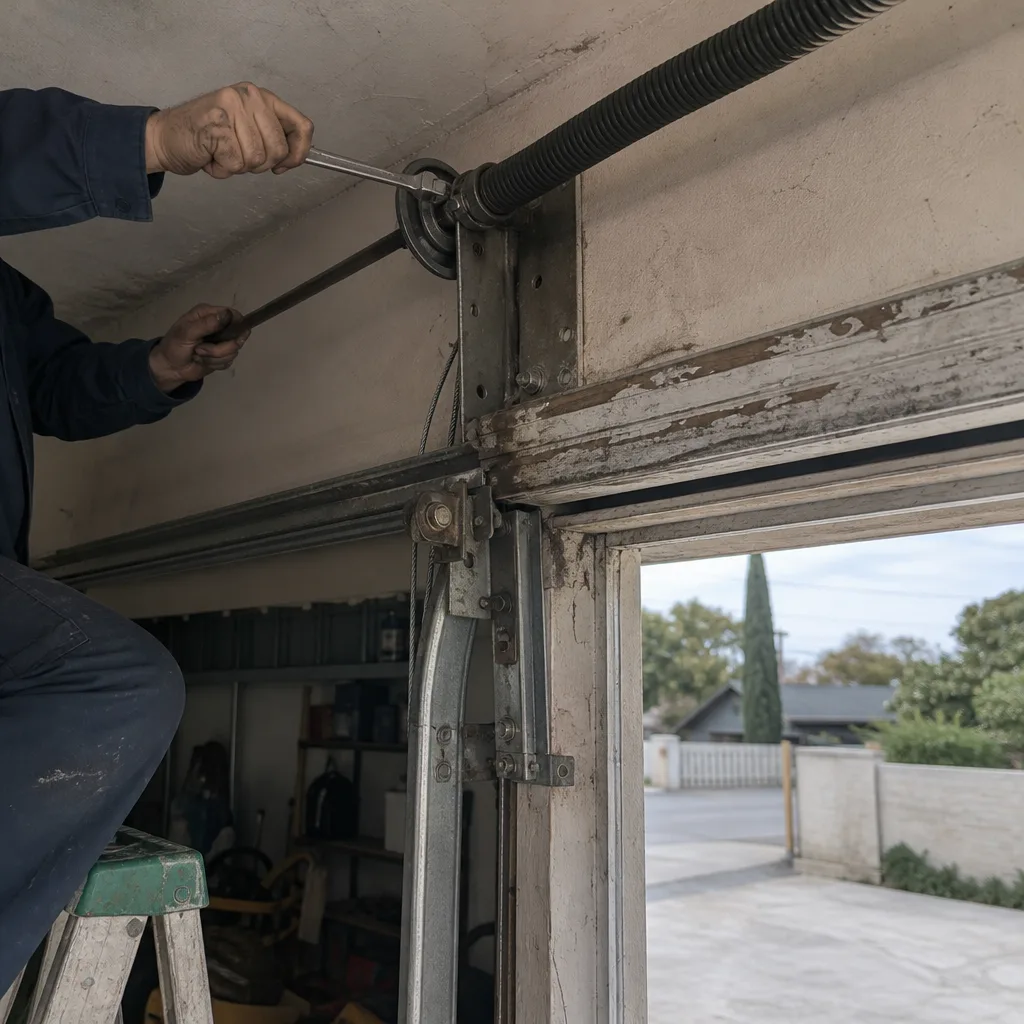
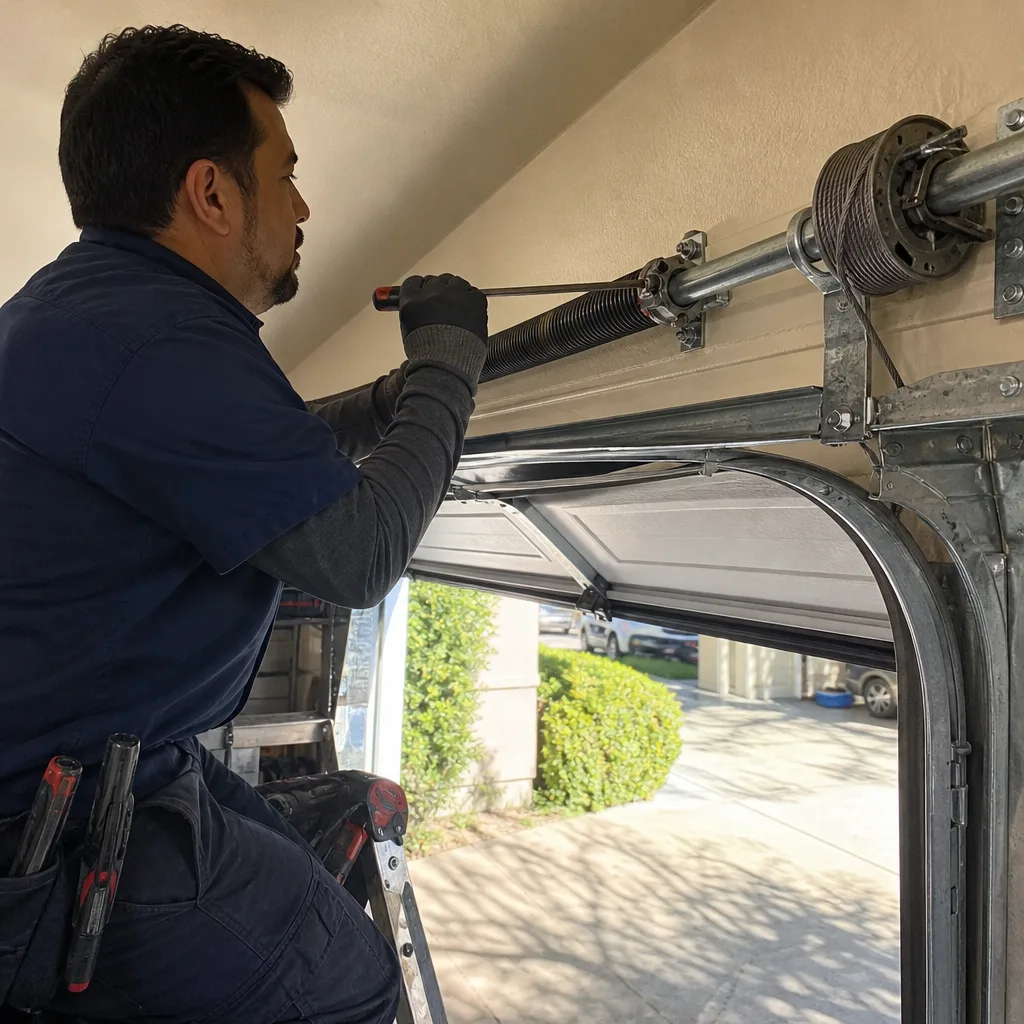
If you find a broken spring, a derailed door, or a track that’s visibly out of alignment, don’t try to fix it by hand. A torsion spring under tension carries enough stored energy to cause serious injury if it snaps during handling. That’s not a do-it-yourself situation. Our Garage Door Repair in Grandview page covers what a professional repair involves in the Los Angeles area, including how the spring is replaced safely and what it typically costs.
What to Do When the Power Is Out and You Need the Door Open Now
Power outages in Los Angeles arrive in several forms: scheduled public safety shutoffs during red flag wind events, local outages from overloaded transformers during heat waves, and unplanned failures during storms. Whatever the cause, the procedure is the same and it starts with the manual release.
- Confirm the door is closed. If it’s partially open, the springs are carrying partial tension and the door may drop when you release the opener.
- Pull the emergency release cord down and toward the door. The trolley carriage disengages from the drive belt. You’ll feel it release.
- Lift the door manually. Use the handle or the bottom edge. If it’s properly balanced, it should feel manageable and stay open on its own.
- Drive the car out. Close the door by hand if time allows. If you’re evacuating and seconds matter, prioritize the vehicle.
- Pull the cord again to re-engage when power returns. Run the opener once so the trolley carriage clicks back onto the belt.
If you have a battery backup opener, the door will open normally with the wall button or remote even without utility power. If you have a backup system and it doesn’t respond during an outage, the battery may be depleted. Most Genie and LiftMaster backup units beep or blink to signal a low battery. Check the battery once a year and replace it according to the manufacturer’s schedule, typically every three to five years.
One common failure we see during Los Angeles heat waves: the garage is so hot that the plastic gears inside an older opener expand and bind, which mimics a power failure even when the electricity is on. If your door won’t open but the opener hums, that’s a mechanical failure, not a power issue. Release the door manually and deal with the opener separately. For a new opener installation in Los Angeles, including battery backup models, the Garage Door Installation in Grandview page details what we do and what it costs.
Safety Rules That Apply to Every Situation
There is a line between being prepared and taking on a repair you shouldn’t. The torsion spring, the one that runs across a bar above the center of the door, holds an enormous amount of stored energy. When it breaks, it can release that energy all at once. When it’s nearing the end of its life, it can snap during ordinary operation. This is not the component to inspect closely or adjust yourself.
The same caution applies to the steel lifting cables. If a cable has slipped or frayed, the door is unstable. Do not attempt to re-seat it. Close the door only if it’s safe to do so, secure the area with a lock or a bar, and call a professional. These are the two components that send DIY-minded homeowners to the hospital every year, and the risk is not worth the savings.
For everything else, preparation is the point. Know your manual release. Test it at least twice a year. Keep a flashlight mounted in the garage. And if your door has never had a professional balance and safety inspection, make it part of your earthquake preparedness routine. Los Angeles is not a city where you guess at this. For help diagnosing issues, see our Garage Door Installation Troubleshooting: Common Problems and How to Fix Them.
Common Mistakes to Avoid
- Never pulling the red cord until you need it. It’s a simple mechanism, but the first time you use it should not be during an emergency. Practice in daylight, with the door closed, twice a year.
- Releasing the door while it’s open. The emergency release should only be pulled when the door is fully closed or fully open. Mid-open is how you drop a door and bend the tracks.
- Assuming your post-2019 opener automatically has battery backup. The mandate applies to openers sold and installed after July 2019, but older stock was sold through for years. Verify by unplugging your opener and testing it.
- Skipping the track and bracket inspection after an earthquake. Even a minor shake can shift the frame enough to bind the door. You won’t know until you test it, and you don’t want test day to be evacuation day.
- Trying to repair a broken spring or cable yourself. These components carry life-threatening tension. This is the single highest-risk DIY repair in the average home, and no instructional video makes it safe.
- Only teaching the primary driver the manual release. In a real emergency, the person at home may be a partner, a teenager, or a house sitter. Everyone who could be at the house alone needs to know the procedure.
- Running the opener on a damaged door after an emergency. If the door is misaligned or the cables are loose, the opener will strain against it and can strip its own gears or pull the door off its tracks. Inspect first.
When to Call a Professional
Call a garage door professional when the manual release reveals a door that’s heavy, unbalanced, or difficult to move by hand. Those are spring problems, and a professional needs to address them. Call when the tracks are visibly out of alignment, when the cables look frayed or slack, when the opener makes grinding noises, or when you determine that you don’t have a battery backup and want one installed before fire season. Call before the emergency, not during it. Doyle Garage Door Repair offers free estimates in Los Angeles, call (910) 858-8029. We tell you the price in writing before any work begins, and the technician who arrives will have already sent you a name, photo, and ID verification through the Threshold Standard before you open the door.
Frequently Asked Questions
Pull the red emergency release cord hanging from the trolley carriage on the overhead rail, then lift the door by hand using the handle or bottom edge. The cord disengages the carriage from the drive belt so the door moves freely on its tracks. Practice this once while the door is closed before you ever need it.
If your opener was installed after July 2019 and you bought it new in California, it should have a battery backup. Test it by unplugging the opener and pressing the wall button. If the door opens, you have backup power. If it doesn’t, you don’t, and a retrofit or opener upgrade is worth considering before the next public safety shutoff.
Check the door’s balance by disconnecting the opener and lifting the door manually. Inspect the vertical and horizontal tracks for new gaps or bends, check the lift cables for slack or fraying, and run a full open-and-close cycle listening for grinding. Any misalignment or unusual resistance warrants a professional inspection before regular use.
Yes, and they should. Any adult or responsible teenager who can safely reach the red cord while standing on a step stool should practice releasing and re-engaging the door. In an evacuation, the person at home may not be the primary driver, and every able household member should know the procedure without hesitation.
A seismic bracing kit reinforces the horizontal tracks and ties them more securely to the ceiling, keeping the door on its tracks during shaking. Los Angeles homeowners with wood-framed garages built before the 1990s benefit most, but any door in a seismically active area is a candidate. The kit installs in about an hour.
Expect to pay between $450 and $800 for a new battery-backup opener installed in Los Angeles, depending on the brand, horsepower, and whether old equipment needs removal. Call (910) 858-8029 for a written quote before any work begins, estimates are free and the price is always set before we start.
The Bottom Line
A garage door that only works on electricity is a vulnerability in Los Angeles, where power shutoffs, earthquakes, and wildfire evacuations are not hypotheticals. Watch for Garage Door Installation Warning Signs Every Homeowner Should Know before they become emergencies. The single most important step is learning your manual release procedure now, in daylight, with the door closed. Add a battery backup opener if you don’t already have one. Reinforce your tracks if your home predates modern seismic standards. And practice the procedure with every household member twice a year. None of this is complicated, but all of it is skipped until a crisis forces it at the worst possible moment.
Written by Aaron Teague, Owner at Doyle Garage Door Repair home, serving Los Angeles since 2001.