
Last updated October 9, 2026
Full 25-point door and opener safety check with every visit - springs, cables, rollers, tracks, and your LiftMaster or Chamberlain opener included
You get a price before we start. It does not change when the truck arrives.
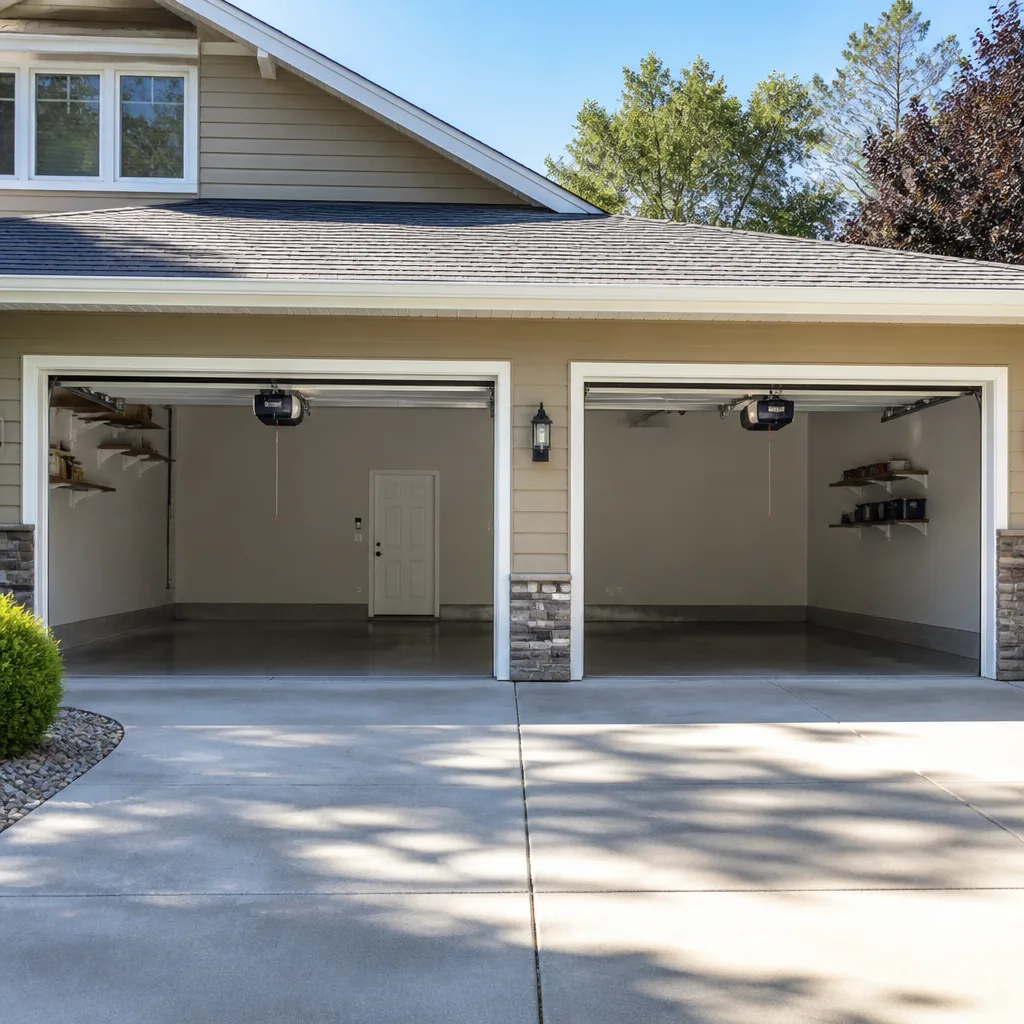
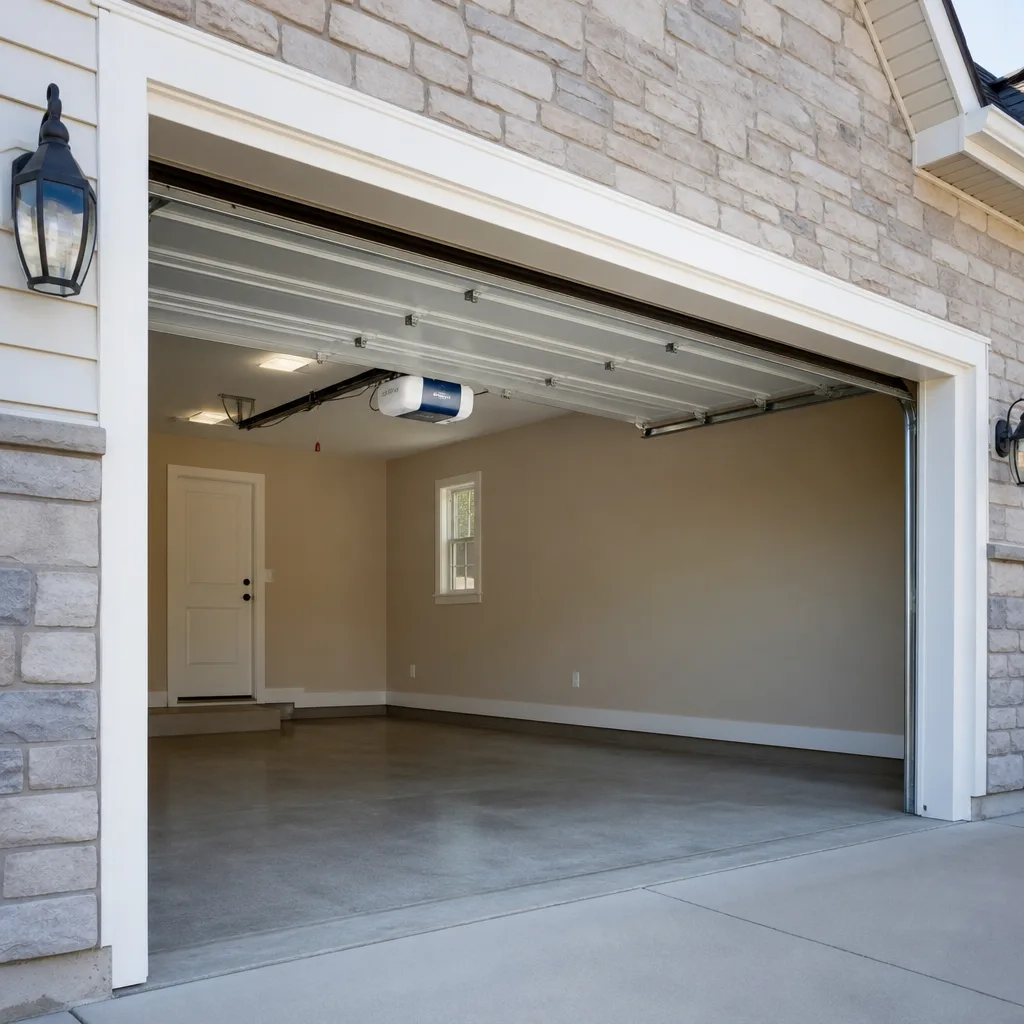
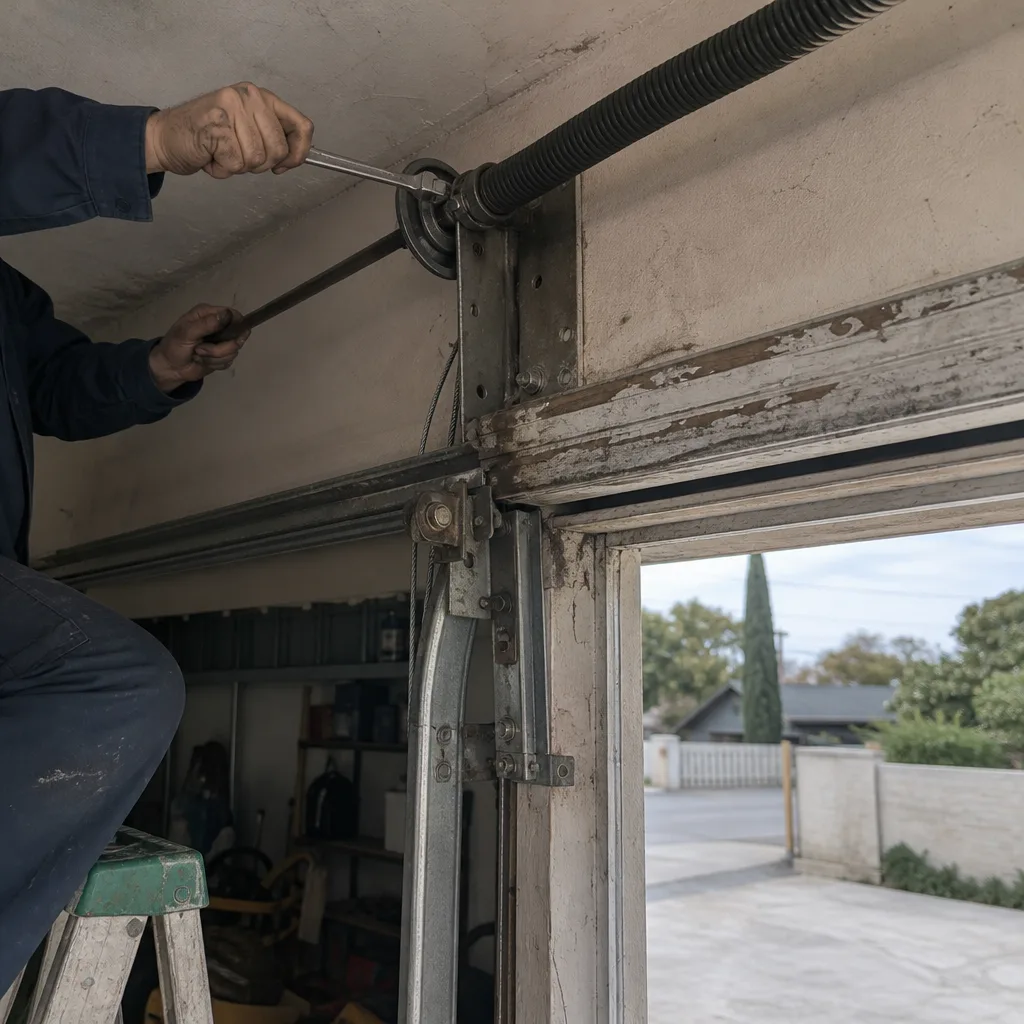 Before
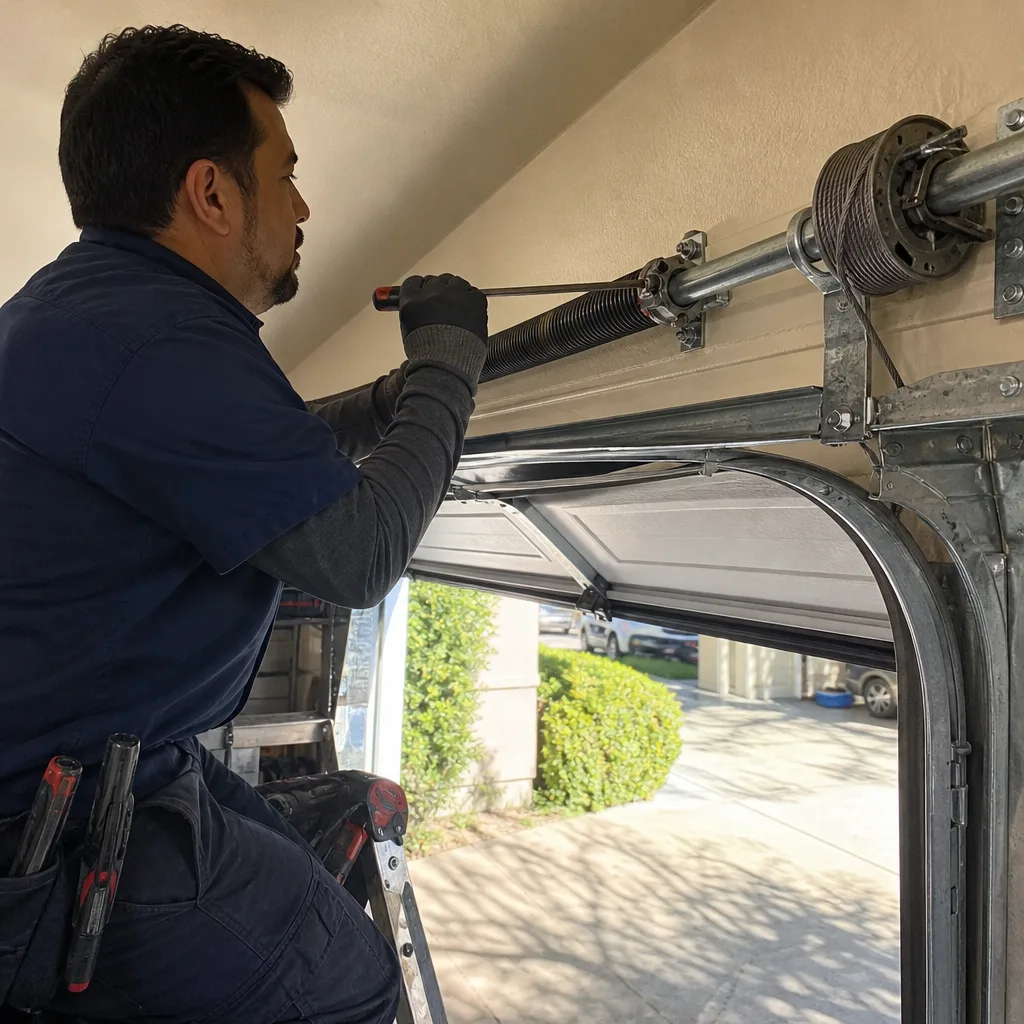 After
After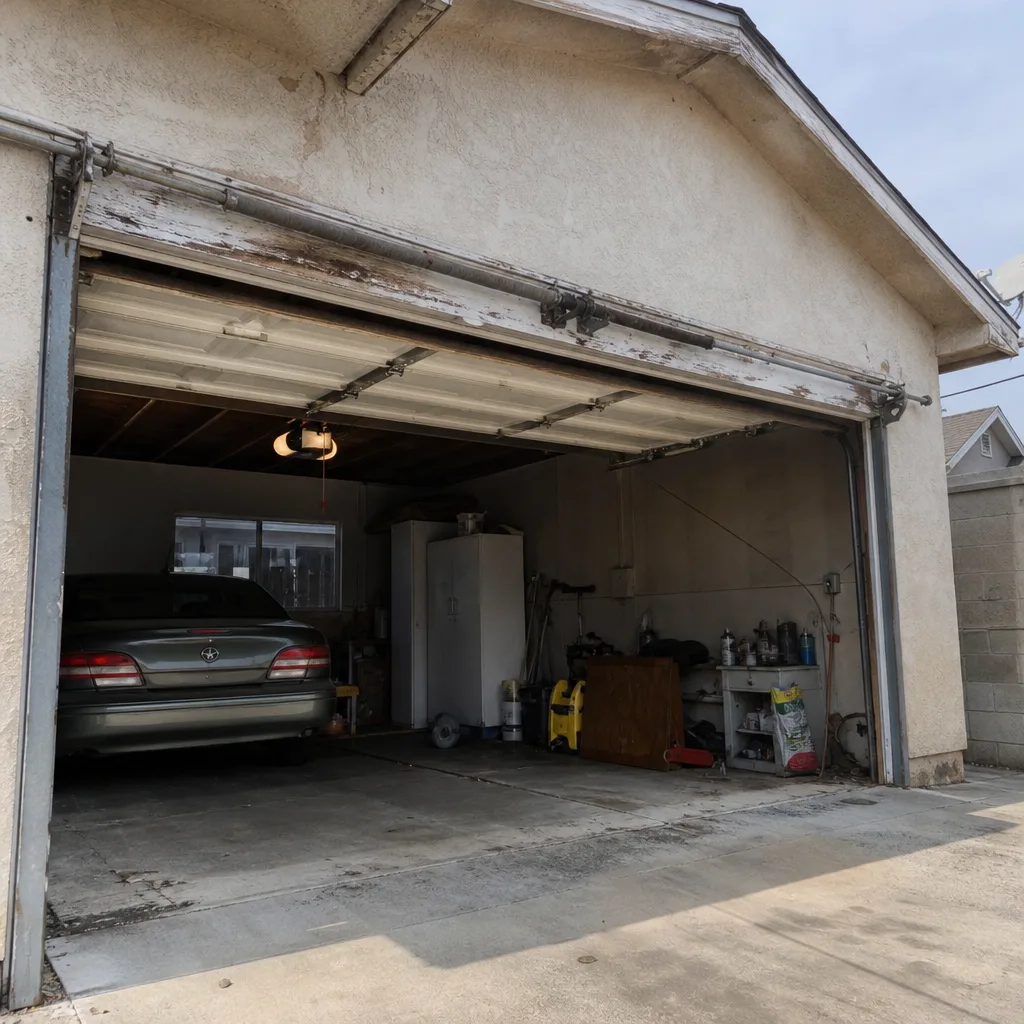 Before
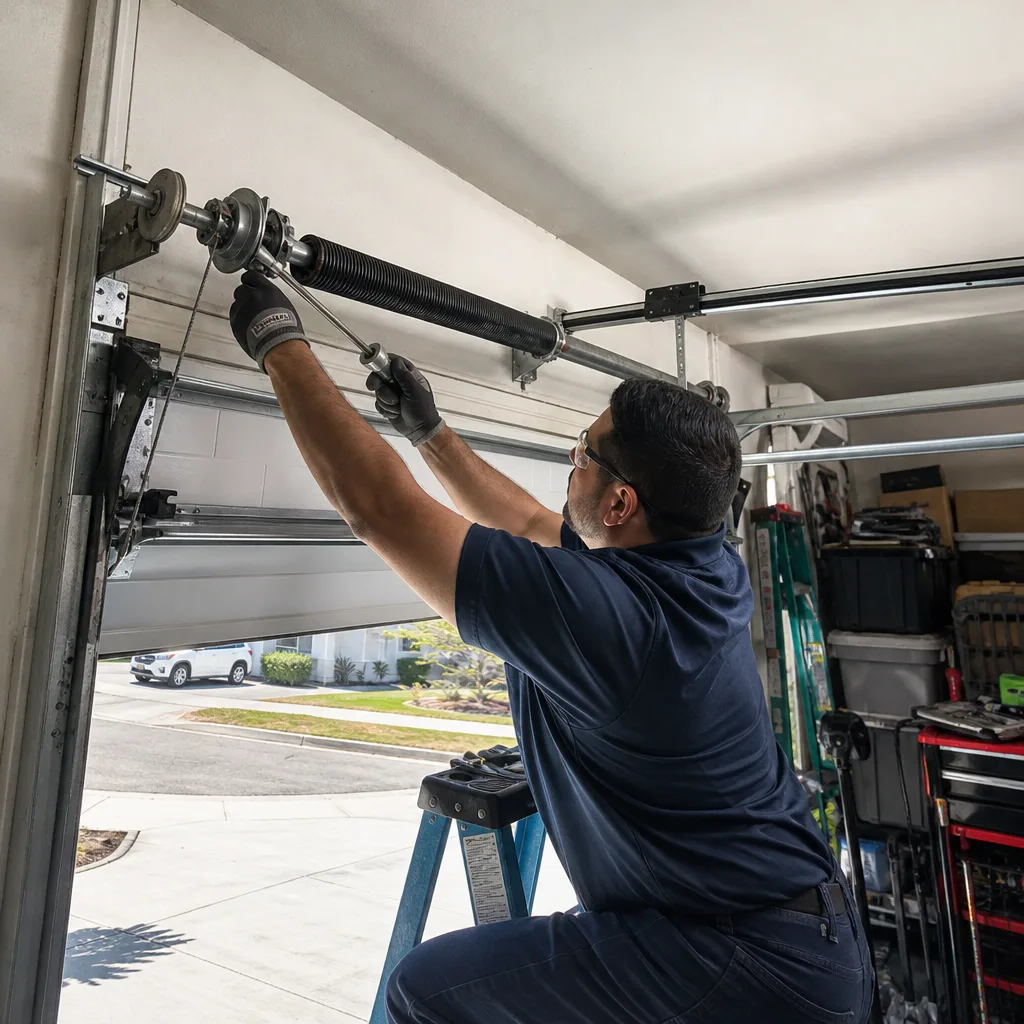 After
After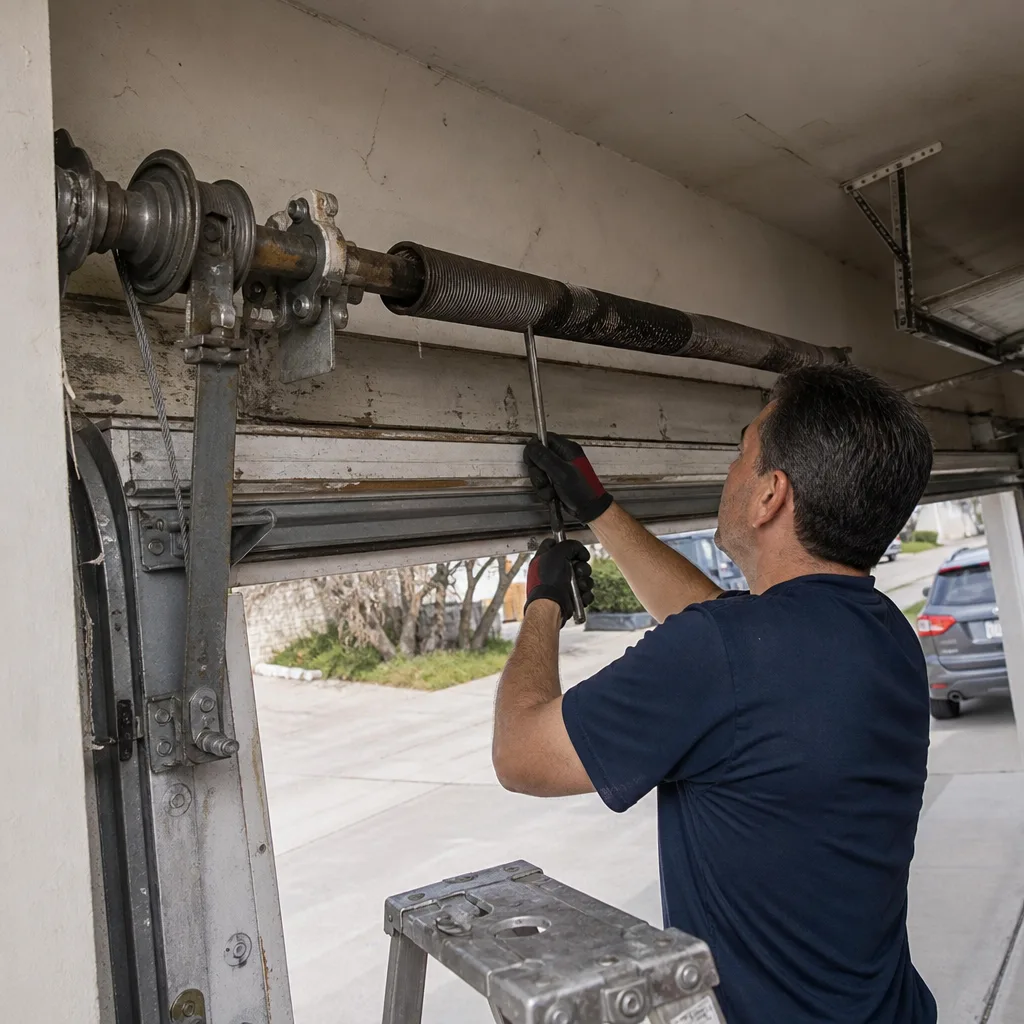 Before
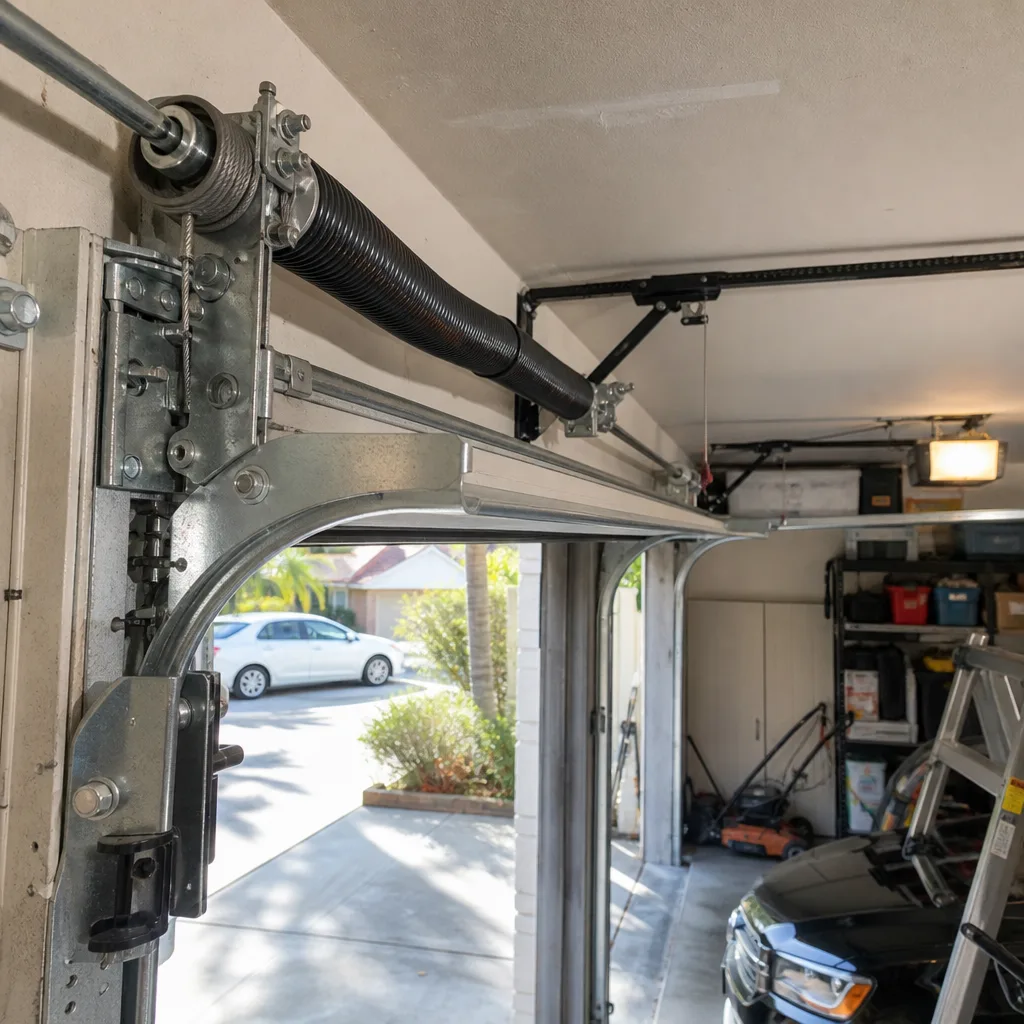 After
AfterGarage Door Installation Maintenance Schedule: What to Do and When
Most installers hand you a remote and leave without mentioning that every new garage door has a 30-day break-in period where the cables seat into the drum grooves, the rollers wear into the track, and the fasteners settle. That single oversight is the most common reason a good installation starts performing like a bad one within a year. In Los Angeles, where garage doors cycle open and closed more times per day than nearly any other market in the country, the stakes are higher than most homeowners realize. This guide, along with our Garage Door Installation Troubleshooting: Common Problems and How to Fix Them resource, lays out exactly what to check, when to check it, and what sounds and behaviors are normal versus what needs a technician’s attention.
Quick Answer
A newly installed garage door needs a 30-day check of fasteners, cable seating, and spring tension, then lubrication at the 6-month mark, and a full inspection including weatherstripping and balance at 12 months. Skipping the 30-day check is the single biggest cause of premature wear on new doors. After year one, shift to a twice-a-year rhythm: lubricate every 6 months and do a full visual and balance inspection annually.
Table of Contents
- The 30-Day Break-In Period: What Actually Happens
- The 30-Day Post-Installation Checklist
- First-Year Schedule for a New Door
- Break-In Noise vs. Installation Problem Noise
- How Los Angeles Heat Affects a New Door’s First Season
- How Your Maintenance Log Protects Your Guarantee
- Common Mistakes to Avoid
- When to Call a Professional
- Frequently Asked Questions
- The Bottom Line
The 30-Day Break-In Period: What Actually Happens
When a new garage door goes up on the tracks, nothing has settled into its final position. The torsion spring, the large coil mounted above the door that does most of the lifting, is set to a specific tension on day one. The steel cables that run along each side of the door need to seat fully into the grooves of the drum, the spool at the end of the spring shaft. The rollers need to wear a fraction of a millimeter into the track surface. The lag bolts holding the wall brackets to the framing need to settle under repeated load. None of this is a defect. It is physics. But it means the door you have on day 30 is very slightly different from the door you had on day one, and that difference shows up as things no longer being quite where the installer left them.
In our experience with Garage Door Installation services across Los Angeles, from Sherman Oaks to Silver Lake to the Westside, we see the same pattern: doors that get a 30-day check stay in spec for years. Doors that skip it drift, and the drift compounds. A bracket that shifts by an eighth of an inch becomes a track misalignment that chews through rollers. A cable that slips half a groove becomes a door that hangs slightly uneven and strains the spring. None of this requires a major repair at the 30-day mark. It requires a quick correction that takes a technician twenty minutes and costs less than a service call on most doors.
Aaron Teague, who has run Doyle Garage Door Repair home since 2001, puts it plainly: the 30-day check is not optional if you want the door to hit its full service life. A quality door installed correctly should last 15 to 20 years in Los Angeles conditions. Skipping the break-in check is the fastest way to shave a decade off that number.
The 30-Day Post-Installation Checklist
At the 30-day mark, a handful of specific items need attention. Here is the list we work through on every new door we install, and the list you should ask any technician to complete if someone else did the installation.
- Re-check all lag bolt connections at the wall bracket. The wall bracket is the metal plate bolted to the framing above the door opening. It anchors the spring assembly and takes the full load of the door every cycle. After 30 days of up-and-down movement, those bolts can loosen by a quarter turn or more. A technician should torque every one of them and confirm the bracket is still flush against the wall. In older Los Angeles homes with older framing, this is especially important because the wood may be drier and more prone to settling.
- Verify cable seating in the drum grooves. The lifting cables spool around a drum at each end of the spring shaft. If a cable has ridden up out of its groove even slightly, the door will soon start to bind or hang uneven. This is a two-minute visual check that prevents a much more expensive cable replacement down the line.
- Confirm door balance with the manual disconnect test. Pull the red emergency release handle to disconnect the door from the opener, then lift the door manually to waist height. It should stay put without drifting up or down more than a few inches. If it falls, the spring tension needs adjustment. If it rises, the spring is over-wound. Either condition wears out the door and the opener prematurely.
- Listen for any new noise that was not present on day one. Some break-in noise is normal, which we cover in a section below. But a new grinding or popping sound is not break-in. It is a signal that something is contacting something it should not be contacting, and the sooner that is identified, the cheaper the fix.
- Check the safety reversal system. Place a 2×4 flat on the floor in the door’s path and close the door. It should reverse within two seconds of contacting the wood. This is a basic safety feature required by law, and it should be verified on day one and again at the 30-day check.
One thing worth stating clearly: none of this is dangerous work for a trained technician, but the torsion spring itself is under enormous tension and should never be adjusted by a homeowner. The spring on a standard two-car Los Angeles garage door holds enough stored energy to cause serious injury if mishandled. A professional with the correct winding bars and training is the only person who should touch it. Our technicians at Doyle Garage Door Repair are background-checked and identity-verified under the Threshold Standard, and every one of them knows that the spring is a professional’s job, not a DIY project.
First-Year Schedule for a New Door
Here is the full first-year maintenance rhythm for a newly installed garage door in Los Angeles. This schedule applies whether your door is a steel Clopay, an Amarr, or a wood custom unit, and whether your opener is a LiftMaster, Chamberlain, or Genie.
Day 1: Baseline
The installer should walk you through the door’s operation, hand you a written record of what was installed, and confirm the safety reversal is working. You should know exactly what brand and model of spring, door, and opener are on your home, and you should have the installer’s contact information in writing. If the installer does not offer a written price before the work starts, that is a red flag: the final invoice should never be a surprise.
Day 30: Break-In Check
This is the checklist in the section above: lag bolts, cable seating, balance test, noise check, safety reversal. Plan for about 20 to 30 minutes of technician time. Some installers include this in the original installation price; if you are working with us, it is part of the job.
Month 6: Lubrication
At six months, lubricate the torsion spring, the rollers, and the hinges. Use a white lithium grease or a garage-door-specific spray lubricant. Do not use WD-40, which is a solvent and will strip whatever lubrication is there. Apply a thin coat to the spring along its full length, a drop or two on each roller bearing, and a drop on each hinge pivot. In Los Angeles, where the air is dry and dust is a constant, six months is the right interval. Going longer invites squeaks and accelerated roller wear.
Month 12: Full Inspection
At the one-year mark, do a complete inspection that includes the 30-day checklist plus weatherstripping compression, track alignment, and opener force settings. Check the bottom weatherstripping for compression: close the door and look for daylight between the seal and the floor. In Los Angeles, UV exposure and heat can stiffen and crack that rubber seal within a single year if the door faces direct afternoon sun. Also check the opener’s force settings: the door should reverse when it meets resistance, but it should not reverse from a stiff breeze. If the settings have drifted, it is usually a five-minute adjustment.
After year one, the schedule simplifies: lubricate every six months, and do a full inspection every year. That rhythm will keep most doors running quietly and reliably for their full service life.
Break-In Noise vs. Installation Problem Noise
New garage doors make noise. A certain amount of it is normal and a certain amount of it is not, and the difference is worth learning because it tells you whether to relax or pick up the phone.
Normal break-in noise is a light creak or a faint squeak from the rollers as they wear into the track surface. It is intermittent, it is quiet enough that you can hold a conversation over it, and it fades over the first month or two. You might hear a soft ticking from the spring as it settles into its mounting brackets, and that fades too. On a new Chamberlain or LiftMaster opener, you will hear a low electrical hum during operation, which is the motor doing its job.
Problem noise is different in character. A grinding sound, like metal dragging on metal, usually means the track is misaligned or a roller is binding. A popping sound, like a knuckle cracking, often comes from a cable that is not seated properly in the drum groove, or from the spring binding on its shaft. A rhythmic thumping during operation usually means a roller is flat-spotted or a hinge is loose. Any of these sounds on a door under a year old means the installation needs a corrective visit, and you should review our Garage Door Installation Warning Signs Every Homeowner Should Know to catch issues early.
Here is a quick reference:
- Light creak or faint squeak, fading over time: normal break-in. Lubricate at month 6.
- Grinding or dragging: track alignment or roller issue. Call a technician.
- Popping or cracking: cable seating or spring binding. Call a technician.
- Steady thumping: flat-spotted roller or loose hinge. Call a technician.
- Normal motor hum with no mechanical noise: healthy operation. Nothing to do.
If you are unsure which category your noise falls into, a live person at Doyle Garage Door Repair answers the phone 24/7 at (910) 858-8029. Describe the sound in your own words; we will tell you honestly whether it needs a visit or whether it will settle on its own.
How Los Angeles Heat Affects a New Door’s First Season
Los Angeles is not a single climate. A new door in Pacific Palisades, where the marine layer keeps things mild, has a very different first year than a new door in Woodland Hills, where summer temperatures routinely pass 100 degrees. But across the whole basin, three heat-related factors affect every new door’s first season.
UV exposure on the bottom weatherstripping. The rubber or vinyl seal at the bottom of the door is the first component to show age in Southern California. If your door faces west or south, that seal bakes in direct sun for hours a day. Within a year it can stiffen, crack, and stop compressing. The check is simple: close the door on a sunny day and look for light under the seal. If you see it, the seal needs replacing. A fresh seal keeps out dust, water, and pests, and it protects the door’s bottom panel.
Thermal expansion of steel panels. Steel expands as it heats, and a dark-colored door in direct sun can grow measurably across its width. The track system is designed to accommodate this, but only if the installation left the correct clearance. Too tight, and the door binds in hot weather. Too loose, and it rattles. A good installer accounts for the specific panel material and color at installation, but the 30-day check is the moment to verify the clearance is still correct after the first stretch of hot days.
Spring tension drift in temperature swings. Torsion springs are tuned at installation temperature. A swing of 40 degrees between morning and afternoon, common in inland Los Angeles, affects the spring’s performance slightly. This is normal and does not require adjustment every season, but it is one more reason the manual balance test is worth doing at the 30-day and 12-month marks. If the balance is off, a quarter-turn adjustment is all it usually takes.
We have installed doors across Garage Door Installation in Grandview and the wider Los Angeles market, and the doors that hold up longest are the ones where the homeowner paid attention during the first summer. Heat does not damage a well-installed door by itself. It damages a door whose break-in adjustments were skipped.
How Your Maintenance Log Protects Your Guarantee
Every repair at Doyle Garage Door Repair carries the 365-Day Done Right Promise: 365 days from the date of repair, if it fails, we come back and make it right at no charge. That guarantee is written, not verbal, and it applies to every repair we do. A new installation also carries a written warranty from the manufacturer on the door and the opener, typically running several years for the panels and the opener motor.
What many homeowners do not realize is that a simple maintenance log protects both of those promises. Here is why: if a door fails and the manufacturer or installer reviews the claim, the first question is usually about maintenance. Was the door lubricated at the proper intervals? Was the balance checked? Was the weatherstripping maintained? A one-page log with dates and quick notes answers those questions before they become disputes.
Your log does not need to be elaborate. A notebook page or a note in your phone works. Write down:
- Installation date and installer name
- Door brand, model, and color
- Opener brand, model, and date
- Lubrication dates
- Inspection dates and notes
- Any repairs, with the date and a short description
That is the whole system. Ten minutes a year. In exchange, you have a written record that backs up your guarantee claim if anything ever fails. The relationship between your maintenance and the guarantee is straightforward: a door that was lubricated on schedule and inspected annually is a door that gets covered without argument. A door with no record is a door that gets questions. Keep the log.
Common Mistakes to Avoid
- Skipping the 30-day check. Most homeowners assume the installation was the finish line. It was not. The 30-day check catches the small drift that becomes a big repair, and skipping it is the fastest way to shorten the door’s life.
- Using WD-40 on the spring and rollers. WD-40 is a solvent, not a lubricant. It strips grease and leaves moving parts drier than before. Use white lithium grease or a garage-door-specific lubricant.
- Ignoring a balance problem because the opener still works. An opener can mask a balance problem for months by muscling the door up and down. That burns out the opener motor and the spring together. Do the manual balance test annually.
- Waiting until the weatherstripping fully crumbles to replace it. A cracked seal lets in dust, water, and pests long before it falls apart. In Los Angeles, check it every spring after the first hot stretch.
- Attempting DIY spring adjustment. The torsion spring holds enough stored energy to cause serious injury. This is a professional’s job, full stop. Call a technician with the proper training and winding bars.
- Not keeping a maintenance log. A ten-minute annual habit that protects your guarantee. Skipping it costs you leverage if a warranty claim ever arises.
- Ignoring a new noise and hoping it fades. Break-in creaks fade; grinding and popping do not. The longer a real problem runs, the more components it takes with it.
When to Call a Professional
Some things on a garage door are homeowner territory: lubrication, the balance test, the weatherstripping check. Some things are not. Call a professional if the torsion spring breaks or shows a visible gap in the coil, if the cables are frayed or off the drum, if the track is visibly bent or out of alignment, if the opener motor runs but the door does not move, or if you hear grinding or popping that does not fade. These are not maintenance items; they are repair items, and the sooner they are addressed, the cheaper the fix. Doyle Garage Door Repair offers free estimates in Los Angeles. Call (910) 858-8029 any time, day or night, weekends and holidays included, and a live person will answer.
Frequently Asked Questions
A new garage door needs a 30-day break-in check of fasteners, cable seating, balance, and safety features, then lubrication at month 6, and a full inspection at month 12. For more guides & resources, visit our blog. After year one, lubricate every 6 months and inspect annually. Call (910) 858-8029 to schedule a 30-day check with a Doyle Garage Door Repair technician.
A standard garage door tune-up in Los Angeles typically costs $89 to $149, which covers lubrication, balance testing, safety reversal verification, and a visual inspection of all hardware. Repairs identified during the tune-up are quoted in writing before any work begins. Call (910) 858-8029 for an exact price on your door.
Yes, lubrication is a homeowner job. Use white lithium grease or a garage-door-specific spray on the torsion spring, rollers, and hinges, and skip WD-40, which strips lubrication. The spring itself should not be adjusted by a homeowner, but lubricating it is safe when the door is closed and the opener is disconnected.
A quality steel door installed correctly in Los Angeles should last 15 to 20 years, with the opener typically lasting 10 to 15 years. The biggest variables are installation quality, maintenance consistency, and exposure: a west-facing door in direct afternoon sun will wear its weatherstripping and finish faster than a shaded or north-facing door.
Yes. Doyle Garage Door Repair is factory-trained on all major brands, including LiftMaster, Chamberlain, Genie, Raynor, and others. We stock parts for the most common models on our trucks, which means most opener repairs are completed in a single visit in the Los Angeles area.
No. The price is written down and handed to you before any work starts, and that number does not change unless you approve additional work in writing. Every repair also includes the 365-Day Done Right Promise, and a free second visit if the repair fails within that year. That is the policy on every job, every time.
The Bottom Line
A new garage door in Los Angeles is a 15-to-20-year investment, and the first 30 days of that investment matter more than most homeowners realize. Do the break-in check at day 30, lubricate at month 6, inspect fully at month 12, and then settle into a simple twice-a-year rhythm. Keep a one-page maintenance log so your guarantee is always backed by a record. And when something sounds or feels off, call a professional before a small drift becomes a big repair. For your free estimate, call Garage Door Repair in Grandview at (910) 858-8029 any time, or reach out for Garage Door Opener Repair in Grandview if the opener is the problem. A live person answers, day or night.
Written by Aaron Teague, Owner at Doyle Garage Door Repair, serving Los Angeles since 2001.