
Last updated October 9, 2026
Full 25-point door and opener safety check with every visit - springs, cables, rollers, tracks, and your LiftMaster or Chamberlain opener included
You get a price before we start. It does not change when the truck arrives.
 Before
 After
After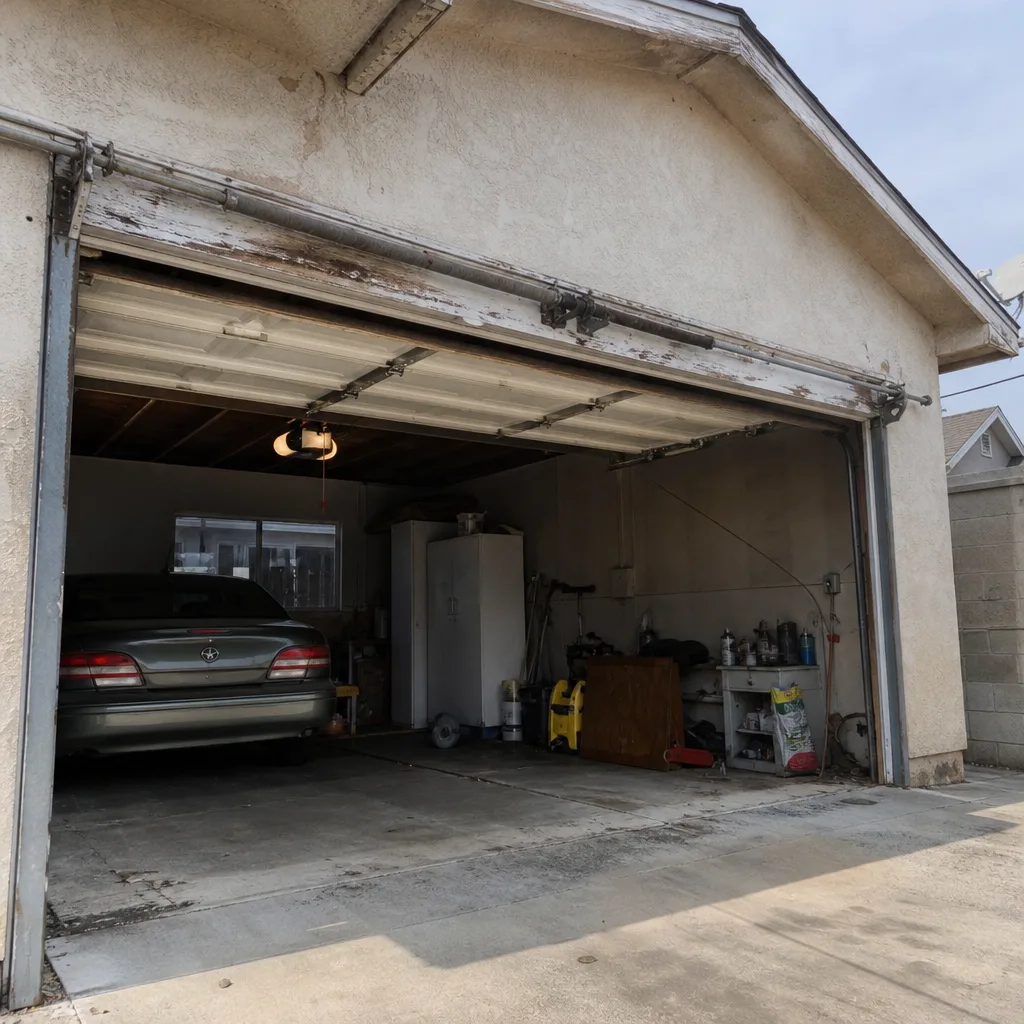 Before
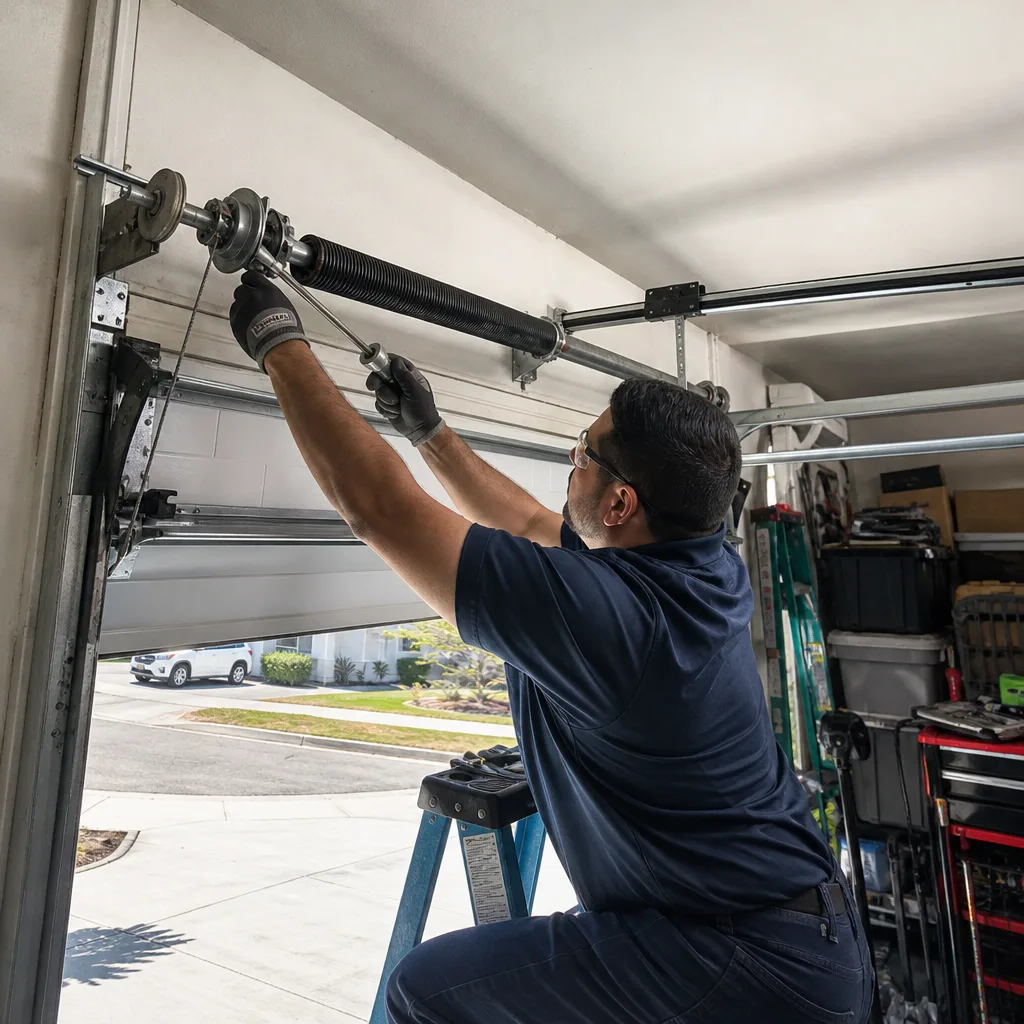 After
After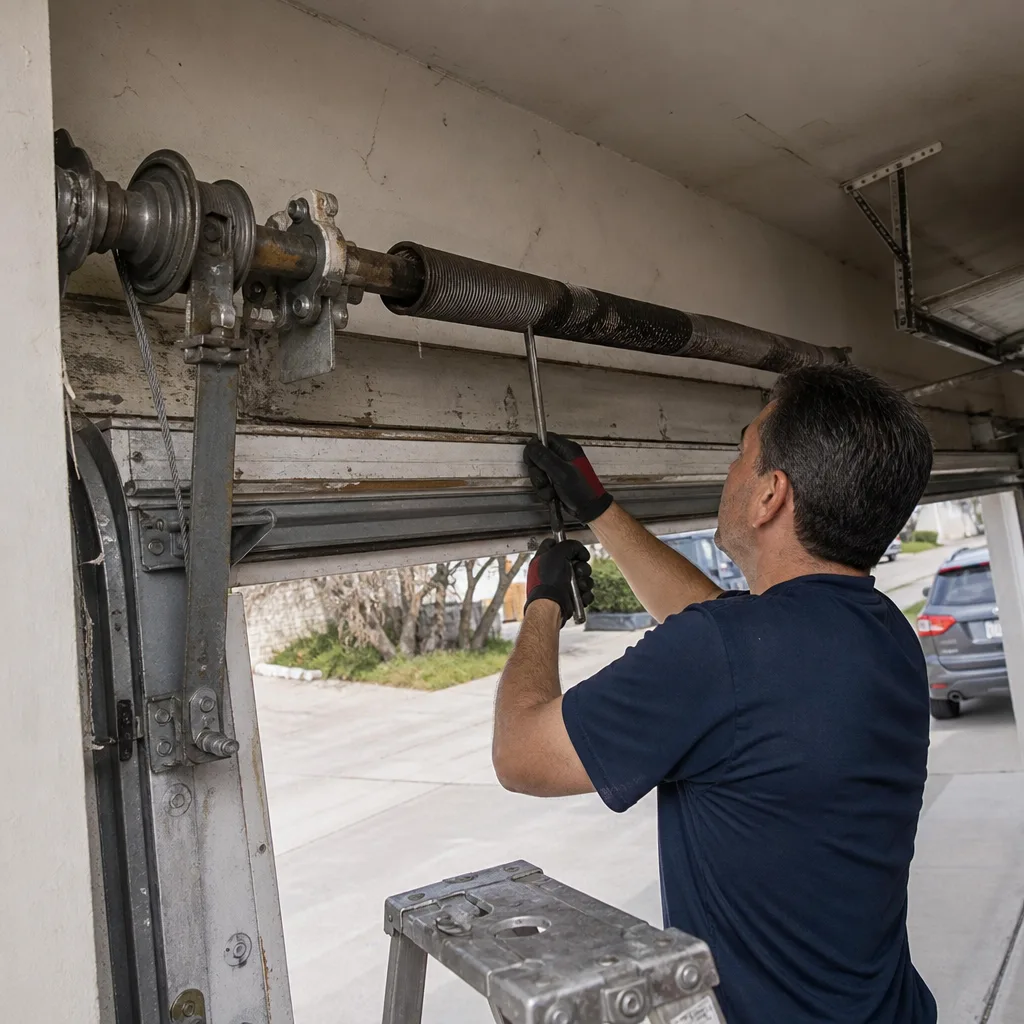 Before
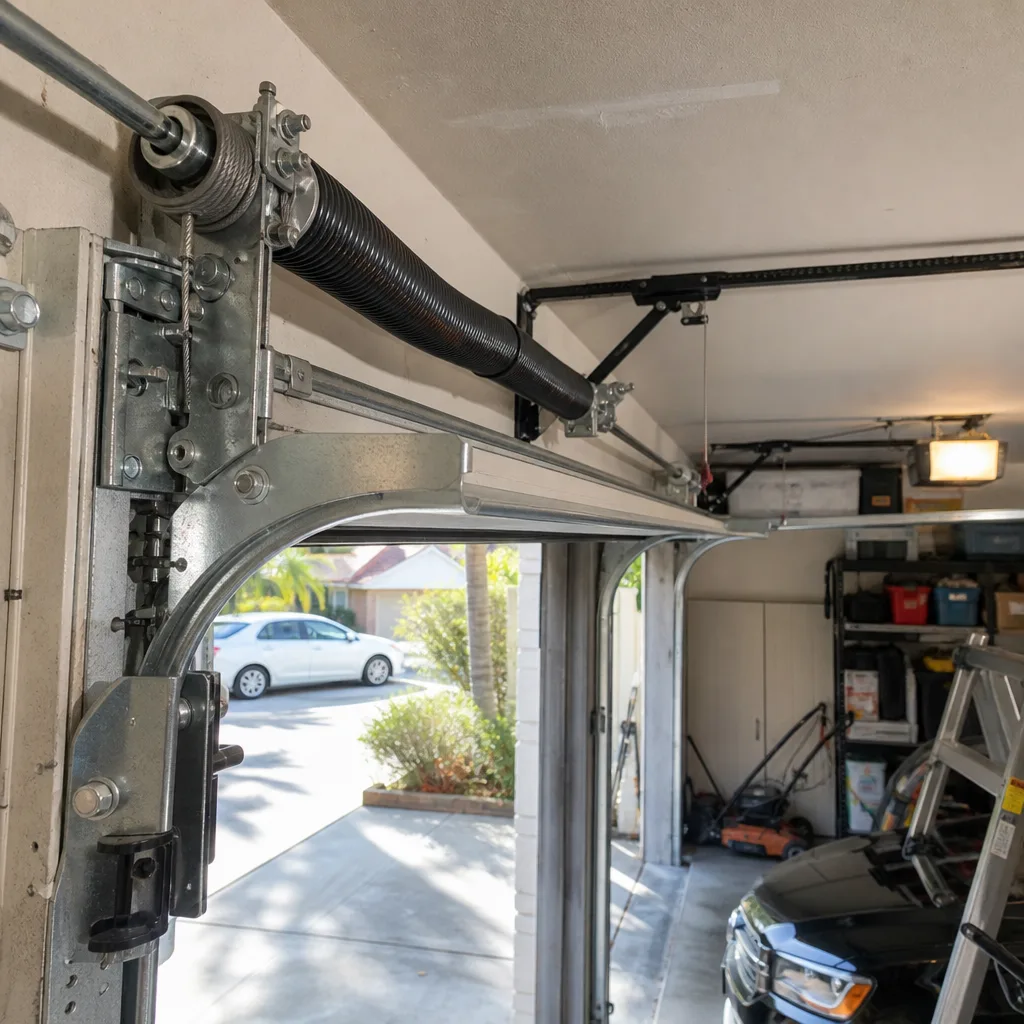 After
AfterGarage Door Warning Signs: A Los Angeles Homeowner’s Reference Guide
A snapped torsion spring doesn’t announce itself the morning it fails. It spent the prior month making a grinding noise you decided wasn’t worth a call. That single spring failure will cost more to fix than the inspection you skipped, and in Los Angeles, where garages often double as storage rooms and workshops, a suddenly inoperable door is more than an inconvenience. It’s a hole in your home’s security. Most garage door failures in Los Angeles are preceded by at least two weeks of visible and audible warnings that homeowners write off as “just how it sounds.” This guide gives each warning sign a name, a cause, and a repair urgency rating so nothing gets ignored until it becomes a safety emergency. Aaron Teague, who founded Doyle Garage Door Repair in 2001, has spent two decades walking Los Angeles homeowners through exactly these signals before they turn into crises.
Quick Answer
The most common garage door warning signs in Los Angeles are grinding or screeching sounds during operation, visible gaps or kinks in the torsion spring, a door that opens unevenly or jerks on the way up, slow response times from the opener, and photo-eye sensors that reverse the door for no apparent reason. Any of these means the door needs professional attention sooner rather than later. A trained technician can diagnose the issue in under an hour, and in most cases the fix is far less expensive when caught early.
Table of Contents
- Torsion Spring Warning Signs: The Gap, The Kink, and The Grind
- Loud vs. Slow vs. Uneven: Three Different Problems, Three Different Urgency Levels
- Photo-Eye Sensor Misalignment: LA’s Most Common False Alarm
- Earthquake Micro-Shifts: Why Your LA Door Tracks Like It Has Worn Rollers (But Doesn’t)
- Roller and Hinge Wear: The 7-Year Parts Los Angeles Homeowners Forget
- Opener Warning Signals: Chain Slap, Flickering Lights, and Reversing Doors
- Security and Structural Warnings: Loose Panels, Bent Tracks, and Warped Sections
- Who Shows Up at Your Door Matters: Setting a Baseline for Service Calls
Torsion Spring Warning Signs: The Gap, The Kink, and The Grind
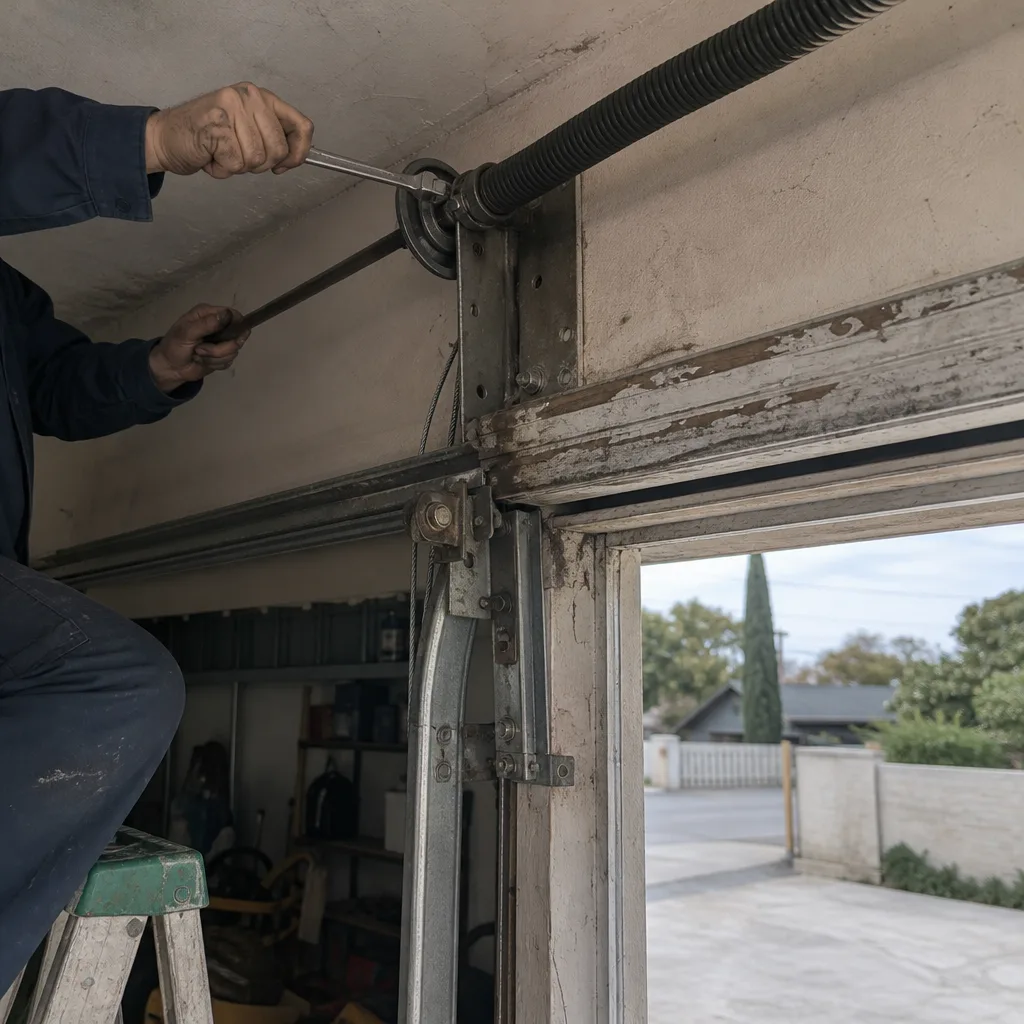
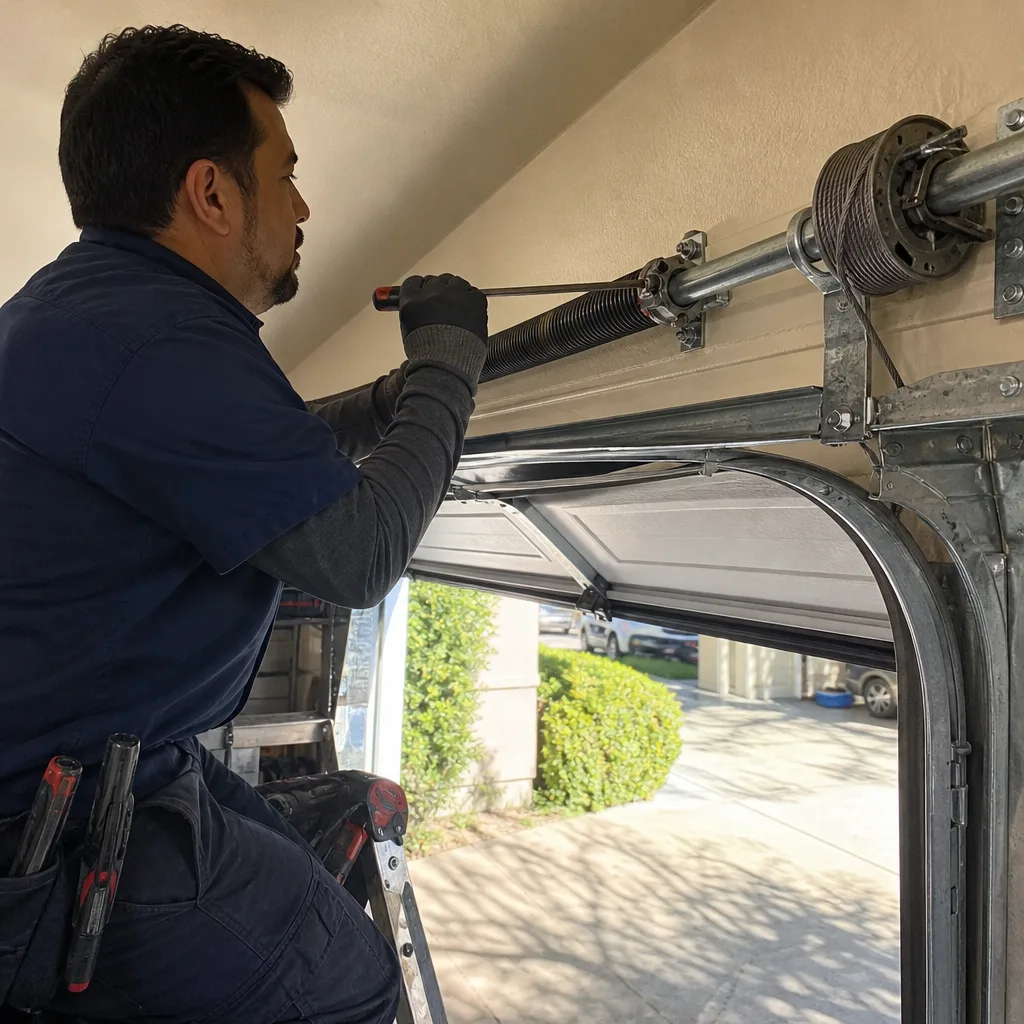
The torsion spring is the large coil mounted horizontally above your garage door. It does most of the lifting, counterbalancing the weight of a door that can easily reach 150 pounds or more. When it starts to fail, it gives you three distinct warnings before it snaps.
The Gap
A healthy torsion spring has coils that sit flush against each other, like a tightly wound slinky. When you see a visible gap between coils, roughly the width of a quarter or more, the spring has started to lose tension. This happens gradually as the metal fatigues. In Los Angeles, where many garage doors are used twice a day or more for commute parking, this fatigue accumulates faster than in cities where garage doors are opened once daily. A gap means the spring is working harder than it should. The door still operates, but you’re asking a weakening component to lift hundreds of pounds. It’s a warning with a short fuse.
The Kink
A kink is a visible bend or wave in the coil line. It’s more serious than a gap. A kinked spring has already begun to deform, which means the metal is compromised. If you see a kink, stop operating the door manually and do not use the opener. Call a technician. The spring can snap without additional warning, and when it does, the release of stored tension is violent. We have seen spring failures in Los Angeles dent car hoods, shatter glass, and cause serious lacerations. There is a documented injury risk with DIY spring replacement, which is why this is one repair that should never be attempted by a homeowner. The tools required are specialized, and the margin for error is effectively zero.
The Grind
When a torsion spring begins to fail, it often creates a grinding or creaking sound as the coils rub against each other during opening and closing. Homeowners frequently describe it as “the sound of metal dragging across metal.” That’s roughly accurate. The noise comes from coils that are no longer seating correctly. A spring that grinds today will often snap within two to four weeks. For reference, How Long Does Garage Door Repair Take? Timelines and What to Expect explains that a broken torsion spring replacement in Los Angeles typically costs between $180 and $340 depending on the spring size, and most companies can complete the repair the same day. By contrast, the inspection call to identify a grinding spring is usually free or minimal. The math is simple.
Loud vs. Slow vs. Uneven: Three Different Problems, Three Different Urgency Levels
Homeowners in Los Angeles often lump all unusual garage door behavior into one category: “something’s wrong with the door.” But loud, slow, and uneven each point to a different component, and each carries a different urgency level. Knowing which is which helps you decide whether to call today or next week.
A Loud Door (Urgency: Moderate)
A loud door is usually caused by dry rollers, worn bearing plates, or a chain that needs lubrication or tension adjustment. Rollers are the small wheels that travel inside the vertical and horizontal tracks. In Los Angeles, the dry air and dust from Santa Ana winds can strip lubrication from rollers faster than in humid climates. A door that squeals or screeches is telling you the rollers need attention. This is not an emergency, but it should be addressed within a month. Left alone, dry rollers can wear unevenly, which then puts stress on the hinges and track. What starts as a $40 roller replacement can become a $200 hinge and bracket repair.
A Slow Door (Urgency: Moderate to High)
A slow door typically points to the opener, not the door itself. The limit switch, which tells the motor how far to travel, can drift over time. The motor may be struggling against a door that has become harder to lift due to spring fatigue. Or the opener’s internal gears may be wearing out. If your door opens noticeably slower than it did six months ago, and particularly if it slows down midway through the cycle, call a technician. A slow door is often an early indicator of spring failure or opener motor strain. In a city like Los Angeles, where many people park in the garage and exit through an interior door, a door that eventually won’t open is a real disruption to your daily routine.
An Uneven Door (Urgency: High)
An uneven door is the most concerning of the three. If one side of the door hangs lower than the other when partially open, or if the door jerks to one side while moving, you’re likely dealing with a broken cable or a spring that has lost tension on one side only. This is not something to watch and wait on. A door that is lifting unevenly is placing disproportionate stress on the functioning side, which can damage tracks, bend panels, and eventually cause the entire door to come off its rollers. If you observe uneven movement, stop using the door immediately and call for service. The repair is typically straightforward, a cable replacement or spring adjustment on the affected side, but the longer an uneven door operates, the more expensive the eventual repair becomes.
Photo-Eye Sensor Misalignment: LA’s Most Common False Alarm
In our experience across Los Angeles, photo-eye sensor misalignment causes more “broken door” service calls than actual hardware failure. The photo-eye system consists of two small sensors mounted about six inches off the ground on either side of the garage door opening. One sends an invisible beam to the other. If the beam is interrupted, the door will not close, or it will reverse immediately upon closing. This is a safety feature designed to prevent the door from closing on a child, pet, or object.
The problem is that these sensors are easy to knock out of alignment. Bumping one with a trash can, a bicycle, or a box from the garage can shift its angle slightly. A single degree of misalignment is enough to break the beam. When this happens, the opener behaves as if there’s an obstruction. The door refuses to close, or the opener light blinks, and the homeowner concludes the opener is broken. In most cases, the opener is fine. The sensors just need to be re-aimed at each other.
The 30-Second Self-Test
- Check the small LED lights on both sensors. Most Genie and Chamberlain models have them. Both lights should be solid and steady.
- If one light is blinking or off, the sensor is either misaligned or has a wiring issue.
- Gently adjust the sensor with the blinking light until both LEDs are solid. This often means tilting it slightly up, down, left, or right.
- If both lights are solid but the door still reverses, wipe the sensor lenses with a dry cloth. Dust in Los Angeles accumulates quickly, and a dirty lens can diffuse the beam.
- If the lights are solid and the lenses are clean but the door still won’t close, call a technician. The issue may be in the sensor wiring or the opener logic board.
This test saves Los Angeles homeowners hundreds of dollars in unnecessary service calls. And for the calls that do become necessary, the diagnosis is faster because you can describe exactly what the sensors are doing when the technician calls you back.
Earthquake Micro-Shifts: Why Your LA Door Tracks Like It Has Worn Rollers (But Doesn’t)
Los Angeles experiences thousands of small seismic events every year that residents never feel. Over time, these micro-shifts can subtly move a home’s frame, particularly in older neighborhoods with raised foundations. When the frame shifts, the garage door tracks shift with it. The result is a door that suddenly starts binding, rubbing, or sticking in a specific spot during travel.
Homeowners often assume this means worn rollers. They’ll replace the rollers, only to find the binding persists. The actual problem is that the track is no longer perfectly parallel to the door edge. One track may be slightly out of square, or the header bracket above the door may have shifted by a fraction of an inch. The fix is different from a roller replacement. A technician will loosen the track bolts, realign the track to the door’s travel path, and retighten. In cases where the header bracket has moved, the bracket itself needs to be reseated or replaced. This work requires a level, shims, and an understanding of how the door’s weight distributes across the track system. It’s a different repair entirely from what the homeowner initially suspected, and it’s a distinctly Los Angeles problem. Homes in cities without seismic activity rarely see this pattern.
Roller and Hinge Wear: The 7-Year Parts Los Angeles Homeowners Forget
Rollers and hinges are the unsung workhorses of a garage door system. In a city where garage doors can cycle 700 to 800 times per year, these components accumulate real wear. Most rollers have a service life of 7 to 10 years, assuming they were quality parts to begin with. Nylon rollers with sealed ball bearings last longest. Metal rollers without bearings are cheaper but wear faster and run louder.
Warning signs of roller and hinge wear include:
- A rattling sound when the door moves, like loose hardware vibrating (often a hinge pin working loose)
- Visible side-to-side wiggle in the roller wheels when the door is in motion
- Flat spots on rollers, visible when the door is partly open, that create a thumping rhythm during travel
- Door panels that separate slightly or shift against each other, which points to hinge wear rather than roller wear
Replacing rollers and hinges is generally a moderate-cost repair, but it becomes more expensive when neglected. Worn hinges put stress on the panel connection points. In Los Angeles, where many homes have wooden garage doors that are 30 or 40 years old, a hinge failure can crack the wood panel itself. That turns a $15 hinge into a $400 panel repair. The economics of early replacement are compelling, and the improvement in operating noise is immediate.
Opener Warning Signals: Chain Slap, Flickering Lights, and Reversing Doors
The opener is the motorized unit mounted to your garage ceiling. It’s the most complex component in the system, and it gives off several distinct warnings before it fails outright. Many Los Angeles homes still run openers installed in the early 2000s, which means a large portion of the city’s opener fleet is at or past its expected service life.
Chain Slap
A chain-drive opener uses a metal chain to pull the trolley carriage along a rail. When the chain is properly tensioned, it moves smoothly with a consistent mechanical hum. When the chain is loose, you’ll hear a slapping sound, like the chain is hitting the rail as it moves. This is most audible at the start and end of the travel cycle when the chain changes direction. Loose chains wear sprockets, and worn sprockets can eventually strip, leaving the door inoperable. Chain slap is a warning that costs little to address early. The same applies to belt-drive openers from Chamberlain and Amarr systems, though a loose belt presents as flapping rather than slapping.
Flickering or Dimming Lights
Many openers have a built-in light that activates when the opener runs. If that light flickers or dims significantly during operation, the opener motor may be drawing more current than it should. This is often a sign of a failing capacitor or a motor that is working harder due to a door that has become harder to lift. It’s a subtle warning that’s easy to dismiss. Don’t. An opener that strains today is an opener that fails tomorrow, usually at the worst possible time, like 6:45 a.m. on a workday with your car trapped inside.
Reversing Doors
A door that reverses on its own after reaching the floor is not the same as a photo-eye reversal. Photo-eye reversals happen during descent. A door that touches the floor, then immediately reverses back up, points to a limit switch issue. The opener’s brain believes the door hasn’t fully reached its down position. It’s a software calibration problem most of the time, but it can also indicate that the door’s travel distance has changed due to track shifting, which brings us back to the earthquake micro-shift issue addressed earlier. In either case, the fix requires a technician who understands the interplay between opener settings and door hardware.
Security and Structural Warnings: Loose Panels, Bent Tracks, and Warped Sections
A garage door is the largest moving object in your home, but it’s also the largest single access point. When panels come loose or tracks bend, you have a security problem in addition to a mechanical one. In Los Angeles, where garages often open directly into the home or house valuable tools and equipment, a door that doesn’t seal properly is an invitation.
Loose panels occur when the hinge screws back out of the panel material, which is common in older wooden doors and in doors that have absorbed moisture over years of rain. Warped sections are more common in Los Angeles than people realize. The combination of dry heat, direct sun exposure on west-facing doors in neighborhoods like Sherman Oaks or Studio City, and the temperature swings between day and night can cause metal doors to expand and contract repeatedly. Over a decade, this thermal cycling can warp a panel enough that it no longer sits flush in the track.
Bent tracks are usually the result of impact. A car bumper, a trash bin pushed too hard, or a child’s bicycle handlebar striking the vertical track can create a small dent. That dent becomes a catch point for the roller. The door starts to hesitate or jerk every time it passes that spot. Each time it does, the dent worsens. Track work is not a DIY job. The track is under tension from the door’s weight, and attempting to hammer out a dent while the door is connected can release energy unpredictably.
Who Shows Up at Your Door Matters: Setting a Baseline for Service Calls
Here’s a connection Los Angeles homeowners rarely make: one reason problems get ignored for weeks is that homeowners dread the unknown of the service call itself. You know something is wrong with the door. You also know that calling a company means letting a stranger into your garage, often when you’re home alone or with young children. That dread, that reluctance to open the door to someone you’ve never met, is a real and legitimate concern. It’s also a repair killer. The longer you put off the call, the worse the problem gets and the more it costs.
We believe the solution is to set a baseline for what a trustworthy service call actually looks like. Before the technician ever arrives, you should know who is coming. At Doyle Garage Door Repair, part of the Threshold Group family of home-service companies, every customer receives the technician’s name and photo before the appointment. The technician arrives in a clean marked uniform and shows a photo ID badge at the door. Every time, no exceptions. That’s the Threshold Standard: background-checked, identity-verified, and fully accountable. It’s a concrete safety step that changes the whole dynamic of the service call because there is no unknown to dread. You will know exactly who is at your door before you open it.
And when the technician is there, the price goes in writing before any work starts. No verbal estimates, no invoice surprises. Every repair carries a 365-day written guarantee. If the repair fails within a year, we come back and make it right at no charge. That guarantee is the surest sign that the diagnosis you’re being given is the diagnosis the technician stands behind. In a city the size of Los Angeles, where companies come and go, a written guarantee with a real company behind it is worth more than any marketing slogan. If you’re also looking for Garage Door Repair in Grandview or Garage Door Installation in Grandview, the same standards apply across the entire Threshold Group family. We service all major brands including Chamberlain, Genie, and Clopay, and our Garage Door Opener Repair in Grandview receives the same written guarantee as everything else we do. Start with the Doyle Garage Door Repair home page for a full overview of our process and what to expect when you call.
Common Mistakes to Avoid
- Lubricating a failing spring. Lubrication quiets a grinding spring temporarily, which masks the warning sign without addressing the underlying fatigue. A spring that grinds is a spring that is failing. Lubricant just makes it fail quietly.
- Ignoring a door that’s “a little slower than usual.” Slow operation is often the first sign of spring fatigue or opener motor wear. The fix gets more expensive every week it’s ignored.
- Adjusting photo-eye sensors by force. Forcing a sensor back into alignment can strip its mounting bracket. These sensors are delicate. Gentle adjustment is the entire method.
- Replacing rollers before checking the track alignment. Especially in Los Angeles seismic zones, a binding door is often a track issue masquerading as a roller issue. You’ll spend money on rollers and still have the same problem.
- Operating a door with a visible spring gap or kink. This is the highest-risk mistake on this list. A compromised torsion spring can snap without warning. If you see a gap or kink, stop using the door and call a technician.
- Letting a sagging wooden door continue to sag. Older LA homes with wooden garage doors often have panels that have absorbed moisture and lost their structure. The door gets heavier, the opener works harder, and the springs fatigue faster. A sagging door is a warning to the entire system.
When to Call a Professional
Call a professional the moment you see a torsion spring gap or kink, when your door begins opening unevenly, or when the door stops responding to the opener’s commands altogether. These are not wait-and-see situations. For slower-developing issues like grinding sounds, sluggish operation, or a door that’s getting louder month over month, call within a week. See How Long Does Garage Door Installation Take? Timelines and What to Expect if you’re considering full replacement. The repair is nearly always cheaper before the failure than after. Doyle Garage Door Repair offers free estimates in Los Angeles. Call (910) 858-8029 and a live person answers, day, night, weekend, or holiday. No voicemail tree, no callback wait. You’ll speak to a real person, describe what you’re seeing and hearing, and get a sense of what the repair likely involves before anyone ever comes to your home.
Frequently Asked Questions
The most common warning sign we see in Los Angeles is a grinding or screeching sound during door operation, which almost always traces back to dry rollers, a failing torsion spring, or a worn bearing plate. Each has a different urgency level, but all three are cheaper to fix before the component fails completely. Call (910) 858-8029 if you’re hearing something unusual and you want a professional read on it.
A broken torsion spring replacement in Los Angeles typically costs between $180 and $340, depending on the spring size and the door’s weight rating. The job is usually completed the same day. Doyle Garage Door Repair puts that price in writing before any work begins, so you’ll never face an invoice that doesn’t match the quote.
Yes, a garage door can fall or slam shut if the torsion spring breaks while the door is open, because the spring is what counterbalances the door’s weight. This is why a visible spring gap or kink should stop all door use immediately. The door is safe to leave in the closed position until a technician arrives, but it should not be moved.
A door that reverses after touching the floor is usually experiencing a limit switch calibration problem, which tells the opener the door hasn’t completed its travel. It can also indicate track shifting due to seismic movement. Both are correctable without replacing the opener in most cases. Call (910) 858-8029 if your door has started doing this regularly.
A noisy garage door is not immediately dangerous in most cases, but it is a warning sign that should not be ignored for more than a month. Dry rollers and worn bearing plates create noise before they create failures. A grinding noise specifically associated with the spring area is the exception; treat that as urgent because it often precedes a spring snap.
Yes. Every repair performed by Doyle Garage Door Repair carries a 365-day written guarantee. If the repair fails within one year of the date of service, we return and make it right at no charge. There’s no fine print and no argument required. That guarantee is included on every job, in writing, every time.
The Bottom Line
Your garage door tells you when it’s failing. It grinds, it slows, it jerks, it slaps, it reverses. The homeowners in Los Angeles who avoid the biggest repair bills are the ones who listen to those warnings and act on them within a week or two, not the ones who wait for the failure. The gap in the spring, the uneven lift, the blinking sensor light: each one has a name and a cause, and now you know them. And when you call, you have the right to know exactly who is coming to your door, what it will cost, and that the work is guaranteed in writing. That’s the standard Aaron Teague and the Doyle Garage Door Repair team have held in Los Angeles since 2001, and it’s the standard you should hold every company to. For more guides & resources, visit our blog.
Written by Aaron Teague, Owner at Doyle Garage Door Repair, serving Los Angeles since 2001.