
Last updated October 9, 2026
Full 25-point door and opener safety check with every visit - springs, cables, rollers, tracks, and your LiftMaster or Chamberlain opener included
You get a price before we start. It does not change when the truck arrives.
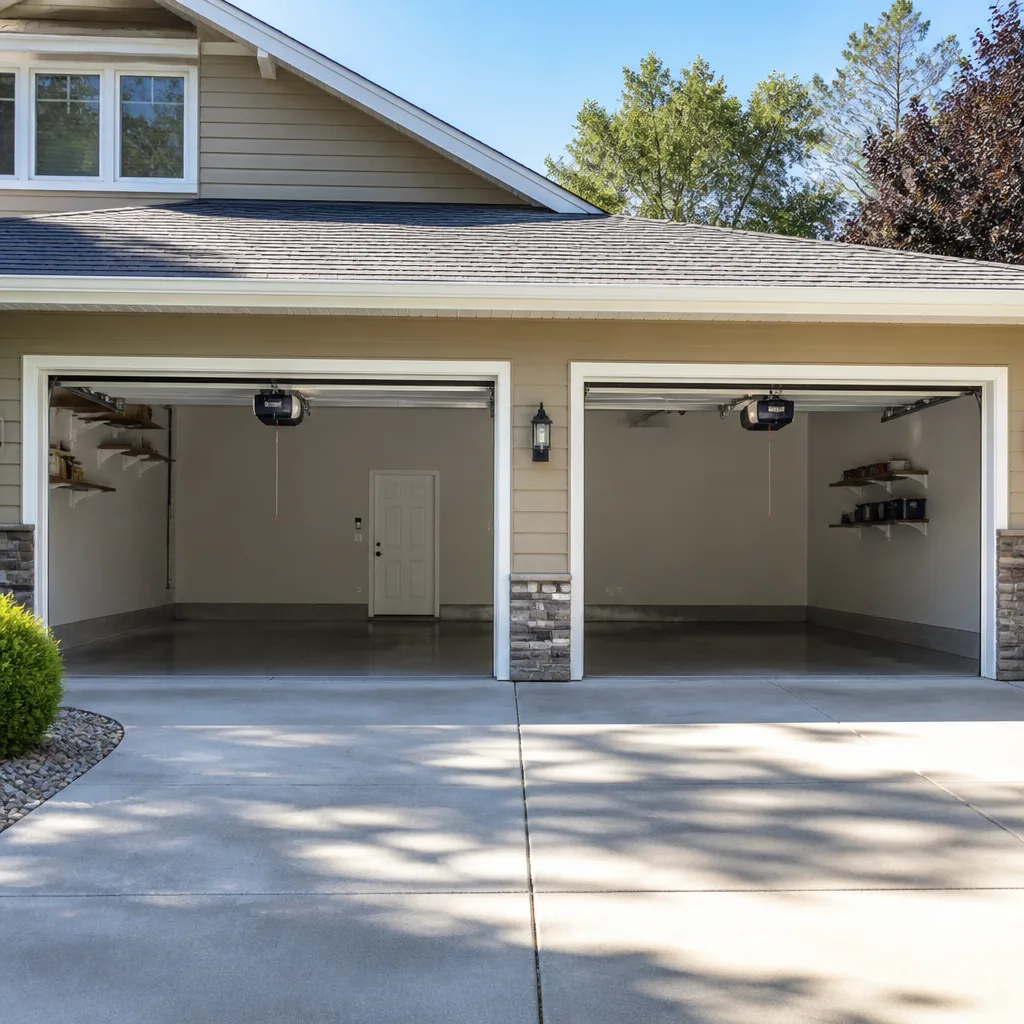
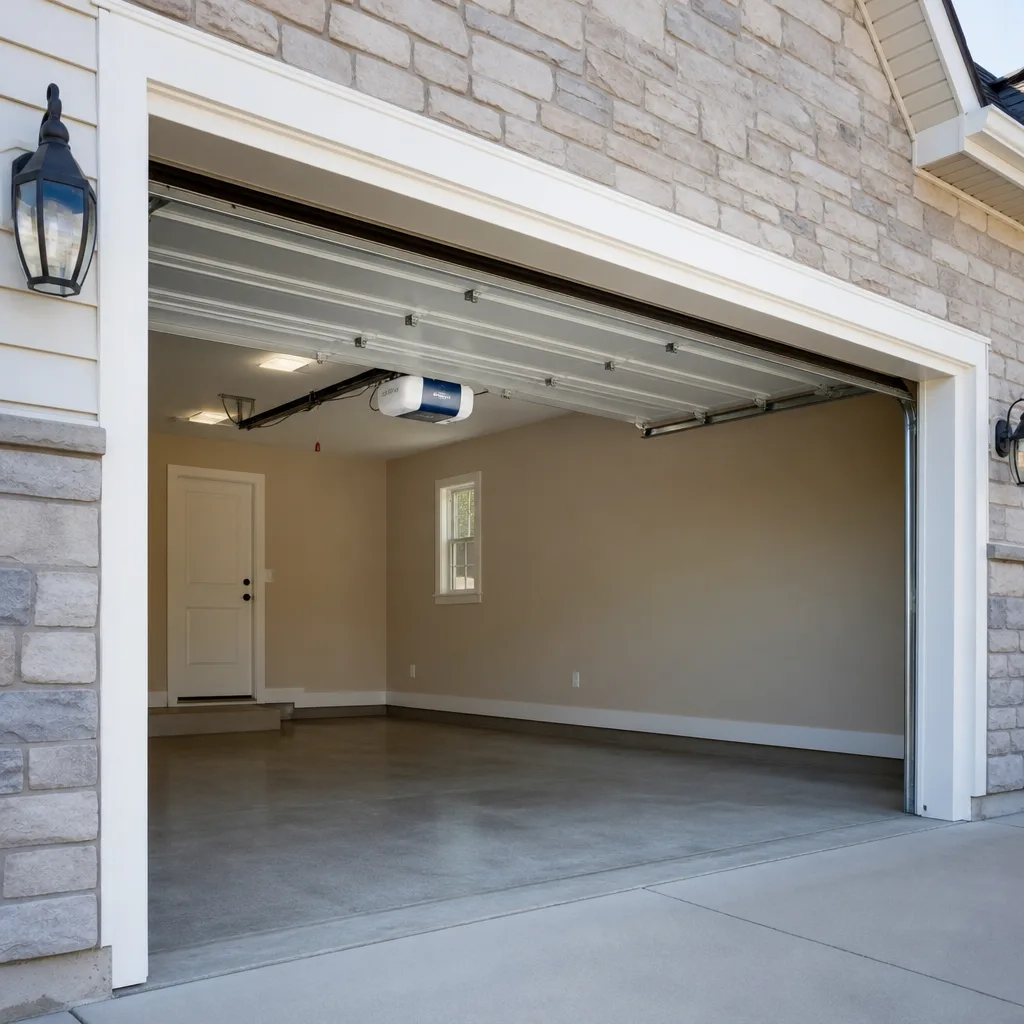
 Before
 After
After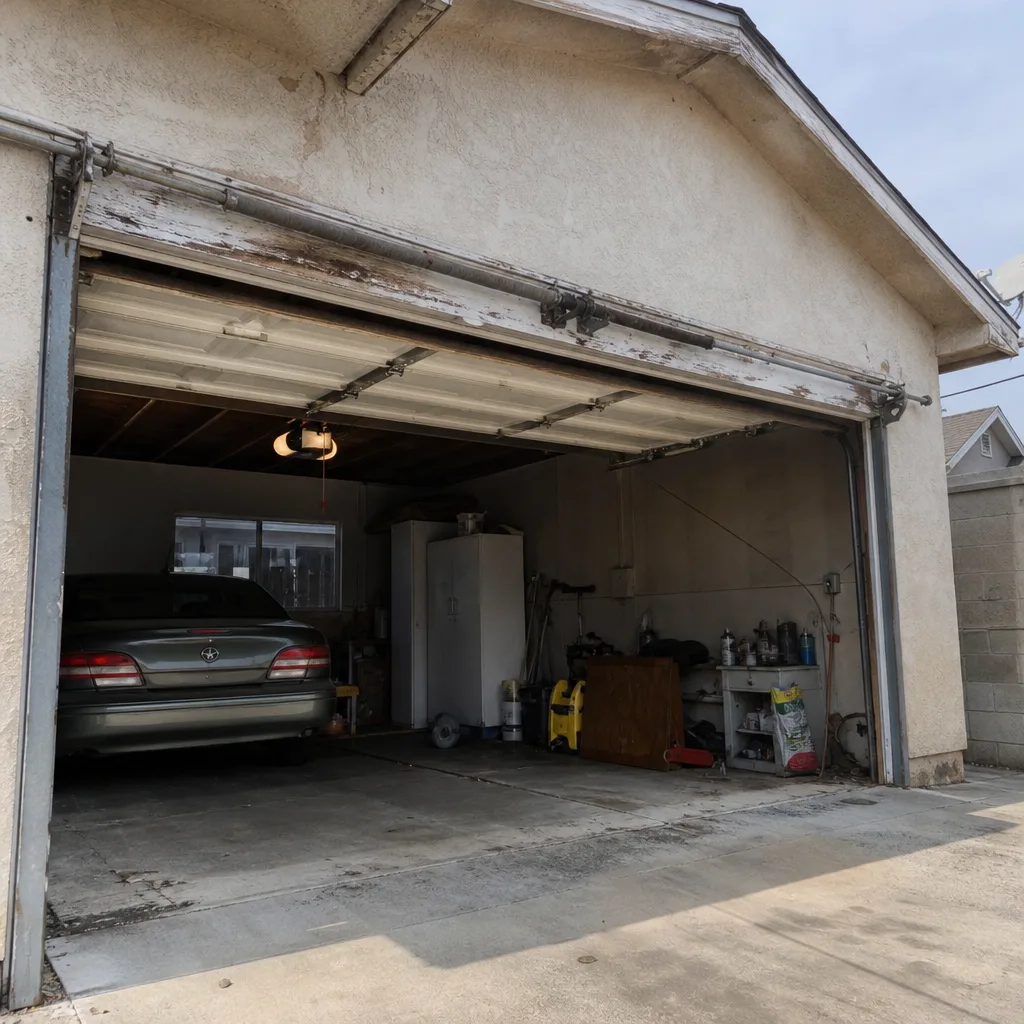 Before
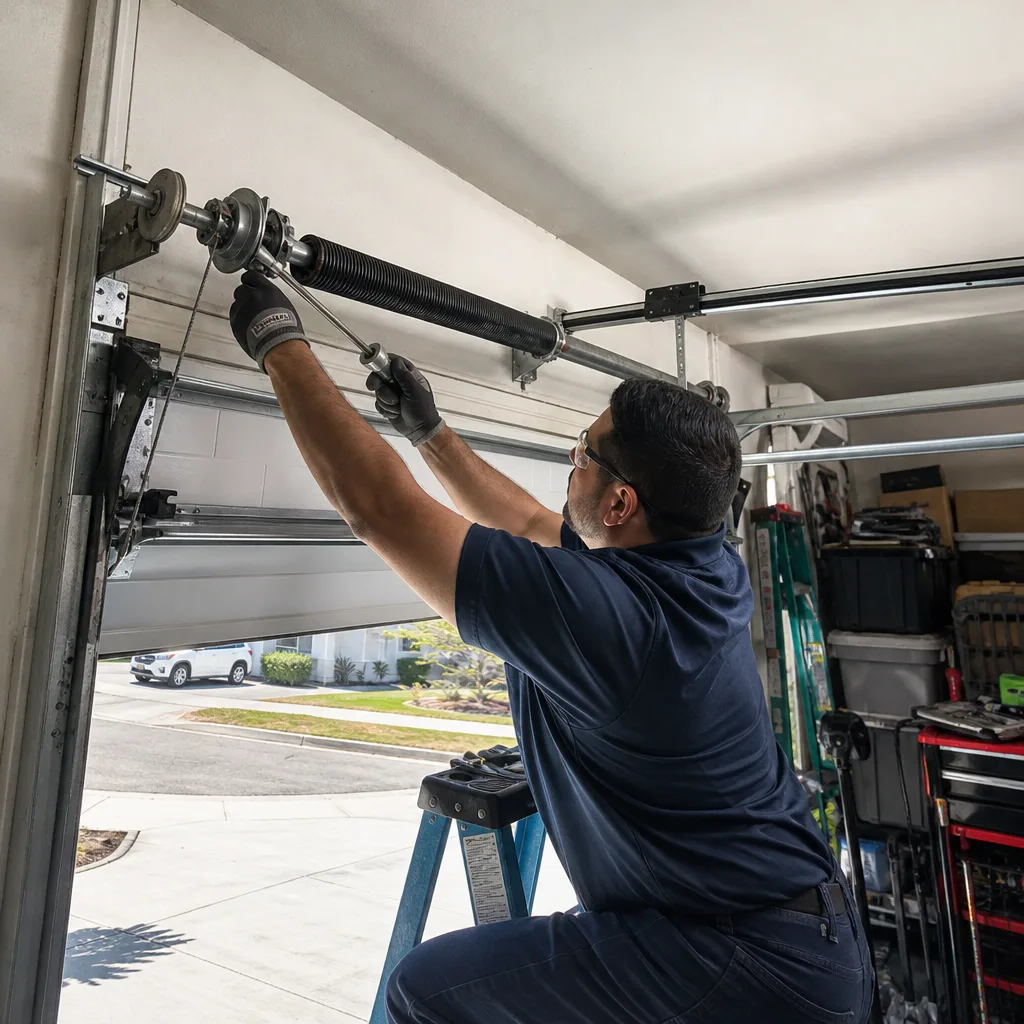 After
After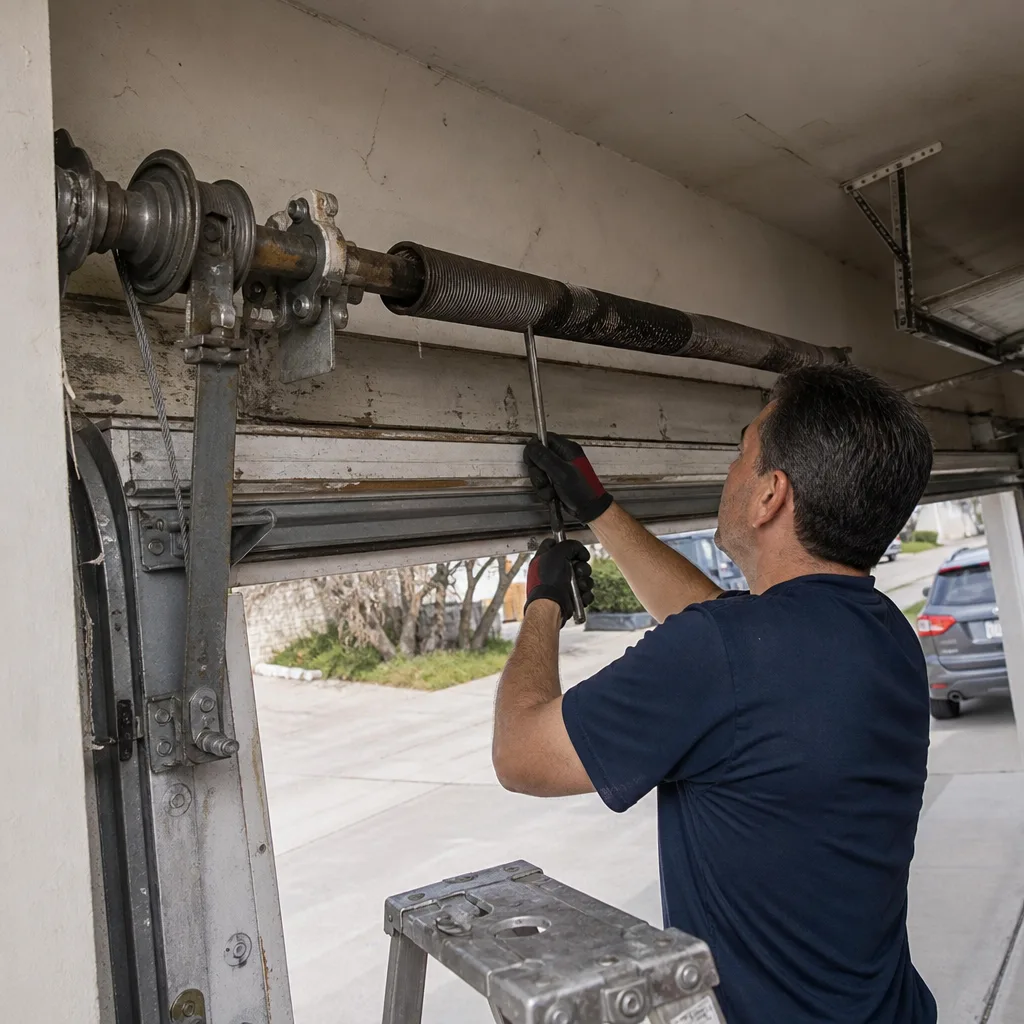 Before
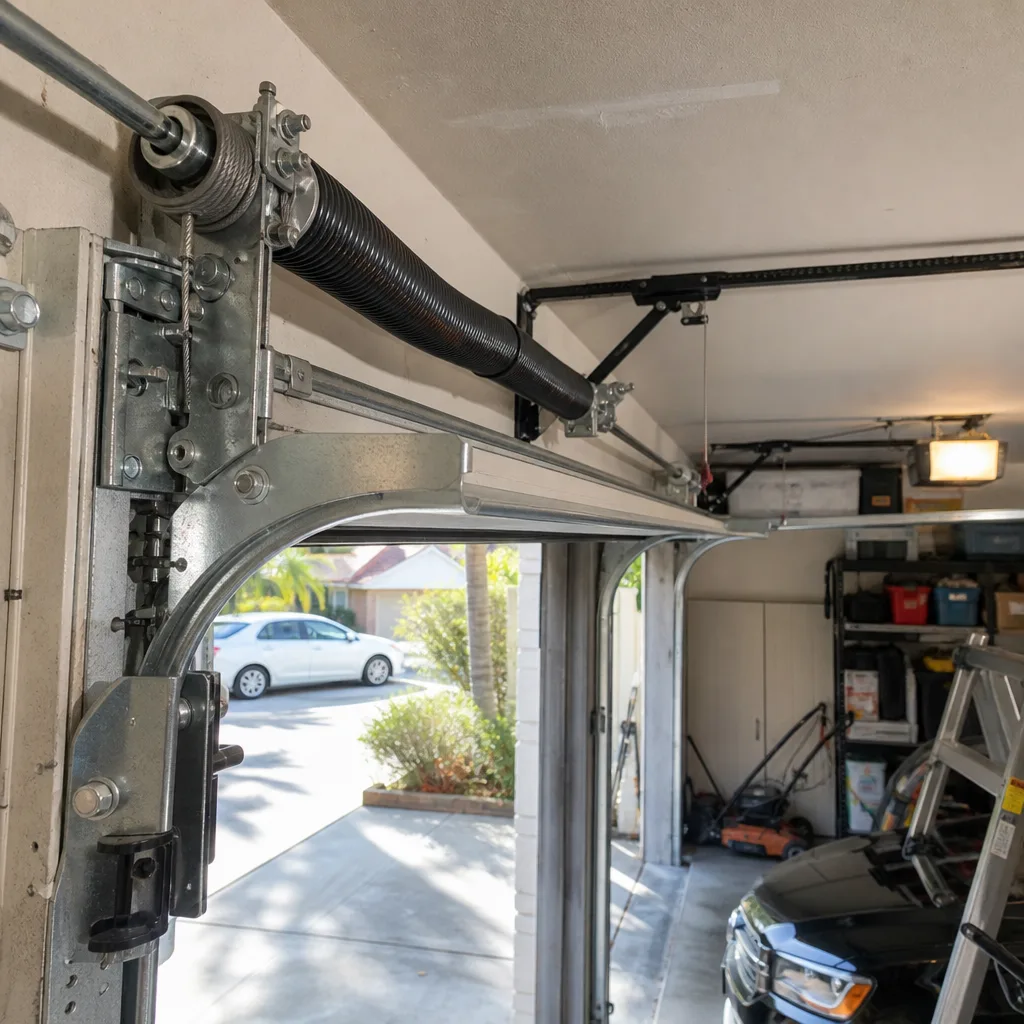 After
AfterHow Long Does Garage Door Repair Take? Timelines and What to Expect
When a technician says “probably an hour,” they mean an hour if the torsion spring is the right size, the cable drum isn’t also worn, and the opener limit switch didn’t slip during the spring failure. Three assumptions that don’t always hold, and the ones that don’t add time you weren’t expecting. Most Garage Door Repair services in Los Angeles take between 45 minutes and 2 hours on site, but the spread between those numbers comes down to something specific: which component failed, whether the right part is in the van, and how many years of deferred maintenance the door is hiding. This guide walks through the realistic timelines for every common repair, the variables that push a job to the high end, and how to plan your day around a repair call without sitting in a four-hour window with no information.
Quick Answer
Most garage door repairs take 45 to 120 minutes on site. A single torsion spring replacement typically runs 45 to 75 minutes, a cable replacement 30 to 60 minutes, roller replacement 45 to 90 minutes, and a full opener replacement 90 to 120 minutes. The biggest variable is whether the correct part is on the technician’s truck; if a specific part has to be ordered, you’re looking at a second visit, usually within a few days.
Table of Contents
- Repair Timelines by Component
- What “Parts in the Van” Actually Means
- How Deferred Maintenance Compounds Repair Time
- The Pre-Visit Communication Factor
- How to Structure Your Day Around a Repair
- Second-Visit Scenarios: What They Look Like
- Pricing and Time: What Adds Cost, What Adds Hours
- Common Mistakes to Avoid
- When to Call a Professional
- Frequently Asked Questions
- The Bottom Line
Repair Timelines by Component
Every garage door has a handful of parts that do most of the work: the torsion spring (the large coil mounted above the door that does most of the lifting), the cables that run along each side, the rollers that ride inside the tracks, the hinges connecting each panel, and the opener motor with its internal gears and circuit board. Each failure has its own realistic time range, and knowing the range ahead of time means you’re not guessing when the technician says “about an hour and a half.”
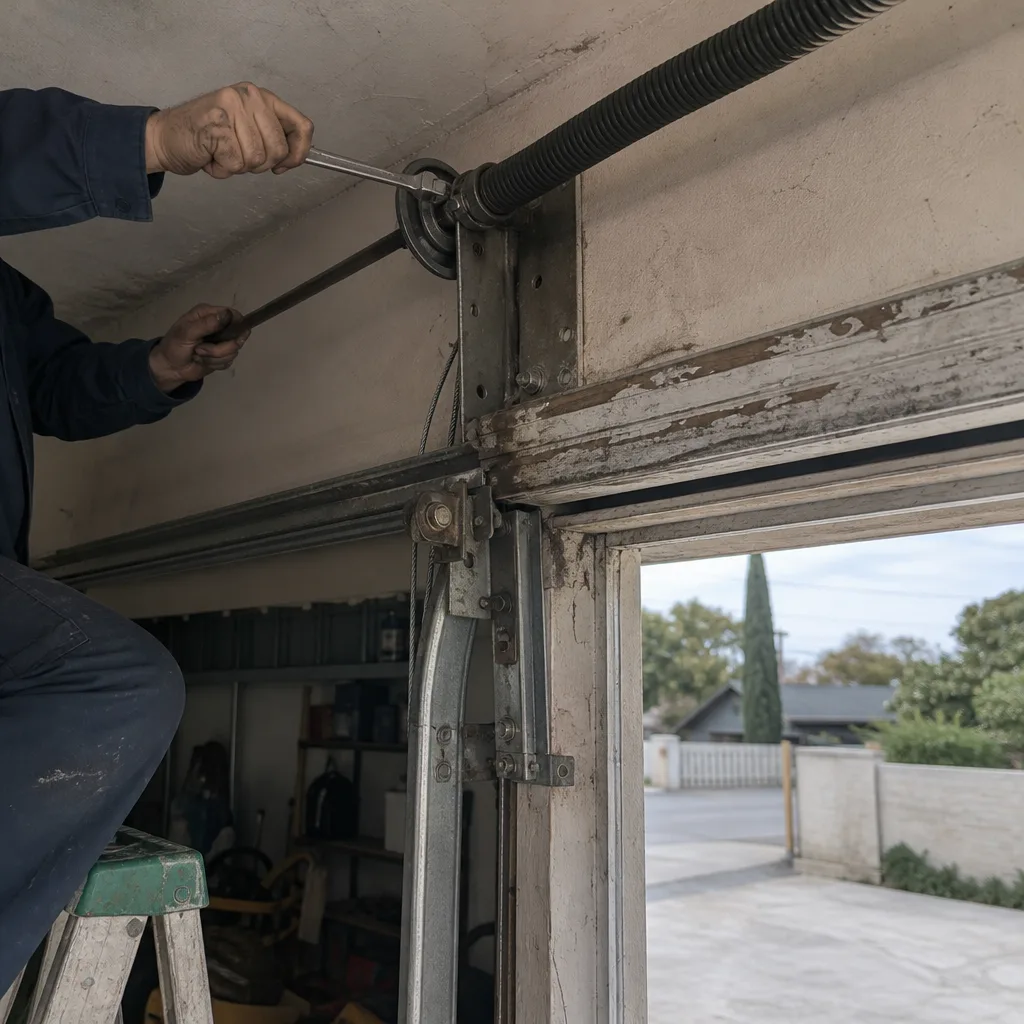
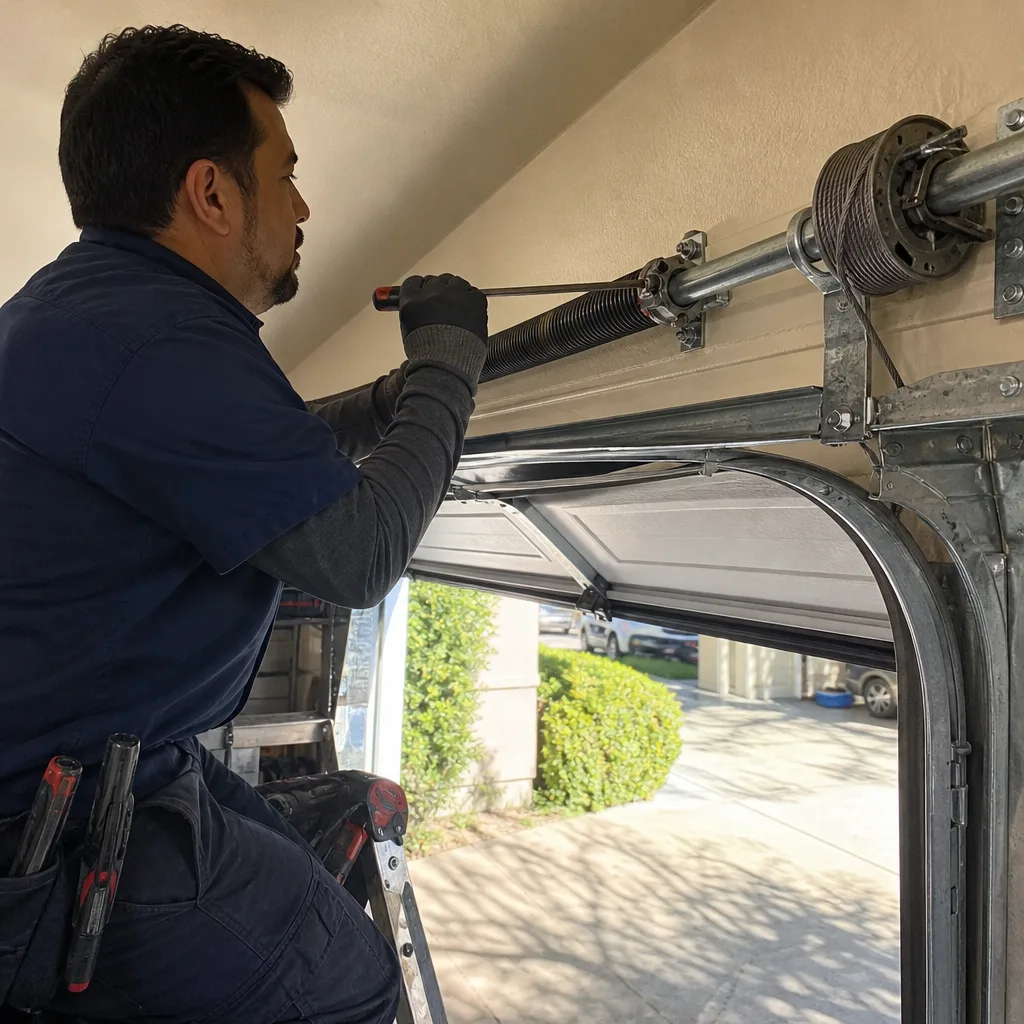
Single Torsion Spring Replacement: 45 to 75 Minutes
The most common repair we perform in Los Angeles is a broken torsion spring. The spring itself takes about 15 minutes to swap once the old one is off. The rest of the time goes to: releasing tension on the second spring (if you have a two-spring door, the unbroken one stays under load), removing the old hardware, setting the new spring’s winding, and running the door through a full cycle test. The high end of the range (75 minutes) happens when the spring is rusted to the center bracket, when the door is particularly heavy, or when the technician has to adjust the cable drums because the old spring’s failure threw them slightly out of alignment.
Cable Replacement: 30 to 60 Minutes
Cables fray and snap, especially on doors that cycle multiple times a day. A straight cable replacement is usually 30 to 45 minutes. The extra 15 minutes comes when the snapped cable has wrapped around the drum at the top of the shaft, or when the technician has to re-level a door that shifted when one cable let go. On a single-cable failure, we recommend replacing both cables at the same time even though only one broke; the second cable has seen identical wear.
Roller Replacement: 45 to 90 Minutes
Rollers fail gradually. You’ll hear grinding or see the door hesitate mid-travel. Replacing all rollers on a standard two-car door takes about 45 minutes. The high end (90 minutes) applies when the old rollers have worn the track’s interior enough that the track needs adjustment, or when a roller has seized and the technician has to carefully work it free without bending the track. In older Los Angeles homes with doors from the 1990s, we also see roller stem corrosion that adds time.
Full Opener Replacement: 90 to 120 Minutes
A complete garage door opener replacement means removing the old motor, rail, trolley carriage, and safety sensors, then installing and programming the new unit. This is the one job that almost never comes in under 90 minutes, even with an experienced technician. The high end accounts for: rewiring a wall console in an awkward location, replacing the safety sensor brackets, and programming the new opener to your vehicle’s built-in buttons if you drive something with HomeLink. Brands we work with regularly include LiftMaster and Chamberlain, and both require a similar setup sequence.
What “Parts in the Van” Actually Means
Every garage door company carries a range of parts in their service vehicles. What’s in the van determines whether your repair happens the same day or becomes a two-visit job. Here’s what’s typically stocked and what isn’t:
- Stocked in most vans: torsion springs in common sizes, extension springs, cables, rollers, hinges, brackets, safety sensors, remote controls, keypads, weather stripping, and opener gears for major brands.
- Sometimes stocked: specific opener circuit boards for newer models, certain Raynor or Craftsman proprietary components, and specialty track sections.
- Rarely stocked: trolley carriages for discontinued openers, custom-sized door panels, and match-specific spring systems on oddball door weights.
At Doyle Garage Door Repair, our technicians do a parts-availability check before they leave the shop. That means the technician looks at the job notes, checks the van inventory against the door’s brand and model, and loads the right parts before driving to your home. Not every company does this. Many send the technician out first and hope the part is on the truck. The pre-check eliminates probably a third of the second-visit situations we see in Los Angeles and its surrounding areas.
For more on what goes into a professional repair visit, see our Garage Door Repair in Grandview page.
How Deferred Maintenance Compounds Repair Time
Deferred maintenance is the quiet variable in every time estimate. A spring job that takes 45 minutes on a well-maintained door can take 90 minutes on one that’s been ignored for a decade. Here’s what we see most often in Los Angeles garages:
- Corroded cable drums. The spring breaks, but the drum it sits next to is also rusted or stuck. The technician has to free the drum before the spring work can begin. Add 15 to 20 minutes.
- Worn rollers and tracks. While the spring is off, the technician can finally see the rollers clearly. If three are grinding and the track has a groove, you’re making a choice: fix it now (add 30 to 45 minutes) or fix it later (another service call).
- Failed opener limit switches. When a spring breaks, the opener sometimes keeps running for a split second longer than it should, over-traveling the door and knocking the limit switch out of position. The technician re-sets the switch, but that’s an extra diagnostic step.
- Stripped gear from an overloaded opener. The opener was working against a heavy, unbalanced door for months. The gear inside quietly wore down. Now it’s stripped. Add a gear replacement or a full opener replacement conversation.
None of these items are the customer’s fault. Door parts wear. But when they all wear at once, a one-hour repair becomes a two-and-a-half-hour repair through no fault of the technician either. The pattern is common enough that we mention it during pre-visit communication: if the door hasn’t been serviced in more than five years, expect the possibility of additional findings once the technician starts working.
The Pre-Visit Communication Factor
Time estimates are only useful if you trust the person giving them. That trust starts before the technician arrives. At Doyle Garage Door Repair, every customer receives the technician’s name and photo before the visit, along with an arrival window. When the technician rings the bell, they present a photo ID badge and wear a clean, marked uniform. This is the Threshold Standard, and it’s a concrete requirement for every tech, every visit, no exceptions.
Why does this matter for timelines? Because when you know exactly who is coming and what they’ll look like, you’re not standing at the door wondering whether the person in the driveway is actually from the company you called. You open the door once. The work starts on time. The time estimate you were given holds because the technician has already reviewed the job notes and checked the van stock before leaving the shop.
Aaron Teague, the owner of Doyle Garage Door Repair, structured the company this way for a reason. The customers we serve often tell us the same thing: they were home alone, or their kids were home, or they’re older and don’t open the door to strangers. A name and a photo sent in advance removes a layer of anxiety that other companies don’t even acknowledge.
How to Structure Your Day Around a Repair
Garage door repair doesn’t require you to be present for the whole job, but you do need to be there for the start and the finish. Here’s how to structure your day sensibly:
- Confirm the arrival window the day before. Don’t accept “sometime between 8 and 5.” Ask for a tighter window. A company that can’t give you a two-hour window is telling you something about how they run their schedule.
- Plan for the full high-end estimate. If the repair is estimated at 45 to 75 minutes, plan for 75. If a second problem is found mid-job, the technician should call or knock on the door to discuss it before doing anything. You should not be surprised at the end.
- Clear the garage area before the technician arrives. Move vehicles out, clear space around the door tracks, and move anything stored near the opener. This saves 10 to 15 minutes and keeps your belongings out of the work zone.
- Have your questions ready. Technicians are happy to explain what they found, what they’re doing, and what they recommend. A five-minute conversation at the start can save a longer conversation at invoice time.
- Expect a written price before any work starts. At Doyle, the price is written down and handed to the customer before a single bolt is turned. No verbal estimates, no invoice surprises. If a company won’t put the price in writing, that’s a red flag.
For homeowners considering a new door instead of a repair, timelines differ. Installations are measured and ordered, which means a scheduled appointment rather than a same-day call. See our Garage Door Installation in Grandview page for what that process looks like.
Second-Visit Scenarios: What They Look Like
A second visit isn’t a failure; it’s sometimes the honest answer when a part isn’t available locally. But it helps to know which scenarios typically trigger one, so you can ask the right questions before booking:
- Discontinued opener models. If you have a 15-year-old opener and the circuit board fails, the board may not be manufactured anymore. The technician can quote a board replacement (if available) or a full opener replacement. The full replacement can often be done same-day since openers are commonly stocked.
- Special-order springs. Most torsion springs are standard sizes. But higher-cycle springs for heavy or custom doors sometimes need to be ordered. Ask your technician if your spring is standard or special-order before they arrive.
- Odd-size door panels. A dented or damaged panel on a custom-width door usually requires ordering. This is an installation task, not a repair, and it’s scheduled rather than dispatched.
- Opener parts for specific brands. Some Raynor and Chamberlain components are model-specific. We carry the most common ones, but no van can carry every part for every opener ever made. If your part is a second-visit item, you’ll know before the technician leaves your driveway, and you’ll have a written quote for the follow-up.
- Single torsion spring replacement: $180 to $340, 45 to 75 minutes. The spring itself is a modest cost; the labor is where the expertise lives. High-cycle springs (rated for 25,000 to 30,000 cycles instead of the standard 10,000) run at the top of the range.
- Cable replacement (both cables): $150 to $250, 30 to 60 minutes. Replacing both at once saves a second dispatch fee later.
- Roller replacement (full set): $120 to $220, 45 to 90 minutes. Nylon rollers run quieter and last longer than steel.
- Opener replacement (motor, rail, trolley, sensors, programming): $450 to $850 depending on the model, 90 to 120 minutes. LiftMaster and Chamberlain are both common choices; the more powerful the motor and the more features (battery backup, camera, WiFi), the higher the cost.
- Booking the cheapest quote without asking about parts availability. A low quote means nothing if the technician arrives, doesn’t have the right spring, and schedules a second visit that wipes out your savings in time and inconvenience. Ask about van stock before you book.
- Ignoring a grinding door for months. A grinding sound is usually a failing roller or a worn hinge. Letting it ride until the door jams converts a $150 roller job into a $400 track-and-roller repair. The time also doubles.
- Attempting a torsion spring repair yourself. The torsion spring is under extreme tension and can cause serious injury or death if it releases suddenly. This is not a DIY job under any circumstances. Call a trained professional.
- Accepting a four-hour arrival window. Los Angeles traffic is unpredictable, but a repair company that can only commit to a half-day window hasn’t built a real scheduling system. A two-hour window is standard for organized operations.
- Skipping the opener limit-switch check after a spring replacement. A new spring on a door with a misaligned limit switch means the door opens too far or not enough. A good technician re-tests the full cycle before leaving. Ask if this was done.
- Not asking about the warranty before the work starts. If the company doesn’t mention a written guarantee, ask. At Doyle, the 365-Day Done Right Promise is included on every repair, in writing, every time. You shouldn’t have to ask.
If a repair fails within 365 days from the date of repair, we come back and make it right at no charge. That’s the 365-Day Done Right Promise, and it applies to every repair we do, in writing, every time. The free second visit if a repair fails is not a negotiation; it’s automatic.
Pricing and Time: What Adds Cost, What Adds Hours
Time and cost are connected but not the same. Some slow jobs are cheap; some fast jobs are expensive because the part itself is pricey. Here’s a snapshot of what Los Angeles homeowners typically see:
The price you’re quoted is the price you pay. At Doyle, the written price is handed to you before work starts, and it does not change unless you approve additional work that was discovered mid-job. No one is standing in your driveway with a surprise invoice at the end.
Opener problems have their own timelines and costs. Our Garage Door Opener Repair in Grandview page covers them in detail.
Common Mistakes to Avoid
When to Call a Professional
Garage doors have exactly two safety systems: the spring (which holds the weight) and the cables (which guide the spring’s force). Both are dangerous to work on without training. If your spring is broken, if your cables are frayed, if your door is off its track, or if your opener is making a grinding sound that wasn’t there last month, stop using the door and call a professional. The time saved by attempting a repair yourself is not worth the risk of serious injury. Doyle Garage Door Repair offers free estimates in Los Angeles. Call (910) 858-8029 and a live person answers, day, night, weekend, or holiday.
Frequently Asked Questions
A single torsion spring replacement typically takes 45 to 75 minutes. The high end applies when the spring is rusted to its bracket, when the door is unusually heavy, or when the cable drums need adjustment after the spring failed. If both springs are replaced, expect 60 to 90 minutes total.
In most cases, yes. Broken springs, snapped cables, and failed opener gears are all repairable same-day if the right part is in the van. At Doyle Garage Door Repair, the technician checks van inventory before leaving the shop, which improves same-day completion rates significantly. Call (910) 858-8029 and a live person gives you a straight answer about today’s availability.
At Doyle Garage Door Repair, the written price you’re quoted is the price you pay unless you approve additional work after a mid-job discovery. The price is written down and handed to you before any work starts. There are no verbal estimates and no invoice surprises at the end.
Most common parts, including torsion springs in standard sizes, cables, rollers, hinges, brackets, safety sensors, and opener gears, are carried on every Doyle service van. Some model-specific parts, like certain opener circuit boards, may require ordering. The technician can often tell you during the initial phone call whether your part is a van-stock item.
Most repairs in Los Angeles range from $120 to $850 depending on the component. A full roller replacement runs $120 to $220, a cable replacement $150 to $250, a single spring $180 to $340, and a full opener replacement $450 to $850. Every Doyle job includes a written price before work begins and the 365-Day Done Right Promise on every repair.
Look for a company that sends the technician’s name and photo before the visit, puts prices in writing before work starts, and backs repairs with a written guarantee. All three are standard practice at Doyle Garage Door Repair and part of the Threshold Standard. A live human on the phone 24/7 is a good sign too; you shouldn’t have to leave a voicemail for an emergency.
The Bottom Line
Garage door repairs in Los Angeles take between 45 minutes and 2 hours for the vast majority of jobs. The timeline depends on the component that failed, whether the part is stocked in the technician’s van, and how much deferred maintenance the door has accumulated. A company that communicates clearly before the visit, writes the price down before starting, and backs the work with a real guarantee removes the two biggest anxieties homeowners have: who is at the door, and what the invoice will say. Those are the parts of the timeline you can control. Pick the company that handles them well. For a full guide to garage door services, visit the Doyle Garage Door Repair home page.
Written by Aaron Teague, Owner at Doyle Garage Door Repair, serving Los Angeles since 2001.