
Last updated October 9, 2026
Full 25-point door and opener safety check with every visit - springs, cables, rollers, tracks, and your LiftMaster or Chamberlain opener included
You get a price before we start. It does not change when the truck arrives.
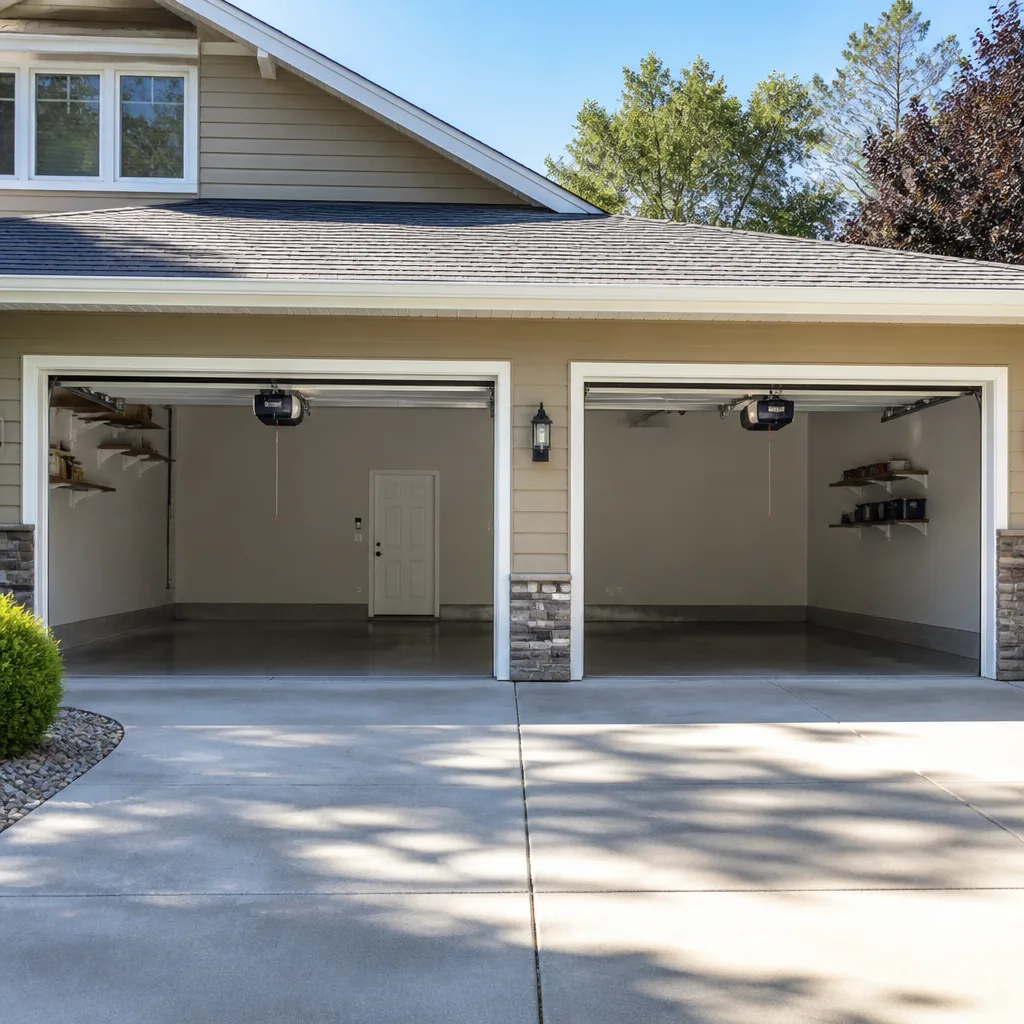
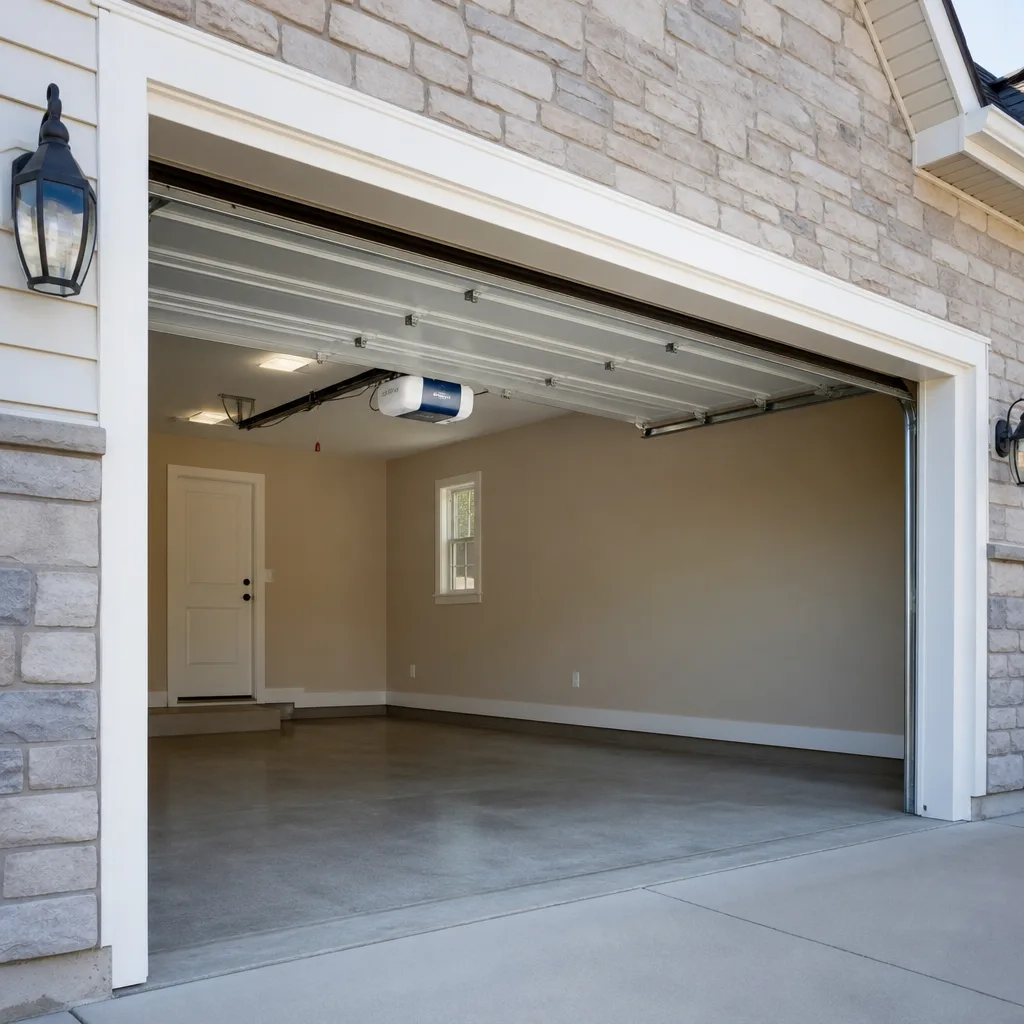
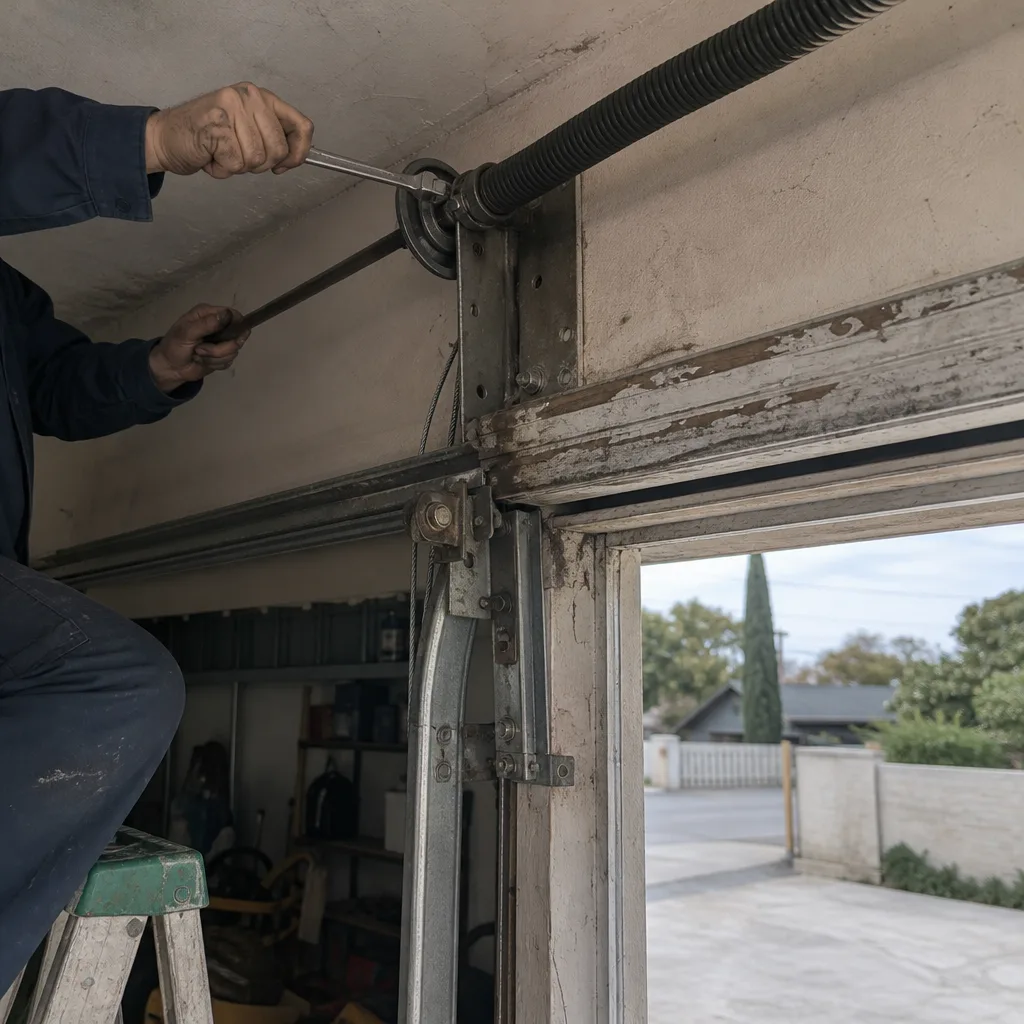 Before
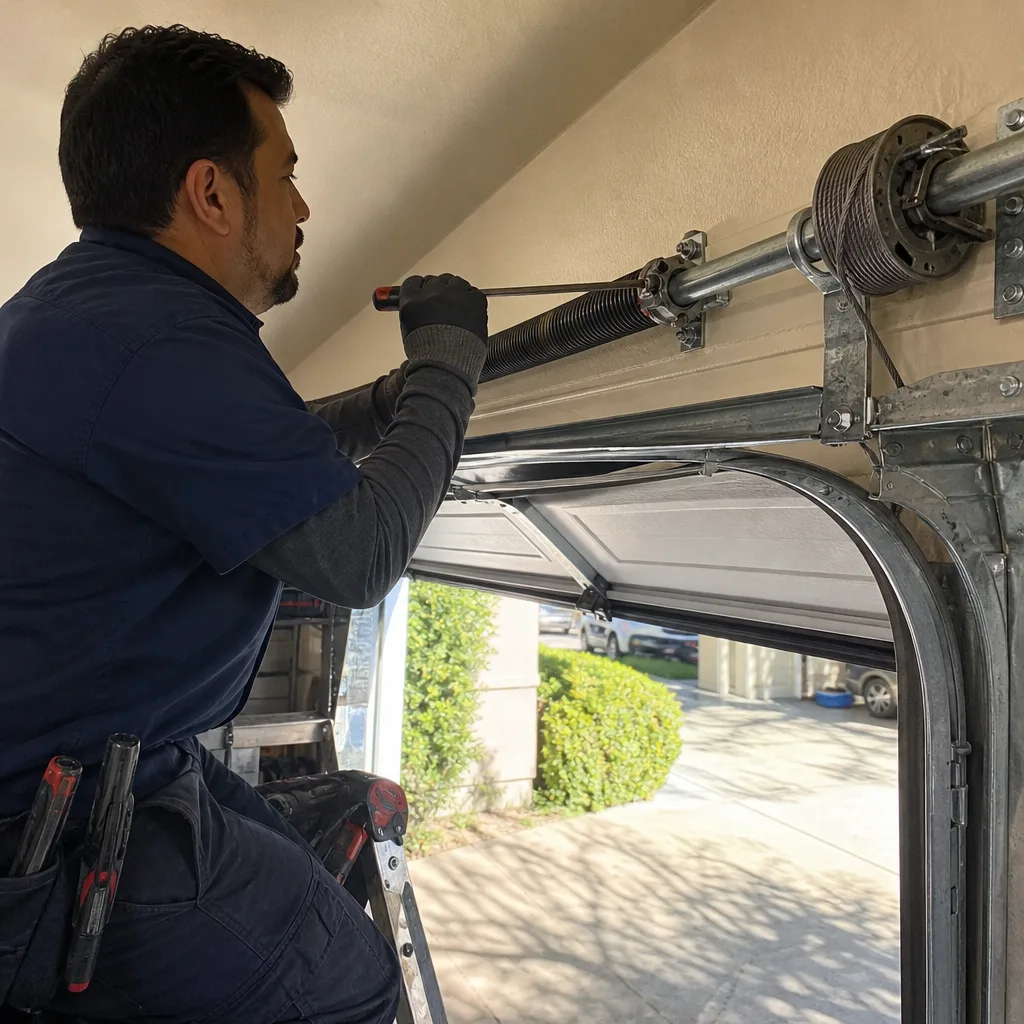 After
After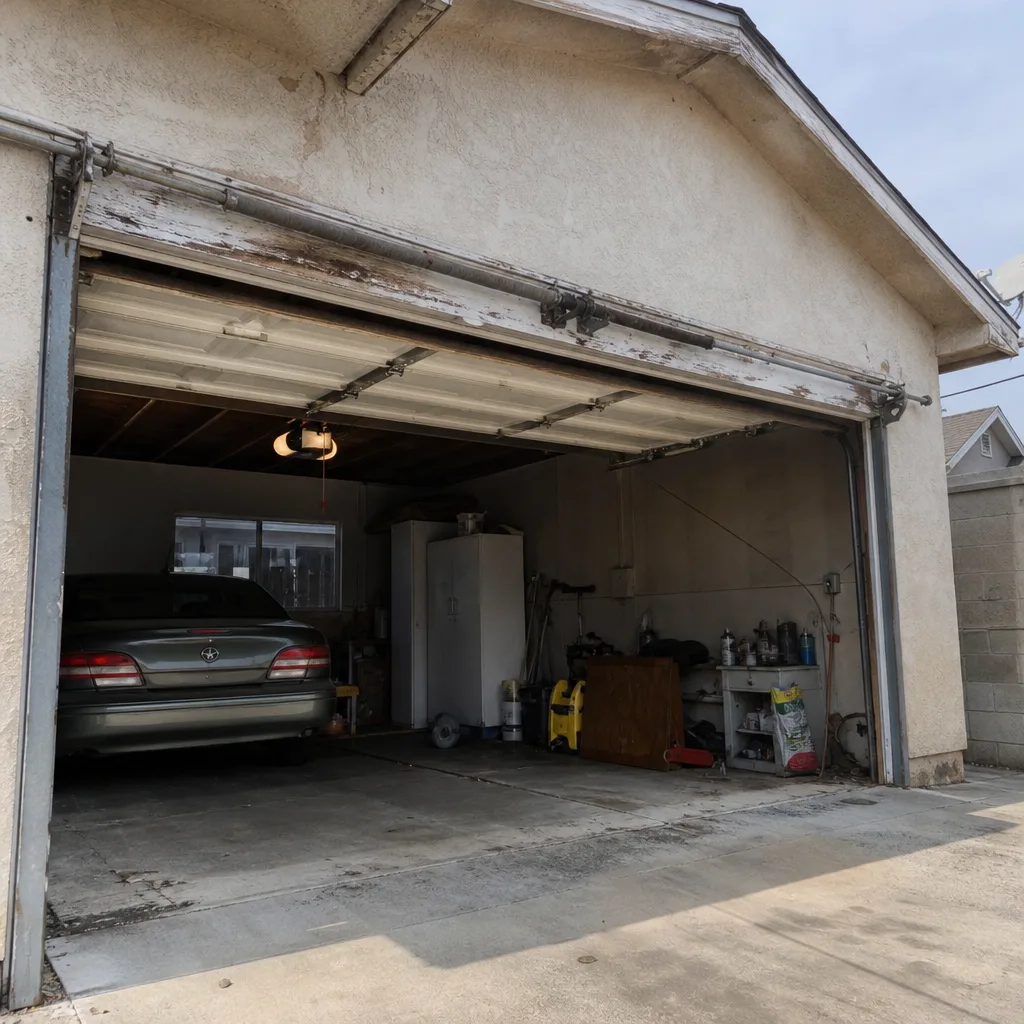 Before
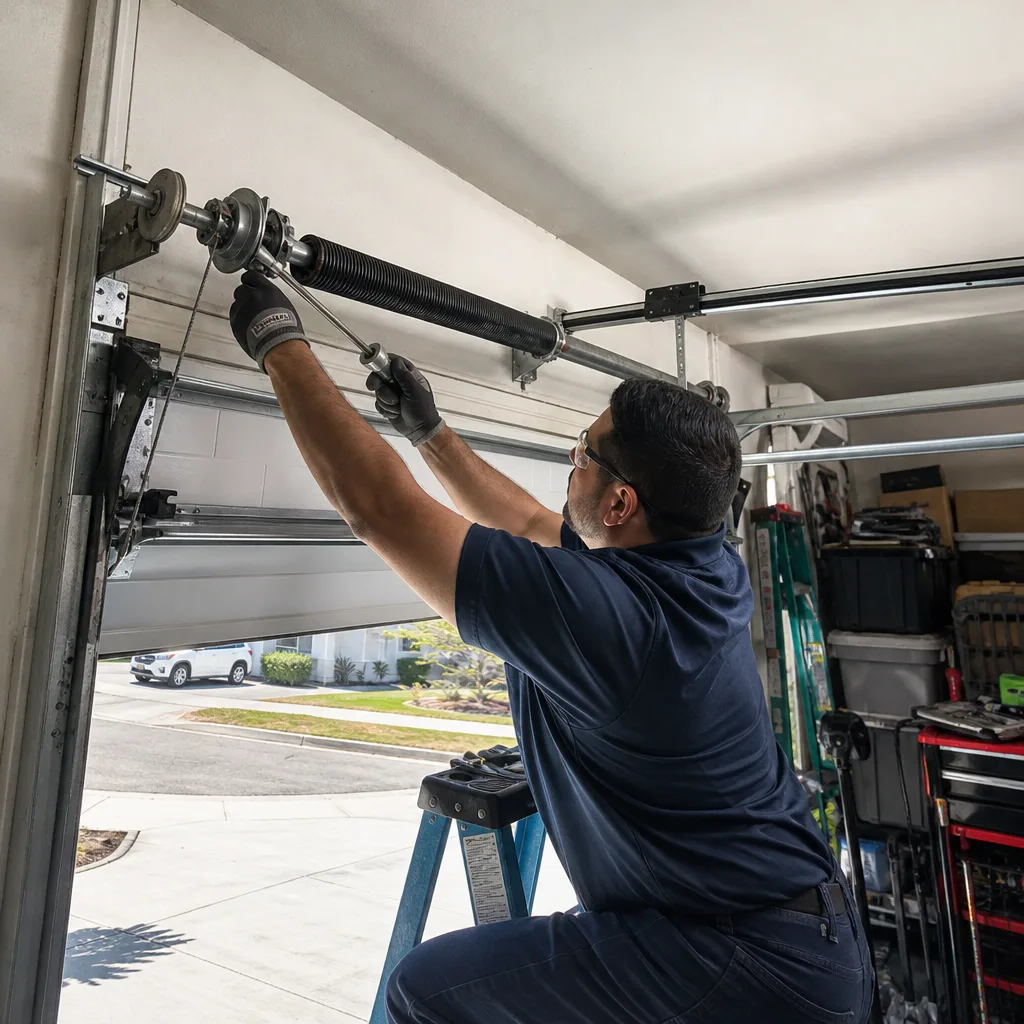 After
After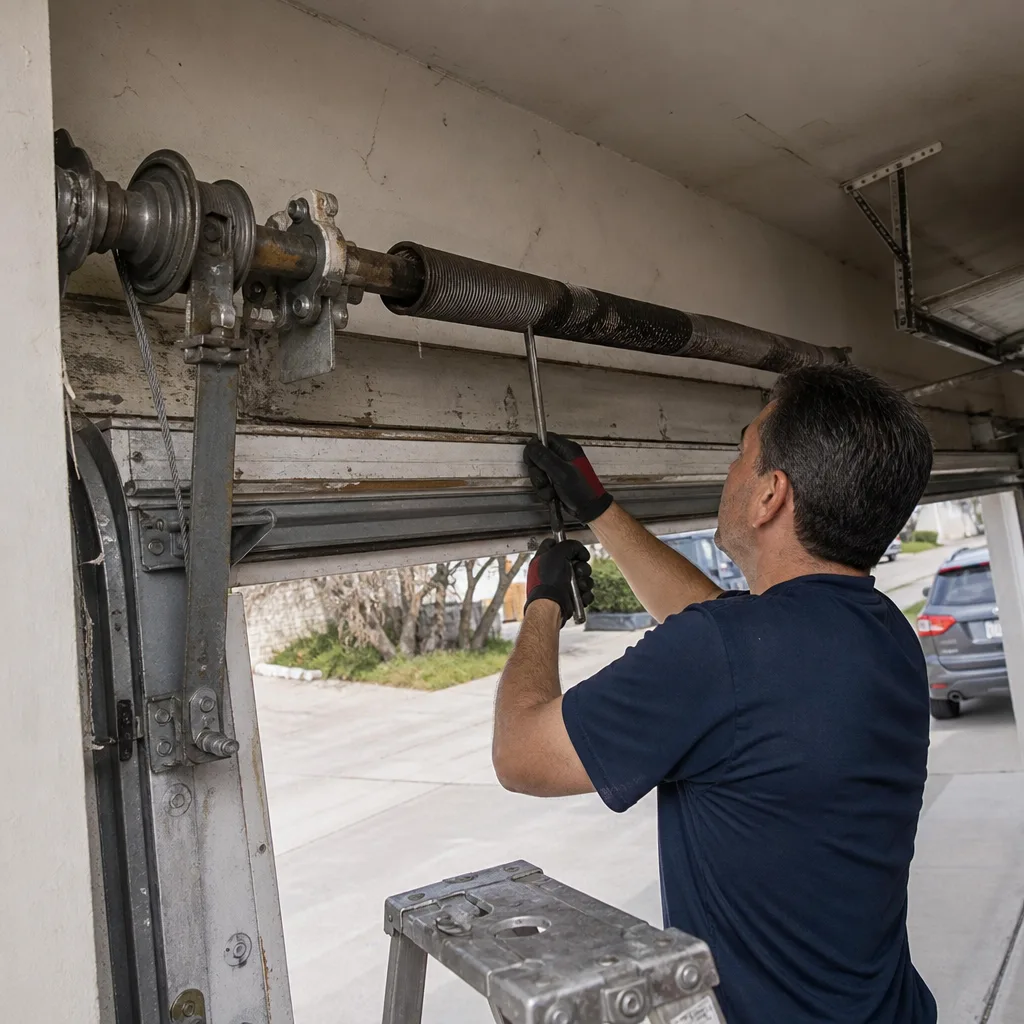 Before
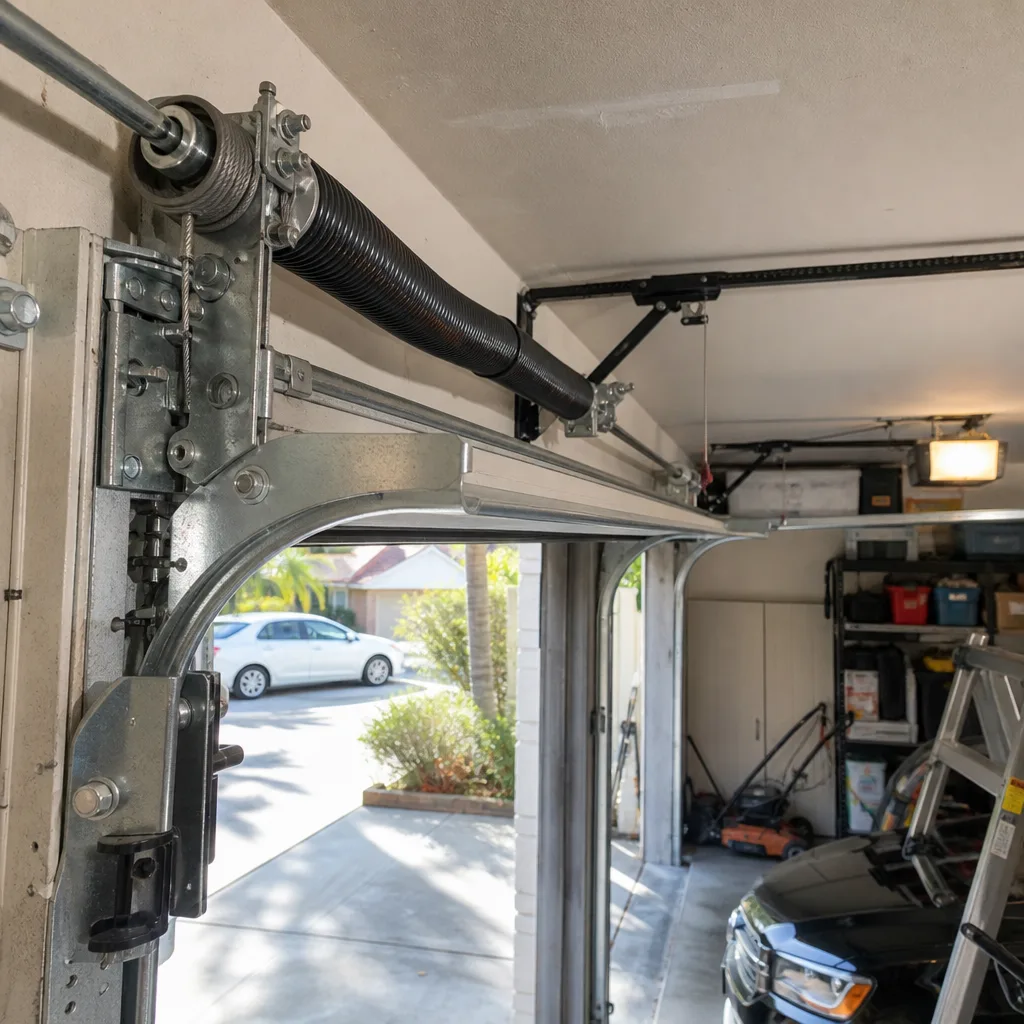 After
AfterHow Long Does Garage Door Opener Repair Take? Timelines and What to Expect
Our How Long Does Garage Door Repair Take? Timelines and What to Expect guide explains that opener repairs can take anywhere from 10 minutes to 2 hours, and the single biggest variable isn’t the repair itself. It’s whether the technician arrives already knowing what’s wrong. We see this play out across Los Angeles every week: a homeowner says on the phone, “My opener’s broken,” so the tech shows up expecting to diagnose. That diagnosis takes 30-45 minutes before work even starts. Had that same homeowner said, “The motor runs, but the door doesn’t move,” the tech would have arrived with a drive gear on the truck and finished in under an hour. This guide breaks down realistic timelines by repair type, explains what happens during each phase, and tells you exactly how to describe your symptoms so the clock works in your favor.
Quick Answer
Most garage door opener repairs take between 15 minutes and 2 hours. Simple fixes like photo-eye alignment run 10-15 minutes, limit switch adjustments take 15-20 minutes, and drive gear or logic board replacements typically run 30-75 minutes. A full opener replacement takes 90-120 minutes. The exact time depends on whether the technician arrives with the right parts already on the truck, which is why describing your symptoms accurately when booking the call matters more than most people realize.
Table of Contents
- Why Symptom Description Matters More Than You Think
- Repair Timelines by Type
- What Happens During the Diagnostic Phase
- The Parts Availability Variable
- What If the Repair Reveals a Second Issue?
- Scheduling Realities in Los Angeles
- How to Describe Your Symptoms Over the Phone
- Common Mistakes to Avoid
- When to Call a Professional
- Frequently Asked Questions
- The Bottom Line
Why Symptom Description Matters More Than You Think
Here’s the counterintuitive part: the repair time for a garage door opener is almost entirely determined before the technician ever rings your doorbell. A technician who arrives knowing the symptom (motor runs, door doesn’t move) can complete a drive gear replacement in 45 minutes. A technician who arrives expecting a generic “broken opener” and has to diagnose on the clock can turn that same repair into a two-hour job.
This matters in Los Angeles, where scheduling windows and drive times already eat into your day. When you call a company and describe the symptom clearly, two things happen. First, the dispatcher can estimate the repair window more honestly. Second, the technician loads the truck with the parts most likely needed for that specific fault. That’s the difference between one visit and two.
At Doyle Garage Door Repair home, we ask a short set of questions when you call: Does the motor run? Does the door move at all? Do you hear grinding, clicking, or nothing? Each answer narrows the likely fault and determines which parts the tech brings. That pre-arrival diagnosis is the single biggest time-saver in opener repair.
Repair Timelines by Type
These are the time ranges we typically see for common opener repairs in the Los Angeles market. They assume the technician has the necessary parts on the truck and is working on a standard residential setup.
- Photo-eye alignment: 10-15 minutes. The safety sensors at the bottom of the door tracks get bumped out of alignment, and the door refuses to close. This is usually a quick repositioning job.
- Limit switch adjustment: 15-20 minutes. The limit switch controls how far the door travels up and down. When it’s off, the door reverses immediately or doesn’t close all the way. Adjusting it is fast.
- Wall button or wiring repair: 20-30 minutes. A faulty wall console or a short in the low-voltage wiring between the wall button and the opener unit. The tech tests continuity and replaces the bad component.
- Logic board replacement: 30-45 minutes. The circuit board is the brain of the opener. When a lightning strike or power surge kills it, the whole unit goes dead. Replacing the board is straightforward but requires matching the exact model.
- Drive gear replacement: 45-75 minutes. The drive gear is the plastic or metal gear inside the opener that transfers motor power to the chain or belt. When it strips, the motor runs but the door stays put. This is one of the most common repairs we do on LiftMaster and Chamberlain units in Los Angeles.
- Full opener replacement: 90-120 minutes. If the opener is old, repeatedly failing, or economically not worth repairing, a full swap is the right call. That includes removing the old unit, installing the new one, programming remotes, and testing safety features.
These ranges assume standard conditions. Older openers, unusual mounting situations, or Los Angeles homes with high ceilings and extended rail kits can add 15-30 minutes.
What Happens During the Diagnostic Phase
No homeowner should stand in their garage wondering what the technician is doing or why they’re being charged for it. A transparent technician walks you through the diagnostic process and explains what they’re testing at each step. Here’s what an honest diagnostic sequence looks like:
- Visual inspection (5 minutes): The tech checks the opener unit, the rail, the chain or belt, and the door itself for obvious signs of wear or damage. Loose bolts, frayed cables, and misaligned tracks get noted.
- Manual operation test (3-5 minutes): The technician disconnects the opener from the door using the red emergency release cord, then lifts the door by hand. If the door is heavy or sticks, the problem is the door, not the opener. This step prevents a misdiagnosis where an opener gets blamed for a spring problem.
- Electrical test (5-10 minutes): Using a multimeter, the tech verifies power is reaching the opener, the wall button is sending a signal, and the safety sensors are transmitting. This narrows the fault to either the electrical side or the mechanical side.
- Component-specific testing (10-15 minutes): Depending on the symptoms, the tech tests the drive gear for stripping, the limit switch for proper travel, the logic board for visible burn marks, and the trolley carriage for smooth movement along the rail.
- Diagnosis and written quote (5 minutes): The technician explains what’s wrong in plain language, shows you the failed part if it’s visually obvious, and writes down the repair cost before any work starts.
At Doyle Garage Door Repair, our Garage Door Opener Repair services ensure every Los Angeles technician follows this sequence. The diagnostic is thorough, but it’s also efficient because the dispatcher already gathered symptom information when you booked the call. The tech isn’t starting from zero.
The Parts Availability Variable
Here’s a scenario we see constantly in Los Angeles: a homeowner calls a company, a tech shows up, diagnoses a bad drive gear, and then says, “I’ll have to order that part. Should be here in 3-5 days.” The homeowner is now on visit two, paying a second service fee, and waiting nearly a week with a garage door that won’t open.
This is entirely avoidable when the company stocks common parts on the truck. A technician who carries drive gears and circuit boards for the major brands, including LiftMaster, Chamberlain, Genie, and Craftsman, can complete most opener repairs same-day. One who doesn’t is scheduling a second visit and charging you twice.
We stock our Los Angeles trucks with the parts that fail most frequently: drive gears for Chamberlain and LiftMaster chain-drive units, logic boards for Genie and Craftsman models, photo-eye sensors, wall consoles, and limit switch assemblies. We also carry a range of remotes and keypads. If your opener uses a Wayne Dalton or Raynor unit, we may need to source a specialized part, but we’ll tell you that upfront, before the diagnostic, not after.
Ask the dispatcher two questions when you book: “Do your techs carry common opener parts on the truck?” and “Is the diagnostic fee credited toward the repair cost?” Companies that answer yes to both are set up for same-day service.
What If the Repair Reveals a Second Issue?
Sometimes a door that won’t open has two problems: a stripped drive gear in the opener and a worn torsion spring, which is the large coil mounted above the door that does most of the lifting. The opener repair takes 45 minutes. The spring replacement adds another 30-45 minutes and a few hundred dollars.
This is exactly where a written scope of work matters. Before any work starts, you should know three things in writing: what’s being repaired, what it costs, and whether any additional issues were discovered that might affect the price. A technician who discovers a second issue mid-repair should stop, explain it, and get your approval before touching it.
Our policy at Doyle Garage Door Repair is straightforward: the price is written down and handed to you before a single bolt is turned. If the diagnostic reveals a second problem, we show you what we found, explain whether it’s urgent or can wait, and give you a separate written quote for that work. There’s no obligation to approve it. And because every repair includes a written price before work begins, you’re never surprised by an invoice that’s larger than the quote you approved.
This matters especially for Los Angeles homeowners who have been burned by aggressive upsells. You know your budget. You get to decide.
Scheduling Realities in Los Angeles
Garage door opener repair happens faster when you know how to hire a garage door contractor in Los Angeles who’s actually in your area. Los Angeles is a sprawling market, and a regional dispatcher covering a 60-mile radius might quote you a four-hour arrival window and still show up late because the prior job was across town. A company that serves a tight local radius books tighter windows, because the drive times are predictable.
Here’s what that means in practice: when you call us for Garage Door Opener Repair in Grandview, the technician is dispatched from close by. The truck is stocked for the symptoms you described. The arrival window is realistic. And because we’re part of the Threshold Group family, every tech who shows up has been background-checked and identity-verified under the Threshold Standard. You get a name and a photo sent to your phone before the visit, so you know exactly who’s opening the garage.
That last part is not a luxury. For homeowners who are home alone, for parents with young children, for older Los Angeles residents who choose companies carefully, knowing who’s at the door is a concrete safety step. No generic garage door company in Los Angeles can match it.
We also answer our phones with a live person, 24 hours a day, 7 days a week. No voicemail tree, no callback form, no bot. A real person picks up day, night, weekend, and holiday. If your opener fails at 10 p.m. and the door is stuck open, you talk to a human who can dispatch a tech.
How to Describe Your Symptoms Over the Phone
The words you use when you call determine how fast the repair goes. Here’s how to describe your opener problem accurately, so the technician shows up prepared:
- Does the motor run? Stand near the opener unit and press the wall button. Do you hear the motor humming or running? If yes, say, “The motor runs.” If no, say, “There’s no sound at all.”
- Does the door move at all? Does it move a few inches and stop? Does it reverse immediately? Does it not move at all? Each behavior points to a different fault.
- What sounds do you hear? Grinding usually means a stripped drive gear. Clicking often means a bad logic board or capacitor. Squealing may mean worn rollers. Rattling could mean loose hardware on the rail.
- Do the remotes work? Test both the wall button and a remote. If the wall button works but remotes don’t, the issue is likely programming or the receiver logic board. If neither works, the opener unit itself is the problem.
- Is the door open or closed right now? If the door is stuck open, that’s a security issue and we treat it as urgent. A stuck-open door in Los Angeles is an invitation to your home’s contents.
When you call Doyle Garage Door Repair at (910) 858-8029, a live person walks you through these questions. The answers go directly to the technician loading the truck, so they arrive ready.
Common Mistakes to Avoid
- Saying “it’s broken” without describing the symptom. The phrase “broken opener” could mean 12 different things. The more specific you are, the faster the repair. Describe what the opener does or doesn’t do.
- Hiring a company that charges a diagnostic fee but doesn’t stock parts. You’ll pay for a diagnosis, wait days for a part to be ordered, and then pay for a second visit. Ask about truck stock before you book.
- Approving a repair verbally without a written quote. In Los Angeles, verbal estimates lead to invoice surprises. Insist on a written price before any work starts. Any reputable company already does this as standard practice.
- Attempting DIY opener repairs. The torsion springs on a garage door carry enough tension to cause serious injury. Opener units also involve electrical components. Watch from a safe distance and let a trained professional handle it.
- Ignoring a door that’s slow or noisy. A door that labors to open is telling you something is wearing out. Waiting until it fails completely means a bigger repair instead of a smaller one.
- Not asking who’s coming to your home. You’re letting a stranger into your garage. A company that won’t tell you the technician’s name before the visit hasn’t earned your trust. Ask for a name, a photo, and proof of background checks.
When to Call a Professional
Call a professional when the opener motor runs but the door doesn’t move, when the door reverses before touching the ground, when you hear grinding or clicking from the unit, when remotes and wall buttons both fail, or when the door is stuck open and won’t close. These aren’t symptoms that resolve on their own. A trained technician can diagnose the exact fault in a single visit and fix it same-day in most cases. Doyle Garage Door Repair offers free estimates in Los Angeles, and we send the technician’s name and photo before the visit. Call (910) 858-8029 and you’ll talk to a live person who can schedule a repair, not a voicemail.
Frequently Asked Questions
Most opener repairs take between 15 minutes and 2 hours, depending on the fault. Photo-eye alignment runs 10-15 minutes, limit switch adjustments 15-20 minutes, and drive gear replacements 45-75 minutes. A full opener replacement takes 90-120 minutes. Call (910) 858-8029 for an exact time estimate based on your symptoms.
Yes, in most cases. Same-day repair depends on the technician having the right parts on the truck. At Doyle Garage Door Repair, our Los Angeles trucks stock common drive gears, logic boards, and sensors for LiftMaster, Chamberlain, Genie, and Craftsman units, so we complete most opener repairs in one visit.
Opener repair in Los Angeles typically ranges from $85 to $340 depending on the fault. Photo-eye realignment and limit switch adjustments run $85-$125, logic board replacement $150-$250, and drive gear replacement $180-$340. Every repair at Doyle Garage Door Repair includes a written price before work starts, so the number you approve is the number you pay. Call (910) 858-8029 for a free estimate.
Not without your written approval. The price is quoted in writing before any work begins. If the diagnostic reveals a second issue, we show you what we found, explain it, and give you a separate written quote. You approve or decline. Nothing gets added to your bill that you didn’t agree to in writing.
Yes. Our trucks are stocked with drive gears, logic boards, photo-eyes, wall consoles, and limit switches for the major brands we service. That’s how we complete most opener repairs in one visit instead of scheduling a return trip.
We’re factory-trained on LiftMaster, Chamberlain, Genie, Clopay, Amarr, Wayne Dalton, Craftsman, and Raynor equipment. If your opener is an older or less common model, we’ll tell you upfront if a part needs to be ordered before we start the diagnostic.
The Bottom Line
Garage door opener repair in Los Angeles takes between 15 minutes and 2 hours, and the biggest variable is how well the technician is prepared before arrival. For more guides & resources, describe your symptoms accurately when you book. Ask whether the company stocks parts on the truck. Demand a written price before any work starts. And know who’s coming to your door. A company that sends a name and photo in advance, answers the phone with a live person 24/7, and puts every price in writing is the one that respects both your time and your safety. That’s the standard we’ve held at Doyle Garage Door Repair since 2001.
Written by Aaron Teague, Owner at Doyle Garage Door Repair, serving Los Angeles since 2001.