
Last updated October 9, 2026
Full 25-point door and opener safety check with every visit - springs, cables, rollers, tracks, and your LiftMaster or Chamberlain opener included
You get a price before we start. It does not change when the truck arrives.
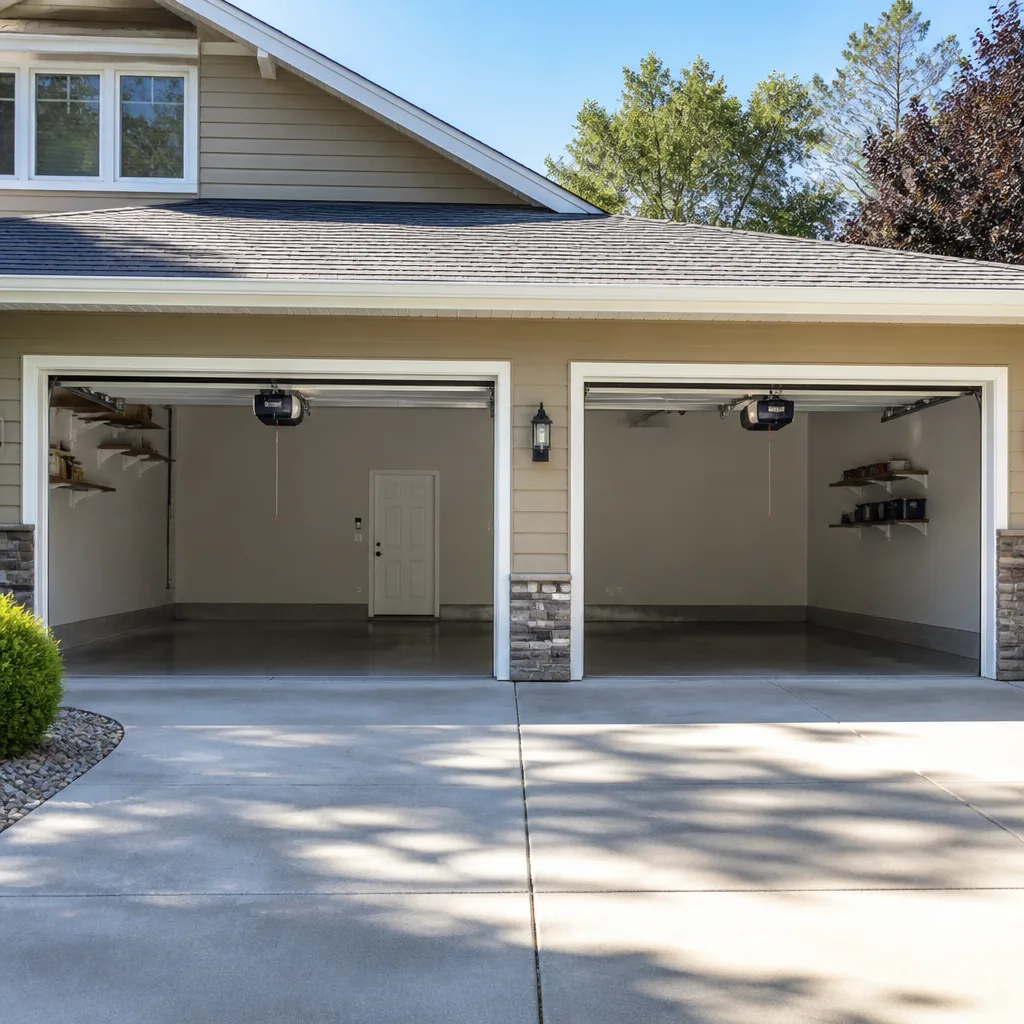
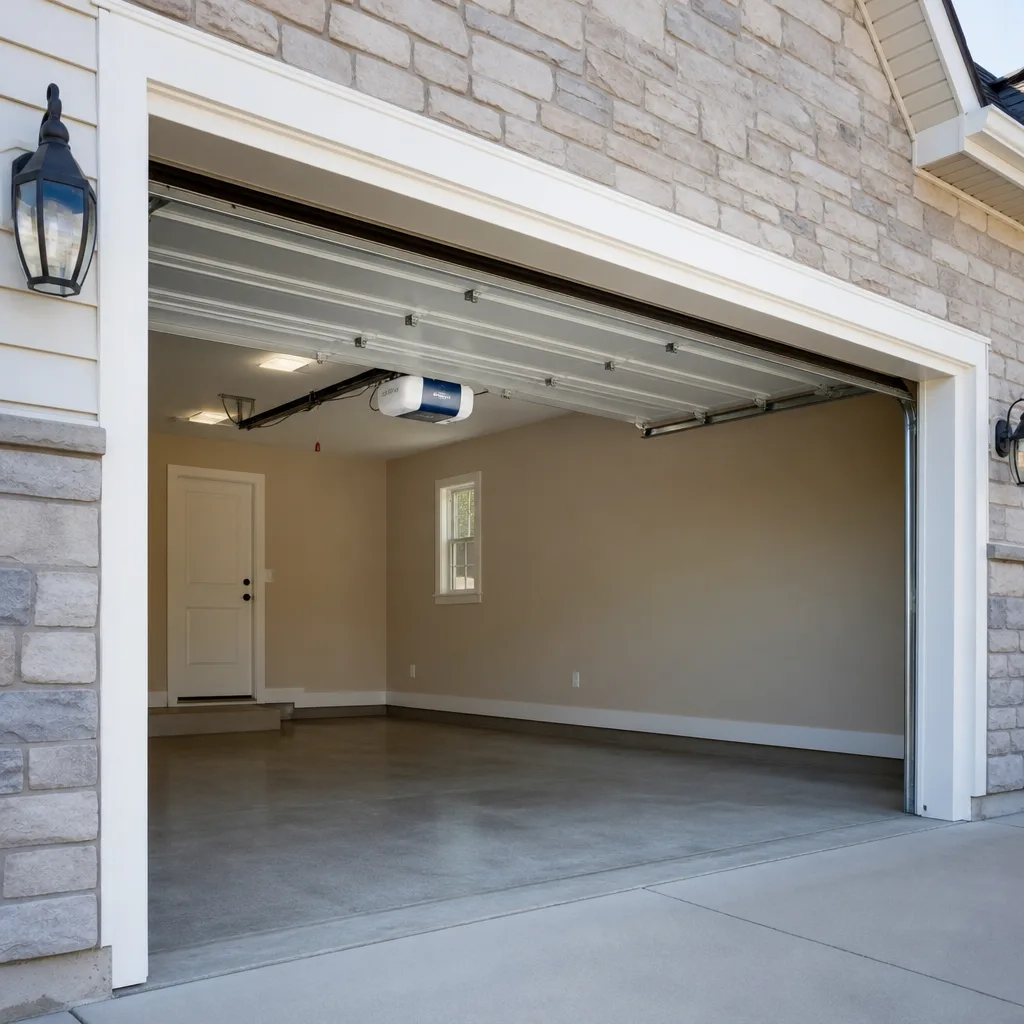
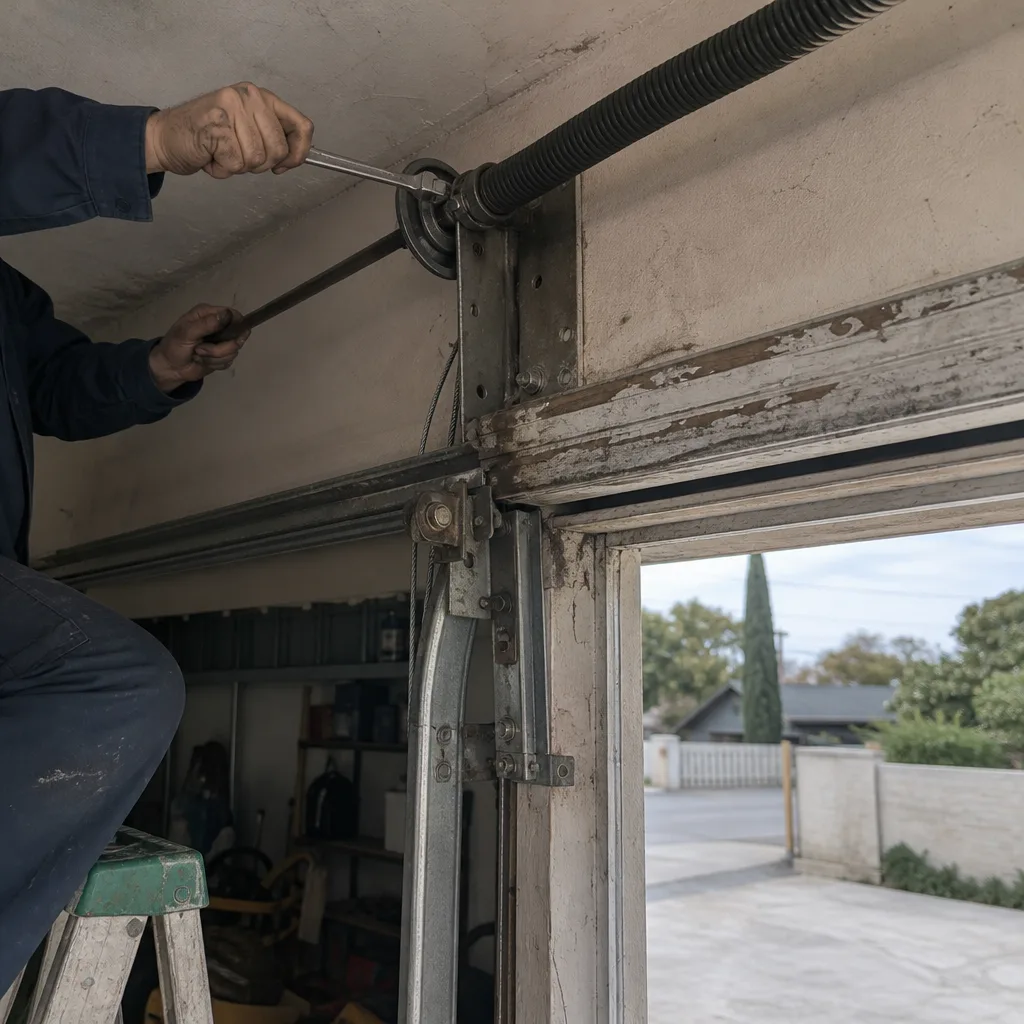 Before
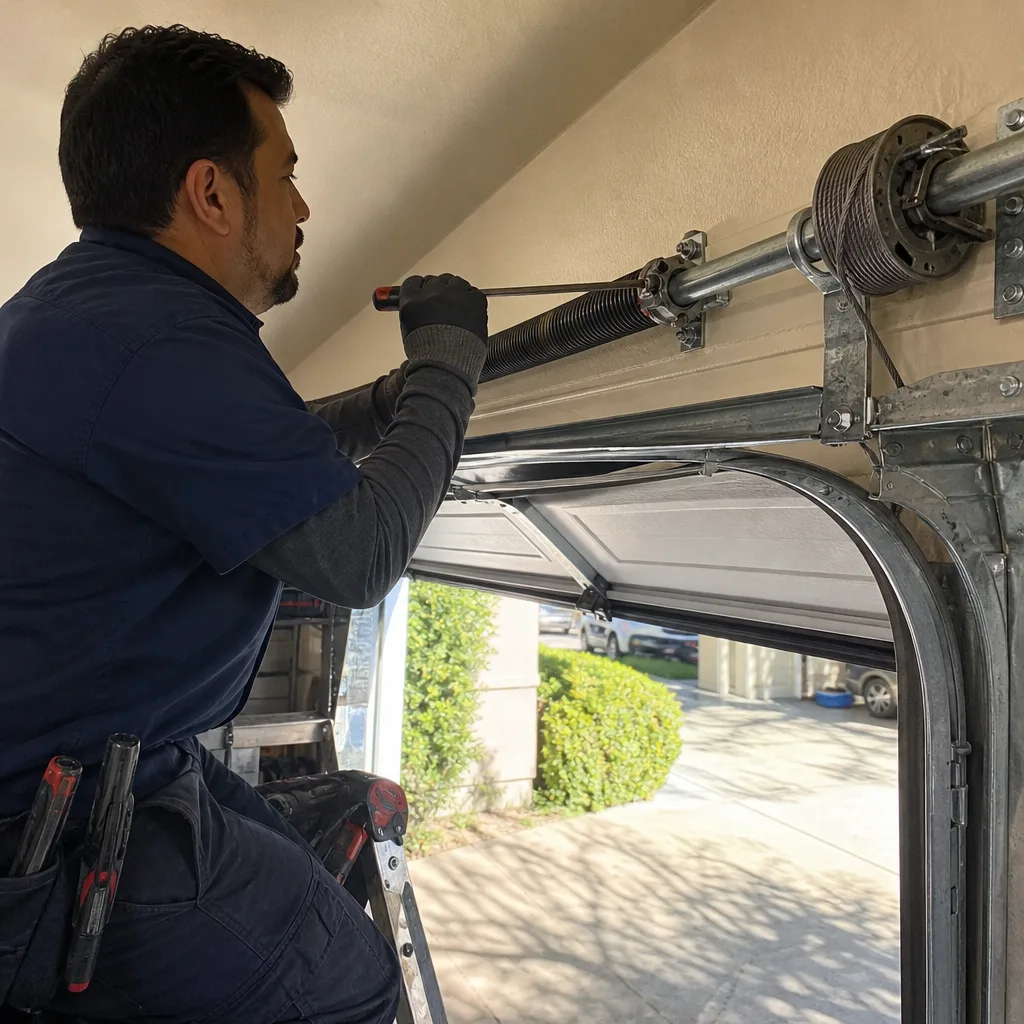 After
After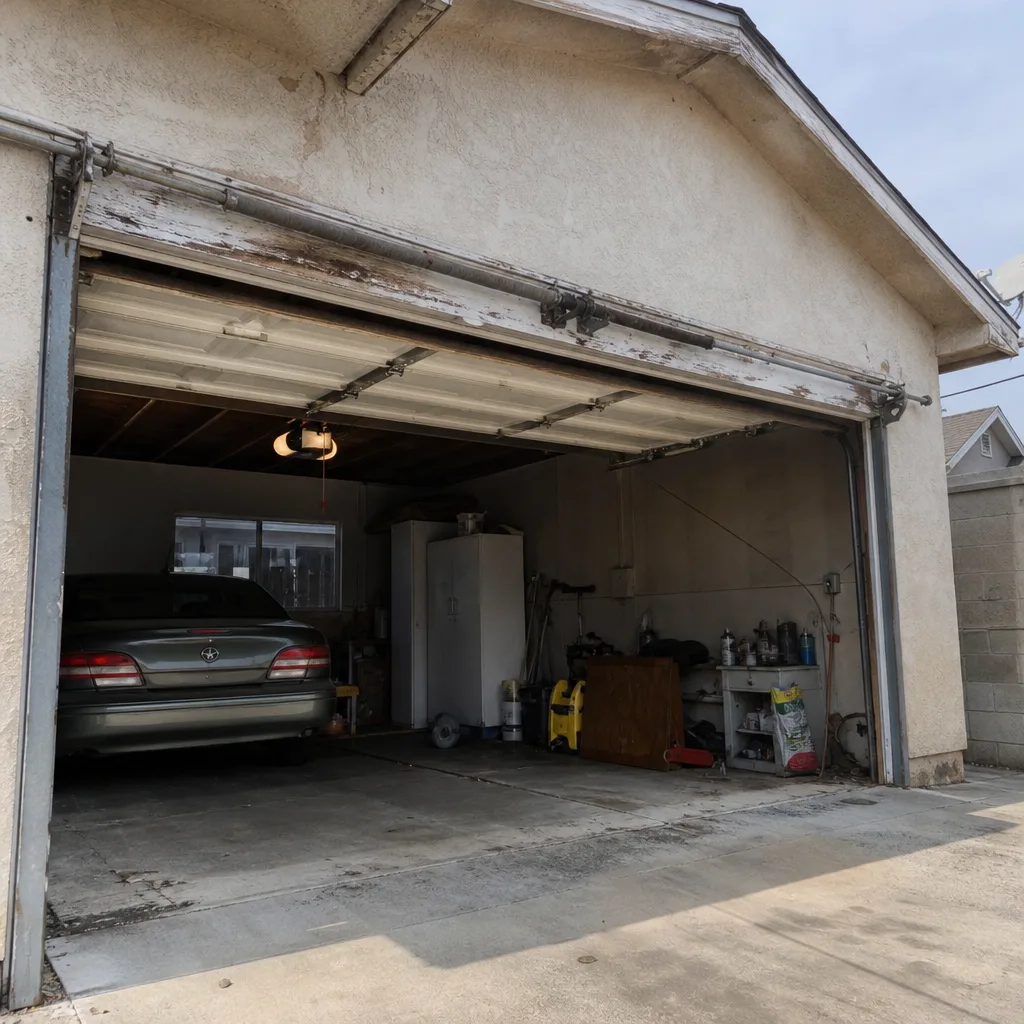 Before
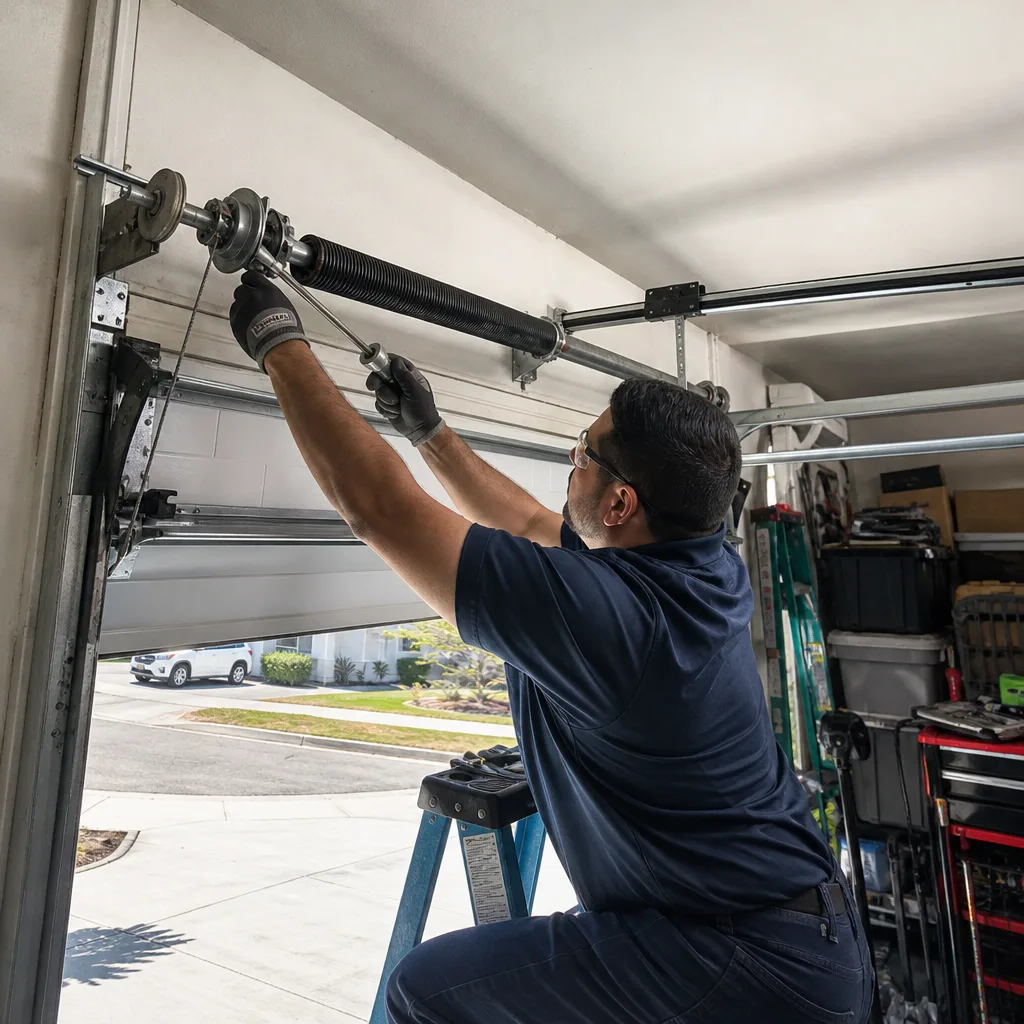 After
After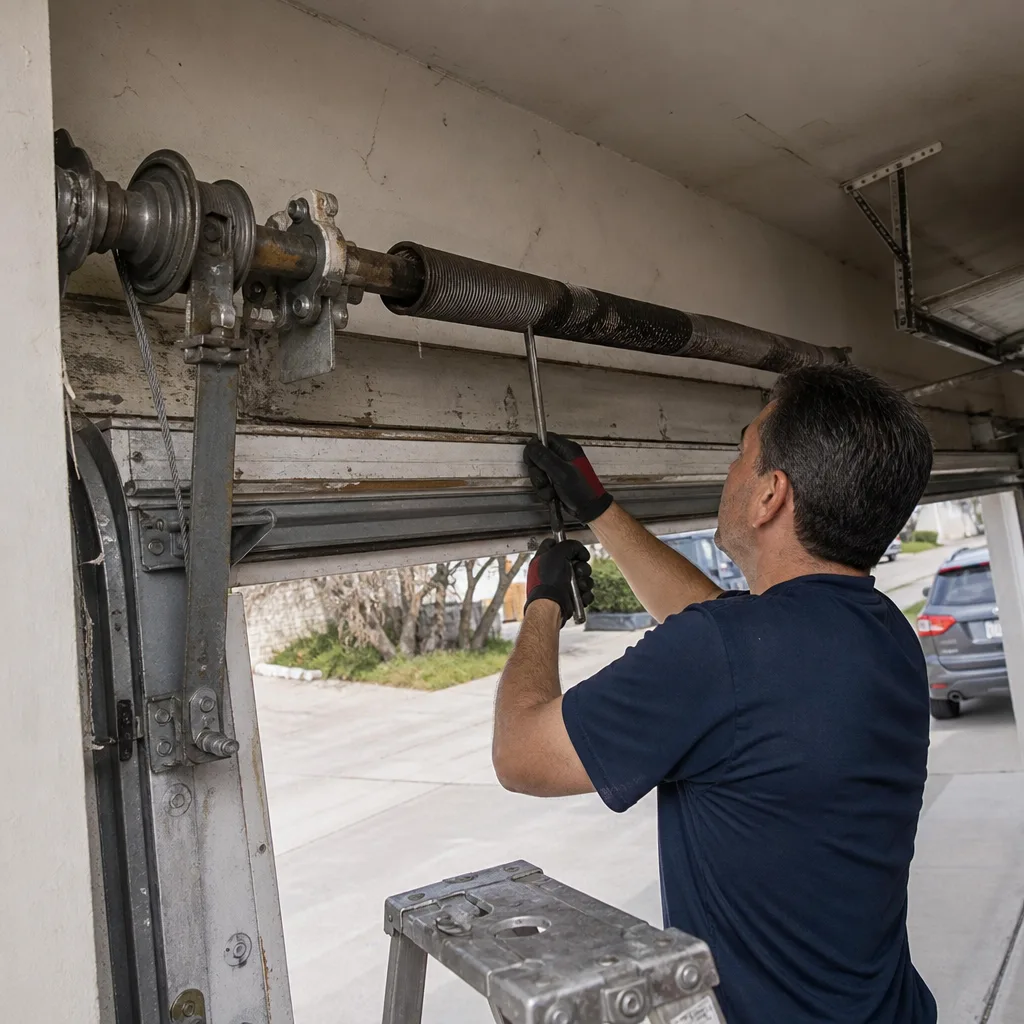 Before
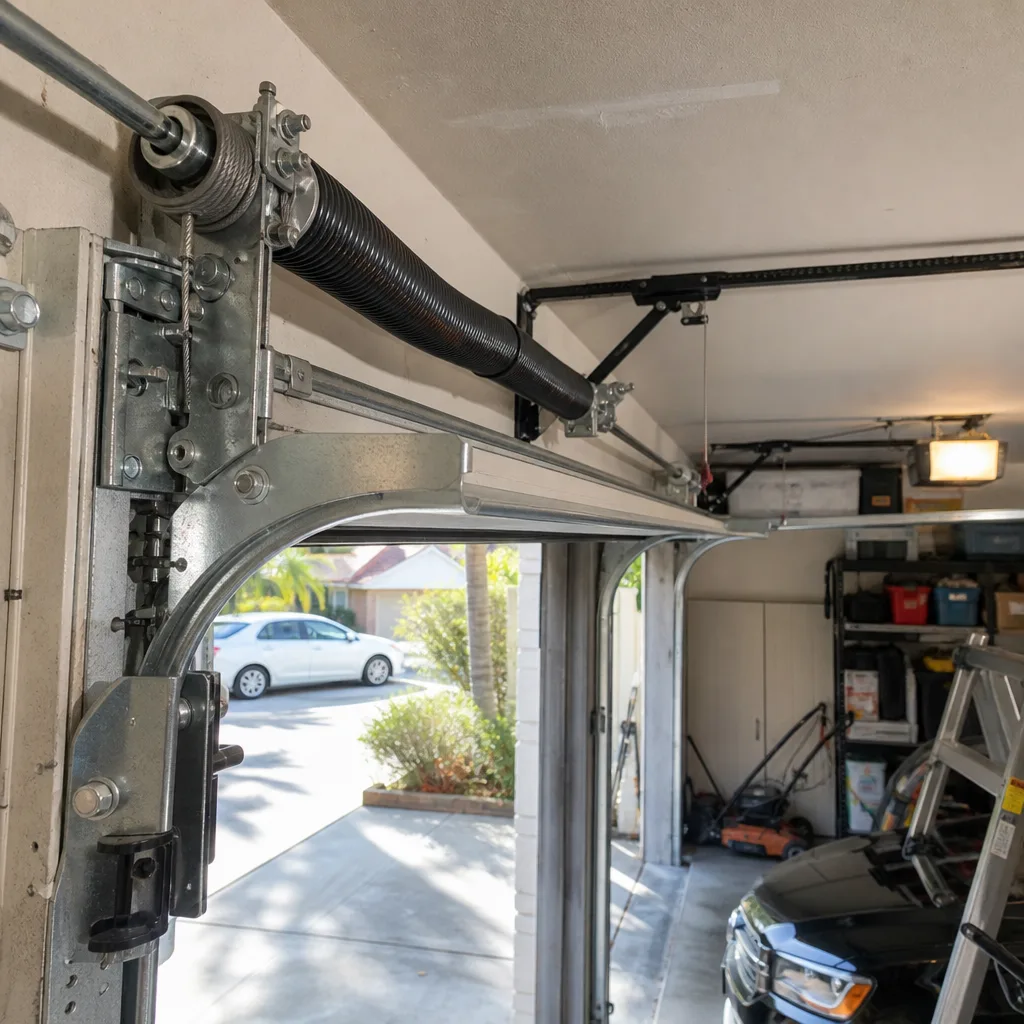 After
AfterHow to Hire a Garage Door Contractor in Los Angeles: A Step-by-Step Guide
In 2023, the California Contractors State License Board took enforcement action against more than 800 unlicensed contractors, and garage door work consistently ranks among the top categories where unlicensed operators thrive. The reason is simple: most homeowners in Los Angeles don’t know what to check before someone arrives at their door, so the unlicensed operator faces almost no friction. This guide walks you through exactly how to verify a contractor’s license, insurance, pricing, and the identity of the person who will stand on your doorstep in Los Angeles, step by step, with more guides & resources available to help protect your home.
Quick Answer
To hire a garage door contractor in Los Angeles, verify their California C-61/D28 license on the CSLB website, confirm both general liability and workers’ compensation insurance in writing, demand a written line-item price before any work starts, and require the company to send you the technician’s name and photo before the visit. Skip any contractor who hesitates on any of those four steps.
Table of Contents
- Step 1: Verify the C-61/D28 License on the CSLB Website
- Step 2: Confirm Insurance Means Both Liability and Workers’ Comp
- Step 3: Demand a Written Price Before Any Work Begins
- Step 4: Require the Technician’s Name and Photo Before the Visit
- Step 5: Spot the Red Flags Specific to the Los Angeles Market
- Step 6: Ask the Three Questions That Expose a Low-Ball Quote
- Step 7: Check the Guarantee Before You Sign Anything
Step 1: Verify the C-61/D28 License on the CSLB Website
Garage door installation and repair in California falls under the C-61/D28 specialty classification, which is a specific credential for “door and gate” contractors. A general handyman license, a roofing license, or an electrician license is not the same thing, and hiring someone without the D28 classification means you have no CSLB recourse if the work fails. Checking takes under 90 seconds. Go to the CSLB website, click “License Check,” and type in the contractor’s name or license number. Look for three things: the license is active, the classification includes D28, and the bond is current.
In our experience at Doyle Garage Door Repair, most Los Angeles homeowners never run this check because they assume the contractor appearing in their search results is licensed. That assumption is exactly what unlicensed operators count on. If a contractor’s name doesn’t return a CSLB result, the conversation is over. If the license belongs to a different business name than the one on the truck or the invoice, that’s also a stop sign.
Los Angeles presents a specific challenge here. The market is enormous, and small unlicensed operations can cycle through neighborhoods like Echo Park, Van Nuys, and Mid-City, staying one step ahead of complaints. The CSLB check is the one tool you can use in less time than it takes to make a cup of coffee, and it eliminates the entire category of risk at once.
Step 2: Confirm Insurance Means Both Liability and Workers’ Comp
“Insured” is the most common word in garage door advertising, and the most commonly misleading. In California, you need the contractor to carry two different policies: general liability, which covers damage to your property, and workers’ compensation, which covers injury to the technician while working on your home. If a technician gets hurt on your property and the company lacks workers’ comp, your homeowner’s insurance policy becomes the target.
The correct move is request a certificate of insurance directly from the contractor’s insurer, not a verbal assurance from the person on the phone. Any legitimate Los Angeles garage door company can produce this document in minutes. At Doyle Garage Door Repair, part of the Threshold Standard is that proof of insurance is available before the appointment, not after you ask three times.
This matters more in Los Angeles than in many markets because the work often happens in detached garages, hillside homes, and older structures where a ladder slip or a falling panel carries real injury risk. If the company can’t name their insurer and show you the certificate, they don’t have what they’re claiming.
Step 3: Demand a Written Price Before Any Work Begins
The price should be written down and handed to you before a single bolt is turned. Not a verbal number, not a text message, not a scribble on the back of a business card. A written line-item estimate. In our experience across Los Angeles, the biggest invoice dispute in garage door repair comes from a verbal estimate that expanded once the work began. A written price kills that problem at the root.
Here’s what a written estimate should include:
- The specific parts being replaced, with brand names where applicable (LiftMaster, Chamberlain, Genie, Clopay)
- The labor charge, stated separately from parts
- The total, including any trip or service fee
- The warranty term, in writing
- A statement that no additional work will be performed without a separate written approval
At Garage Door Repair in Grandview and across every community we serve, the same standard applies: the price is quoted and agreed before any work starts. No exceptions. If a contractor in Los Angeles will not put the total in writing before starting, you are not looking at a pricing policy; you are looking at a business model that depends on surprise.
Step 4: Require the Technician’s Name and Photo Before the Visit
This is the step most Los Angeles homeowners skip entirely, and it’s the one that matters most if you’re home alone, have young children, or simply want to know who is about to walk through your gate. Ask the company to send you the technician’s name and photo before the appointment. Not a generic “your technician will arrive between noon and four.” A specific person, with a face attached.
Doyle Garage Door Repair sends every customer the technician’s name and photo before the visit, and the technician arrives in a clean marked uniform with a photo ID badge at the door. That’s the Threshold Standard, and it’s the single most concrete safety step a garage door company can take. You know who to expect before you open the door.
Make this a non-negotiable in every contractor conversation. If the dispatcher can’t tell you who is coming, that means the company doesn’t know who is coming, which means you are the one taking the risk. In a city the size of Los Angeles, where a stranger at the door is a legitimate daily concern for millions of people, this is not an unreasonable ask. It is the baseline.
Step 5: Spot the Red Flags Specific to the Los Angeles Market
Los Angeles has its own garage door contractor problems, shaped by weather, geography, and the sheer size of the market, which is why Seasonal Garage Door Care for Los Angeles: Year-Round Homeowner’s Guide matters for local homeowners. Here are the red flags we see most often:
- Storm-chasing pop-up companies. After heavy wind or rain, temporary operations appear in neighborhoods like Northridge and Tarzana, offer cheap repairs, and vanish within weeks. If the company didn’t exist in the neighborhood before the storm, be wary.
- Bait-and-switch spring pricing. A torsion spring refill in Los Angeles typically costs $180 to $340, depending on the spring’s cycle rating and the door’s weight. A quote of $79.95 for a “spring repair” nearly always turns into a much larger invoice once the tech explains that your door “needs more work than expected.”
- Refusing to put the total in writing. Covered above, but it bears repeating. In Southern California, this is the single most reliable predictor of an invoice that doesn’t match the quote.
- No physical Los Angeles address. A Google listing with no street address, or an address that turns out to be a mailbox, is a red flag. You want a company with a real footprint in or near the city.
- No pre-visit identity disclosure. If the company will not tell you who is coming to your door, consider what that means about how they run the rest of their operation.
Each of these red flags is avoidable with a single phone call and a few direct questions. The pattern is consistent: the more resistance you get to a straightforward request, the more likely you are dealing with an operator who survives on ambiguity.
Step 6: Ask the Three Questions That Expose a Low-Ball Quote
A low quote is not a bargain; it’s often a tactic. Here are the three questions that separate a legitimate Los Angeles garage door contractor from a low-ball operator:
- “Can I get a written line-item estimate?” A real contractor says yes immediately. A low-ball operator hedges, says they’ll “figure it out on site,” or gives you a number that changes when they arrive. The written estimate is the difference between an agreement and a negotiation.
- “Is the spring rated for my specific door weight and cycle life?” Torsion springs (the large coils mounted above the door that do most of the lifting) have specific cycle ratings and weight capacities. A cheap spring that doesn’t match your door’s weight will fail early. A contractor who can’t answer this question in thirty seconds is not a spring expert.
- “What is the technician’s name, and can you send me a photo?” This question does more than establish safety. It also signals that you are not an easy mark. A company that handles this request gracefully is a company that has nothing to hide.
At Garage Door Opener Repair in Grandview, these questions are part of our standard intake, because we believe a homeowner who asks them is a homeowner who should be answered directly and fully. If a contractor bristles at any of these three questions in Los Angeles, thank them for their time and call someone else.
Step 7: Check the Guarantee Before You Sign Anything
A repair without a written guarantee is a repair you may be paying for twice. Ask what happens if the spring breaks again in six months, or if the opener stops reversing. The answer should be specific, in writing, and attached to your invoice, not promised verbally.
Our guarantee at Doyle Garage Door Repair is 365 days from the date of repair. If it fails, we come back and make it right at no charge. It’s not a conditional promise, it’s not a “we’ll take a look” gesture. It’s a written term on every repair, included at no extra charge. If the repair fails, the second visit is free, automatically, no argument required.
Here’s what to look for in a guarantee when evaluating any contractor in Los Angeles:
- The exact duration (in days, not “for a while”)
- What is covered (parts, labor, or both)
- What the process is if the repair fails
- Whether the guarantee is printed on the invoice or just mentioned on a website
A guarantee that exists only in a marketing brochure has no teeth. A guarantee printed on the invoice does. Make the contractor show you the language before you agree to the work.
What a Typical Garage Door Repair Costs in Los Angeles
Knowing the price range before you pick up the phone protects you from the low-ball bait and the high-pressure upsell. These are the ranges we see across Los Angeles, from the South Bay up through the Valley:
| Service | Typical Los Angeles Range | Notes |
|---|---|---|
| Torsion spring replacement | $180 – $340 | Depends on cycle rating and door weight |
| Garage door opener repair (LiftMaster, Chamberlain, Genie) | $120 – $250 | Includes trolley carriage, limit switch, and logic board issues |
| Full opener replacement with installation | $450 – $750 | Belt or chain drive; pricing varies by brand and rail type |
| New garage door installation (single) | $1,100 – $2,600 | Steel, wood composite, or custom Clopay doors |
| Cable replacement | $120 – $180 | Often paired with spring replacement |
These are ranges, not quotes. Your specific door weight, spring cycle rating, and opener brand will determine the final number. But arriving at the appointment with these figures in your head means you can spot a quote that’s designed to trap you, not to serve you.
How Los Angeles Climate and Housing Stock Affects Garage Door Work
Los Angeles is not one climate; it’s several. Coastal neighborhoods like Playa del Rey and San Pedro deal with salt air and humidity that corrode metal tracks and springs faster than inland areas. The Valley sees summer temperatures above 100 degrees, which accelerate the wear on torsion springs and motor belts. Hillside homes in Mount Washington and Silver Lake often have angled driveways that put extra strain on openers and rollers. A contractor who knows Los Angeles knows these differences, and a generic national franchise often does not.
The housing stock matters too. Many Los Angeles garages are converted spaces, older detached structures, or single-car garages built before modern door standards. That means a spring rated for a standard 7-foot door may not fit a 1960s-era 6-foot-6 door in Westchester or an oversized custom door in Hancock Park, so Choosing the Right Garage Door Brand: A Buyer’s Guide for Los Angeles can help you understand what fits your specific home. This is another reason to ask whether the spring is rated for your specific door, not just “a spring.”
This local knowledge is part of why we recommend hiring a garage door contractor who actually operates in Los Angeles, not a remote call center that dispatches subcontractors, and why The Complete Garage Door Installation Guide for Los Angeles Homeowners emphasizes working with true local professionals. The person who shows up should know the difference between a Coastal salt-air track problem and a Valley heat spring failure.
Common Mistakes to Avoid
- Hiring based on the first Google result without checking the CSLB. Search rankings don’t verify licenses. A 90-second CSLB check does.
- Accepting “insured” as a complete answer. You need both general liability and workers’ comp, in writing, from the insurer. Not a verbal nod.
- Letting the technician start before the price is written down. Once work begins, the leverage shifts. Get the number on paper first, every time.
- Skipping the pre-visit identity check. If you don’t know who is coming, you can’t verify who arrives. Ask for a name and a photo.
- Choosing the lowest quote without asking why it’s lower. A $79 spring “deal” in Los Angeles is almost never a deal. It’s a loss leader designed to get a tech in your garage.
- Ignoring the guarantee language. A repair with no printed guarantee is a repair you may pay for twice.
- Hiring a handyman for garage door work. The torsion spring is under extreme tension and can cause serious injury when mishandled. The D28 classification exists for a reason.
When to Call a Professional
A garage door spring under tension is dangerous. If your door won’t open, makes a loud bang, or the spring is visibly split, do not attempt a DIY fix. The same applies to cables that have come off the drum, a door that’s off its tracks, or an opener that won’t reverse when it meets resistance. These are not weekend projects; they are safety hazards. Doyle Garage Door Repair offers free estimates in Los Angeles. Call (910) 858-8029 and a real person will answer, day or night, weekends and holidays included. We’ll send you the technician’s name and photo before the visit, put the price in writing before any work begins, and back every repair with our 365-day written guarantee.
Frequently Asked Questions
Go to the CSLB website and run the contractor’s name or license number through the license check tool. You’re looking for an active license with the C-61/D28 classification, which is the specific credential for door and gate contractors in California. This takes under 90 seconds.
Typical Los Angeles prices are $180 – $340 for a torsion spring replacement, $120 – $250 for an opener repair, and $450 – $750 for a full opener replacement with installation. Your door weight, spring cycle rating, and opener brand will determine the exact number. Call (910) 858-8029 for a free estimate with the price in writing before any work starts.
No. Garage door installation and repair in California requires the C-61/D28 specialty classification from the CSLB. A general handyman license or a different trade classification does not authorize garage door work, and hiring someone without the proper credential leaves you without CSLB recourse if the work fails.
The technician’s name and photo. This is the single most overlooked step in hiring a garage door contractor in Los Angeles. Doyle Garage Door Repair includes it on every visit, along with a background-checked, uniformed technician who shows a photo ID badge at the door.
Not if the company operates on written pricing. At Doyle Garage Door Repair, the price is written down and handed to you before a single bolt is turned. If additional work is needed, you’ll receive a separate written approval before anything else happens. No verbal estimates, no invoice surprises.
Some do, some don’t. Our guarantee is 365 days from the date of repair. If it fails, we come back and make it right at no charge. The guarantee is printed on every invoice, and the second visit is free if the repair fails. Ask any contractor to show you their guarantee language in writing before you agree to the work.
The Bottom Line
Hiring a garage door contractor in Los Angeles comes down to four verifications: the license, the insurance, the written price, and the identity of the person at your door. Run the CSLB check. Request the certificate of insurance. Demand the line-item written estimate. Ask for the name and photo before the visit. Any contractor who handles all four without hesitation is a professional. Any contractor who resists even one is telling you something important. We’ve been doing this work in Los Angeles since 2001, from Garage Door Installation in Grandview to repair calls across the basin, and the homeowners who ask the right questions are the ones who get the right result, every time.
Written by Aaron Teague, Owner at Doyle Garage Door Repair, serving Los Angeles since 2001.