
Last updated October 9, 2026
Full 25-point door and opener safety check with every visit - springs, cables, rollers, tracks, and your LiftMaster or Chamberlain opener included
You get a price before we start. It does not change when the truck arrives.
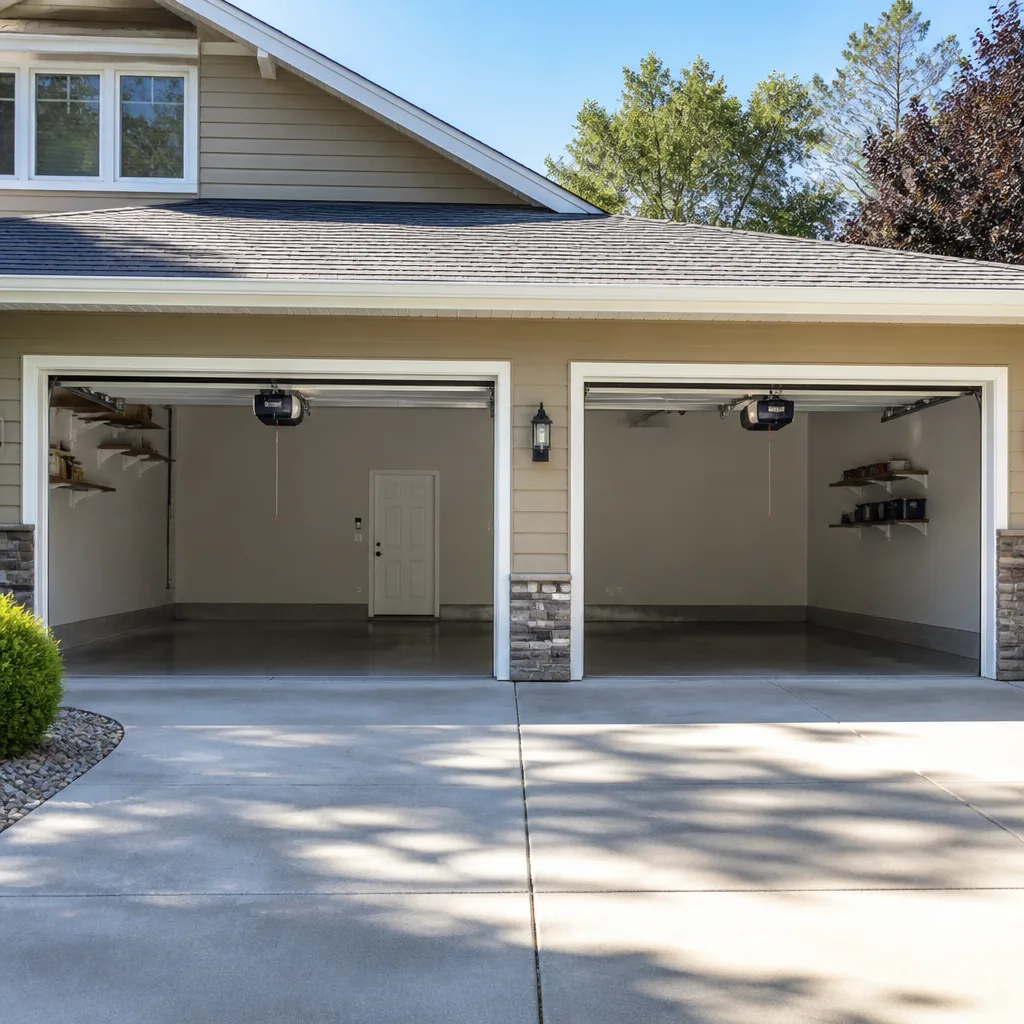
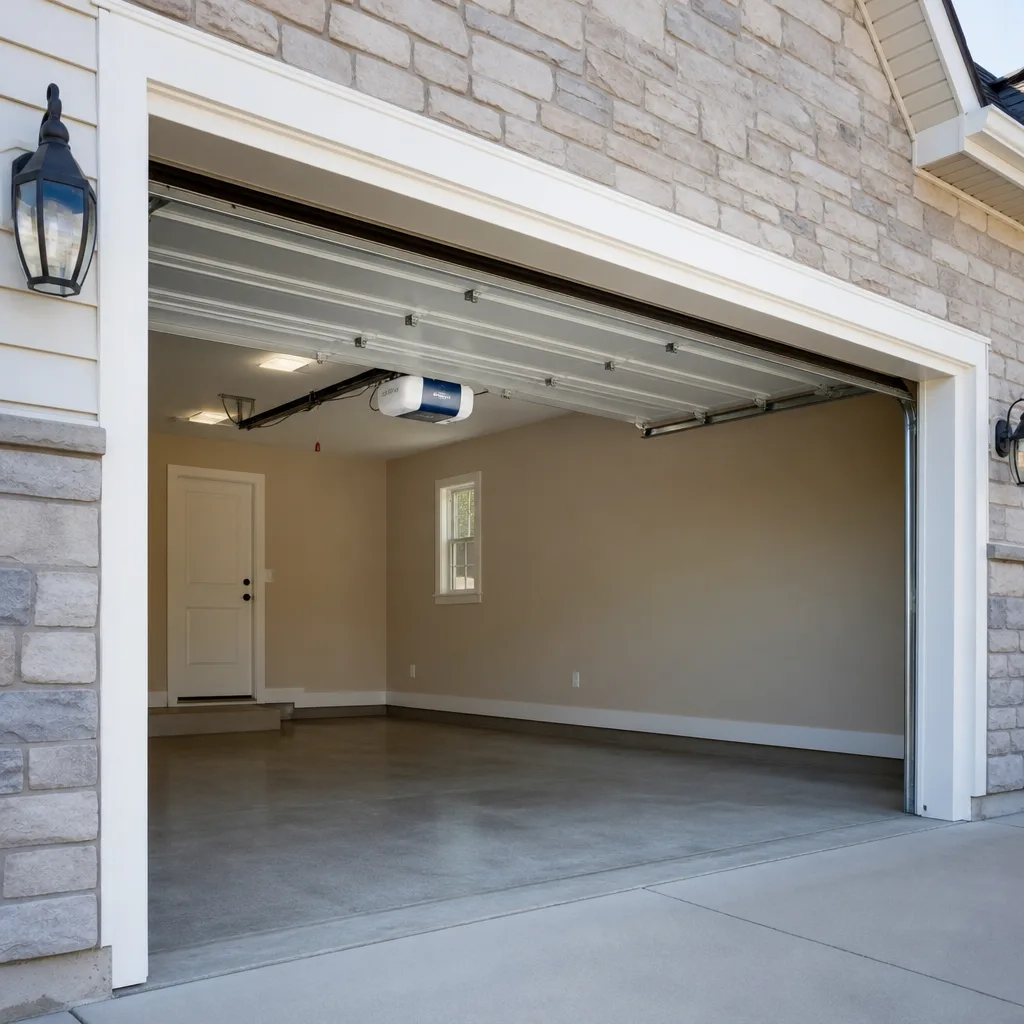
 Before
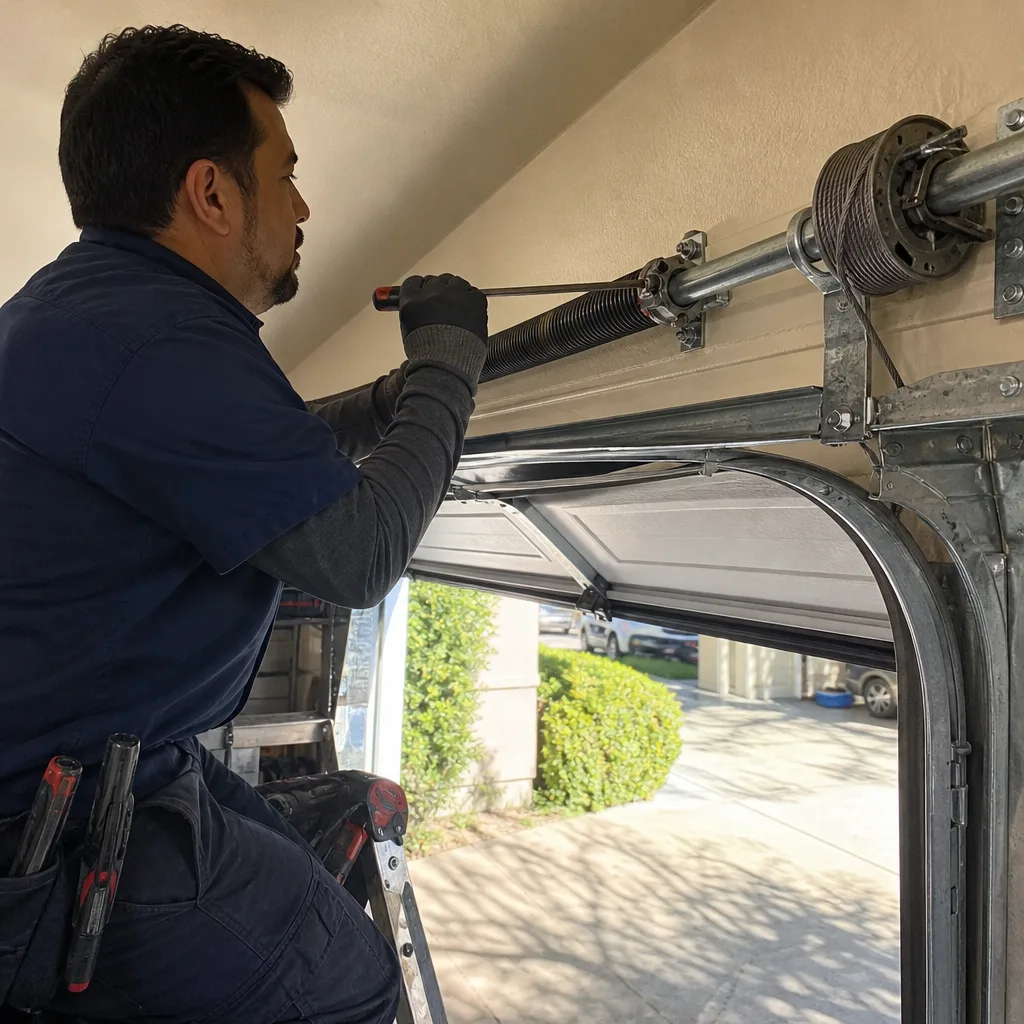 After
After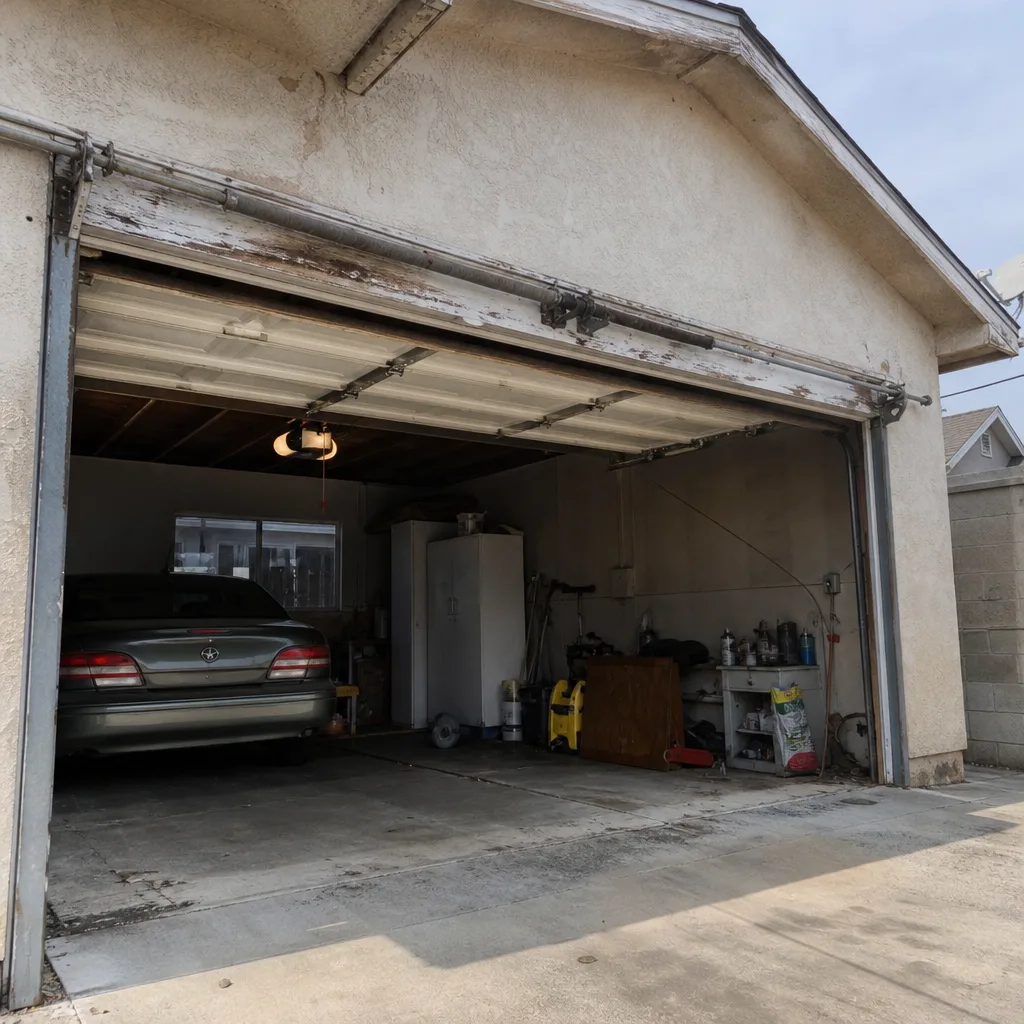 Before
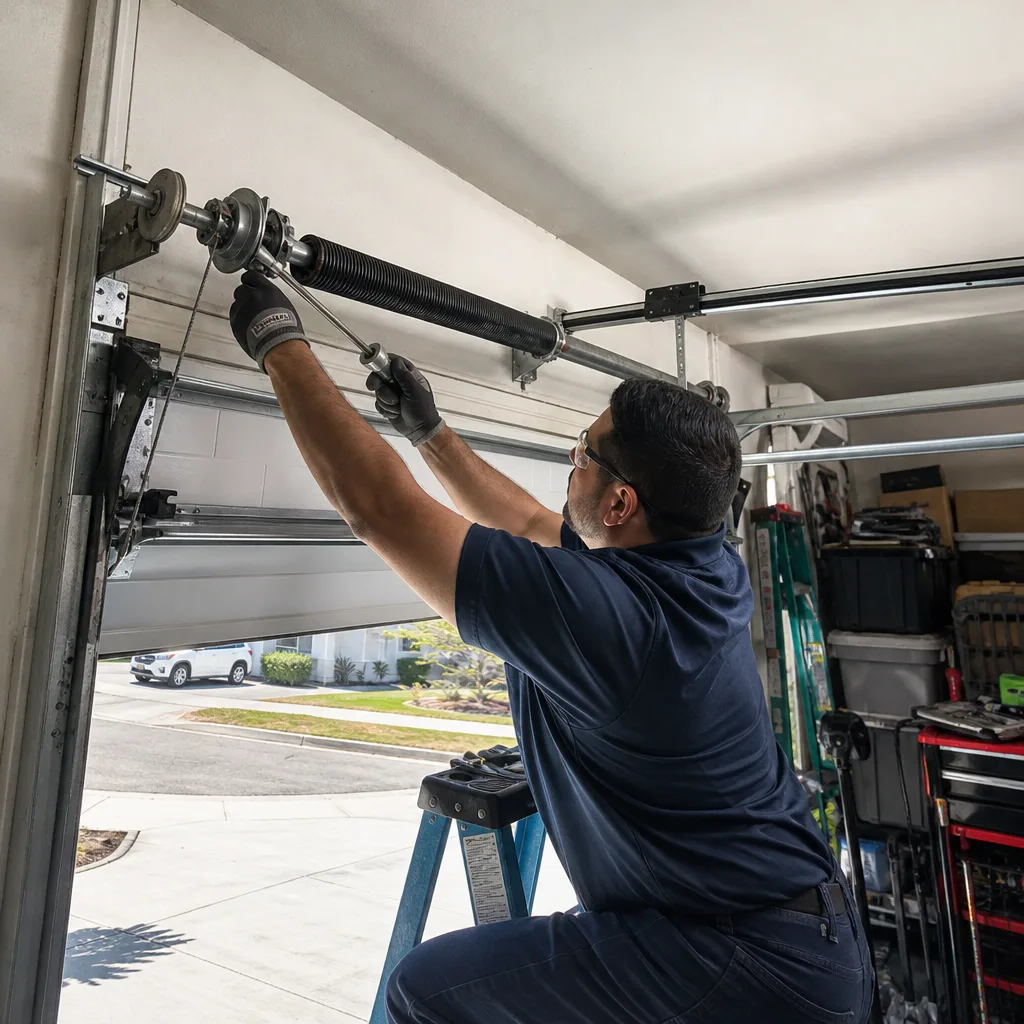 After
After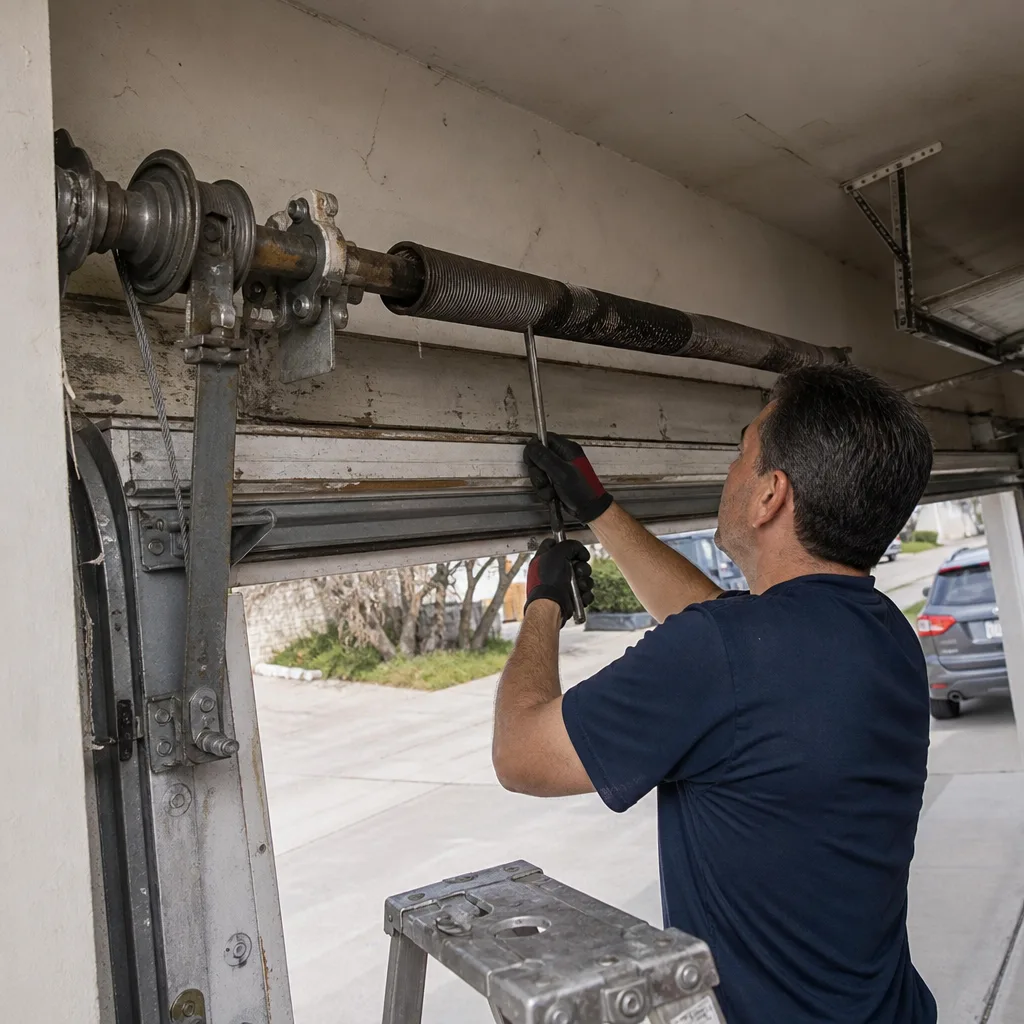 Before
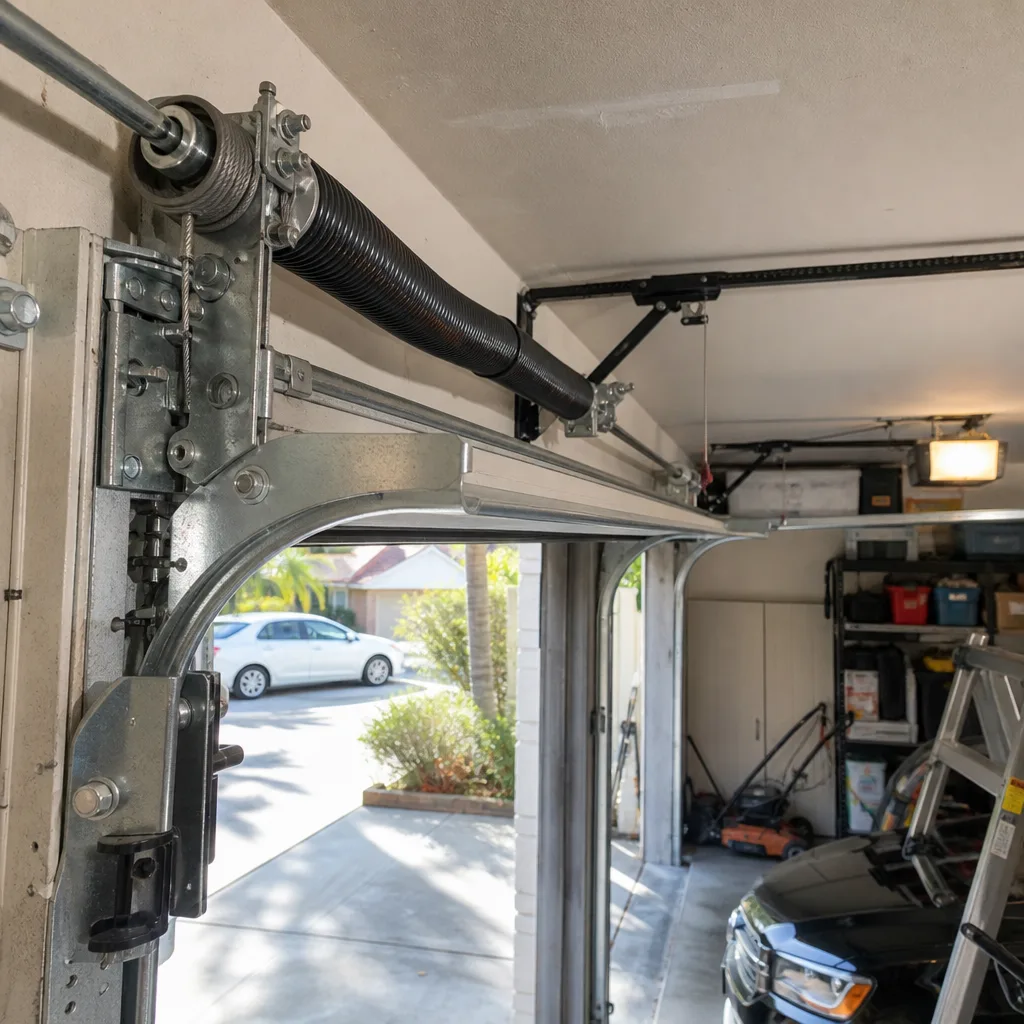 After
AfterGarage Door Repair Troubleshooting: Common Problems and How to Fix Them
“It just stopped working” is the most common phrase we hear from homeowners in Los Angeles, and it’s also the most dangerous one. That single complaint describes at least six different mechanical failures, from a $30 sensor alignment issue to a $400 torsion spring replacement. Mistaking one for another is exactly how people get talked into unnecessary repairs. This guide walks you through a symptom-by-symptom decision tree that tells you what’s wrong before a technician ever arrives, what it should cost, and which fixes you can safely handle yourself versus which ones need our Garage Door Repair services with the right tools and training.
Quick Answer
Most garage door failures fall into one of four buckets: sensor misalignment (a 10-second fix), limit switch or circuit board issues (typically $125-$200), broken springs or cables ($180-$400), and trolley carriage or opener motor failures ($150-$350). The fastest way to diagnose yours is to match the exact symptom, not the vague “it’s broken,” to the component list below. If the door makes a loud bang like a firecracker and the spring above it is split in two, stop using the door immediately and call a professional.
Table of Contents
- The Symptom Table: Match What You See to What’s Wrong
- Safety First: The One Symptom That Means Stop Now
- Photo-Eye Sensors: How to Test Misalignment vs. Failure
- Door Won’t Move at All: The Power and Opener Checklist
- Grinding, Scraping, and Squealing: What Those Noises Mean
- Door Reverses Before Closing: The Most Misdiagnosed Problem
- Los Angeles Climate: Why Dust and Heat Change Everything
- What to Write Down Before You Call a Technician
- Common Mistakes to Avoid
- When to Call a Professional
- Frequently Asked Questions
The Symptom Table: Match What You See to What’s Wrong
Before you touch anything, stand in front of the door and describe what it actually does when you press the wall button or remote. Start with the symptom, then work backward to the component. Here’s the plain-language map we use on service calls throughout Los Angeles, from West Adams to the Valley, plus more guides & resources:
- Opener runs but door doesn’t move: The trolley carriage, the C-shaped metal piece that pulls the door along the rail, has likely stripped or disengaged. You’ll hear the motor humming but see zero movement. This repair typically runs $150-$250.
- Door reverses immediately after touching the floor: The down-limit setting is too aggressive, or the close-force adjustment is off. In most cases this is a $125-$175 adjustment, not a part replacement.
- Door starts to close, then reverses halfway: The photo-eye sensors at the bottom of the track are either misaligned, dirty, or failing. Ten-second fix if it’s alignment, $80-$150 if the sensor itself needs replacement.
- Door jerks, shudders, or moves unevenly: One of the extension springs or cables has lost tension or is about to fail. This is the precursor to a full spring break. We’ll come back to this one because it’s the most dangerous symptom on this list.
- Grinding or metal-on-metal sound while moving: The rollers are shot, or the track is bent. Roller replacement runs $100-$180. A bent track is $150-$300 depending on how many sections are affected.
- Opener makes no sound at all: Power issue, dead capacitor, or a failed logic board. In Los Angeles, where heat and dust fry circuit boards faster than in cooler climates, we replace more Genie and LiftMaster logic boards than any other single opener component.
Safety First: The One Symptom That Means Stop Now
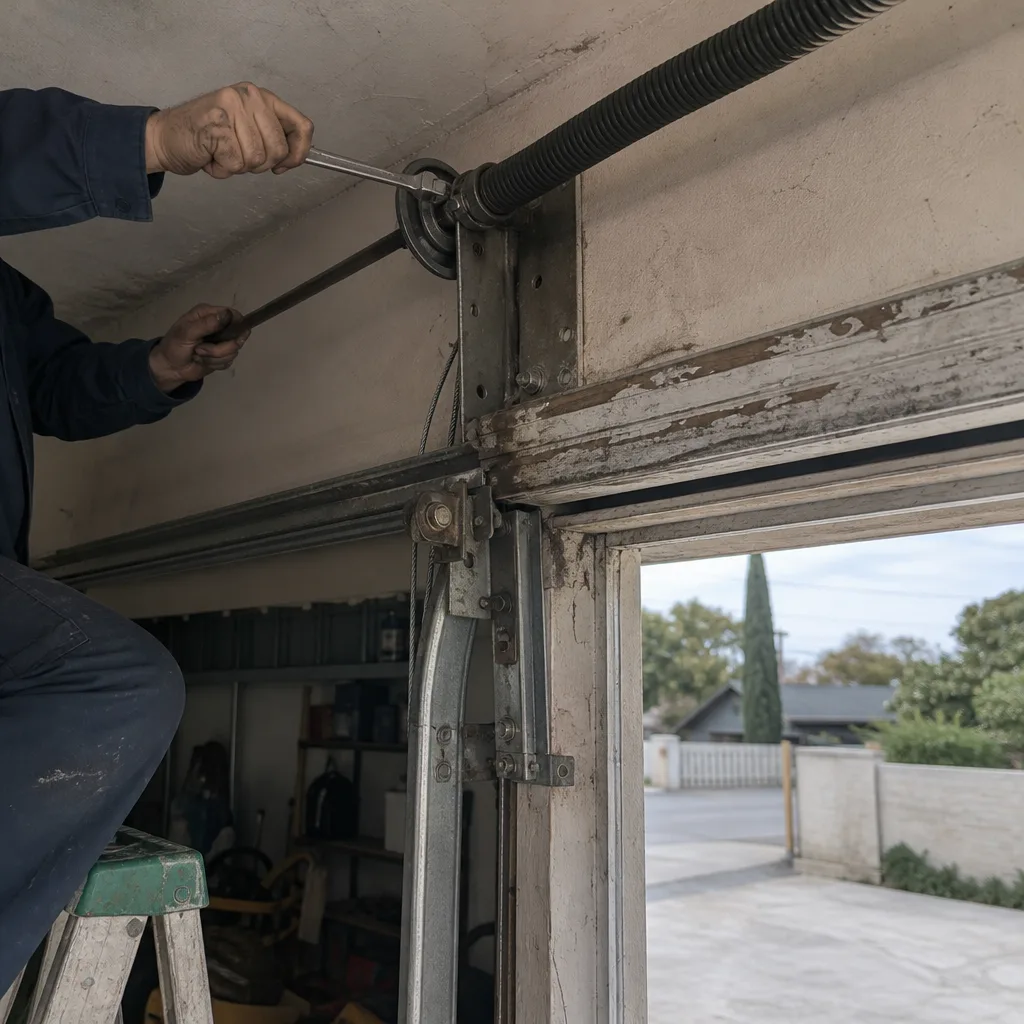
The torsion spring, that large coil mounted horizontally above the closed door, holds hundreds of pounds of tension. When it breaks, it sounds like a gunshot. You’ll hear a single loud bang, the door will feel dead-heavy if you try to lift it manually, and you’ll see a visible two-inch gap in the spring where it snapped apart. If you see that gap, stop using the door immediately, do not try to open it by hand, and do not stand under it while it’s in the raised position. A door with a broken torsion spring is held up by nothing but the opener, and openers are not designed to carry that weight. The door can come down hard and fast without warning. In Los Angeles, torsion spring replacement typically costs $180-$340, including the spring, labor, and a written guarantee. We replace springs on the same visit in nearly every case, and we carry all common sizes on the truck.
Photo-Eye Sensors: How to Test Misalignment vs. Failure
Those two small units mounted about six inches off the floor on either side of the door opening are photo-eye sensors. One sends an invisible beam to the other. If the beam is interrupted, the door refuses to close because it thinks a child, pet, or object is in the way. Here’s the step-by-step test we recommend to every Los Angeles homeowner before they call a technician:
- Look at each sensor. There are two small lights, one green, one red or orange. If both are lit solid, the sensors are getting power and the beam is aligned. If one is blinking, the beam is interrupted or the alignment is off.
- Wipe the lens of both sensors with a clean, dry cloth. Central Los Angeles dust coats lenses faster than you’d believe, and a dirty lens blocks the beam just like a misalignment does.
- Check the wingnuts on the sensor brackets. A bump from a lawn mower, a kid’s bike, or even a hard door close can knock the bracket a quarter-inch out of alignment. Loosen the wingnut, aim the sensor so the light turns solid, and retighten.
- If both lights are lit solid and the door still reverses, close the door from the wall button while holding the button down. If the door closes, the sensors are misaligned or dirty. If it still reverses, one of the sensors has failed internally and needs replacement, typically $80-$150 for the part.
Door Won’t Move at All: The Power and Opener Checklist
A door that does nothing when you press the button is either a power problem or an opener failure. Walk this list in order, and you’ll isolate the cause in under five minutes:
- Check the outlet the opener plugs into. Plug a lamp or phone charger into the same socket. If it doesn’t work, reset the GFCI outlet or check the breaker. This one free fix accounts for a surprising number of Los Angeles service calls, especially in older homes with overloaded circuits.
- Pull the emergency release cord, the red rope hanging from the rail, and try to open the door by hand. If it opens smoothly and stays balanced at waist height, the door itself is fine and the problem is the opener or power supply. If it’s heavy or won’t stay up, you have a spring issue, not an opener issue.
- Check the LED light on the opener unit itself. Blinking codes vary by brand. LiftMaster and Chamberlain openers blink the LED in patterns that correspond to specific faults, listed in your owner’s manual. Genie units use a blinking red light on the motor head. If you’ve lost the manual, most are available online by model number.
- Unplug the opener for 60 seconds and plug it back in. This resets the logic board, which clears transient faults. In Los Angeles, where power surges from rolling brownouts are common, a hard reset fixes a surprising number of opener failures.
If none of these steps gets the door moving, the problem is most likely the circuit board, capacitor, or motor. On a typical LiftMaster or Chamberlain opener, board replacement runs $150-$250. Motor replacement on a unit more than 12 years old usually means the opener itself should be replaced, which runs $300-$500 installed in the Los Angeles market.
Grinding, Scraping, and Squealing: What Those Noises Mean
Your ears are a diagnostic tool. Each noise maps to a specific component, and knowing the difference keeps a small repair from becoming a big one:
- Squealing when the door moves: Dry rollers. A shot of garage door-specific lithium grease on the roller bearings usually quiets it. Don’t use WD-40; it’s a solvent, not a lubricant, and it’ll wash out whatever grease remains. Roller lubrication is a five-minute homeowner job.
- Grinding or scraping metal-on-metal: The rollers are worn to the point where the bearings have failed, or the track is bent. Worn rollers should be replaced, $100-$180 for a full set. A bent track needs a technician with the right tools to straighten or section-replace it, typically $150-$300.
- Rattling or shaking while moving: Loose bolts on the track brackets or opener rail. A socket wrench and ten minutes fixes most cases. Check every bracket bolt where the vertical track meets the wall and where the horizontal track meets the ceiling.
- Thumping or banging at the top of the door’s travel: The up-limit is set too high, and the door is slamming into the opener rail at full speed. This is a limit switch adjustment, $125-$175, and ignoring it will eventually crack the rail or burn out the opener motor.
Door Reverses Before Closing: The Most Misdiagnosed Problem
Here’s the scenario we hear constantly from Los Angeles homeowners: the door closes most of the way, then reverses back open for no reason. The automatic assumption is that the sensors are bad. In a meaningful number of cases, the sensors are fine and the real culprits are the limit settings or the close-force adjustment.
When a door reverses immediately after the bottom edge touches the floor, the down-limit is set too far. The door thinks it’s hit an obstacle and reverses as a safety response. The fix is a small adjustment on the opener unit, usually two dials or an up-down arrow on the control panel. It takes a technician about ten minutes. When the door reverses partway down without touching anything, the close-force setting is too sensitive. The opener is detecting resistance it believes is an obstacle. A technician can increase the close force incrementally until the door closes smoothly without being unsafe.
Both of these fixes are adjustments, not parts, and they should cost between $125 and $175 on a service call in Los Angeles. If a company tells you the circuit board needs replacing before they’ve even checked the limit settings, get a second opinion.
Los Angeles Climate: Why Dust and Heat Change Everything
We’ve been repairing garage doors in Los Angeles since 2001, and we’ve learned that this city’s climate fails garage door components in ways that cooler, wetter cities never see. Read our Garage Door Warning Signs: A Los Angeles Homeowner’s Reference Guide for details. Three factors matter most:
- Fine dust and particulate buildup: The dry air and constant construction in neighborhoods like Silver Lake and Echo Park fill photo-eye lenses with a fine coating you can barely see. That same dust settles on circuit boards and acts as an insulator, making already-hot components run hotter.
- Sustained heat inside uninsulated garages: A closed garage in the San Fernando Valley can hit 120 degrees in the summer. Circuit boards, capacitors, and logic boards degrade noticeably faster in that kind of sustained heat. We replace opener logic boards at a higher rate than our peers in coastal markets.
- Thermal expansion on metal tracks: The temperature swings from cool mornings to hot afternoons cause metal tracks to expand and contract. Over years, this loosens bolts and shifts track alignment, which is why properly torqued track bolts matter more here than in stable climates.
What to Write Down Before You Call a Technician
You’ll get a more accurate phone estimate, and you’ll protect yourself from vague pricing, if you gather this information before picking up the phone:
- The exact symptom, in one sentence: “Door reverses after touching the floor” is actionable. “It’s broken” is not.
- The brand and model of the opener, printed on the motor housing. Genie, LiftMaster, Chamberlain, and Raynor units have different failure patterns and different part pricing.
- Any blinking lights or codes on the opener itself. Count the blinks if you can.
- Whether the door opens manually by pulling the red release cord, and whether it stays balanced at waist height when you do. This tells the technician whether the springs are still good.
- Any recent changes: a power surge, a bump to the door or track, a new remote, a move-in, anything that might have changed the system.
Common Mistakes to Avoid
- Ignoring a slow or uneven door. When a door starts moving noticeably slower on one side, an extension spring is losing tension and will fail. That’s a $180-$340 repair if you catch it now, and a $400-$600 emergency if it breaks at 7 a.m. with your car trapped inside.
- Lubricating a worn roller instead of replacing it. Grease quiets a failing roller for a few days, then the bearing seizes and the roller skids along the track, carving grooves into the metal. You’ve turned a $140 roller job into a $300 roller-plus-track job.
- Replacing the opener when the problem is the springs. A door that’s become hard to lift manually has spring failure, not opener failure. A new opener will strain against bad springs and burn out its motor in a year or two. Always diagnose the springs before condemning the opener.
- Adjusting the limit or force settings blind. Turning dials without knowing which way is which can make a reversing problem worse or, more seriously, disable a safety reversal feature. This is one adjustment worth paying a trained technician to make.
- Using the wrong grease on rollers and hinges. WD-40 and household oils break down plastic bushings and attract dust in Los Angeles’s dry, particulate-heavy air. Use garage door-specific lithium grease or silicone spray only.
- Waiting days for a spring repair. A broken torsion spring means the door is held only by the opener. Every day you wait is a day the opener is carrying a load it wasn’t designed for. We make same-day spring replacements standard in the Los Angeles area because waiting isn’t safe.
When to Call a Professional
Some repairs are legitimately homeowner jobs: cleaning sensors, tightening track bolts, lubricating rollers. Others are not. Call a professional if the torsion spring is broken, if the door comes off its track, if a cable is frayed or snapped, or if you’ve replaced the opener’s logic board and the door still misbehaves. Torsion springs are under enough tension to cause serious injury, and cable replacements require the same tools and knowledge. Doyle Garage Door Repair offers free estimates throughout Los Angeles, and every quote is written down and handed to you before any work starts. Call (910) 858-8029 to schedule.
Frequently Asked Questions
Most garage door repairs in Los Angeles run between $125 and $400 depending on the component. Sensor replacement runs $80-$150, limit or force adjustments run $125-$175, trolley carriage replacement runs $150-$250, and torsion spring replacement runs $180-$340. Opener replacement runs $300-$500 installed. Call (910) 858-8029 for an exact quote, our estimates are free.
Yes. Doyle Garage Door Repair keeps same-day appointments available in Los Angeles for urgent repairs like broken springs and doors that won’t close. Call (910) 858-8029 early and we’ll give you a window before the truck rolls.
No. The price we quote over the phone is the price we write down and hand to you before work starts. If we find something unexpected, we tell you before touching it and we re-quote in writing. No verbal estimates, no surprise invoices.
We service all major brands including LiftMaster, Chamberlain, Genie, Raynor, Clopay, Amarr, Wayne Dalton, and Craftsman, and we carry common parts for all of them on our trucks. Most repairs are completed on the first visit.
Power surges during Los Angeles brownouts and rolling outages can trip the GFCI outlet the opener plugs into, or reset the opener’s logic board into an error state. Unplug the opener for 60 seconds, check the outlet, and if the door still doesn’t respond, call us before assuming the motor is dead.
No. Spring replacement is a safety repair, and we don’t charge a surcharge for same-day service. The price we quote includes the spring, installation, and a 365-day written guarantee against spring failure. If the spring fails within that year, we come back at no charge.
The Bottom Line
The difference between a $30 fix and a $400 repair is knowing what symptom matches what component. Door reverses before closing? Check the sensors and limit settings before touching the opener. See Garage Door Repair Warning Signs Every Homeowner Should Know for more. Loud bang and a visible gap in the spring? Stop using the door and call a technician today. Opener runs but nothing moves? The trolley carriage is the likely culprit. In Los Angeles, our dust, heat, and power conditions make circuit boards and sensors fail faster than in cooler climates, which makes accurate diagnosis even more valuable. Write down the five things from our checklist, call (910) 858-8029, and you’ll get a written price before any work begins.
Written by Aaron Teague, Owner at Doyle Garage Door Repair, serving Los Angeles since 2001.