
Last updated October 9, 2026
Full 25-point door and opener safety check with every visit - springs, cables, rollers, tracks, and your LiftMaster or Chamberlain opener included
You get a price before we start. It does not change when the truck arrives.
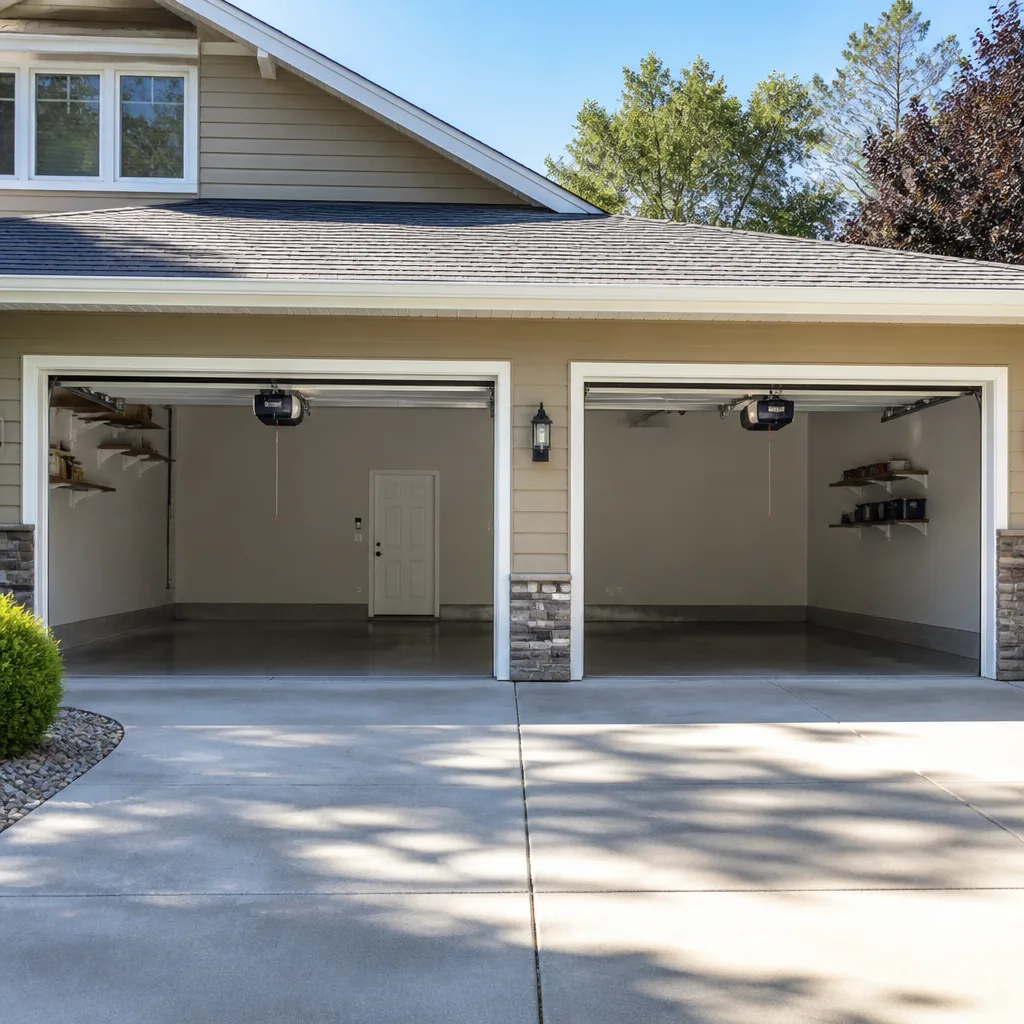
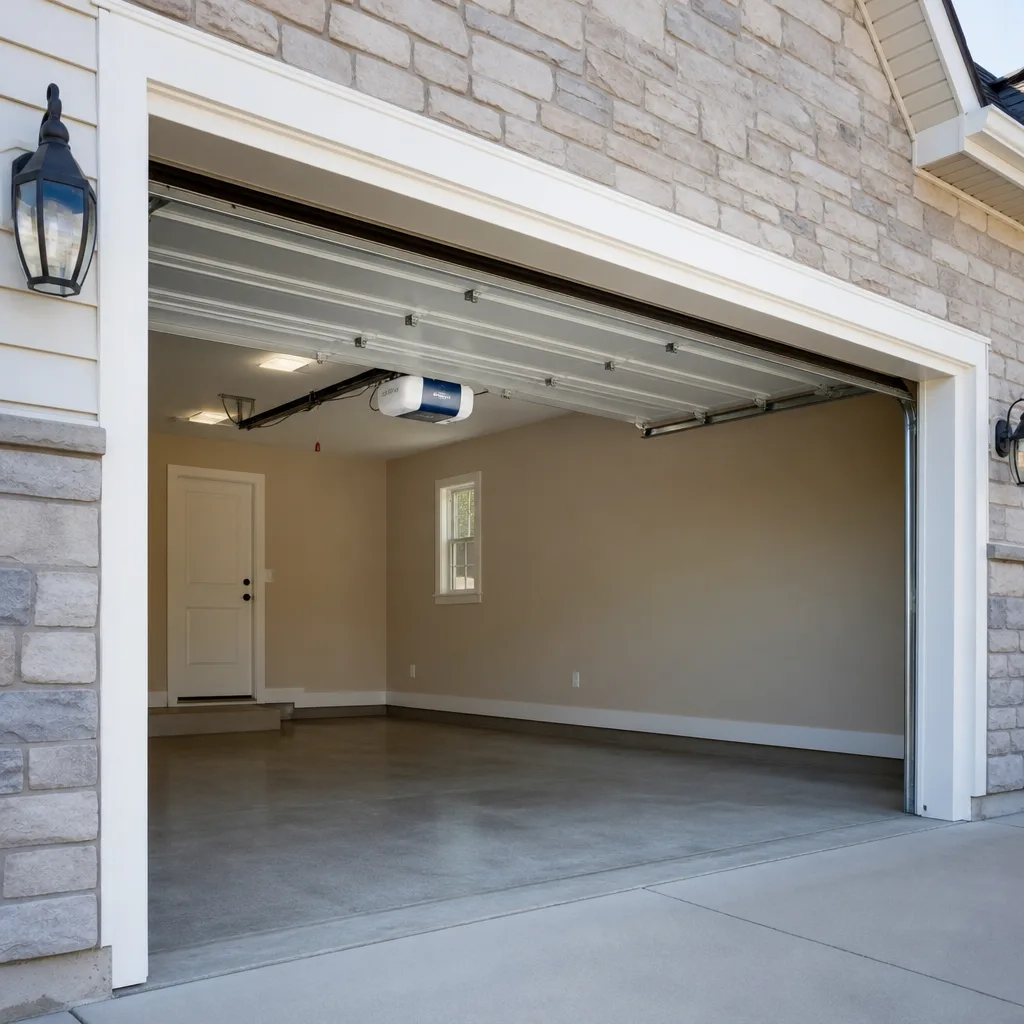
 Before
 After
After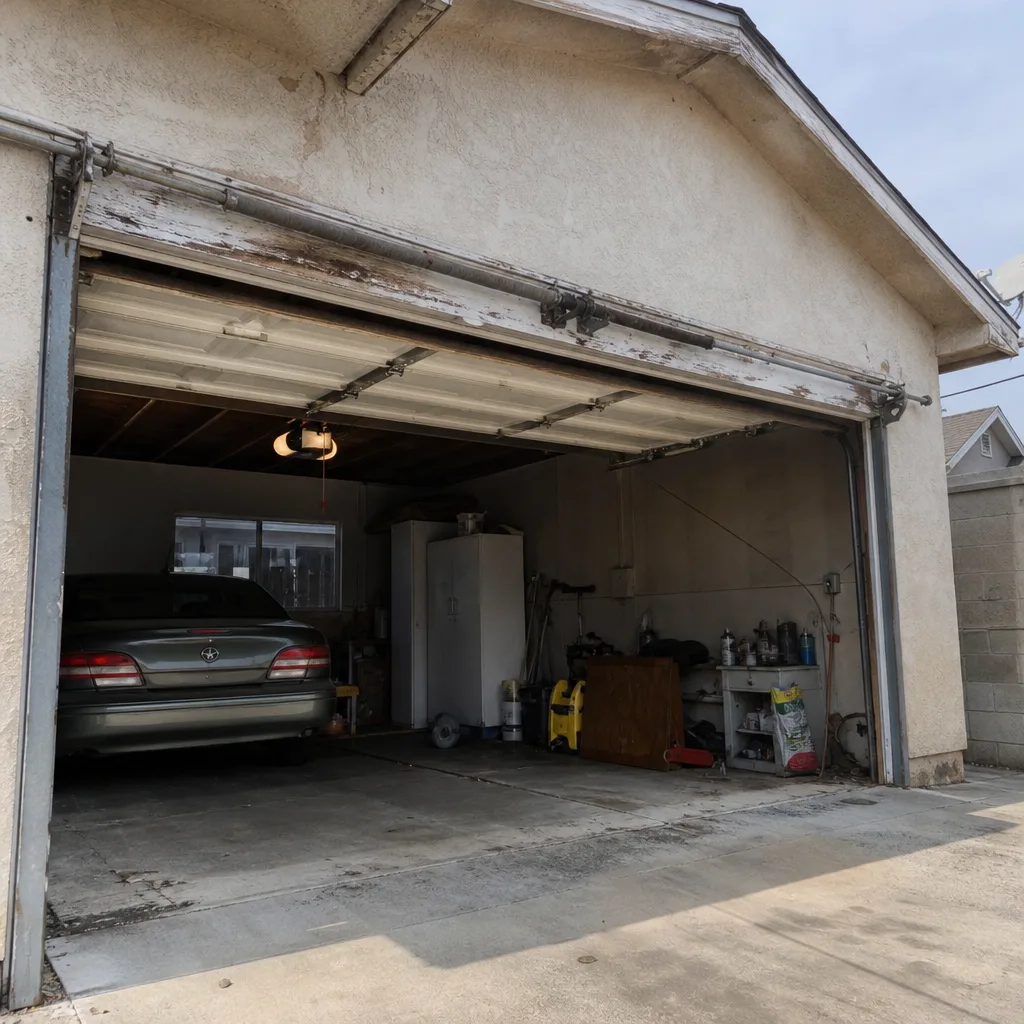 Before
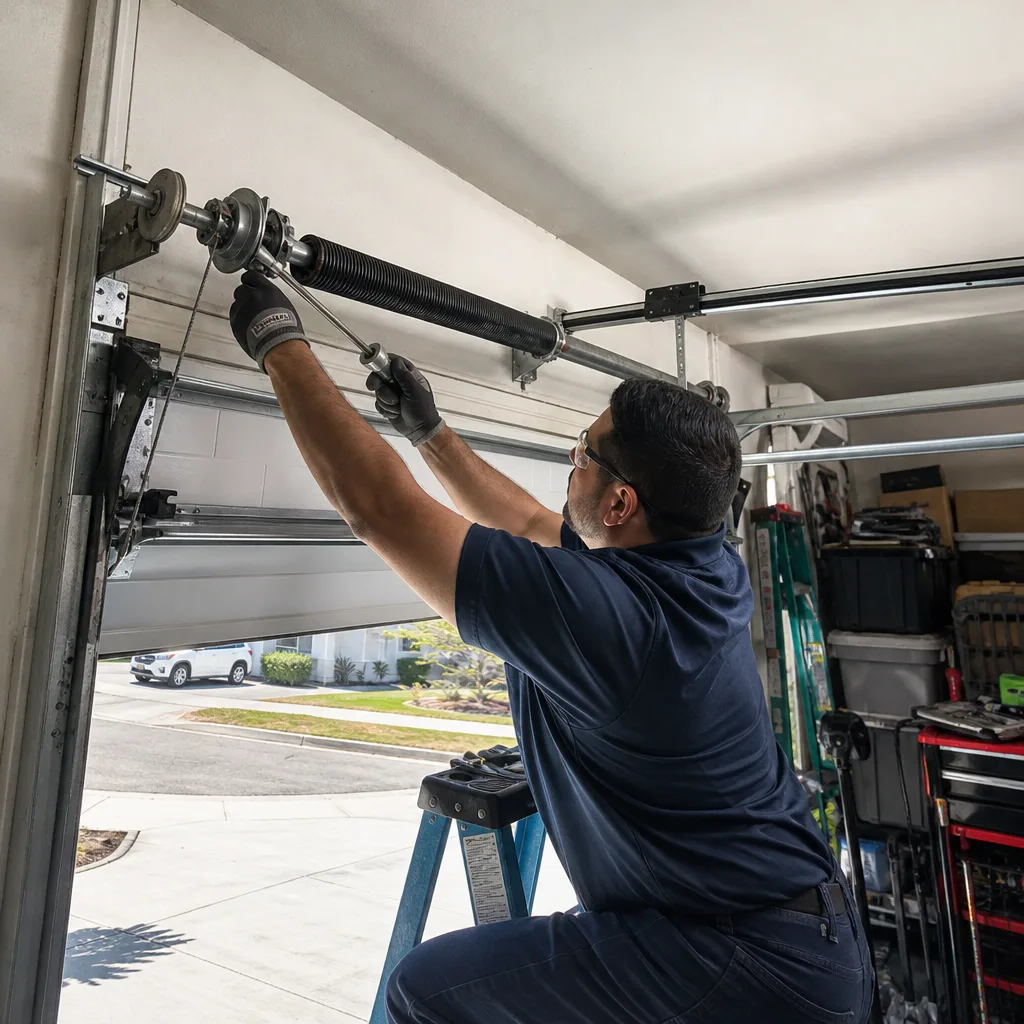 After
After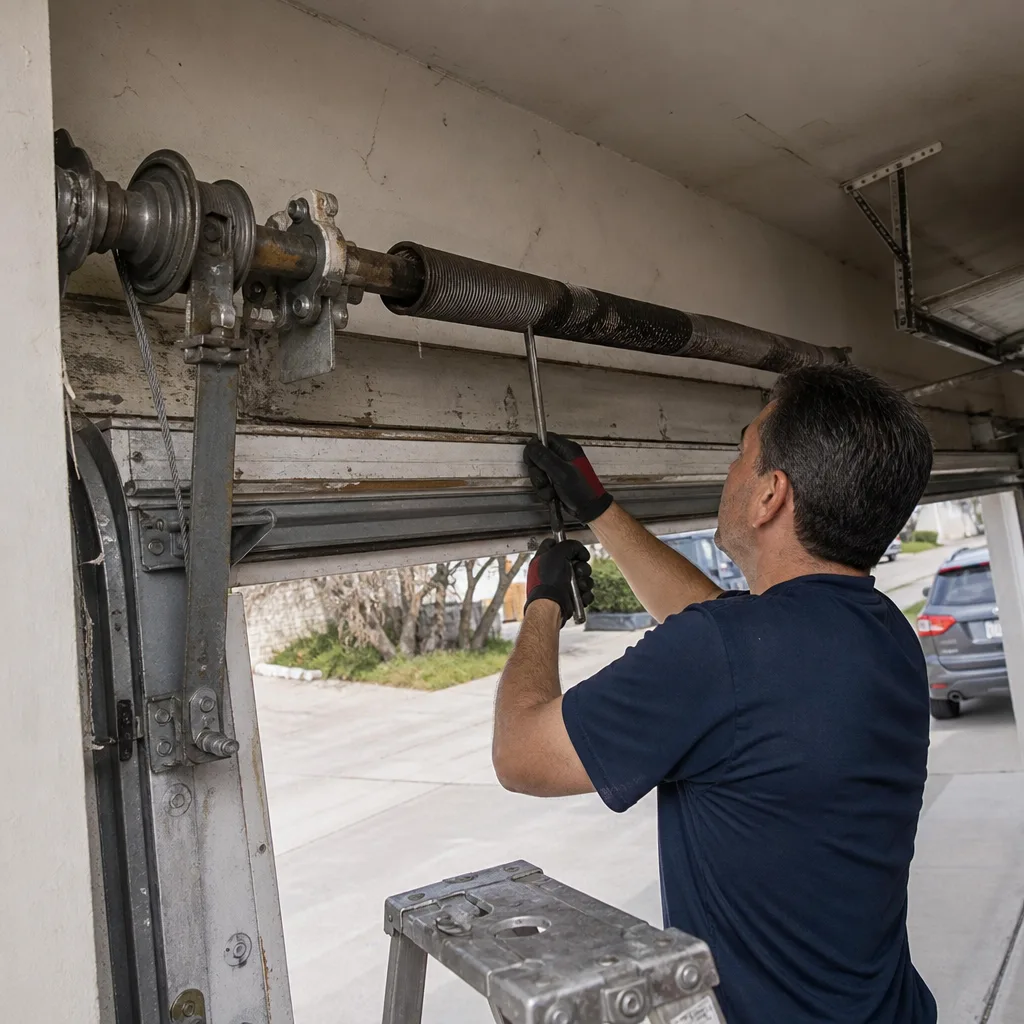 Before
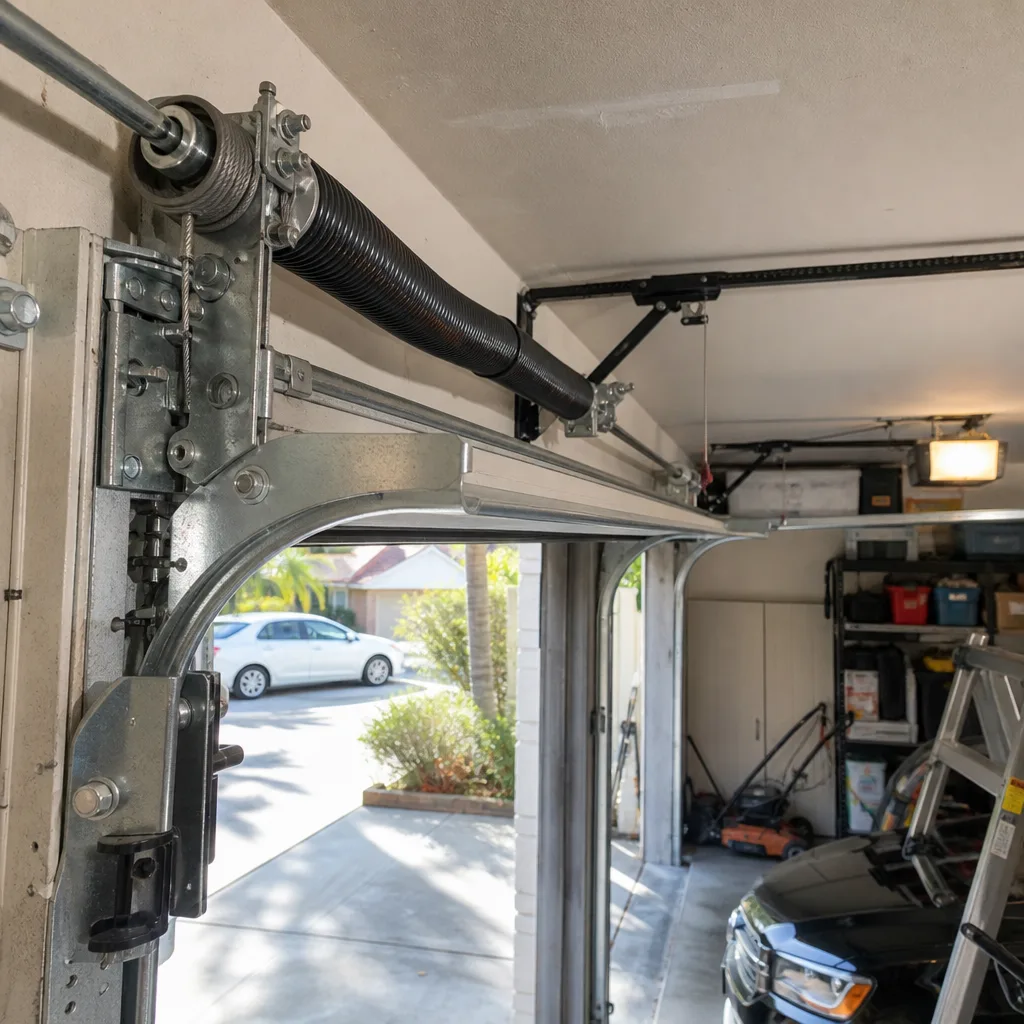 After
AfterGarage Door Installation Warning Signs Every Homeowner Should Know
A garage door that works perfectly for the first month can still be a bad install. Improper spring tension and misaligned tracks often take weeks of cycling to reveal themselves, by which time the installer is long gone and your warranty claim is a phone call to someone who has no incentive to pick up. This guide walks through what goes wrong when corners are cut, how to spot the symptoms during the first 30 days, and the simple post-install checks you can run yourself. If you’re in Los Angeles, where garage doors cycle hundreds of times a year in everything from coastal humidity to Valley heat, the stakes are higher than most installers will admit.
Quick Answer
The most reliable garage door installation warning signs are a door that hesitates at the same point in its travel, a bottom edge that doesn’t seal evenly, grinding or squealing sounds that get worse over the first month, and an installer who left without running a full test cycle in front of you. These symptoms typically trace back to incorrect spring tension, unlevel track alignment, or torque settings that were never verified with a torque wrench. A proper installation of your garage door includes a written price before work starts, a full demonstration of the door’s balance and safety reversal, and a written guarantee that covers what happens after the truck pulls away.
Table of Contents
- Red Flags You Can Spot During the Installation Itself
- The 30-Day Symptom Window: What a Botched Install Sounds and Feels Like
- Cosmetic Gap vs. Structural Gap at the Top Corners
- How a 365-Day Written Guarantee Changes Installer Behavior
- Your Post-Install Checklist: 5 Checks You Can Run Yourself
- What Los Angeles Homeowners Specifically Need to Watch For
- Why Your Installer Should Be Able to Name the Spring’s IPPT Rating
- Common Mistakes to Avoid
- When to Call a Professional
- Frequently Asked Questions
- The Bottom Line
Red Flags You Can Spot During the Installation Itself
Most homeowners focus on how the door looks when the job is done. But the clearest warning signs of a bad garage door installation happen while the installer is still standing in your driveway. You don’t need technical knowledge to catch them. You need to know what a thorough job looks like.
- The installer skips the final test cycle. A complete installation ends with at least two full open-and-close cycles, watched from both inside and outside the garage. The installer should open the door completely, close it completely, and then do it again while checking the bottom seal, the side gaps, and the door’s behavior at the halfway point. If your installer packs up after a single cycle, or worse, after just checking that the opener responds, that’s a red flag.
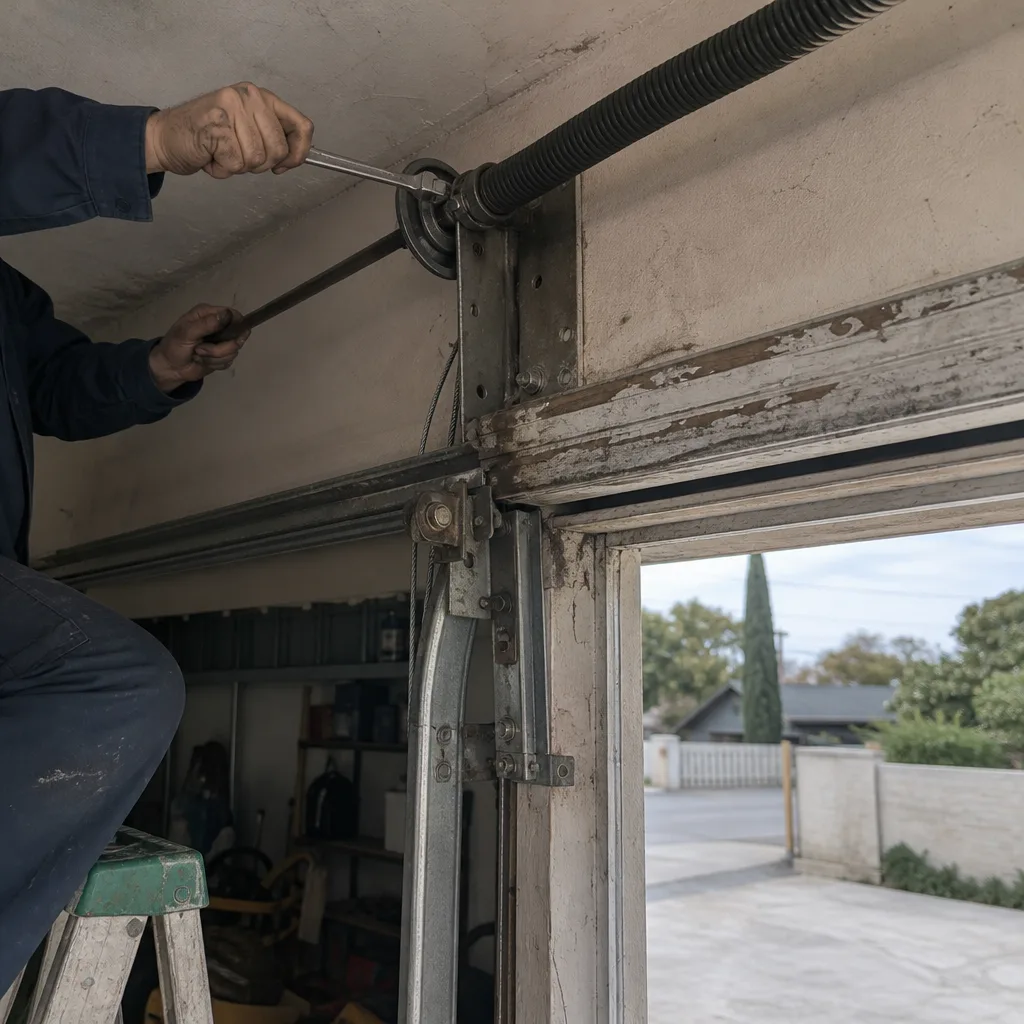
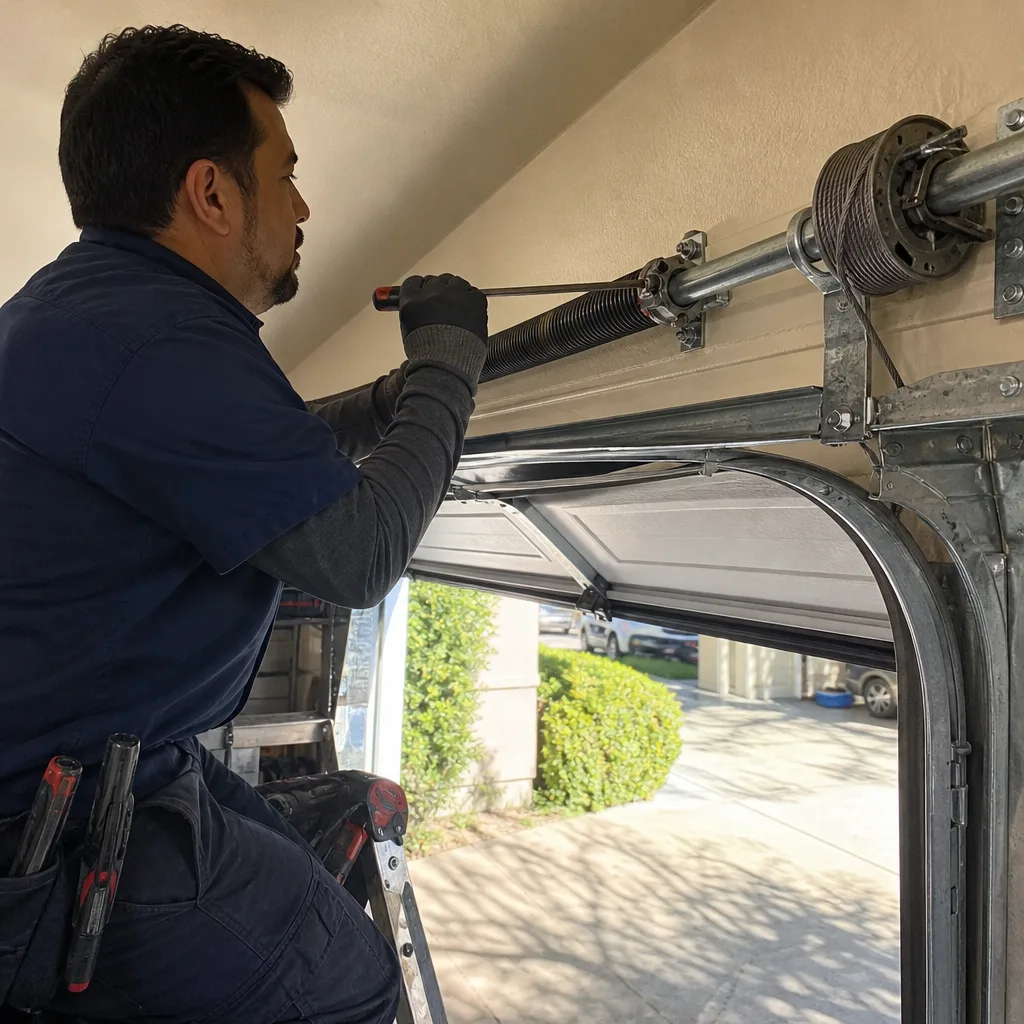
- No torque wrench appears during spring setup. Torsion springs, the large coils mounted above the door that do most of the lifting, are held in place by set screws that require a specific torque setting. Too loose and the spring slips. Too tight and the spring cone cracks. A proper installer uses a torque wrench on every set screw and takes the time to do it. If you never see one, the spring tension was set by feel, and feel is how doors fail weeks later.
- The tracks are eyeballed rather than measured with a level. Garage door tracks must be vertical on the sides and level on the horizontal run. A bubble level costs twelve dollars. There’s no excuse for eyeballing. If the installer isn’t checking track alignment with a level at multiple points, the door will bind, squeal, or wear rollers unevenly, and you won’t notice until the noise starts.
- No written price is presented before work starts. This is non-negotiable. The price should be written down and handed to you before a single bolt is turned. A verbal number isn’t a quote. If the installer won’t put it in writing, you should assume the final invoice will be different from the first number you heard.
- The technician can’t name the spring’s IPPT rating. IPPT stands for inches per pound per turn, and it’s the measurement that tells an installer how many turns a given spring needs to properly balance a given door. A trained professional knows the IPPT rating of the spring they’re installing and can explain, in plain English, why that number matters for your specific door’s weight and height. “I just put it on like the last one” is not an answer.
Each of these red flags shares the same root cause: the installer is moving fast, working from habit rather than measurement, and hoping the door works well enough that you never ask questions. A proper Garage Door Installation in Grandview takes measurement seriously because the installer knows they’ll be accountable for what happens in week three.
The 30-Day Symptom Window: What a Botched Install Sounds and Feels Like
A door that’s installed wrong rarely fails on day one. Torsion springs settle, tracks shift subtly under load, and roller wear begins so gradually that you won’t register it until the sound becomes impossible to ignore. In our experience serving Los Angeles homeowners, the most common window for these symptoms to surface is between two and six weeks after installation. Here’s what to listen and watch for.
Hesitation at the same point in travel. Watch the door’s movement carefully. A properly balanced door moves at a consistent speed from closed to open and back. If the door slows, pauses, or stutters at the same point on every cycle, that’s not a motor issue. It’s typically track misalignment or uneven spring tension, and it’s a direct result of installation decisions made on day one.
Uneven bottom gap. Close the door and step back. The bottom seal should touch the floor evenly from left to right. A gap on one side means the tracks aren’t level or the door wasn’t squared during installation. Over time, that gap lets in water during Los Angeles winter rains, and lets out cooled air every single day, which you’ll see on your energy bill before you ever see it on the door.
Grinding on reverse. When a garage door reverses direction mid-cycle, the rollers change direction inside the track. A properly installed door does this quietly. A grinding or scraping sound during reversal usually means the tracks were set too tight against the rollers, or the horizontal track sections weren’t aligned properly when they were bolted together.
Squealing from the spring area. A light squeak is normal wear. A persistent, metallic squeal that gets louder each week is not. It often indicates that the spring was wound without proper lubrication, or that the spring’s center bearing wasn’t seated correctly during installation. Either way, the fix requires disassembly, and the original installer should be the one doing it.
None of these symptoms mean your door is about to collapse. They do mean that the installation was not done to a standard that will hold up over years of cycling. And in Los Angeles, where many households cycle their garage door four to six times a day, small errors compound into real failures faster than in other parts of the country.
Cosmetic Gap vs. Structural Gap at the Top Corners
Not every gap is a problem. Knowing the difference between a cosmetic gap and a structural gap at the top corners of your garage door can save you from needless worry, or prevent you from ignoring a real issue until it becomes expensive to fix.
A cosmetic gap is a small, even space where the door’s top panel meets the header. This is often the result of standard weatherstripping compression or minor settling in the garage framing, neither of which affects how the door operates. If the gap is consistent from left to right, the door opens and closes smoothly, and the gap doesn’t change from day to day, it’s almost certainly cosmetic. You can leave it alone, though replacing worn weatherstripping is a cheap and sensible upgrade.
A structural gap is different. It’s wider on one side than the other. It changes after a few cycles. It may be accompanied by light coming through at the top corners, or by the door looking tilted when it’s fully closed. A structural gap means the door isn’t square in the opening, which almost always traces back to the tracks being set at slightly different heights during installation, or the spring tension being uneven from left to right. Left unaddressed, a structural gap will accelerate roller wear, stress the panels, and eventually cause the door to bind.
The test is simple: close the door, kneel at one corner, and look across the top edge. If both corners show the same gap, it’s cosmetic. If they don’t match, call the installer. A door that’s out of square after a new installation was never set up right in the first place.
How a 365-Day Written Guarantee Changes Installer Behavior
Here’s a truth most homeowners don’t consider: installers work differently when they know they’ll be held accountable after the truck leaves. A written guarantee isn’t just a piece of paper for you to file away. It’s a structural incentive for the person doing the work.
When a company offers a 365-day written guarantee on every repair and installation, the technician knows that any shortcut they take will generate a callback, and that callback comes out of the company’s time and money. That changes behavior in ways that matter. The torque wrench comes out. The level gets used. The test cycles get run. The spring’s IPPT rating gets checked against the door’s actual weight. These aren’t abstract ideals. They’re what happens when accountability exists in writing and extends past the moment the garage door first opens and closes.
The Doyle Garage Door Repair 365-Day Done Right Promise states the terms plainly: 365 days from the date of repair or installation, if it fails, we come back and make it right at no charge. That’s the standard we’ve operated under since 2001, and it’s why every technician who works under the Threshold Standard takes the time to verify their work before leaving. It’s also why we hand you a written price before any work starts. If you know the number, and we know we’re accountable for the result, the entire transaction changes.
Most garage door companies in Los Angeles don’t put their guarantee in writing because a written guarantee is enforceable. A verbal promise isn’t. When you’re comparing installers, ask directly: “Can I see the guarantee in writing before I sign anything?” The answer tells you a lot about how that company operates.
Your Post-Install Checklist: 5 Checks You Can Run Yourself
You don’t need a torque wrench or a decade of trade experience to verify the basics of a new garage door installation. These five checks take less than ten minutes combined, and they’ll catch the most common installation errors before the Garage Door Opener Repair Maintenance Schedule: What to Do and When symptom window ever opens.
- Manual disconnect test. Pull the red emergency release handle while the door is closed. Now try to lift the door by hand. It should come up smoothly, without binding or sticking, and it should stay up when you let go around the halfway point. If it’s heavy to lift or slams down, the spring tension is wrong. Reconnect the opener afterward.
- Balance test. With the door disconnected from the opener, lift it manually to the halfway point and let go. The door should stay put. If it drifts up, the springs are overwound. If it drifts down, they’re underwound. Either way, the door shouldn’t have left the installer’s hands in that condition.
- Safety reversal test. With the opener reconnected, close the door and place a roll of paper towels or a two-by-four flat on the floor where the door closes. The door should reverse as soon as it contacts the object. This is a federal safety requirement since 1993, and no installer should leave without demonstrating it.
- Visual inspection of spring anchor plates. Look at the steel plates that hold the torsion spring assembly to the wall above the door, called the spring anchor plates or center bearing plate. They should be flush against the wall, with no visible gap or movement. If the plate moves when the door operates, the lag bolts weren’t set properly.
- Track clearance check. Run the door up and down once and watch the gap between the rollers and the track. The gap should be consistent. If a roller rubs against the track at any point, or if the gap visibly widens and narrows, the track needs adjustment.
If your door fails any of these checks, don’t ignore it. Call the installer while the installation is still fresh in their records. A company that stands behind its work will come back and make it right. A company that doesn’t will start screening your calls. That’s the real test, and it’s why the written guarantee matters more than the initial price.
What Los Angeles Homeowners Specifically Need to Watch For
Los Angeles is not one climate. It’s a patchwork of microclimates, and each one puts different stress on a garage door installation. In the San Fernando Valley, summer temperatures routinely cross 100 degrees. That heat causes metal tracks to expand, which means a track that was set too tight in April will bind in August. In coastal neighborhoods like Santa Monica or Redondo Beach, salt air and humidity accelerate corrosion on hardware that wasn’t properly sealed. In the hills, older garages with non-standard openings require custom track work that installers unfamiliar with Los Angeles housing stock will routinely get wrong.
We’ve replaced enough poorly installed doors in Los Angeles to see the patterns clearly. The Valley doors fail on track binding and spring fatigue. The coastal doors fail on rusted hardware and corroded rollers. The older hillside homes fail because the installer treated a 1950s garage opening like a modern one and shimmed the difference with whatever was in the truck.
One Los Angeles-specific consideration is building code. The City of Los Angeles requires garage door openers to meet current UL 325 safety standards, which include the auto-reverse feature and a secondary entrapment prevention system like photo eyes. If your installer doesn’t bring up code compliance during the installation, ask about it. A licensed installer working in Los Angeles should know what the city requires without having to look it up.
This is also a city where many garages serve double duty as storage, workshops, or even home offices. That means the door cycles more often, often with the opener doing the work. More cycles, more heat, more corrosion, and older housing stock combine to make installation quality more important in Los Angeles than in almost any market in the country. If you’re replacing a door, or repairing one that a previous owner installed, the work needs to be done right the first time. We’ve walked into too many Los Angeles garages where the “new” door was six months old and already failing, and the installer’s phone number was disconnected.
For help with a door that’s showing any of the warning signs in this guide, start with the Doyle Garage Door Repair home page to see how we work.
Why Your Installer Should Be Able to Name the Spring’s IPPT Rating
IPPT stands for inches per pound per turn. It’s the specification that tells you how much lifting force a torsion spring delivers with each full turn of the winding cone. When a professional installer selects a spring for your door, they’re matching the spring’s IPPT rating to the actual weight and height of your specific door. Get the rating wrong, and the door won’t balance, even if everything else is perfect.
Here’s why this matters in plain English. A torsion spring is the large coil mounted above the door that does most of the lifting. The opener isn’t actually doing the heavy work. It’s guiding the door while the spring handles the weight. If the spring is too weak for the door’s weight, the opener strains, the motor burns out early, and the door becomes heavy to lift manually. If the spring is too strong, the door snaps open too fast and drifts up when you try to stop it halfway.
A trained installer can tell you your spring’s IPPT rating and explain what it means for your door. They can show you the spring’s markings, which list its wire size, inside diameter, and length. They can do the math that connects those numbers to your door’s panel weight. If the installer can’t name the IPPT rating of the spring they’re installing, or looks confused when you ask, they’re working from habit rather than knowledge. That’s a flag worth taking seriously.
This isn’t about testing your installer to make them uncomfortable. It’s about verifying that the person touching your garage door, which weighs between 150 and 400 pounds depending on material and size, actually understands the forces involved. Garage door springs under tension are dangerous. A spring that’s wound incorrectly can snap, and a snapped torsion spring can cause serious injury. The IPPT rating isn’t trade trivia. It’s a safety number, and your installer should know it cold. When you call for Garage Door Repair in Grandview, the technician who arrives should be able to answer this question without hesitation.
Common Mistakes to Avoid
- Hiring based on the lowest quote without asking about the guarantee. A low price with no written guarantee is a bet that the install will be perfect. When it isn’t, you pay twice: once for the original job, once for the fix.
- Not checking that the installer ran a full test cycle before leaving. If the installer doesn’t demonstrate the door’s operation and safety reversal in front of you, you’ve accepted an unverified installation.
- Ignoring early symptoms because “it’s a new door, it should be fine.” New doors fail too, and installation errors typically show up in the first month. Early attention is cheaper than late repair.
- Accepting a verbal price instead of a written one. A verbal price is not a contract. Without a written price before work starts, you have no protection against invoice creep.
- Choosing an installer who can’t name the brands they service. If a technician can’t tell you whether they’re trained to work on LiftMaster, Chamberlain, Craftsman, Raynor, or your specific brand, that’s a sign of limited experience. Factory-trained installers know their brands. We service LiftMaster, Chamberlain, Genie, Clopay, Amarr, Wayne Dalton, Craftsman, and Raynor, and our technicians can tell you the differences that matter.
- Skipping the post-install checklist because you trust the installer. Trust is earned, and verification is how trust gets confirmed. A reputable installer expects you to check the work.
- Not testing the safety reversal on an existing door after a repair. If someone worked on your door and didn’t demonstrate the safety reversal afterward, you should test it yourself before anyone in your family operates the door.
When to Call a Professional
Some checks you can do yourself, and this guide has shown you how. But the moment a door starts grinding, binding, or hesitating at the same point in its travel, you’re past the point of observation and into the territory of actual repair. Torsion springs under tension, tracks that need realignment, and openers that won’t reverse properly are not DIY projects. They involve components that can cause serious injury when handled incorrectly. A trained technician has the tools, the torque specs, and the experience to diagnose and fix the problem safely. Garage Door Opener Repair in Grandview is a service we provide daily, and the diagnostic process always starts with the same question: what changed, and when did it start happening? Doyle Garage Door Repair offers free estimates in Los Angeles. Call (910) 858-8029 and a real person will answer, day or night, weekends and holidays included.
Frequently Asked Questions
The cost to correct a botched garage door installation in Los Angeles typically ranges from $150 to $450 depending on what’s wrong. Track realignment usually runs $150 to $250, spring retensioning $180 to $300, and replacing damaged rollers or hardware $100 to $200 per component. The price you pay should be written down and handed to you before any work starts, with no surprises on the final invoice. Call (910) 858-8029 for an exact quote on your specific door.
Yes, in most cases we can diagnose and correct an installation problem the same day you call. Track adjustments, spring retensioning, and roller replacement are all standard service calls that our technicians handle in a single visit. We answer phones 24/7 with a live person, not a voicemail tree, so you’ll know exactly when someone can arrive.
Disconnect the door from the opener using the red emergency release handle, then lift the door manually to the halfway point and let go. If the door stays put, the spring tension is correct. If it drifts down or up, the springs are either underwound or overwound and need adjustment by a professional. This balance test is the single most reliable check a homeowner can run.
A door that needs adjustment shows symptoms like uneven gaps, binding, or noise but still has structurally sound panels and hardware. A door that needs replacement shows cracked panels, rust-through on the track system, or a spring that has snapped and damaged surrounding components. In Los Angeles, where doors cycle frequently, replacement is often the better long-term value for doors older than 15 years that need more than two major repairs in a year.
Yes, our trucks carry the most common torsion and extension springs, rollers, track components, hinge hardware, and opener parts for LiftMaster, Chamberlain, Genie, and Craftsman doors. That means most installation corrections happen in one visit, not two. If your door needs a custom part, we’ll tell you upfront and give you a written timeline and price before any work begins.
No. The price we quote is the price you pay, and it’s written down and handed to you before a single bolt is turned. If the technician finds something unexpected, they’ll show you, explain it in plain English, and get your written approval before doing anything outside the original scope. No verbal estimates, no invoice surprises, by policy, every time.
The Bottom Line
A bad garage door installation doesn’t announce itself on day one. It shows up weeks later as a squeal, a stutter, or a door that won’t stay put, and by then the installer has moved on to the next job. The way to protect yourself is to watch the installation itself, run the five post-install checks listed here, and never accept a job that doesn’t come with a written price and a written guarantee. See our more guides & resources for additional homeowner tips. In Los Angeles, where garage doors work harder than they do in most parts of the country, installation quality isn’t a luxury. It’s the difference between a door that lasts 15 years and one that needs major work before its first birthday. If your door is showing symptoms, call (910) 858-8029. We’ll send a technician who arrives with a name, a photo, a badge, and a written plan for making it right.
Written by Aaron Teague, Owner at Doyle Garage Door Repair, serving Los Angeles since 2001.