
Last updated October 9, 2026
Full 25-point door and opener safety check with every visit - springs, cables, rollers, tracks, and your LiftMaster or Chamberlain opener included
You get a price before we start. It does not change when the truck arrives.
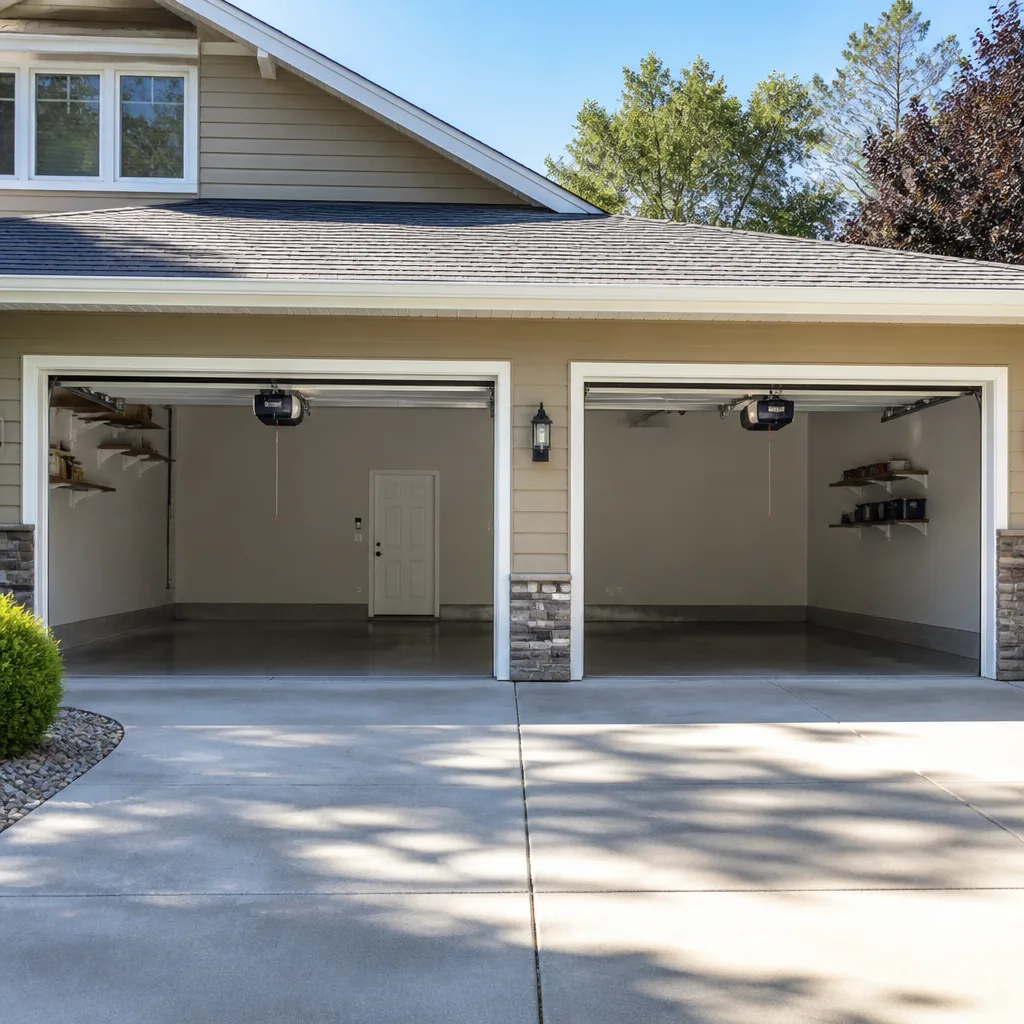
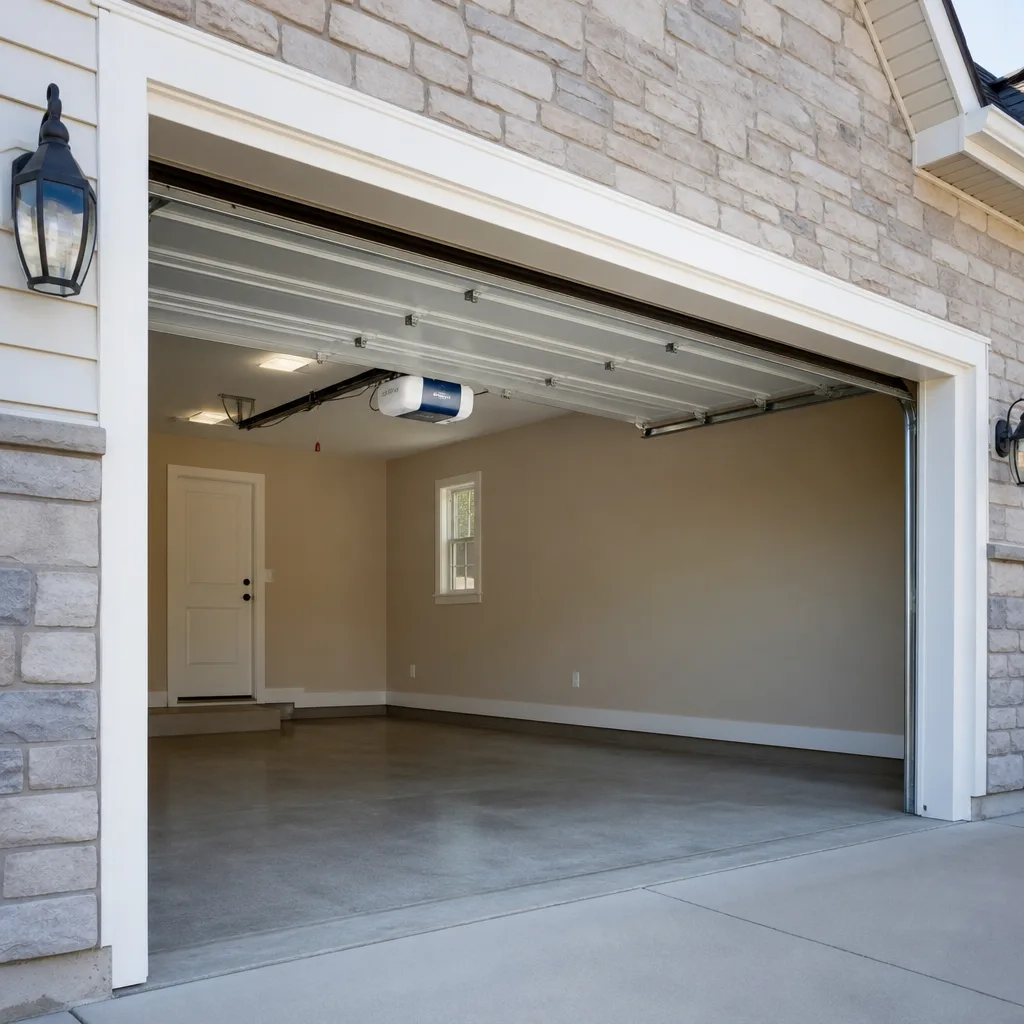
 Before
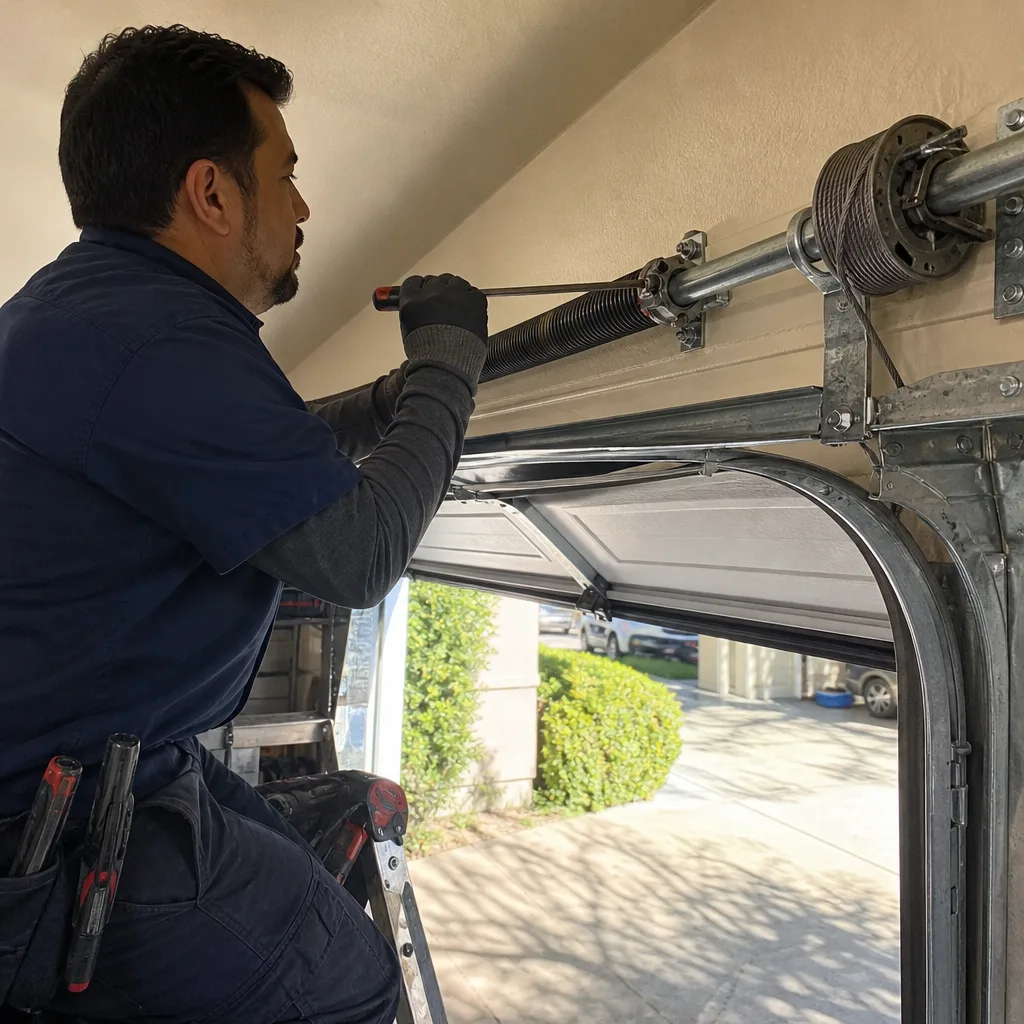 After
After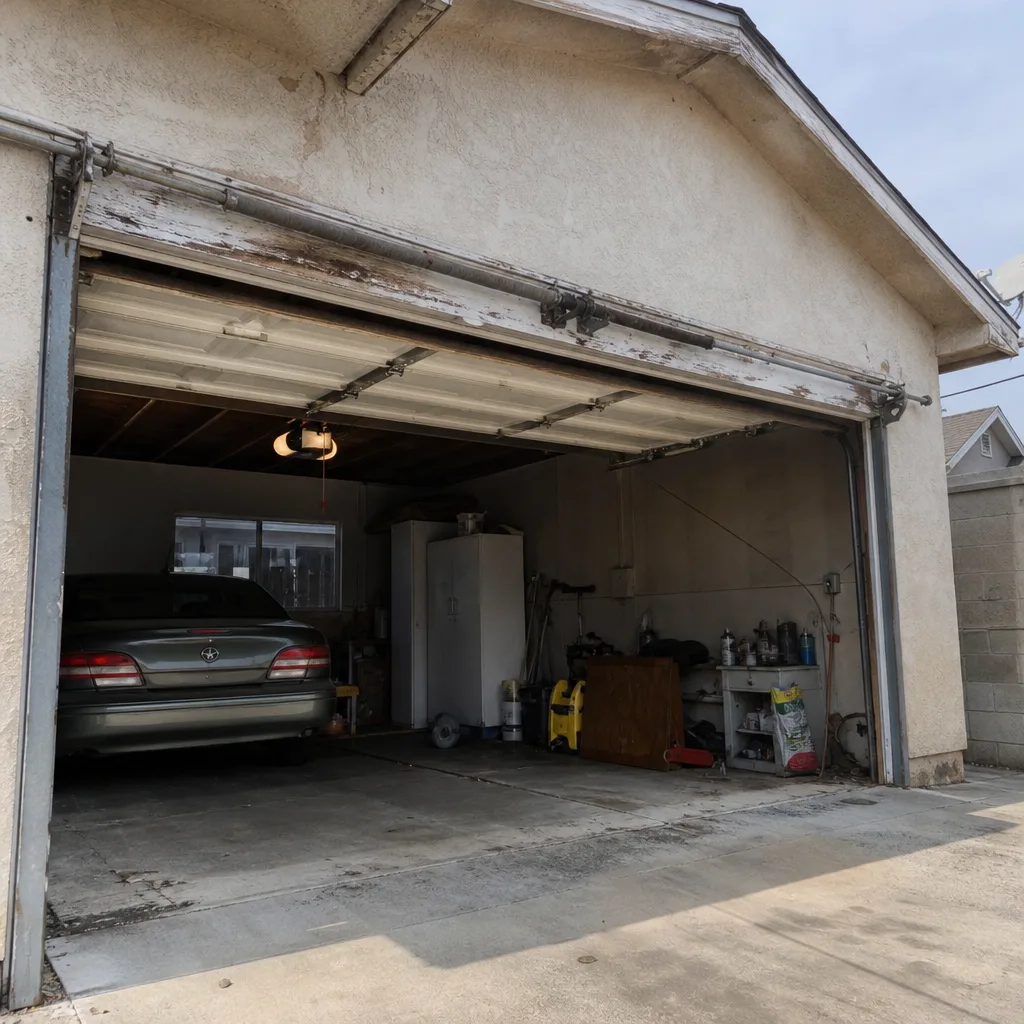 Before
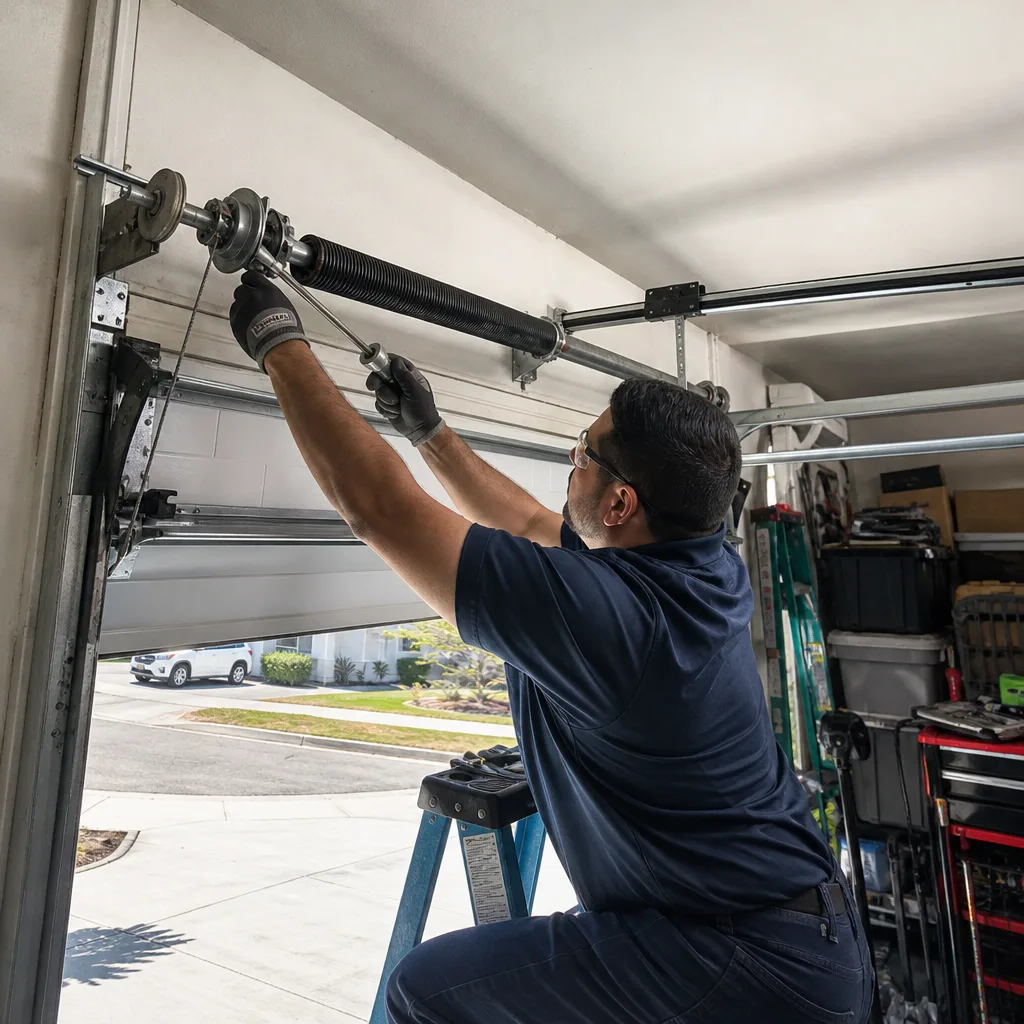 After
After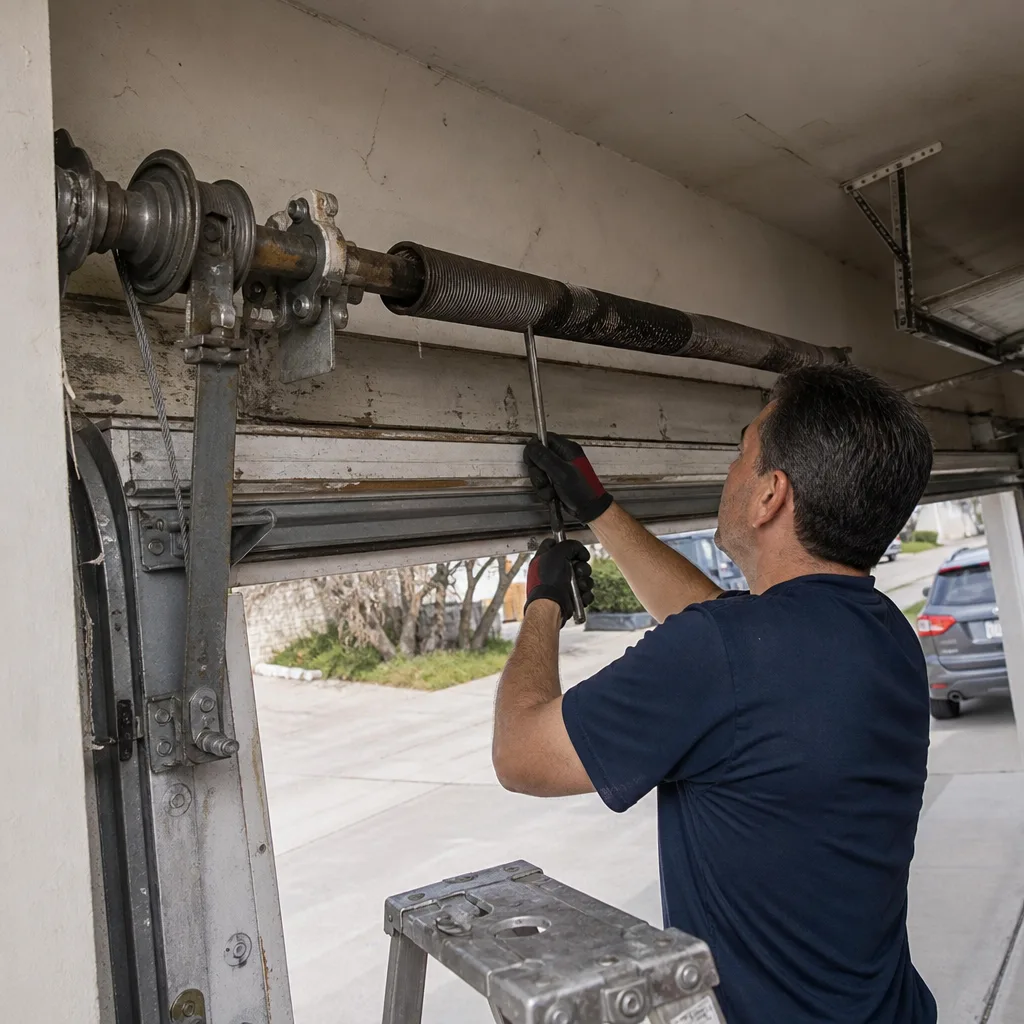 Before
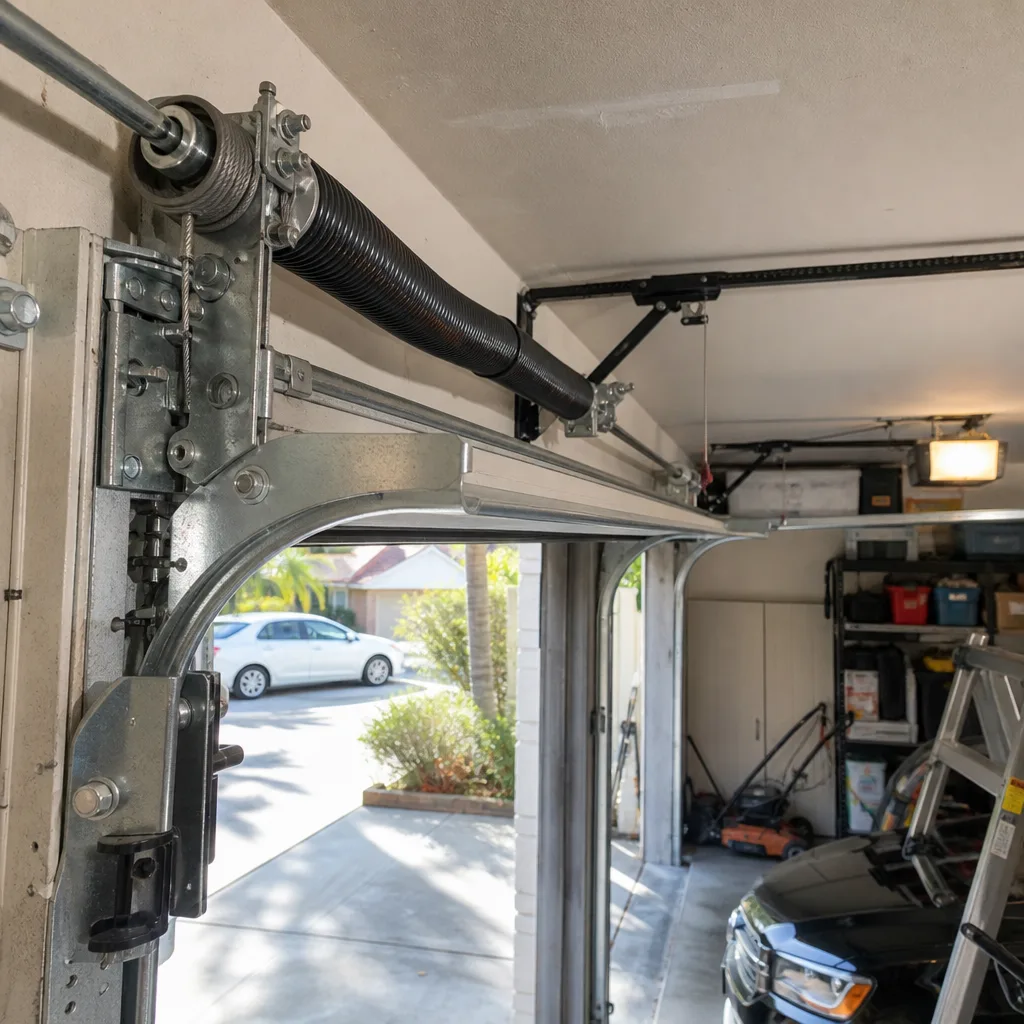 After
AfterThe Complete Garage Door Repair Guide for Los Angeles Homeowners
Here’s something most Los Angeles homeowners don’t realize until it’s too late: a garage door in Silver Lake doesn’t fail the same way one does in Canoga Park, and neither fails the way the national averages predict. Salt air near the coast, hundred-degree heat in the Valley, and the constant fine dust that settles into every moving part mean your door ages differently depending on which side of the 405 you live on. If you’re reading this, you probably have a door that’s grinding, sagging, or refusing to open. This guide will walk you through what’s actually wrong, what it should cost in Los Angeles specifically, and how to avoid paying for our Garage Door Repair services you didn’t need. We’ll cover springs, openers, cables, tracks, and the repair sequence that separates a fifteen-minute fix from a full rebuild.
Quick Answer
Garage door repair in Los Angeles typically costs between $150 and $450 for most common fixes, with broken torsion springs running $180 to $340 and opener replacements starting around $350 installed. The two most frequent failures are snapped torsion springs and stripped opener gears, both of which are same-day repairable by a qualified technician. If your door won’t open and you hear the motor running but nothing moves, the problem is almost always a disconnected trolley carriage, a broken spring, or a stripped gear, not the motor itself.
Table of Contents
- How Los Angeles Weather Affects Your Garage Door
- Torsion Springs: The Part That Actually Fails
- When the Opener Runs But the Door Doesn’t Move
- Cables, Tracks, and Rollers: The Wear Items
- What Garage Door Repair Actually Costs in Los Angeles
- How to Read a Written Repair Estimate
- Choosing a Technician in Los Angeles: What Verification Actually Means
- What Los Angeles Homeowners Can Safely Do Themselves
How Los Angeles Weather Affects Your Garage Door
Los Angeles doesn’t get the freeze-thaw cycles that crack doors in Chicago, but it has its own set of problems that wear doors out faster than most homeowners expect. The two factors that matter most here are heat and dust, and they work together in a way that national repair guides rarely mention.
First, the heat. In the San Fernando Valley, summer temperatures regularly push past 100°F, and your garage becomes an oven. The air inside an uninsulated garage can hit 120°F or higher. That heat does two things to your door. It degrades the rubber weatherstripping along the bottom and sides, which turns brittle and cracks within three to five years instead of the seven to ten you’d get in a milder climate. More importantly, it accelerates metal fatigue in your torsion springs. Here’s the technical detail that matters: torsion springs are rated for a certain number of cycles, typically 10,000 for a standard spring. A cycle is one full open and close. The heat itself doesn’t reduce the cycle count, but it does make the spring steel expand and contract daily, which introduces micro-stress that shortens the effective lifespan. In our experience, a spring rated for 10,000 cycles in Los Angeles often fails closer to the 7,000-cycle mark. That works out to roughly seven to nine years for a typical homeowner who uses the door three or four times a day.
Second, the dust. Los Angeles sits in a basin, and the fine particulate that blows in from the deserts east of us settles on everything. Inside your garage door tracks, that dust mixes with the existing lubricant to form a paste that’s abrasive. Rollers that should glide instead grind, and that grinding adds friction to every single cycle. More friction means the opener motor works harder, the cables wear faster, and the springs carry more load than they were sized for. A door that would last twelve years in a clean environment might need major service in eight here, simply because of what’s in the air.
Coastal homeowners in places like Venice or Long Beach face a separate issue: salt air corrosion. The hardware on your door, especially the hinges and cables, rusts faster within a few miles of the ocean. Galvanized steel parts start showing rust spots within two to three years. That’s not a cosmetic issue. Rusted cables snap, and when a cable snaps under load, the door can slam shut with enough force to injure someone or damage a car.
Torsion Springs: The Part That Actually Fails
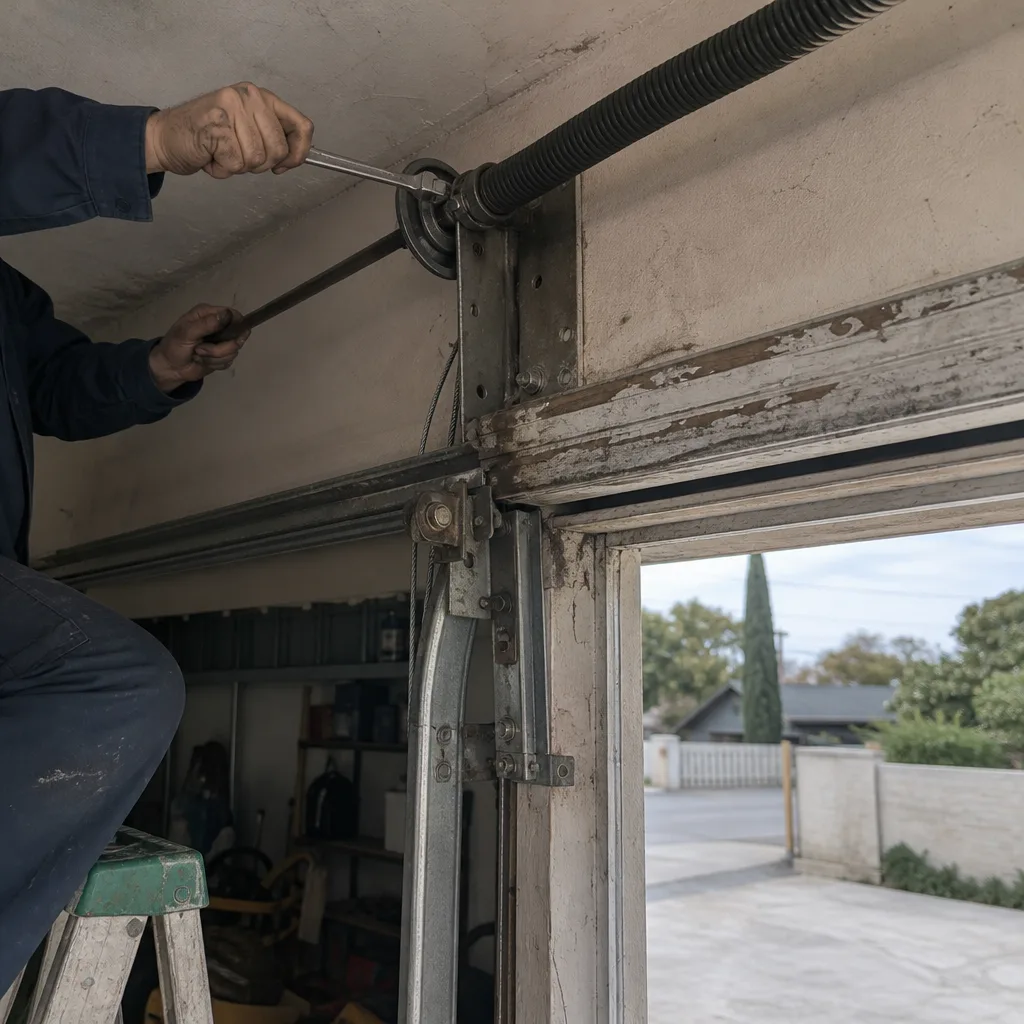
Let’s talk about the single most common garage door repair in Los Angeles: the torsion spring. This is the large coiled spring mounted horizontally on the metal bar above your door opening. It stores the mechanical energy that lifts the door, counteracting most of the door’s weight so that the opener motor only has to provide a fraction of the force. When it breaks, you’ll know. The sound is a loud bang, like someone fired a pistol in your garage. After that, the door won’t lift, even by hand, because the full weight of the door, typically 150 to 250 pounds for a double door, is now entirely on the motor and your arms.
Here’s what most Los Angeles homeowners don’t know about torsion springs: they’re sized for a specific door weight, and when you change your door, the spring math changes with it. This matters because many older homes in Los Angeles, particularly in neighborhoods like Eagle Rock, Highland Park, and Pasadena, were built with solid wood garage doors. Those doors weigh a lot, sometimes 300 pounds or more for a double door. The torsion springs were sized to match that weight. Over the years, many owners have replaced those heavy wood doors with insulated steel doors that weigh less, typically 150 to 200 pounds. Swapping the door without recalibrating the springs creates a mismatch. A spring that’s too strong for the door will yank it open too fast, which slams components together and wears out hinges and rollers prematurely. A spring that’s too weak, which happens when someone just reuses the old spring, will strain every cycle and fail early.
On top of the weight consideration, Central Texas and Southern California share a quirk that national charts don’t account for: spring sizing tables assume a standard door height, but Los Angeles has thousands of homes built in the 1920s through 1950s with nonstandard door sizes. Seven-foot, seven-foot-six, and eight-foot doors are all common here, and each requires a different spring size. When a technician just grabs a standard spring off the truck without accounting for the door’s actual dimensions and weight, it either breaks early or causes the door to operate violently. If a technician comes to your door and doesn’t measure the door height, weigh the door, and check the spring’s wire diameter, they’re guessing, and you’re paying for their guess.
One thing to be very clear about: we’re describing how torsion springs work and what goes wrong, not how to replace one yourself. Torsion springs are under enormous tension, and when they release that energy, they can cause severe injury or death. This is not a DIY repair, and no homeowner should attempt it. The winding and unwinding process requires specific tools and training. The reason we’re explaining it here is so you can have an informed conversation with whoever you hire.
When the Opener Runs But the Door Doesn’t Move
This is the most confusing symptom a Los Angeles homeowner faces. You press the button, you hear the motor humming, but the door doesn’t budge. The natural assumption is that the opener is dead and you need a new one. Most of the time, that assumption is wrong. In our experience, this symptom has three common causes, and each requires a completely different fix. Understanding which one you’re dealing with saves you from paying for an opener replacement you didn’t need. For DIY vs Professional Garage Door Installation: What’s Safe to Do Yourself, see our detailed breakdown.
Here’s the diagnostic sequence, step by step:
- Pull the emergency release cord. This is the red rope hanging from the trolley carriage, the sliding mechanism that connects the opener rail to the door itself. Pull it down and toward the door. This disconnects the door from the opener. Now try lifting the door by hand. If it lifts smoothly, the door itself is fine, and the problem is in the opener mechanism. If the door feels heavy or won’t lift, you have a spring problem, not an opener problem. A broken torsion spring means the opener motor is trying to lift the full weight of a 200-pound door with no counterbalance, and it either can’t do it or it’s destroying itself trying.
- If the door lifts fine by hand, check the trolley carriage. The carriage is the plastic or metal block that slides along the rail. In most openers, this carriage has a small disconnect mechanism that can wear out. If the emergency release was partially pulled, or if the carriage has stripped, the motor will run but the carriage won’t engage the chain, belt, or screw that drives it. You’ll hear the motor running and see the drive mechanism turning, but the carriage doesn’t move. This is often a simple carriage replacement, not an opener replacement.
- If the carriage moves but the door doesn’t, check the gear. Inside most openers, particularly LiftMaster and Chamberlain models, there’s a plastic gear that transfers power from the motor to the drive shaft. This gear is deliberately plastic so it strips before the motor burns out. In Los Angeles heat, that plastic can get brittle and strip faster. If you hear the motor running and see the carriage moving very slowly or not at all, and the drive mechanism isn’t turning, the gear is likely stripped. This is a $100 to $180 repair in most cases, not a full opener replacement.
If you’ve worked through these three and the drive mechanism is turning, the carriage is engaging, and the door still doesn’t move, then you’re looking at an opener logic board or motor issue, and replacement starts to make sense. But that’s the least common outcome. We’d estimate that in Los Angeles, three out of four “broken opener” calls are actually broken springs or stripped gears.
Cables, Tracks, and Rollers: The Wear Items
Beyond springs and openers, three other components wear out predictably, and Los Angeles conditions accelerate all of them.
Cables. These are the steel wires that run along each side of the door, connected to the bottom brackets and winding around the drums at the top. They work with the torsion spring to lift the door evenly. In Los Angeles, cables near the coast rust, and cables everywhere else collect dust that acts as an abrasive on the cable drum. A frayed cable is a serious safety issue because when it snaps, the door drops without warning. If you see fraying, which looks like individual wire strands peeling away from the main cable, do not operate the door and call a technician. This is a same-day repair, and in our experience it takes a technician about 45 minutes to do correctly.
Tracks. The tracks are the metal channels on either side of the door that guide the rollers. They rarely fail outright, but they do bend, especially in Los Angeles where minor earthquakes, house settling, and the occasional car bump take their toll. A bent track creates a pinch point where the door binds mid-travel. You’ll see the door slow down, then jerk, then continue. Sometimes you’ll hear a scraping sound. If the bend is minor, a technician can often straighten it. If it’s severe, the track section needs replacement. The key diagnostic: if the door binds at the same spot every time, it’s almost certainly a track issue.
Rollers. Rollers are the small wheels attached to the door that travel inside the tracks. The older nylon and steel rollers last about seven years in normal conditions. In dusty Los Angeles, plan on five to six. When they wear out, you’ll hear a grinding or chattering noise as the door moves, and the door may shake. Replacing all the rollers on a double door typically costs between $100 and $180 including labor, and it’s one of the best preventative repairs you can do. New nylon rollers run quieter and extend the life of your tracks, cables, and even your springs by reducing friction across the whole system.
What Garage Door Repair Actually Costs in Los Angeles
Los Angeles pricing is different from national averages, and different from what you’d pay in smaller cities. Labor rates here are higher, and that’s fair because technicians in Los Angeles pay Los Angeles rent. But you should know the actual ranges before someone quotes you, because the most common overcharge tactic in this industry is quoting a vague “repair” at whatever number the technician thinks you’ll accept.
Here’s what we see in the Los Angeles market for common repairs, including parts and labor:
- Broken torsion spring (single): Typically $180 to $340. Most Los Angeles doors use two springs, so if both need replacing, expect $280 to $480.
- Broken extension spring: $150 to $250. These are the older style springs that run along the horizontal tracks on either side.
- Stripped opener gear: $120 to $200 for parts and labor on a LiftMaster or Chamberlain opener.
- Broken cable (single): $120 to $200. Most technicians will recommend replacing both cables at once since they wear at about the same rate, which runs $180 to $300.
- Roller replacement (full set, double door): $100 to $180.
- Track realignment or minor repair: $80 to $180.
- New opener installation (LiftMaster or Chamberlain, including labor): $350 to $700 depending on the model, features, and whether you’re upgrading from a chain drive to a belt drive.
- Full door replacement (installed, standard double door): $1,500 to $4,500 depending on material, insulation, windows, and brand.
These are the ranges you should expect from a legitimate Los Angeles garage door company. If someone quotes you $90 for a spring replacement, they’re either installing a spring that will fail in a year or they plan to find “additional problems” once they start working. If someone quotes you $600 for a spring replacement, they’re charging more than the market supports unless there’s something unusual about your door.
One more thing about pricing: every legitimate repair should come with a written quote before work begins. Not a verbal estimate. Not a text message. A written, itemized quote that lists each part being replaced and the labor cost. If a technician won’t put it in writing, that’s a red flag, and it’s the number one way Los Angeles homeowners end up with a $700 invoice for a repair that should have cost $200.
How to Read a Written Repair Estimate
Most homeowners glance at the total on a repair estimate and miss everything above it. That’s a mistake, because the line items tell you exactly what you’re paying for and whether the technician is being straight with you. Here’s how to read one in thirty seconds.
First, look for the part numbers. A real estimate for a torsion spring repair should list something like “Spring, .225 x 2 x 24, Qty 2” not just “spring replacement.” The first number is the wire diameter in inches, the second is the inside diameter, and the third is the spring length. These numbers tell you the spring is being sized for your specific door. If the estimate just says “spring replacement,” ask what spring. A technician who can’t tell you the wire diameter is guessing.
Second, check for separate labor and parts lines. If the estimate just says “Garage door repair – $400” with no breakdown, ask for one. Legitimate companies itemize. That’s not a bureaucratic formality. It’s what allows you to compare quotes between companies and verify that you’re only paying for parts you actually need.
Third, look for the warranty line. Every repair should carry a written warranty, and the estimate should state it explicitly. What’s standard in Los Angeles varies, but 90 days to one year is the range you should expect for parts, with labor covered for at least 30 days. If there’s no warranty line, ask. A company that won’t put its warranty in writing before you pay is telling you something about how it handles problems after the check clears.
Fourth, check for the technician’s name. A written estimate should have the name of the person who prepared it, not just a company name. This matters for a reason we’ll get into in the next section, but the short version is: you’re letting a stranger into your home, and you have a right to know who they are before they arrive.
Here’s what a proper estimate looks like in practice:
- Customer name and address
- Technician name and identification number
- Date of service
- Each part listed with a specific name and part number where applicable
- Labor cost listed separately
- Warranty terms stated in writing
- Total price, with tax
- A statement that no work begins without your written approval
Choosing a Technician in Los Angeles: What Verification Actually Means
Los Angeles is full of unlicensed handymen and day-labor crews who’ll offer to fix your garage door for cash. Some of them are competent. Many are not. And in a city this size, you have no way of knowing who you’re actually opening your door to. This is a genuine safety concern for people who are home alone, parents with young kids, and older homeowners who may not have someone else in the house when the technician arrives.
This is where the conversation gets specific, because our company, Doyle Garage Door Repair, has a structure that addresses this directly. We’re part of the Threshold Group family of home-service companies, and every one of our locations operates under the Threshold Verified standard. We’ve been doing this since 2001. The standard requires three things before any technician touches your door: the technician has passed a background check, the technician’s identity has been verified, and the customer receives the technician’s name and photo before the visit, not after.
Think about what that means in practical terms. When you book a repair with us, you don’t get a vague “your tech will arrive between 8 and 12.” You get a name. You get a photo. You know exactly who’s coming. When the doorbell rings, you can check the photo on your phone before you open the door. The technician arrives in a marked uniform and carries a photo ID badge that matches the name and photo you already have. That’s not a marketing gimmick. It’s a safety protocol, and it’s the reason a lot of our customers, particularly older homeowners and people who live alone, choose us over a random name from a search result.
The other question Los Angeles homeowners should ask is whether the technician is factory-trained on the brands they’re working on. We service LiftMaster, Chamberlain, Genie, and Craftsman, among others, and our technicians are trained on the specific gear mechanisms, circuit boards, and spring systems for each brand. A LiftMaster opener from 2015 has a different gear assembly than a 2020 model, and a technician who doesn’t know the difference is going to waste your time and probably your money.
And because the stranger-at-the-door concern is a real one, here’s the other thing that matters: our phone number, (910) 858-8029, is answered by a live person, 24 hours a day, day, night, weekends, and holidays. Not a voicemail. Not a callback service. Not an automated system. When you call at 2 a.m. because your door won’t close and your house is unsecured, a real human picks up.
What Los Angeles Homeowners Can Safely Do Themselves
We’re not going to tell you that every garage door problem requires a professional, though more guides & resources can help you decide. Some maintenance is safe and straightforward, and doing it yourself will extend the life of your door and reduce the number of service calls you need over a decade. Here’s what’s safe and what’s not.
Safe to do yourself:
- Visual inspection. Once a month, walk through your garage and look at the springs, cables, rollers, and brackets. Look for frayed cables, rust spots, and any parts that seem loose. This takes two minutes and catches problems before they become emergencies.
- Lubrication. Use a silicone-based lubricant or white lithium grease on the rollers, hinges, and the torsion spring itself. Do this every six months. In dusty Los Angeles, clean the tracks first with a dry cloth so you’re not lubricating the dust into a paste. Do not use WD-40. It’s not a lubricant for this application, and it’ll attract more dust.
- Balance test. Pull the emergency release cord and lift the door halfway. It should stay in place. If it drops or rises, your springs are out of adjustment, and that’s a sign that a professional should look at it before the spring fails completely.
- Weatherstripping replacement. The rubber seal along the bottom of the door degrades fast in Los Angeles heat. Replacing it yourself is a fifteen-minute job with a $20 part from any hardware store.
Not safe to do yourself:
- Anything involving torsion springs. As we said earlier, these springs are under enough tension to kill you. The winding and unwinding requires training and specific tools. Do not watch a YouTube video and attempt it.
- Cable replacement. Cables are under similar tension and can snap with enough force to cause serious injury.
- Track repair involving the bottom sections. The lower track brackets are load-bearing. If they’re bent or the bolts are stripped, the door can come off the track entirely.
For anything in the second list, the money you’d save doing it yourself isn’t worth the risk. A spring replacement in Los Angeles costs a few hundred dollars. Emergency room visits cost more, and that’s assuming you’re lucky enough to make it to the ER.
Common Mistakes to Avoid
- Ignoring a noisy door. A garage door that grinds, pops, or squeals is telling you something specific. The longer you ignore it, the more expensive the fix becomes. A $15 roller replacement becomes a $200 track replacement, which becomes a $400 spring replacement. Noise is the earliest warning sign you get, and it’s free.
- Replacing the opener when the spring is broken. We see this constantly. A homeowner calls a company, the technician says “your opener is dead,” and sells a $500 opener replacement, when the actual problem was a $250 spring. This is why you use the diagnostic sequence we described earlier. Pull the emergency release. If the door lifts by hand, the opener is the problem. If it doesn’t, the spring is.
- Using WD-40 on the tracks or springs. WD-40 is a solvent, not a lubricant. It’ll clean the grease out of your rollers and attract dust in Los Angeles conditions. Use silicone spray or white lithium grease.
- Hiring based on price alone. The cheapest quote in Los Angeles is cheap for a reason. Either the technician isn’t licensed, isn’t using proper parts, or plans to find “additional repairs” once they start. A legitimate company charges a fair price and puts it in writing before work begins.
- Not asking for a name before the visit. If you’re letting someone into your home, you have a right to know who they are before they arrive. Any company that won’t tell you the technician’s name in advance is not a company you want to do business with, especially if you’re home alone or have young children.
- Delaying a spring replacement after one spring breaks. Most Los Angeles doors have two torsion springs. If one breaks, the other is likely close behind because they’ve been through the same number of cycles. Replacing both at once costs less than two separate service calls and prevents another emergency in six months.
- Forgetting to check the door balance after installing a new opener. A door that’s out of balance will burn through your new opener’s motor in a couple of years. Before you buy a new opener, have the door balance checked. It’s a ten-minute diagnostic that saves you from buying another opener in 2029.
When to Call a Professional
Some garage door problems are unambiguous. Call a professional if your torsion spring has snapped, which you’ll know by the loud bang and the door refusing to lift. Call if a cable is frayed or broken, which you’ll see as loose wire strands hanging from either side of the door. Call if the door has come off its tracks, which happens when a roller breaks or a track gets bent. Call if the door won’t close all the way and reverses before reaching the ground, which is often a limit switch problem or a sensor misalignment. Call if your opener runs but the door doesn’t move and you’ve already checked the emergency release, the carriage, and the gear as described above.
When you do call, ask for the price in writing before any work starts. Ask for the technician’s name before they arrive. Ask what warranty comes with the repair. A company that gives you all three of these without hesitation is a company that respects your time, your money, and your safety. Doyle Garage Door Repair offers free estimates in Los Angeles; call (910) 858-8029 and we’ll have a written price for you before a single bolt gets turned.
Frequently Asked Questions
Most garage door repairs in Los Angeles cost between $150 and $450, with broken springs at $180 to $340 and opener gear replacements at $120 to $200. For a full local overview, read The Complete Guide to Garage Door in Los Angeles. The exact price depends on what’s broken, what brand your door is, and whether the technician needs to replace one part or several. Always ask for a written quote before work begins, and call (910) 858-8029 for a free estimate on your specific repair.
Torsion springs in Los Angeles typically last seven to nine years with normal use, which is shorter than the ten to twelve years you’d expect in a milder climate. The heat accelerates metal fatigue, and the dust adds friction that wears the spring faster. If your springs are seven years old and you’re noticing the door feels heavier, plan for a replacement before they snap.
Yes, most common repairs including broken springs, broken cables, and stripped gears can be done the same day by a qualified technician who keeps common parts on the truck. For opener replacements or full door replacements, the work is measured, ordered, and scheduled. Call (910) 858-8029 to find out if your specific repair can be done today.
This symptom has three common causes: a broken torsion spring that’s preventing the door from counterbalancing, a disconnected or stripped trolley carriage that’s failing to engage the drive mechanism, or a stripped plastic gear inside the opener. Pull the emergency release cord and try lifting the door by hand. If it lifts, the problem is in the opener mechanism. If it doesn’t, the spring is broken. Call (910) 858-8029 for a diagnostic, and we’ll tell you exactly which problem you have before any work starts.
No permit is required for garage door repairs in Los Angeles, including spring replacement, cable replacement, and opener repair. A permit is only required when you’re replacing the entire door with a new one or making structural changes to the door opening. Repairs are considered routine maintenance and can be done without city approval.
Ask for the technician’s name and photo before the visit, verify that the technician has passed a background check, and check for a photo ID badge at the door. Our technicians at Doyle arrive in marked uniforms with name and photo sent to you in advance, identity-verified under the Threshold Standard. If a company won’t tell you who’s coming before they arrive, don’t open the door.
LiftMaster and Chamberlain are the two most common brands in Los Angeles, and both are generally reliable when installed correctly. Belt-drive models run quieter than chain-drive models, which matters if you have a bedroom above the garage. Genie makes solid budget options, and Craftsman openers, while less common on new installs, are still repairable. The installation quality matters more than the brand. A well-installed Genie will outlast a poorly installed LiftMaster.
This is almost always a limit switch adjustment or a photo eye sensor alignment issue. The photo eyes are the small sensors on either side of the door opening near the floor. If they’re misaligned or blocked by dust or debris, the opener thinks something is in the way and reverses as a safety measure. Clean the sensor lenses and make sure they’re pointed at each other. If that doesn’t fix it, the limit switch inside the opener may need adjustment, which is a quick professional repair.
The Bottom Line
Los Angeles homeowners deal with garage door problems that national guides don’t address: heat-accelerated spring fatigue, dust-compromised rollers, and salt-air corrosion along the coast. The most common failures are torsion springs and opener gears, both of which are repairable the same day for a few hundred dollars. The repair decisions you make should be based on the specific part that’s failed, not on a technician’s vague “you need a new opener” pitch. Get the name and photo of your technician before they arrive. Get the price in writing before any work starts. Get the warranty in writing before you pay. If a company won’t do all three, call someone else. For a free estimate in Los Angeles, call us at (910) 858-8029 and we’ll put everything in writing. For more specific information about our installation services, see our garage door installation page.
Written by Aaron Teague, Owner at Doyle Garage Door Repair, serving Los Angeles since 2001.