
Last updated October 9, 2026
Full 25-point door and opener safety check with every visit - springs, cables, rollers, tracks, and your LiftMaster or Chamberlain opener included
You get a price before we start. It does not change when the truck arrives.
 Before
 After
After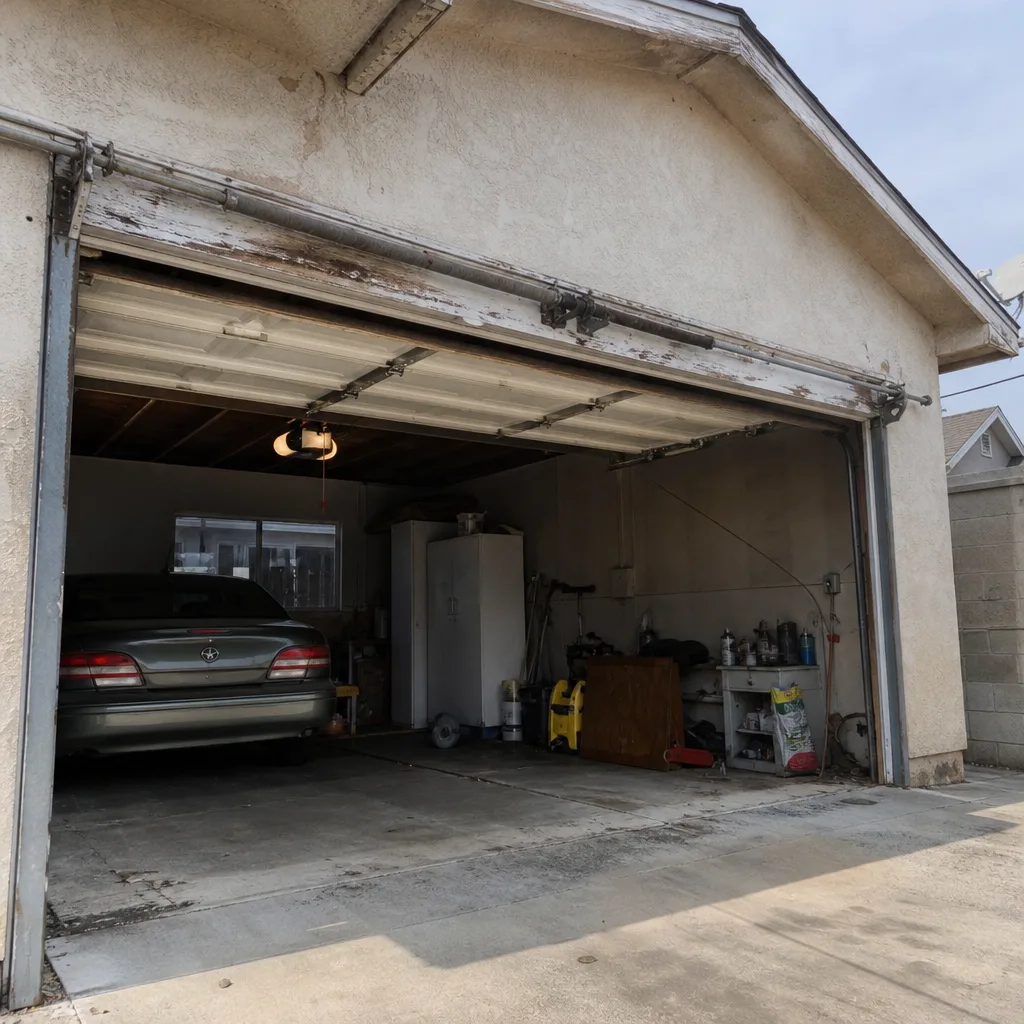 Before
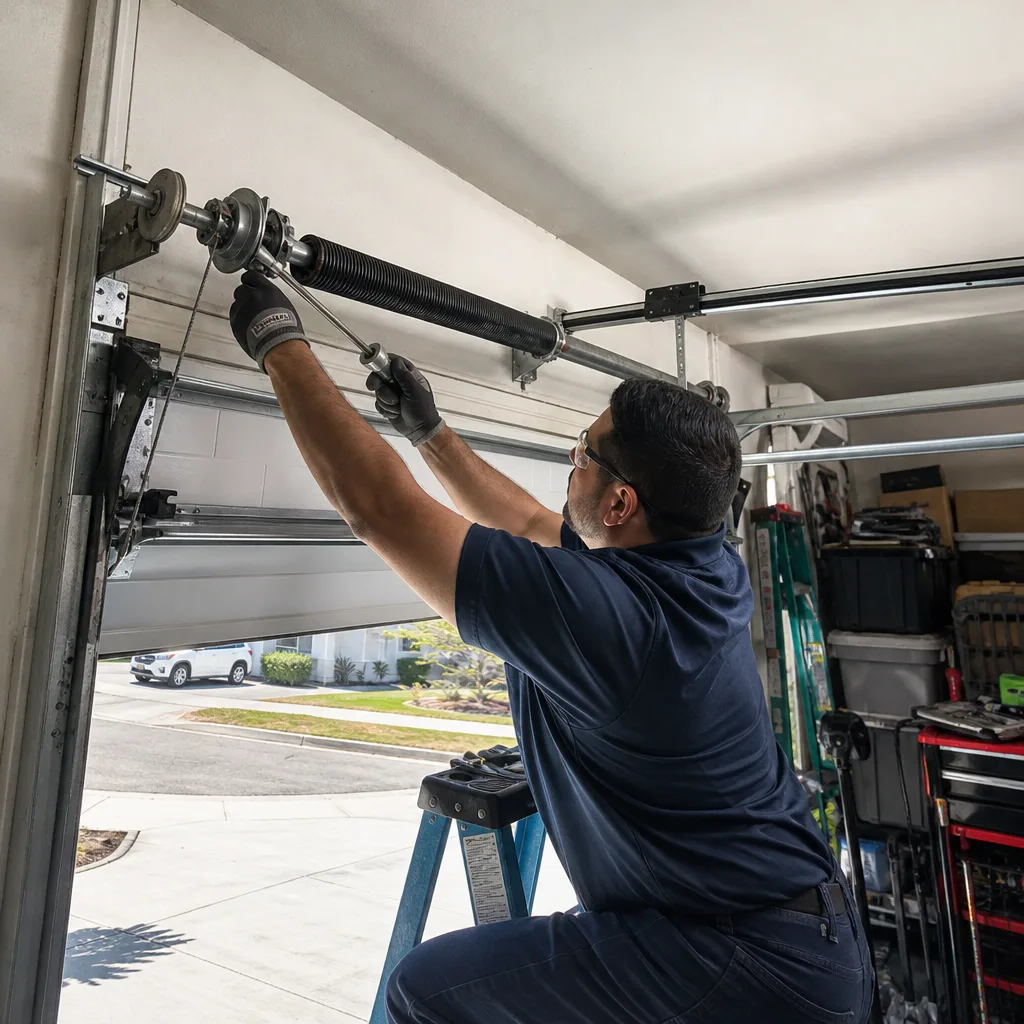 After
After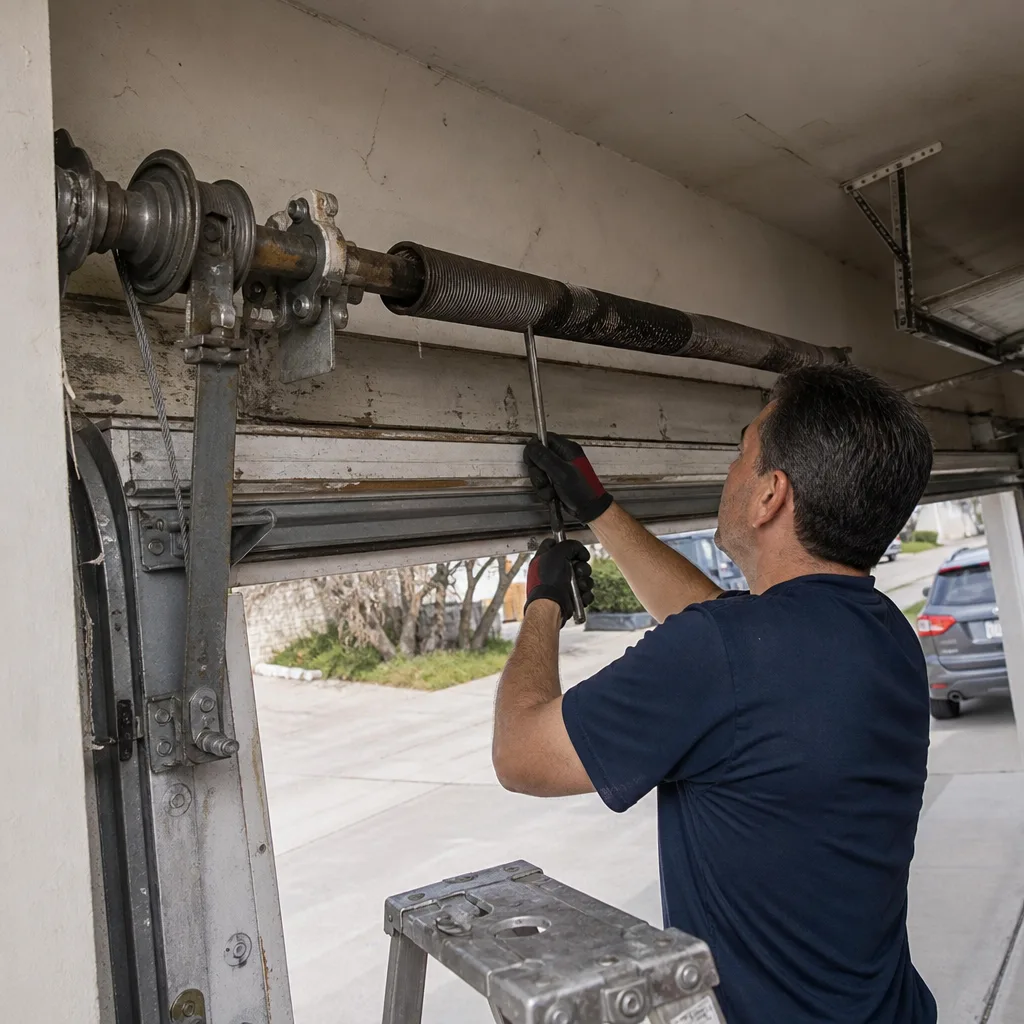 Before
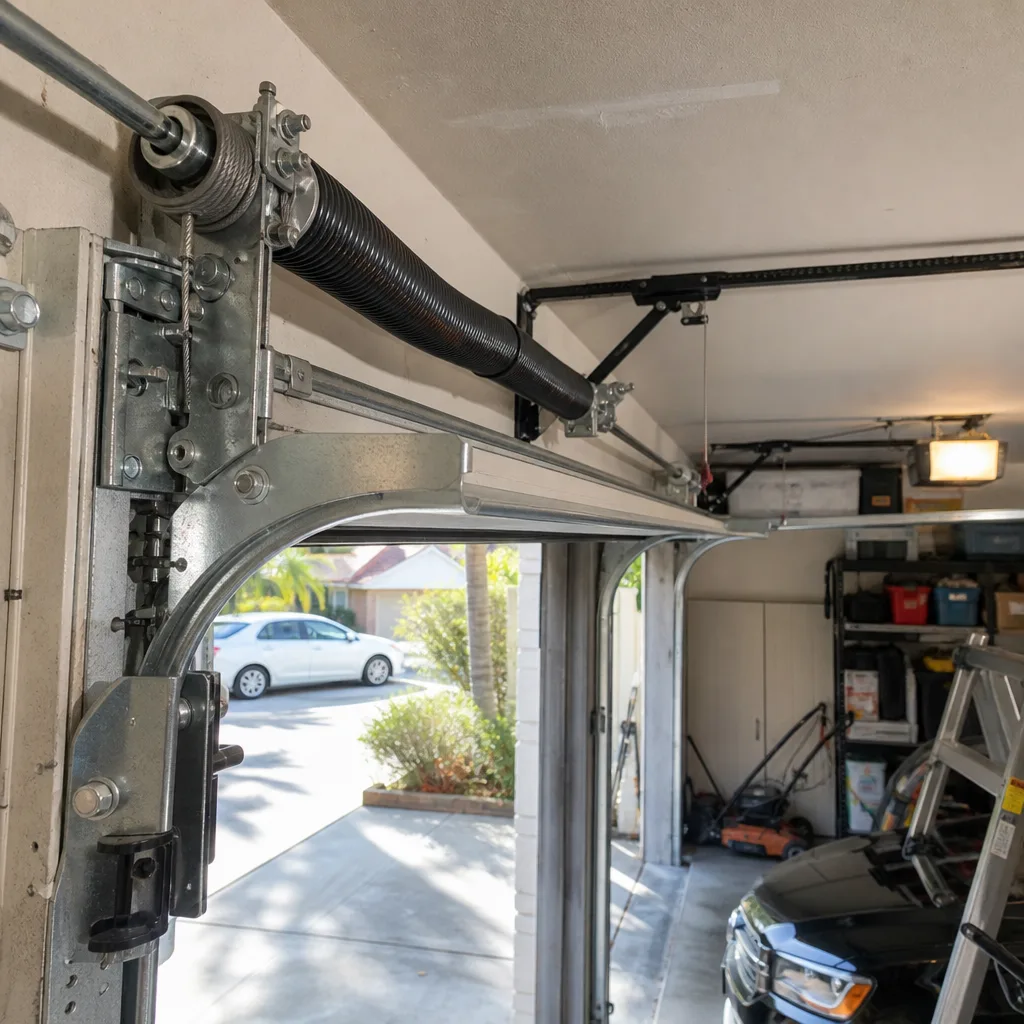 After
AfterDIY vs Professional Garage Door: The Los Angeles Homeowner’s Decision Guide
Torsion springs, the large coils mounted above your garage door, hold between 100 and 250 pounds of stored torque depending on door weight. That energy releases in roughly a third of a second when the spring fails, and the Consumer Product Safety Commission logs hundreds of spring-related injuries every year, most involving homeowners who had watched a tutorial beforehand. This guide breaks down exactly which garage door tasks a competent homeowner can handle safely in Los Angeles, which ones carry injury risk that no video adequately communicates, and what the honest cost difference really is once you factor in tools, parts, and the price of fixing a mistake. For related reading, see our DIY vs Professional Garage Door Repair: What’s Safe to Do Yourself.
Quick Answer
In Los Angeles, DIY garage door maintenance is genuinely safe for four tasks: lubricating moving parts, realigning photo-eye sensors, reprogramming remotes, and replacing bottom weather seals. Everything involving torsion springs, lift cables, or off-track rollers should go to a licensed professional. The cost of a professional repair in LA typically runs $125 to $340 depending on the component, while the average DIY mistake that requires emergency correction lands between $400 and $800 once weekend rates and rework labor are included. For a detailed look at pricing, see our Garage Door Cost Breakdown: The Los Angeles Homeowner’s Reference for 2026.
Table of Contents
- The Component-by-Component Safety Breakdown
- Why Torsion Springs Are the Line You Don’t Cross
- The Four Tasks a Competent DIYer Can Handle
- The Real Cost of a DIY Mistake in Los Angeles
- Parts and Tool Sourcing in the LA Market
- California Insurance and Permit Considerations
- The Stranger-at-the-Door Factor
The Component-by-Component Safety Breakdown
A garage door has roughly a dozen moving parts, and they are not equal in risk. Some fail slowly and obviously. Others fail instantly and violently. The distinction matters more than your mechanical aptitude, because a torsion spring under load doesn’t care how many YouTube videos you’ve watched or how carefully you’ve read the instructions. In our experience serving Los Angeles homes since 2001, we’ve corrected enough DIY attempts to say this plainly: knowing which components are dangerous is the single most important piece of this decision.
Here’s the breakdown, organized by what you can reasonably touch and what you should leave alone:
- Safe for most homeowners: lubrication, sensor alignment, remote reprogramming, weather seal replacement, track cleaning, tightening loose hinge bolts.
- Borderline, only with experience: replacing a snapped extension spring on an older door (still carries real risk), adjusting the up/down limit switch, replacing rollers in a non-bearing bracket.
- Do not DIY, full stop: torsion spring adjustment or replacement (the coil above the door), cable replacement (the wound steel lines running through the spring system), any corrective work on an off-track door, and panel replacement on a double-wide door that requires spring de-tensioning.
The safe list shares a common trait: none of those tasks stores dangerous energy during the repair. Lubricating a hinge doesn’t put your hand near loaded steel. Reprogramming a LiftMaster or Chamberlain opener doesn’t require touching the spring assembly. The dangerous list all involve the door’s counterbalance system, which is under constant tension even when the door is fully open.
For Los Angeles homeowners specifically, the stakes are higher than in many other markets. Garage doors here are typically the second-point of home access after the entry door, and many LA houses built between 1950 and 1990 have original or near-original spring systems that have been adjusted, patched, or jury-rigged over decades. A spring that’s been improvised is less predictable than one that’s been replaced on schedule.
Why Torsion Springs Are the Line You Don’t Cross
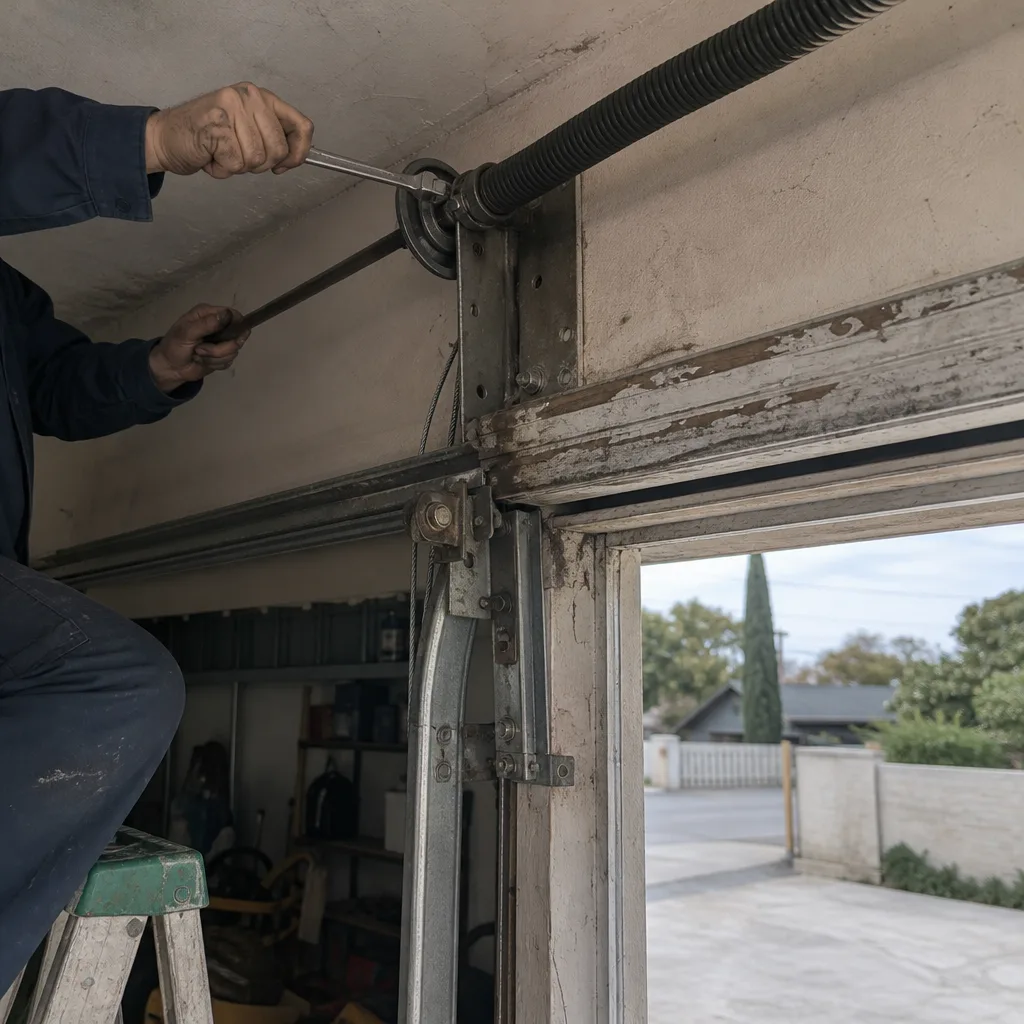
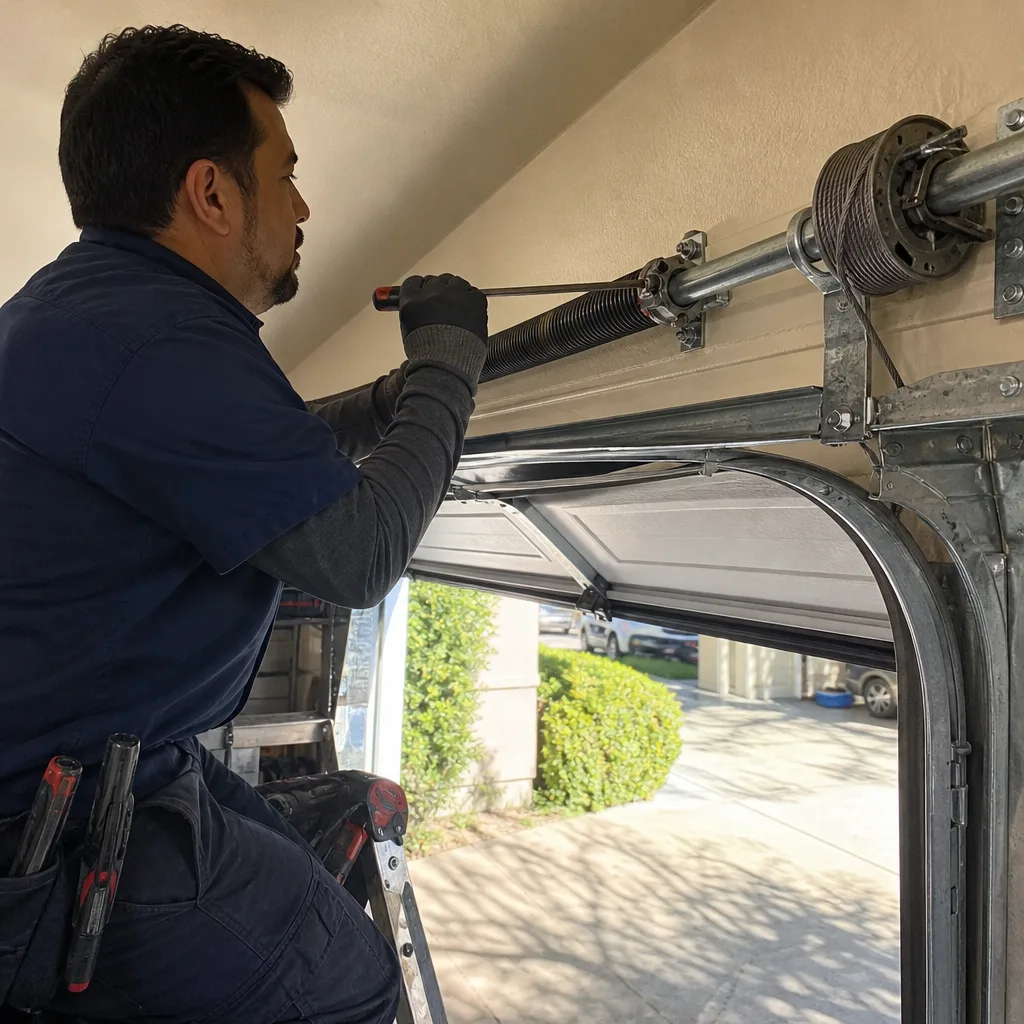
A torsion spring, the large coil mounted horizontally above the door opening, does most of the lifting work for a sectional garage door. On a typical double-wide door in Los Angeles, that spring holds between 150 and 250 pounds of stored torque when the door is closed. The winding and unwinding mechanism requires specialized steel winding bars inserted into the spring cone, and any slip or loss of control during the process releases that stored energy into whatever is nearest, usually your hands, wrists, or face.
What the tutorials rarely show is what happens when the winding bar itself slips. The spring doesn’t fail gracefully. It releases all stored energy in under a second, spinning the bar into anything within its arc. The CPSC’s injury data on garage door springs has consistently shown hundreds of annual emergency room visits, and the common thread is that the person believed they understood the process. Watching a professional do it on video creates a false sense of transferable skill. It does not translate.
The math on doing it yourself also doesn’t work the way most people assume. A professional torsion spring replacement on a standard Los Angeles single-car door runs between $180 and $260, parts included. Winding bars cost $15 to $35 at local hardware stores. A replacement spring pair, matched to your door’s weight and height, runs $80 to $140 from specialty suppliers. So the DIY version looks like $100 to $175 in savings on paper. But if the spring slips mid-install and you need an emergency pro visit, the correction work plus repair typically lands at $350 to $500. And that assumes no injury requiring medical attention.
The Four Tasks a Competent DIYer Can Handle
We want to be fair here. There are garage door maintenance tasks that genuinely make sense for a homeowner to do themselves, and we tell customers this directly. These four tasks don’t involve stored spring energy, require no specialized tools beyond what most LA households already own, and save you a service call fee.
1. Lubricating Moving Parts
A garage door that squeals or grinds when opening usually just needs lubrication. The correct approach is a white lithium grease on the hinges and roller stems, plus a spray silicone lubricant on the torsion spring itself. Do this every six months in Los Angeles, where dry heat and coastal salt air both accelerate metal friction. Avoid WD-40. It displaces moisture but doesn’t provide lasting lubrication, and it attracts dust that turns into grime inside the track.
2. Realigning Photo-Eye Sensors
Those small units at the base of each door track, usually with a small green or red light, are photo-eye sensors. When they’re misaligned or dirty, the door will refuse to close and reverse after a few inches. The fix is usually simple: wipe the lens, loosen the wing nut holding each sensor, and adjust until both lights are solid. This is a five-minute task on most LiftMaster and Chamberlain systems, and the sensors themselves are low-voltage and safe to handle.
3. Reprogramming Remotes and Keypads
Every major opener brand, including LiftMaster, Chamberlain, Genie, and Craftsman, uses a learn button on the motor unit for remote programming. The process typically takes under two minutes and requires no tools. If you’ve lost a remote or moved into a home where the previous owner’s remotes aren’t included, buying a compatible remote and programming it yourself is completely reasonable. Just verify the remote’s frequency matches the opener’s receiver.
4. Replacing the Bottom Weather Seal
The rubber strip along the bottom of the door deteriorates in Los Angeles sun and heat, usually within three to five years. Replacement involves sliding the old seal out of the aluminum retainer channel and sliding a new one in. It takes maybe 20 minutes, costs $15 to $30 for the seal material, and requires nothing beyond a utility knife and some dish soap as lubrication. This is a legitimate DIY win, and it improves your garage’s dust and water resistance meaningfully.
The Real Cost of a DIY Mistake in Los Angeles
The economics of garage door DIY get misrepresented in two directions. The YouTube version assumes nothing goes wrong. The contractor fear-mongering version assumes everything goes wrong. In Los Angeles reality, the most common DIY attempts fall into specific categories with specific price tags.
Here’s what we actually see when DIY goes sideways, with the correction costs:
- Stripped winding cone on a torsion spring: happens when a homeowner uses the wrong-sized winding bar or doesn’t seat it fully. Requires spring replacement. Cost: $220 to $320, plus any of the original DIY attempt costs already spent.
- Misrouted lift cables after attempted spring work: cables that come off the drum get caught in the track or wrap around the shaft. Corrective cable rerouting plus possible cable replacement. Cost: $150 to $260.
- Door forced back onto the track incorrectly: a door pulled sideways or wrestled back into the track often bends the roller stem or damages the bracket. Cost: $130 to $240 depending on parts.
- Opener installed with wrong reinforcement: many DIYers mounting an opener onto a single-panel or lightly reinforced door without the correct strut. The opener motor burns out prematurely. Replacement plus correct reinforcement. Cost: $350 to $550.
Los Angeles emergency service pricing deserves specific mention. If the DIY attempt happens on a Saturday afternoon and the door is now stuck open, you’re calling for weekend emergency work. Emergency surcharges in the LA market typically add $50 to $100 over standard rates, and weekend dispatch fees are common. The total for emergency correction frequently lands between $400 and $800. That’s the number to compare against the original professional repair quote, which for most spring or cable work would have been $125 to $340 on a weekday. The DIY savings disappear fast.
Beyond money, there’s the door being unusable for however long it takes to get a pro out. In Los Angeles, where attached garages frequently serve as the primary entry point and contain more than cars (tools, bikes, holiday decorations, sometimes a home gym), a stuck-open or stuck-closed door is a real disruption. The time cost is real even when the money evens out.
Parts and Tool Sourcing in the LA Market
For the four safe DIY tasks, Los Angeles has strong parts availability. Home Depot and Lowe’s stock lubricants, weather seals, and universal remotes at locations across the city, from Hollywood to the San Fernando Valley to the South Bay. Grainger’s industrial counters in Torrance and Commerce carry commercial-grade lubricants and some roller replacement components. Online, OEM-compatible parts are available through specialty suppliers who ship from Southern California warehouses, meaning most orders arrive in one to two days.
Here’s what to know before buying replacement parts:
- Match spring IPPT to your door’s weight. IPPT stands for inch-pounds per turn, and it’s stamped on the spring cone or listed on the manufacturer’s spec sheet. A spring rated for a 250-pound door will not work safely on a 400-pound double door. The door’s weight is printed on the manufacturer label, usually on the inside edge of a door panel, or the end stile.
- Weather seals are not universal. The T-shaped bottom seal on a Clopay door differs from the bulb seal on a Wayne Dalton or the retainer-channel seal on an Amarr. Bring a photo of your existing seal’s cross-section when buying, or cut off a one-inch piece to match at the store.
- Remote compatibility matters. A Chamberlain remote works with Chamberlain and LiftMaster openers, but not Genie or Raynor. The learn button color on the motor unit (yellow, purple, red/orange, green) corresponds to different radio frequency bands. Match the color, not the brand name alone.
For anything involving springs, cables, or rollers, skip the parts counter route entirely. The garage door industry in Los Angeles uses specialized distributors that don’t sell to walk-in retail customers, and the spring you’d need isn’t on the shelf at Home Depot anyway. A pro arrives with the correct parts for your specific door weight and configuration, which is one practical reason the professional route makes sense for anything beyond the four approved tasks.
California Insurance and Permit Considerations
Here’s something most DIY garage door guides never mention, and it matters specifically in California. If you install a garage door opener yourself and that opener is later involved in a property claim, your insurer can deny the claim if the installation didn’t meet code requirements. The California Building Code, specifically the sections regulating residential garage door safety features, requires automatic reversing mechanisms and photo-eye sensors that meet specific performance standards. A professional installation includes verifying those features work correctly. A DIY installation where you can’t document that verification puts you on weaker footing in a claim dispute.
Los Angeles specifically also has localized permitting requirements for certain garage door work in historic districts and HOAs. If you live in a designated historical preservation zone (such as parts of Hancock Park, Angelino Heights, or West Adams), any garage door replacement that changes the appearance of the door may require design review. A new door that matches the existing style usually doesn’t, but the moment you change color, material, or window configuration, you may need approval. This applies whether you install it yourself or hire a pro, but a professional who works in LA regularly will know to ask about your specific address before any work starts.
We’ve also seen the insurance question come up with garage door openers that lack a modern auto-reverse failure mode. If your opener is older than 2015 or so and you install a new door without updating the opener, and the door fails to reverse on obstruction and causes property damage or injury, the liability path can get complicated. It’s one more reason that opener replacement, when paired with spring work, is worth doing through a company that carries both the licensing and the written guarantee.
The Stranger-at-the-Door Factor
Let’s address something the DIY-versus-pro debate usually ignores, but which matters a great deal to a lot of Los Angeles homeowners. Some people attempt their own garage door repairs not because they particularly want to, but because they don’t want to open their door to someone they didn’t choose, didn’t screen, and can’t verify. That’s a legitimate concern. We hear it regularly, particularly from people who are home alone during the day, parents with kids at home, and older homeowners who have been burned before.
The entire model at Doyle Garage Door Repair home is built around removing that variable. Before any technician arrives at a Los Angeles home, the customer receives the technician’s name and photo. When the technician rings the bell, they’re in a marked uniform and they show a photo ID badge at the door. Every tech is background-checked and identity-verified under the Threshold Standard, which is our family of home-service companies’ specific, written protocol for who gets to wear the uniform. This isn’t marketing language. It’s a process with named steps that happens for every single visit.
The ownership structure matters here too. Garage Door Repair in Grandview operates as part of the Threshold Group family, with each location independently owned and operated under the same Threshold Verified standard. What that means for the customer is that the accountability isn’t abstract. The owner of this business, Aaron Teague, has been serving Los Angeles since 2001 and has his name on the company. When you call, a live person answers. Not a voicemail tree, not a callback form, not a bot. Day, night, weekend, holiday. That’s the standard, and it’s been the standard for over two decades.
If the reason you were considering DIY was discomfort with the stranger aspect, that calculus changes when you know who’s coming before they arrive. It’s a lot easier to hand off the torsion spring work when the person at your door matches the photo you received in advance.
Common Mistakes to Avoid
- Using the wrong winding bar size on a torsion spring. The winding bar must match the cone’s slot diameter exactly. An undersized bar slips under load, and a slip means the spring unwinds into whatever’s in its path. This is the most common cause of spring-related injuries in Los Angeles homes, and it’s completely avoidable.
- Skipping the lubrication step after a repair. Even a correct component replacement needs proper lubrication afterward to prevent premature wear. In LA’s dry, dusty climate, unlubricated rollers and hinges wear noticeably faster than lubricated ones.
- Buying a universal remote without checking frequency compatibility. Universal doesn’t actually mean universal. Match the learn button color on your motor unit to the remote’s frequency specification. Getting this wrong means spending money on a remote that won’t pair.
- Forgetting to test the auto-reverse after any work. The auto-reverse function, which stops and reverses the door when it hits an obstruction, is a required safety feature. After any repair or maintenance, put a roll of paper towels or a block of wood in the door’s path and verify it reverses. If it doesn’t, the door is not safe to operate.
- Attempting to fix an off-track door by forcing it back. An off-track door usually means a broken roller, a bent track section, or a spring that’s out of balance. Forcing the door back into the track almost always bends something else. This is a professional repair, not a strength test.
- Underestimating spring age. Torsion springs are rated for a specific number of cycles, typically 10,000 cycles for standard springs. In a household that cycles the door four times a day, that’s about seven years. If your springs are older than that, they’re on borrowed time, whether or not they’ve snapped yet.
When to Call a Professional
Call a professional when the problem involves any component under spring tension: torsion springs, extension springs, or the cables that connect to them. Call when the door is off-track, when it sags visibly on one side, or when it slams down rather than lowering smoothly. Call when your opener makes grinding noises that aren’t fixed by lubrication, or when the door reverses mid-close for no apparent reason. Call when you’ve already attempted a DIY fix and the door is now worse than before, we fix those situations regularly without judgment, but the repair cost is always higher than it would have been originally. Garage Door Opener Repair in Grandview covers all opener brands including LiftMaster, Chamberlain, Genie, and Raynor. Doyle Garage Door Repair offers free estimates in Los Angeles at (910) 858-8029, with a written price before any work starts and a written 365-day guarantee on every repair.
Frequently Asked Questions
You can, but you shouldn’t. Torsion springs hold 100 to 250 pounds of stored torque, and uncontrolled release causes the injuries that fill CPSC annual reports. A professional replacement in Los Angeles costs $180 to $260 on a standard single door, which is less than most emergency room copays.
In Los Angeles, typical repairs run $125 to $340 depending on the component. Sensor alignment or lubrication runs $75 to $125, cable replacement $150 to $260, torsion spring replacement $180 to $320, and opener replacement $350 to $550 including installation. Every Doyle Garage Door Repair quote is written down and agreed before work starts.
You can safely lubricate moving parts, realign photo-eye sensors, reprogram remotes and keypads, and replace the bottom weather seal. These tasks involve no stored spring energy and require basic household tools. Everything involving springs, cables, or track alignment should go to a professional.
It might not. California insurance companies can deny claims where a DIY installation didn’t meet code requirements, particularly around automatic reversing systems. Professional installation includes documentation that safety features were verified, which puts you in a stronger position if a claim arises.
Torsion springs typically last about seven years in regular use. Warning signs include visible gaps in the spring coil, a door that feels heavier than it used to, a door that opens slower or slams down, and a loud bang when the door moves. If you notice any of these, call (910) 858-8029 for an inspection before the spring fails completely.
Yes. We’re factory-trained on all major brands including LiftMaster, Chamberlain, Genie, Clopay, Amarr, Wayne Dalton, Craftsman, and Raynor. Whether you need Garage Door Installation in Grandview or a spring replacement on your existing door, the price is written down and agreed before any work starts.
The Bottom Line
The DIY versus professional garage door decision really comes down to one distinction: stored energy. For more guides & resources on keeping your garage door safe and functional, visit our blog. Tasks without stored energy, like lubrication, sensor alignment, remote programming, and weather seal replacement, are genuinely safe for a careful homeowner and worth doing yourself. Tasks involving stored energy, which means torsion springs and everything connected to them, aren’t worth the risk to your hands, your door, or your wallet. The numbers in Los Angeles don’t support the DIY savings myth on spring work: the professional repair costs less than the typical emergency correction, and the safety difference isn’t close. When the component is under tension, call someone who does this every day. You’ll get a written price, a written guarantee, and a technician whose name and photo you received before they arrived. Call (910) 858-8029 for a free estimate.
Written by Aaron Teague, Owner at Doyle Garage Door Repair, serving Los Angeles since 2001.