
Last updated October 9, 2026
Full 25-point door and opener safety check with every visit - springs, cables, rollers, tracks, and your LiftMaster or Chamberlain opener included
You get a price before we start. It does not change when the truck arrives.
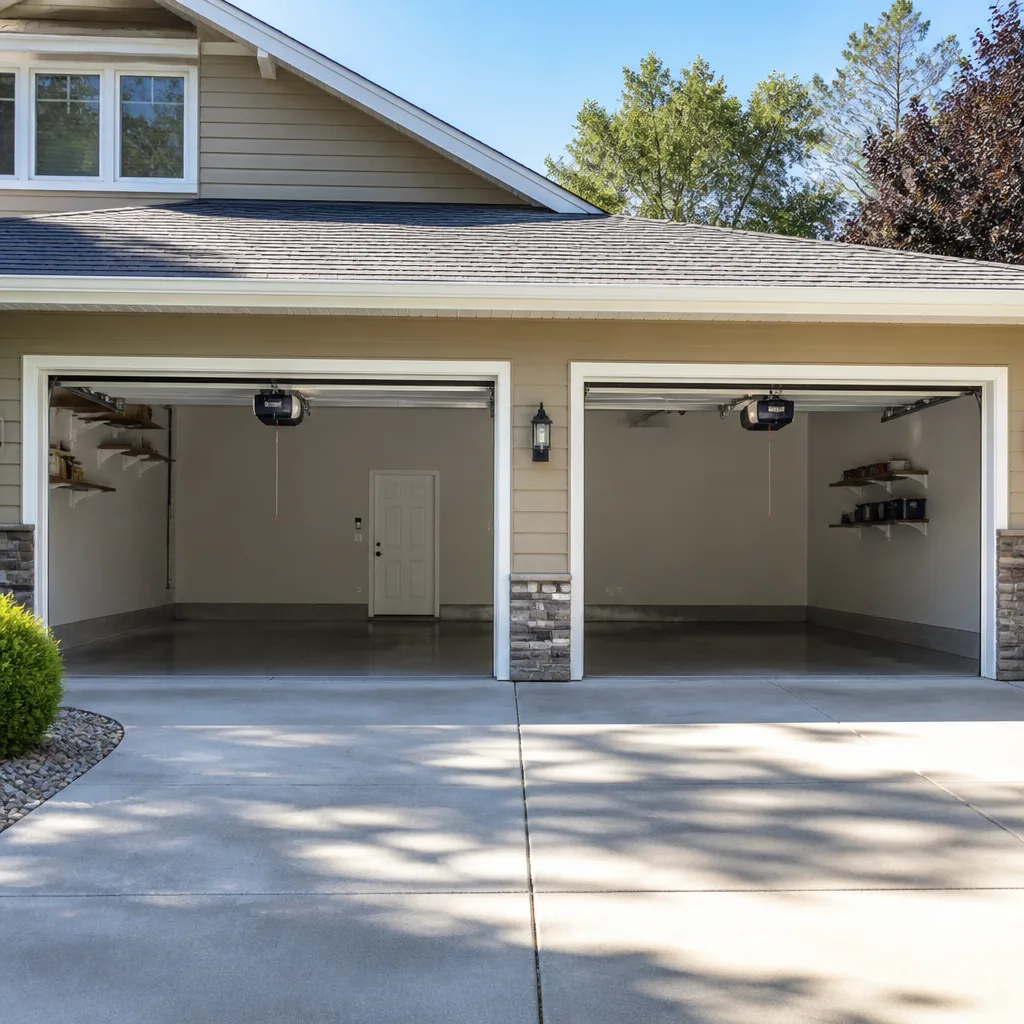
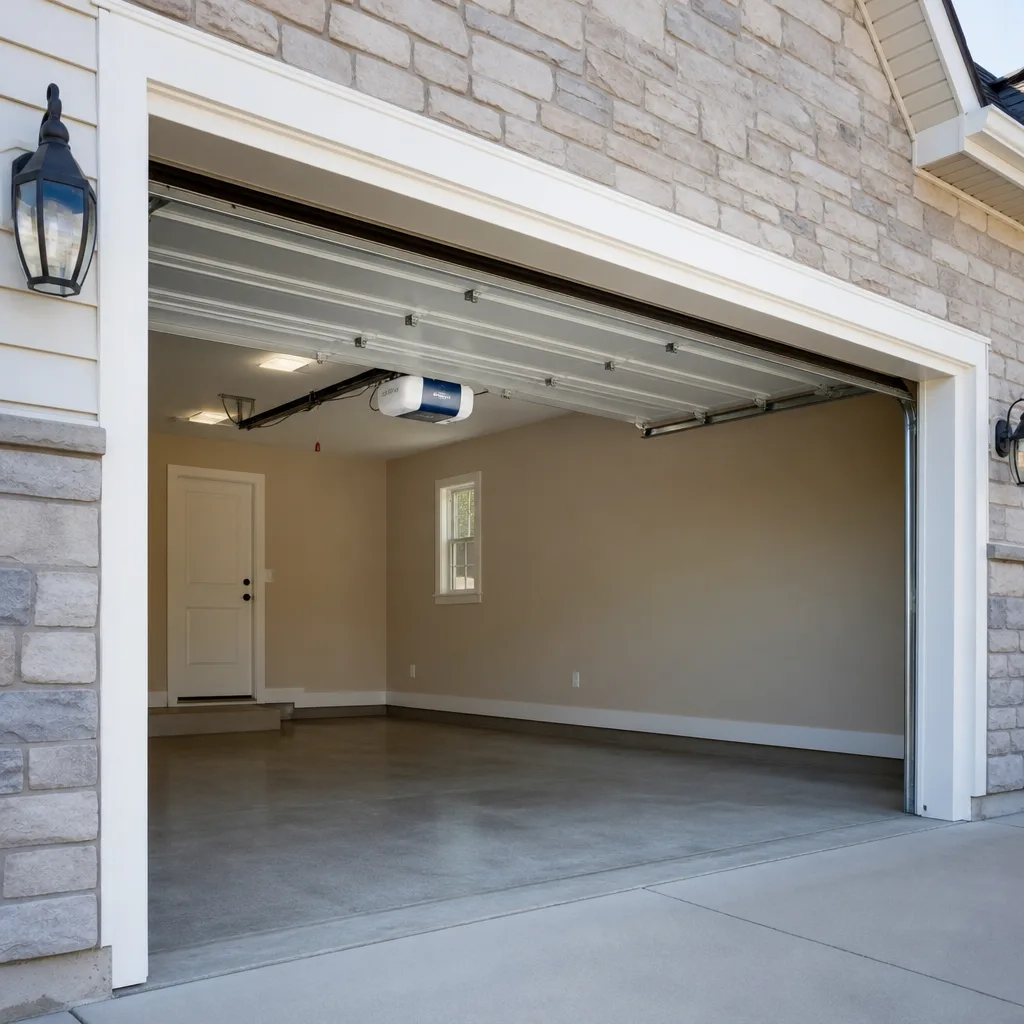
 Before
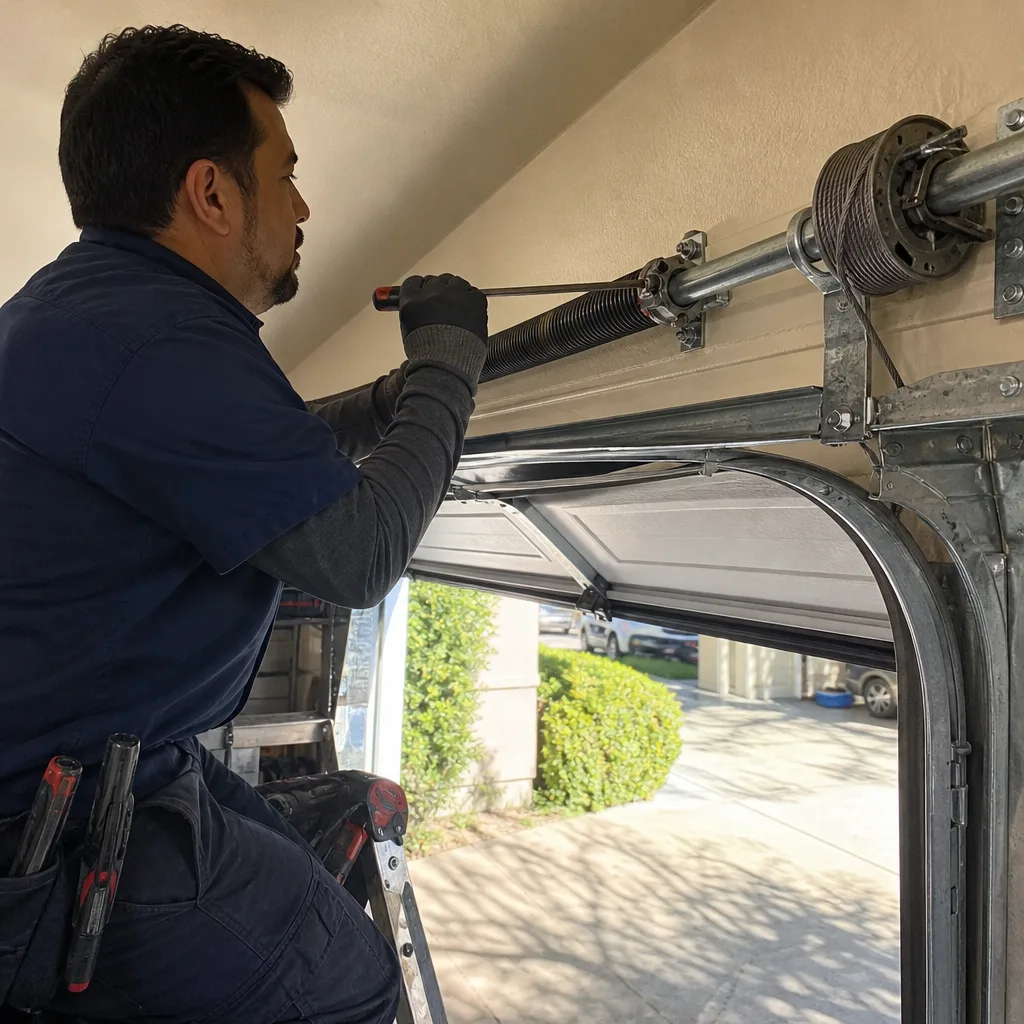 After
After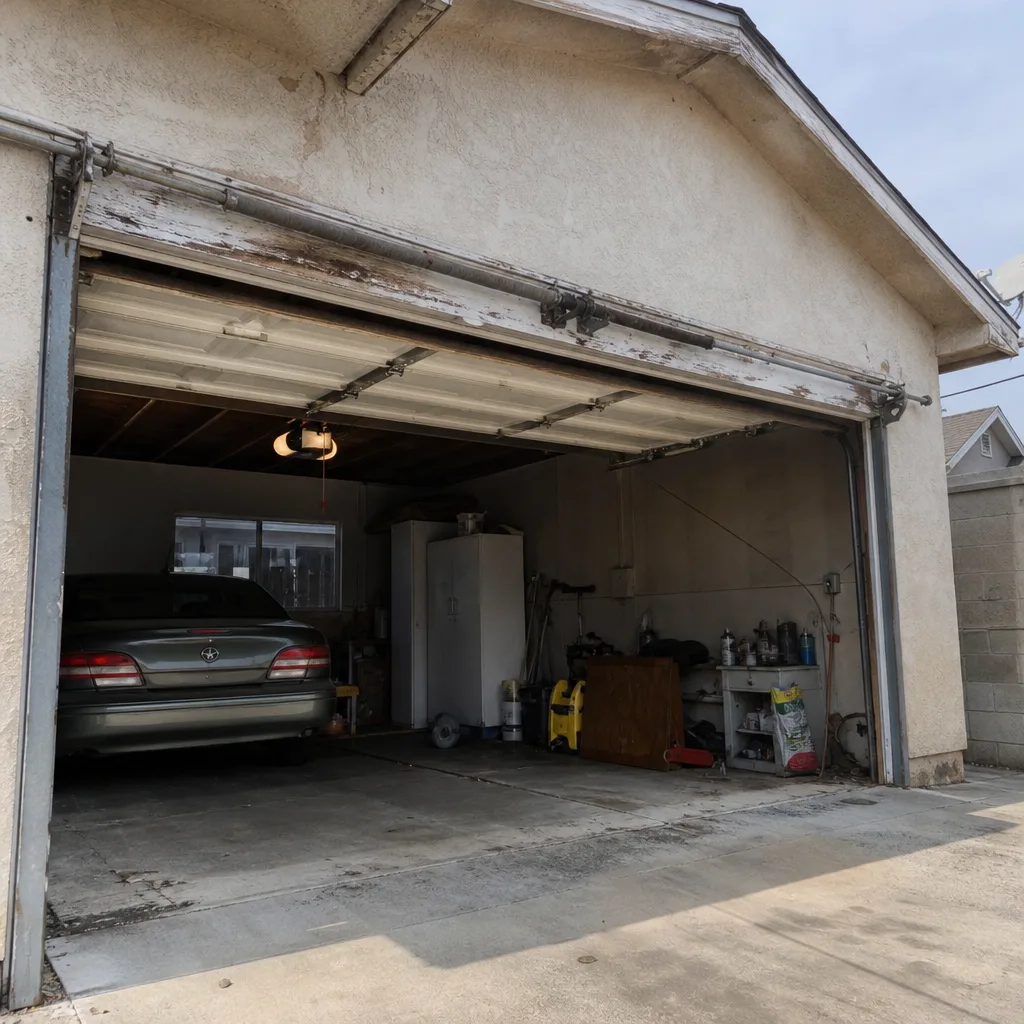 Before
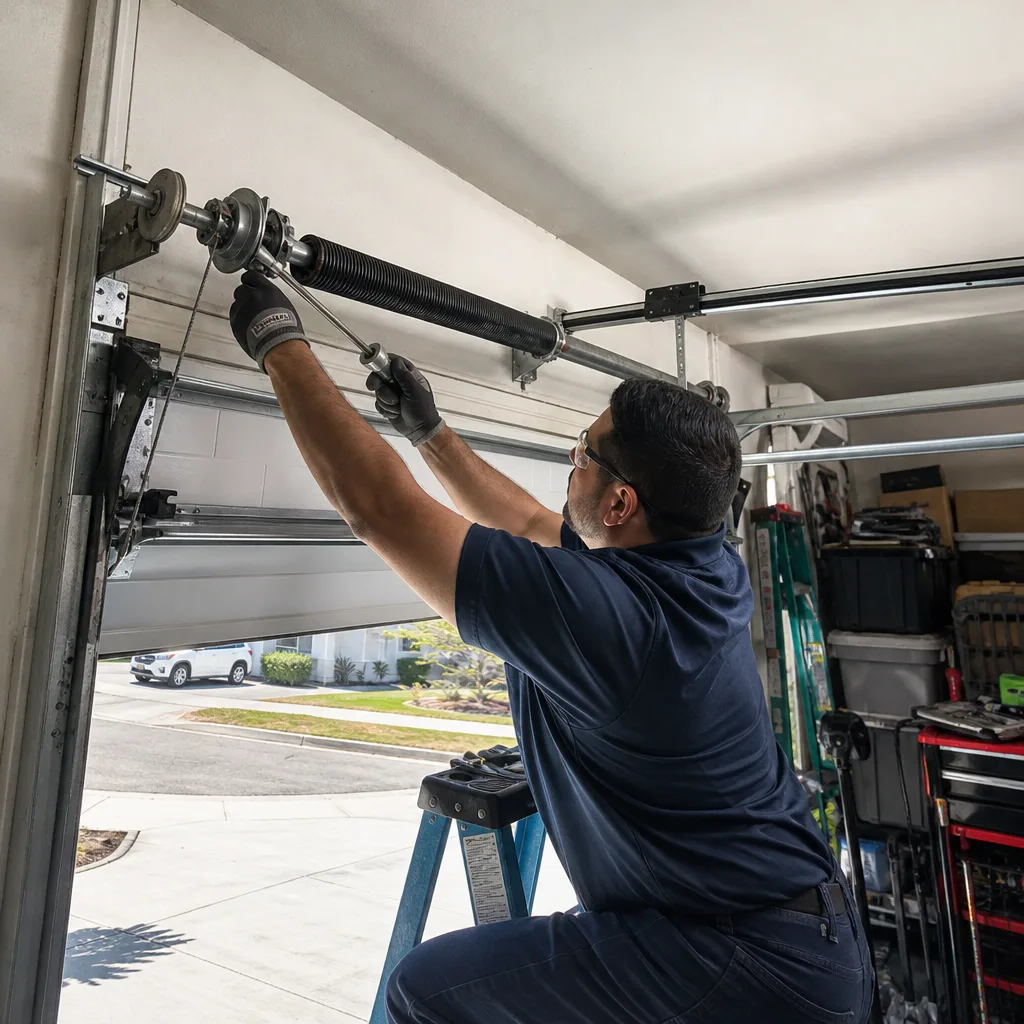 After
After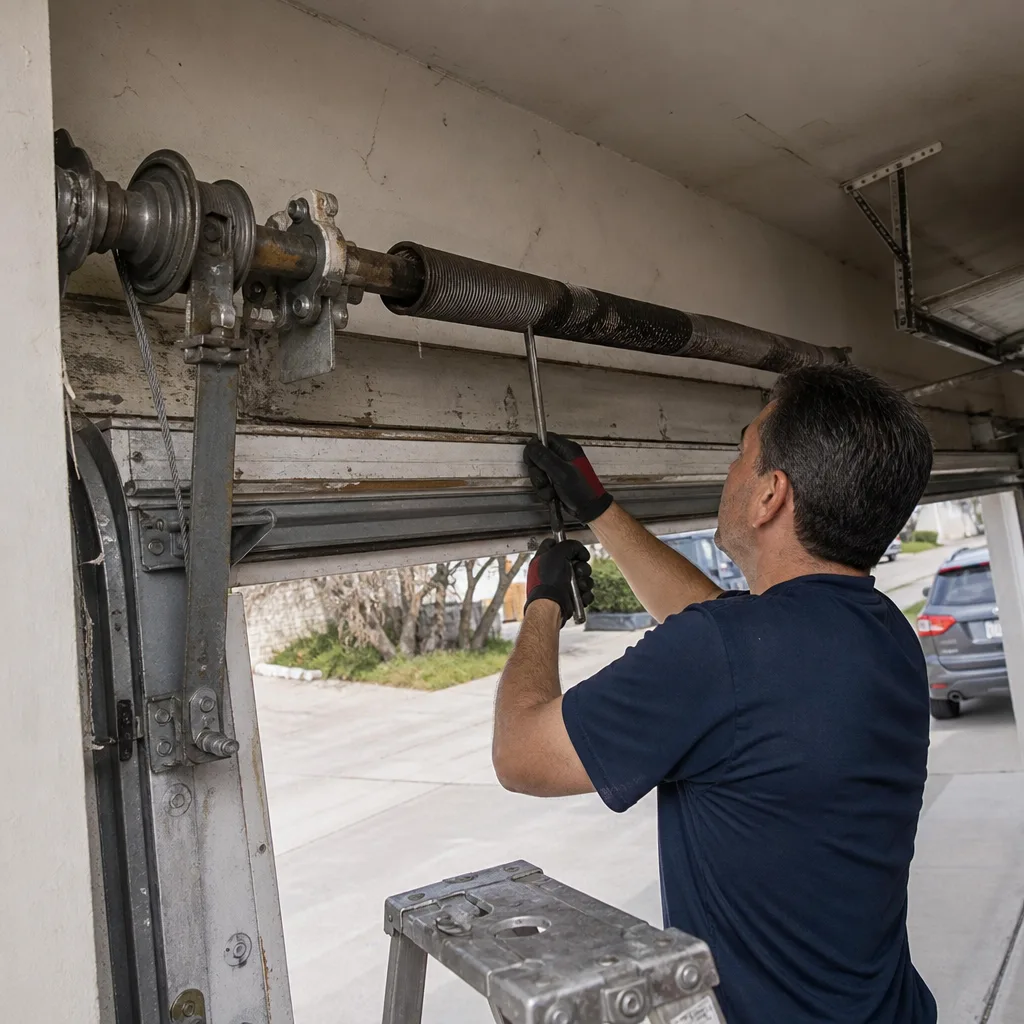 Before
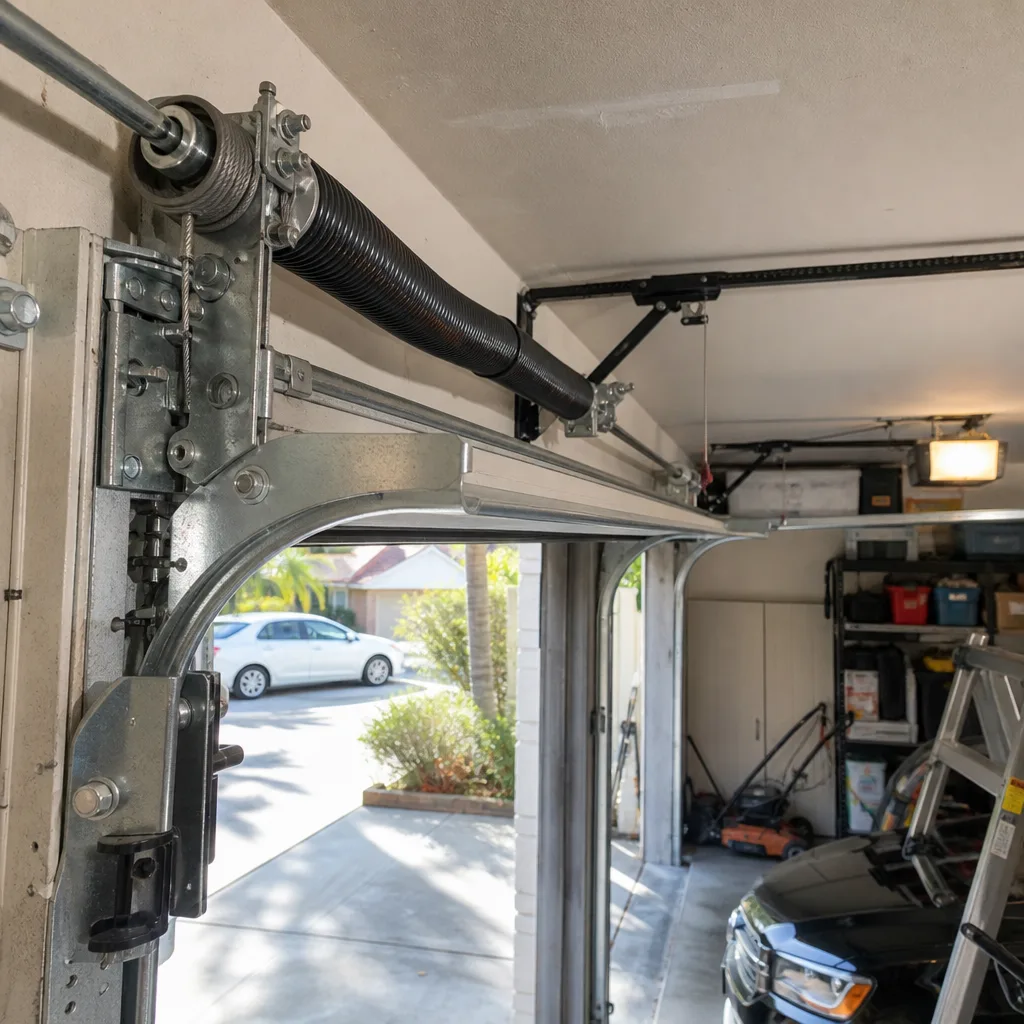 After
AfterThe Complete Garage Door Opener Repair Guide for Los Angeles Homeowners
Here’s something that surprises most homeowners: the garage door opener you have installed in Los Angeles is likely the exact same model your cousin in Ohio has bolted to his ceiling. The machine isn’t the variable. The environment it operates in is. A door opener that lasts fifteen years in a mild coastal climate can eat through a drive gear in seven in a neighborhood where the temperature swings sixty degrees between January and August, and where fine dust settles on every circuit board. This guide walks through how openers actually fail, what each repair typically costs in the Los Angeles market, and how to describe the problem over the phone so the first visit solves it. For The Complete Garage Door Repair Guide for Los Angeles Homeowners, see our expanded resource.
Quick Answer
Our Garage Door Opener Repair services in Los Angeles typically run between $140 and $310 for most component replacements (drive gears, trolley carriages, logic boards, sensor pairs), with full opener replacement landing between $425 and $650 installed. Most repairs can be diagnosed and completed in a single visit. The key is matching the symptom to the component, which is what this guide explains step by step.
Table of Contents
- How Garage Door Openers Fail in Los Angeles (Specifically)
- The Component Glossary: Every Part That Moves the Door
- Symptom to Component: A Diagnostic Map
- What Opener Repair Costs in Los Angeles: Price Ranges by Component
- What You Can Safely Check Yourself (and What You Shouldn’t Touch)
- Why the Technician’s Name and Photo Matter More Than You Think
- Repair vs. Replace: How to Decide
- Preventive Maintenance That Actually Extends Opener Life in LA
How Garage Door Openers Fail in Los Angeles (Specifically)
Most generic opener repair guides assume a climate where the door sees a few gentle open-close cycles per day and the air is relatively clean. Los Angeles is different in two ways that matter to your opener’s longevity. First, the temperature swings. Los Angeles winters drop into the low 40s on cold nights, and summer afternoons routinely push past 90°F. That thermal expansion and contraction stresses the trolley carriage, the rail, and most critically the nylon or plastic drive gears inside the motor unit. We regularly open motor housings in Los Angeles and find drive gears with teeth sheared off entirely, a failure pattern driven by heat-softened nylon under load.
Second, dust. Los Angeles sits in a basin that traps particulate matter, and neighborhoods near the 405, the 110, or any major boulevard accumulate a fine gray film on everything. That dust settles on the photo-eye sensor lenses at knee height, on the logic board inside the motor unit, and inside the limit switch assembly. A thin layer of conductive dust across a sensor lens does not always trigger a visible obstruction warning. Sometimes it just degrades the infrared beam enough that the door intermittently reverses for no apparent reason. Coastal repair guides barely mention this because their air moves differently. Here, it’s a primary failure cause.
The lesson: in Los Angeles, “it just stopped working” often means dust on a sensor or a heat-worn gear, not a dead motor. The good news is both are repairable without replacing the opener.
The Component Glossary: Every Part That Moves the Door
Before you call a repair company, it helps to know the names of the parts you’re describing. Here is the full list, in plain language.
- Motor unit: The box mounted to the garage ceiling that houses the electric motor, the circuit board, and the drive mechanism. When people say “the opener,” this is what they mean.
- Trolley carriage: The small sliding assembly that rides along the rail and physically pulls or pushes the door. It connects the motor unit to the door arm. If you hear grinding but the motor runs, this is often the culprit.
- Drive chain, belt, or screw: The mechanism that moves the trolley. Chain drives are loud and durable, belt drives are quiet and good for attached garages, screw drives sit in the middle. Each has different failure patterns.
- Photo-eye sensors: The two small boxes mounted on either side of the door opening, about six inches off the ground. They project an invisible infrared beam across the opening. If anything breaks the beam, the door will not close, and a closing door will reverse. In Los Angeles, dust on these lenses is one of the most common repair calls we get.
- Limit switch: The mechanism that tells the opener where the door should stop at the top and bottom of its travel. A worn limit switch causes the door to stop short, reverse mid-cycle, or slam into the ground.
- Wall button: The wired control pad on the garage wall. Older units are simple openers, newer ones include a lock feature and a light control. A failing wall button can cause intermittent operation that looks like a motor problem.
- Safety reverse mechanism: The system that senses resistance when the door hits something and reverses direction. It’s mandated by federal law since 1993. A failing safety reverse is a genuine hazard, especially in households with children or pets.
These terms are the same whether your opener is a LiftMaster, Chamberlain, Genie, or Craftsman. What differs between brands is parts availability and repair cost, which we get to below.
Symptom to Component: A Diagnostic Map
This is the section to read before you call anyone. Match what your door is doing to the most likely failed part. This is what a trained technician does mentally in the first thirty seconds of the call, and it saves you from paying for diagnostic time to discover something you could have described accurately.
- Motor hums for a second, then stops. Door doesn’t move. Most likely: stripped drive gear inside the motor unit. The motor spins, but the nylon gear teeth are broken off, so nothing transfers to the chain or belt. This is one of the most common Los Angeles failures we see, driven by heat-softened nylon under load.
- Door starts to close, then reverses and the lights flash. Most likely: dirty or misaligned photo-eye sensors. Check for dust, cobwebs, or a lawn chair nudged into the beam path. If cleaning the lenses doesn’t fix it, the sensor pair likely needs replacement.
- Door opens but won’t close, or closes but won’t open. Most likely: a limit switch that has slipped out of adjustment. The opener thinks the door is in a different position than it is. This requires a technician to reset the travel limits precisely.
- Grinding or rattling noise during operation. Most likely: worn trolley carriage or a stretched chain. The carriage teeth that engage the rail wear down over years of cycles. If left unfixed, this stress migrates to the drive gear and doubles your repair bill.
- Wall button works intermittently. Remote doesn’t work at all. Most likely: a failing wall button or a dead remote battery. If the wall button acts up, the fix is a $35 to $60 part. If the remote is dead, replace the battery before calling anyone.
- Door closes and immediately reverses at the bottom. Most likely: the safety reverse mechanism is set too sensitive, or the close force setting is off. This is a safety system working correctly. Do not disable it. Call a professional to recalibrate.
Our point with this list is not to hand you a toolkit. It’s to hand you a vocabulary. When you call a repair company and say “the motor hums but the door doesn’t move, and it’s been getting worse for a month,” the technician knows to load a drive gear on the truck before heading out. That’s the difference between a one-visit fix and a second appointment.
What Opener Repair Costs in Los Angeles: Price Ranges by Component
Pricing transparency is rare in the garage door trade, so here are the actual ranges we quote in Los Angeles for common opener repairs. These are installed prices including the part, the labor, and the service call, and they assume the opener is a major brand (LiftMaster, Chamberlain, Genie, Craftsman).
- Drive gear replacement: $160 – $240. The nylon gear inside the motor unit, replaced with the factory part. Takes about an hour.
- Photo-eye sensor pair replacement: $120 – $180. Includes realignment and testing of the safety reverse.
- Limit switch adjustment or replacement: $95 – $160. Adjustment is cheaper; full replacement sits at the higher end.
- Trolley carriage replacement: $150 – $220. The carriage and the rail engagement components replaced together.
- Logic board replacement: $180 – $310. The circuit board inside the motor unit. Higher on the range for newer openers with smart-home integration.
- Wall button replacement: $60 – $110. Including the part and the wiring check.
- Full opener replacement (motor unit, rail, sensors, wall button, remote): $425 – $650 installed, depending on drive type and horsepower. Belt drive sits at the higher end.
Two things to know about these numbers. First, they are the cash price, not an estimate that balloons after the tech arrives. At Doyle Garage Door Repair, the price is written down and handed to you before any work starts. If the technician finds additional issues mid-repair, they stop and present a new written price rather than surprising you on the final invoice. Second, every repair includes a written guarantee: 365 days from the date of repair, and if it fails, we come back and make it right at no charge. That guarantee is part of the service, not an upsell.
What You Can Safely Check Yourself (and What You Shouldn’t Touch)
There is a bright line between what a homeowner can safely inspect and what requires a trained professional. Crossing it is how people get hurt. Here is that line, drawn clearly.
Safe to check yourself:
- Photo-eye sensor lenses: Wipe them with a dry cloth. Check for anything blocking the beam path: a broom handle, a trash bin, a child’s bike. This fixes a surprising number of “broken” openers.
- Remote battery: Replace it. If the wall button works and the remote doesn’t, this is the fix nine times out of ten.
- Wall button lock mode: Many newer wall buttons have a lock setting that disables the remotes. If your remotes all stopped working at once, press and hold the lock button for three seconds.
- Power source: Check that the motor unit is plugged in and that the GFCI outlet it shares hasn’t tripped. Los Angeles homes with older electrical panels sometimes have a shared circuit that pops when the opener runs at the same time as a washing machine or hair dryer.
Do not touch:
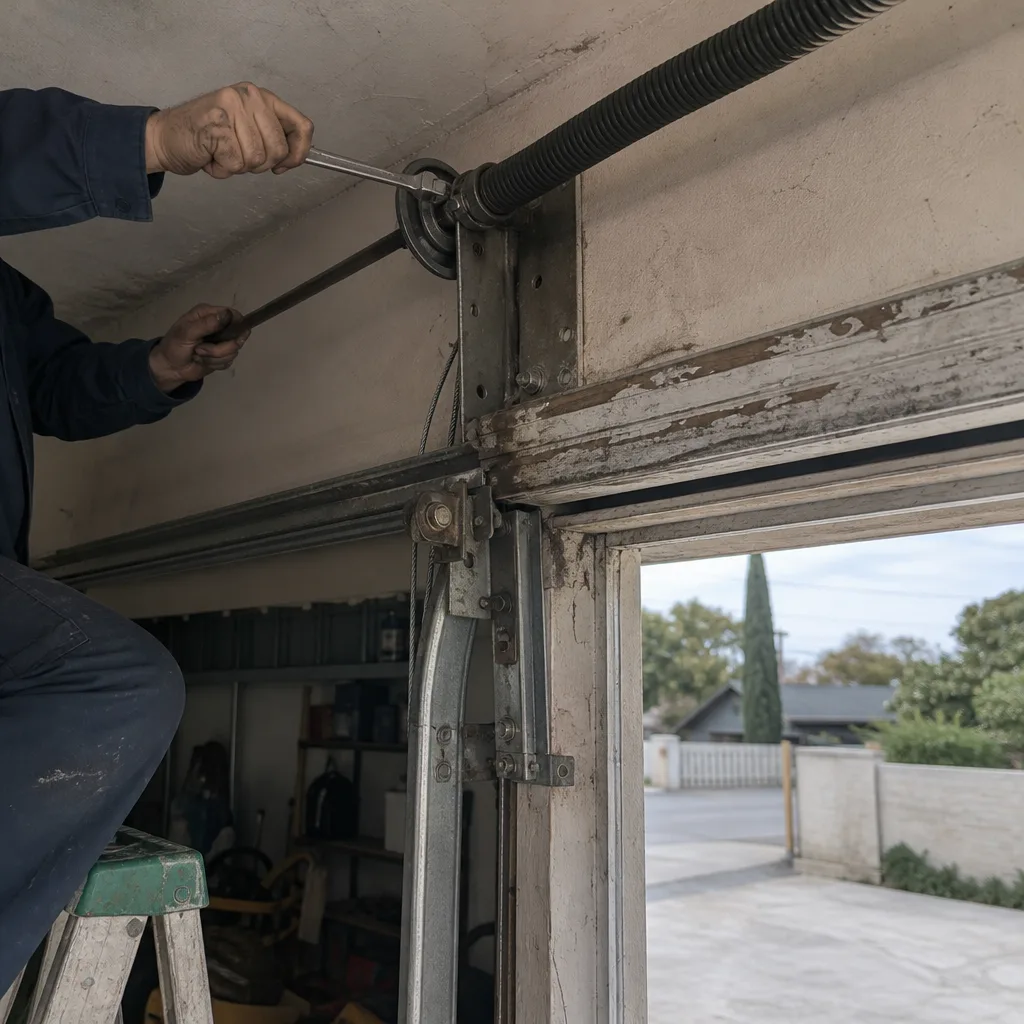
- The torsion spring: The large coil mounted above the door that does most of the lifting. It is under hundreds of pounds of tension. A spring that fails under load can cause serious injury or death. Opener problems are not spring problems, but when a technician is onsite they should always check spring balance as part of the diagnosis. Never adjust or attempt to remove one yourself.
- The drive chain tension: Overtightening a chain is a fast way to destroy the trolley carriage and the drive gear. Chain tension is adjusted to spec, not by feel.
- The motor unit internals: The capacitor inside a motor unit stores electricity even after the unit is unplugged. A shock from a charged capacitor is not a household annoyance. It can stop your heart.
This is not legal boilerplate. We have watched capable homeowners turn a $180 drive gear repair into a $650 full replacement because they tried to adjust a spring that had nothing to do with the original problem. If a repair involves the spring, the cable, or anything under tension, a professional should be looking at it.
Why the Technician’s Name and Photo Matter More Than You Think
Here’s a question most opener guides never address: who is actually coming to your house? In Los Angeles, the answer varies wildly. Some companies dispatch subcontractors they’ve never met. Some send a regional tech from a call center halfway across the county. Some can’t even tell you a name when you ask.
This matters because a garage door technician works in your home, often while you’re alone, often with children in the house, always with access to your garage and everything in it. The person at your door should be someone you can verify. This is why we operate under the Threshold Standard: every technician is background-checked, identity-verified, and arrives in a clean uniform with a photo ID badge. Before the visit, we send you the technician’s name and photo, so you know exactly who to expect before you open the door. That’s a concrete safety step, not a marketing phrase.
In a smaller market like Grandview, TX, this verification layer is something regional dispatch centers cannot offer. Their techs are assigned by zip code from a routing algorithm, not by name from a local team that knows the area. If you live in Los Angeles and you’re choosing between companies, ask the person on the phone: “Can you tell me the name of the technician before they arrive?” If the answer is no, that’s information.
Doyle Garage Door Repair was founded in 2001 as part of the Threshold Group family of home-service companies. We’ve spent more than two decades serving Los Angeles, and the verification standard isn’t a recent addition. It’s been the way we operate from the start.
Repair vs. Replace: How to Decide
At some point, repairing an old opener stops making financial sense. Here is the decision framework we give Los Angeles homeowners, and it’s honest about both sides.
Repair makes sense when: the opener is under ten years old, the motor runs smoothly, and the failed component is one of the parts listed in the pricing section above. A $180 drive gear on a five-year-old LiftMaster is a solid investment that buys another five years. The logic board is healthy, the rail is straight, and the door itself is balanced.
Replace makes sense when: the opener is over twelve years old and the failure is in the logic board or the motor. A $290 board on a thirteen-year-old opener is throwing good money after bad, because the motor and the gear are likely next. Replace also makes sense if you’re moving from chain drive to belt drive for noise reasons, or if you want smart-home integration and your current opener predates it. A new belt-drive LiftMaster or Chamberlain unit installed in Los Angeles runs $425 to $650, and it comes with a fresh warranty, a new safety reverse system, and new sensors.
Our technicians will tell you when repair is the wrong call. We’d rather lose the repair ticket than install a band-aid on an opener that will fail again in six months.
Doyle Garage Door Repair installs and services all major brands, and we’re factory-trained on LiftMaster, Chamberlain, Genie, Craftsman, and Raynor systems. If you’re considering a new unit, ask about belt drive models for attached garages. The noise difference is dramatic, and in Los Angeles homes where the garage shares a wall with a bedroom or home office, it’s worth the $75 to $100 premium.
Preventive Maintenance That Actually Extends Opener Life in LA
Most maintenance advice online is either useless or actively harmful. For more guides & resources that actually work, check our blog. Spraying WD-40 into the motor unit, for example, is a fast way to destroy a logic board. Here is what actually extends opener life in Los Angeles, given our climate and dust load.
- Wipe the photo-eye lenses quarterly. This is the single highest-ROI maintenance task in Los Angeles. A dry cloth, thirty seconds, done. It prevents false obstruction readings, intermittent reversals, and the frustration of a door that refuses to close on a hot afternoon.
- Keep the garage floor under the sensors clear. Not just the beam path. Fine dust gets kicked up by the door every cycle. The less clutter at knee height, the cleaner the sensor lenses stay.
- Listen to the door once a month. Open and close it while standing inside. A door in good health sounds smooth and steady. Grinding, rattling, or a rhythmic thumping are early warnings. Early calls are cheaper than late ones.
- Check the door balance twice a year. Disconnect the opener (pull the red release cord) and manually lift the door halfway. It should stay put. If it falls or drifts, the springs need attention from a professional. An unbalanced door forces the opener to work harder, which shortens its life and accelerates drive gear wear.
- Vacuum the motor unit vents once a year. Unplug the opener and remove the dust that has accumulated on the housing exterior. Do not open the unit. This improves cooling and keeps dust from migrating inside.
These five steps cost nothing and extend opener life by years. They won’t fix an already-broken gear, but they’ll push that failure much further down the road. For parts and labor on necessary fixes, Garage Door Repair in Grandview follows the same written-price and written-guarantee standard, applied to every job.
Common Mistakes to Avoid
- Ignoring the grinding noise for months. A worn trolley carriage grinding on the rail is a countdown to a stripped drive gear. The $170 carriage fix becomes a $240 gear replacement plus the carriage once the stress migrates. The moment you hear grinding, call someone.
- Spraying lubricant into the motor unit. We see this constantly, and it almost always destroys the logic board. The motor unit is not lubricated, ever. The only parts that take lube are the rail and the hinges, and only with a silicone-based garage door lubricant.
- Adjusting the springs to “fix” an opener problem. The springs are under lethal tension. A clicking, grinding, or reversing door is almost never a spring problem. If you’re unsure, the safe move is to leave the spring alone and call a professional who carries the right tools and the right backup.
- Replacing the remote before checking the wall button. If the wall button also acts up, the problem is not the remote. If the wall button is fine and the remote is dead, replace the battery first. This one mistake costs Los Angeles homeowners hundreds of dollars in unnecessary parts every year.
- Forcing a door that won’t open by pulling down on it. If the door is in the closed position and won’t open because of an opener failure, pull the red release cord to disconnect the opener, then lift the door manually. Do not hang your body weight from the door handle. If it doesn’t lift smoothly, the springs need attention and a professional should handle it.
- Hiring on price alone without verifying who is coming. The lowest quote in Los Angeles is often a dispatch center with a subcontractor who has never seen your neighborhood. Ask for the technician’s name before the visit. If the company won’t provide it, you have learned something about how seriously they take your security.
When to Call a Professional
Call a professional when the door reverses for no visible reason, when the motor hums but the door doesn’t move, when you hear grinding or rattling, or when the wall button and remote both stop working. Also call if the door slams on the way down, which signals a failing limit switch or a safety reverse issue. These are not problems that resolve themselves, and several of them get more expensive the longer you wait. Doyle Garage Door Repair offers free estimates in Los Angeles and uses the written-price standard on every job, so you’ll know the cost before any work begins. Call (910) 858-8029 and a live person answers, day or night.
Frequently Asked Questions
Most Los Angeles opener repairs cost between $140 and $310 for component replacements like drive gears, trolley carriages, sensor pairs, and logic boards. Full opener replacement runs $425 to $650 installed. At Doyle Garage Door Repair, the price is written down before work starts, so the number you see is the number you pay. Call (910) 858-8029 for an exact quote on your specific opener.
Same-day opener repair is available in most Los Angeles neighborhoods, and our service area covers the city and surrounding communities. A live person answers the phone 24/7, including weekends and holidays, so you can reach a real human instead of a voicemail tree. Call (910) 858-8029 and we’ll give you a straight answer on timing.
A door that closes halfway and reverses is usually reading an obstruction on the photo-eye sensors, either from dust on the lenses or something in the beam path. In Los Angeles, airborne dust is a frequent culprit, especially near busy roads. Wipe the sensor lenses first. If the problem persists, the safety reverse setting or the limit switch may need professional adjustment.
Yes. Our technicians stock the most common Los Angeles repair parts on the truck: drive gears for LiftMaster, Chamberlain, and Genie units, photo-eye sensor pairs, limit switches, trolley carriages, and wall buttons. That means most repairs are completed in a single visit, not diagnosed and then rescheduled. If your opener needs a part we can’t pull from the truck, we’ll tell you upfront and get it ordered same-day.
No. The written price is produced after the technician inspects the opener and before any work begins. If the inspection reveals an additional problem, the technician stops and writes a new price for the additional work. You approve it before anything else is touched. This is a flat rule at Doyle Garage Door Repair, not a guideline.
Yes. Every repair includes a 365-day written guarantee: if it fails within 365 days of the repair date, we come back and make it right at no charge. If the repair fails, the second visit is also free, no argument required. This guarantee is included on every job at no extra cost, and it’s written on the invoice.
The Bottom Line
The garage door opener is a machine that wears out in patterns specific to where it lives. In Los Angeles, that means heat-stressed drive gears, dust-covered sensors, and trolley carriages that grind themselves down over years of thermal expansion. The fixes are generally affordable, usually quick, and almost always cheaper when you catch the noise early. Know the vocabulary, know the pricing, and know exactly who is walking up your driveway before you open the door. When the repair is done right, it’s backed in writing. Doyle Garage Door Repair has been serving Los Angeles since 2001, and every repair carries a 365-day written guarantee with a free second visit if it fails. Call (910) 858-8029 for a free estimate, and a real person will answer the phone.
Written by Aaron Teague, Owner at Doyle Garage Door Repair, serving Los Angeles since 2001.