
Full 25-point door and opener safety check with every visit - springs, cables, rollers, tracks, and your LiftMaster or Chamberlain opener included
You get a price before we start. It does not change when the truck arrives.
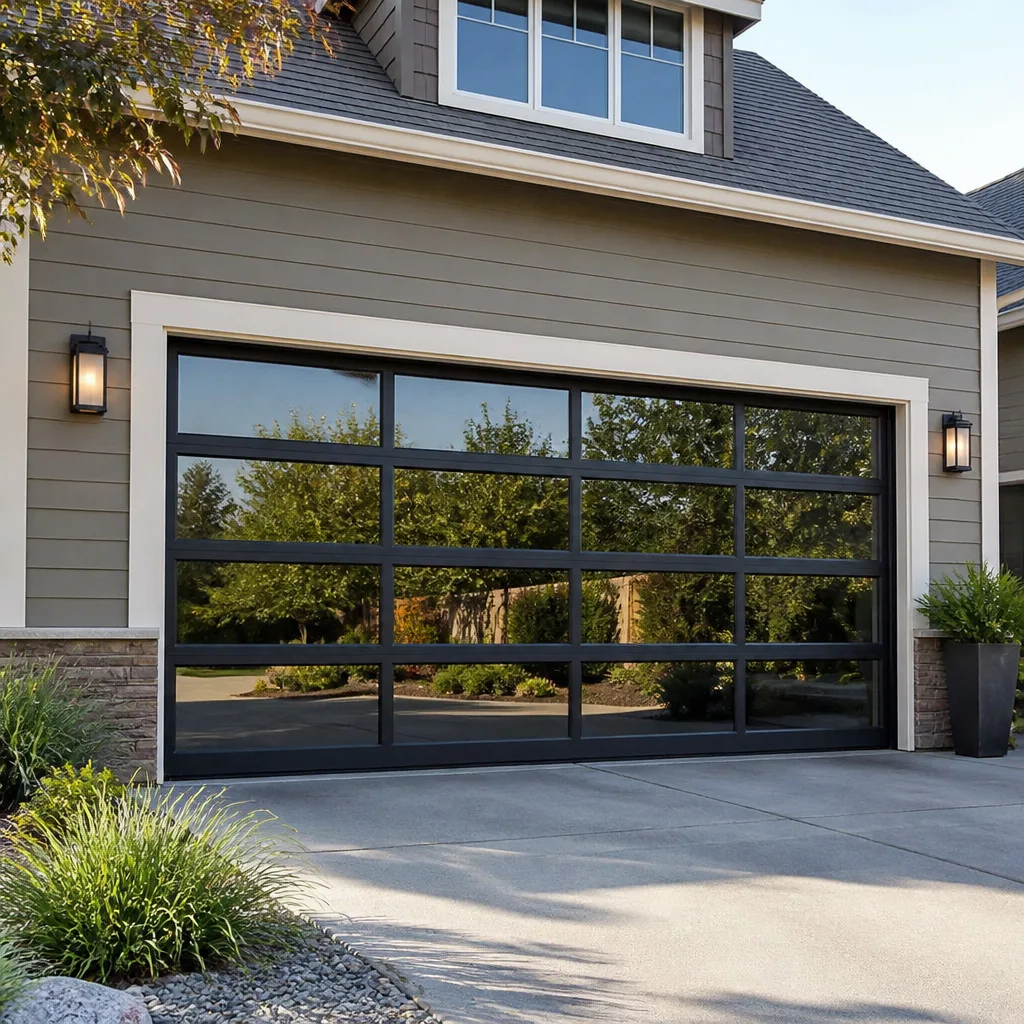
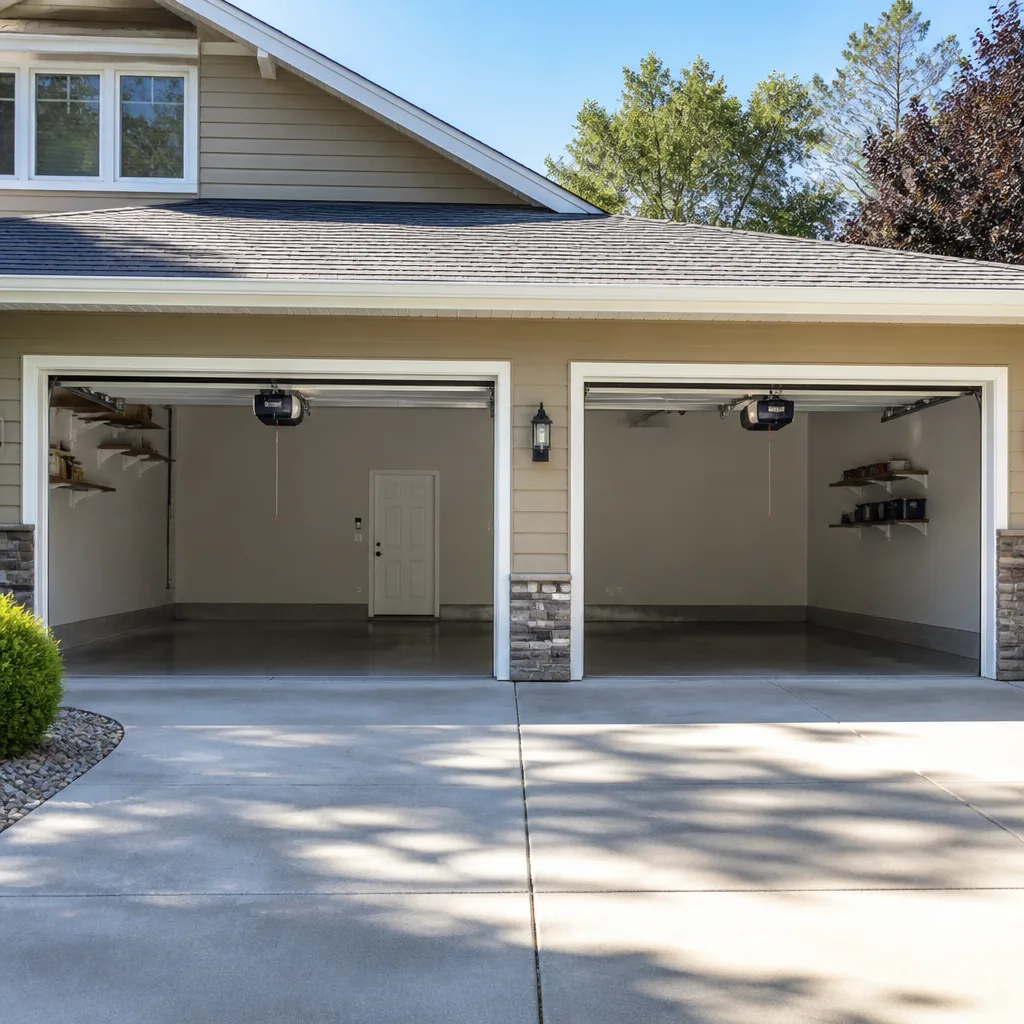
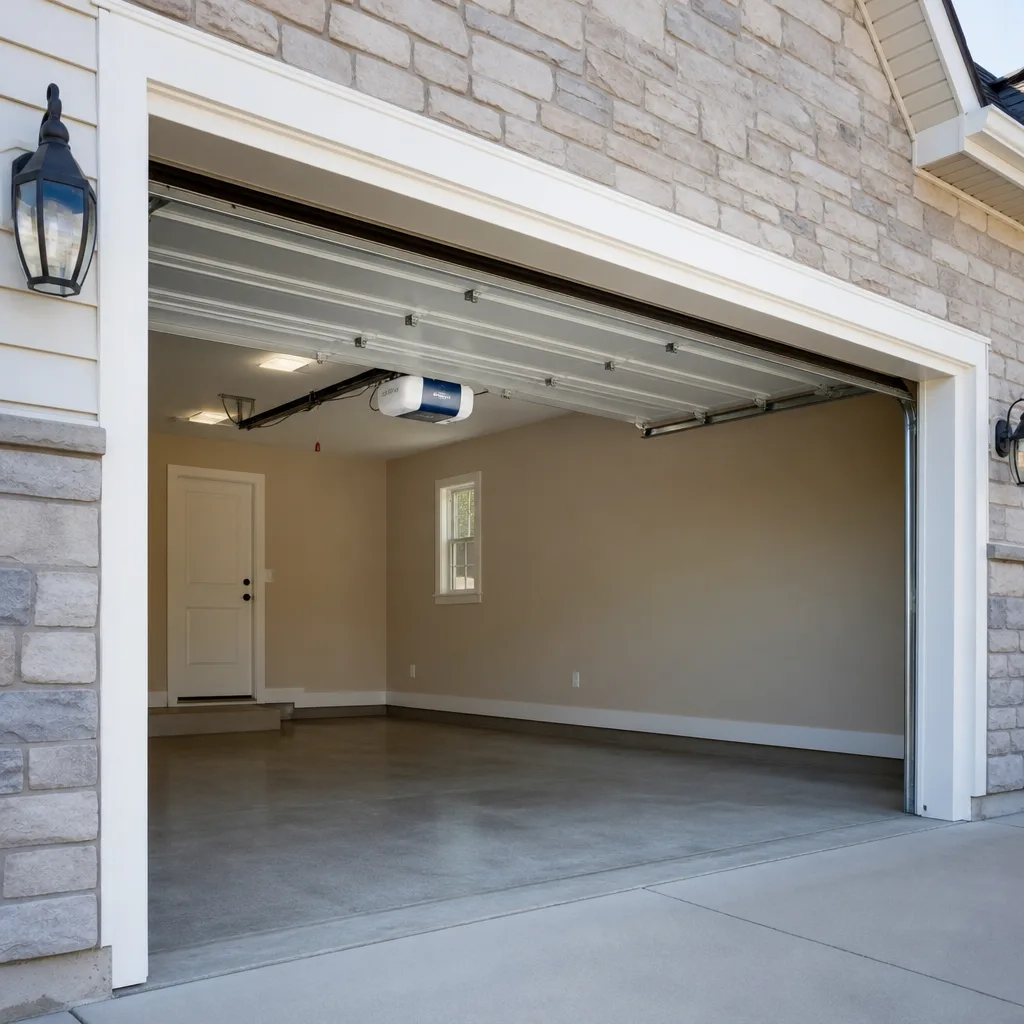
 Before
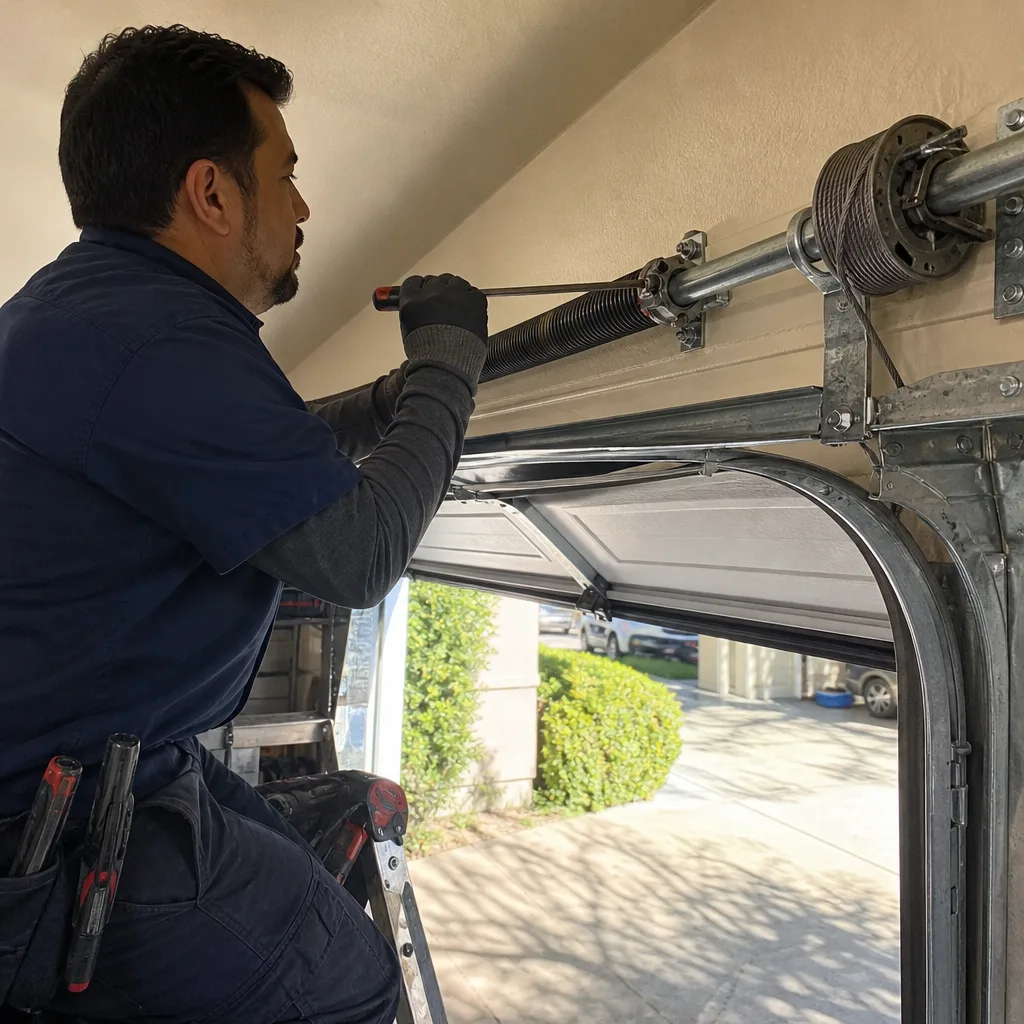 After
After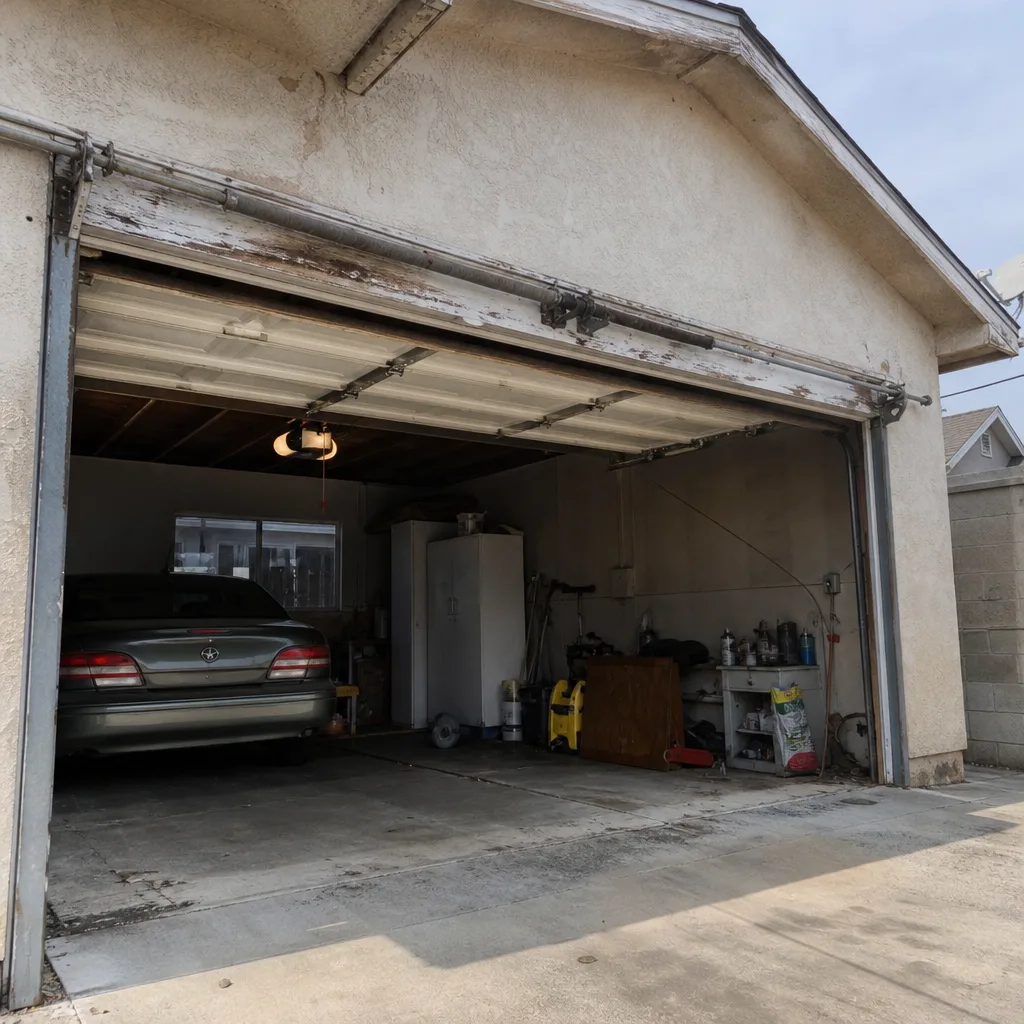 Before
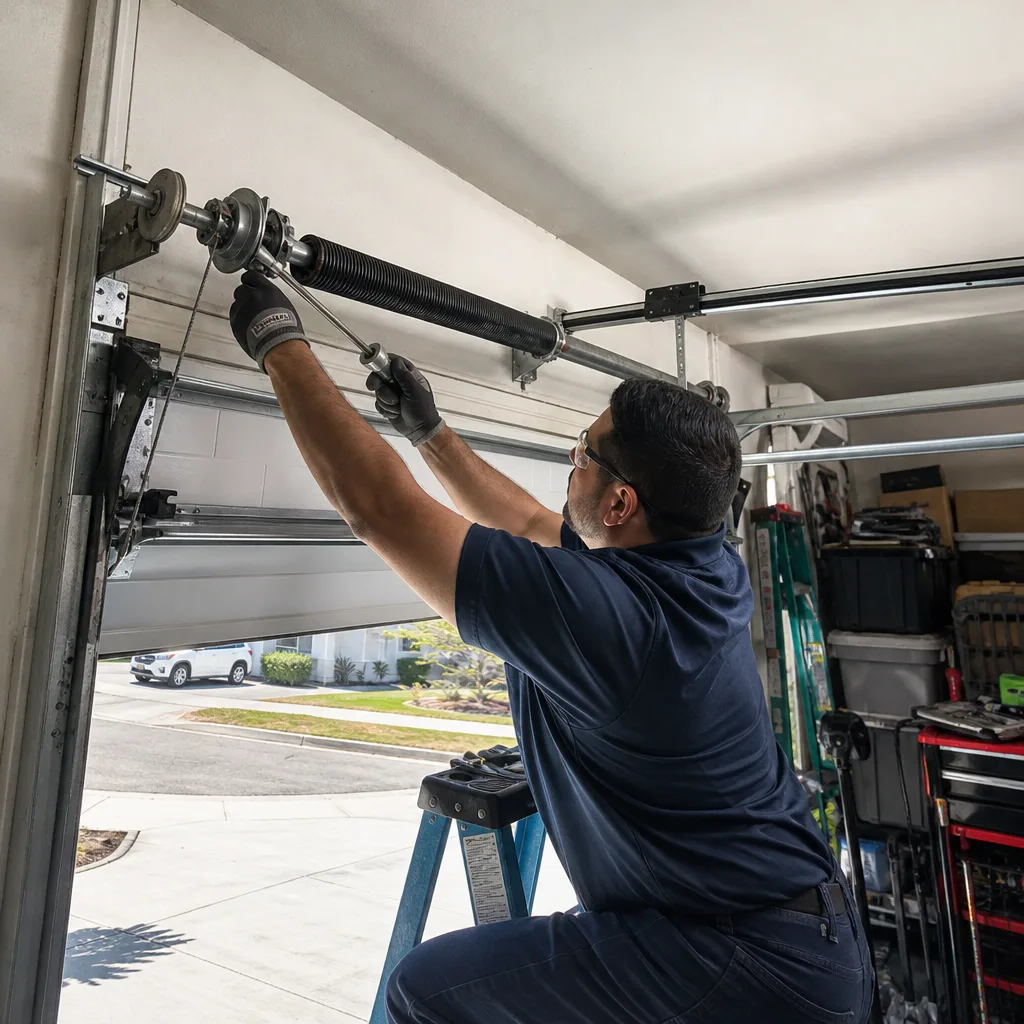 After
After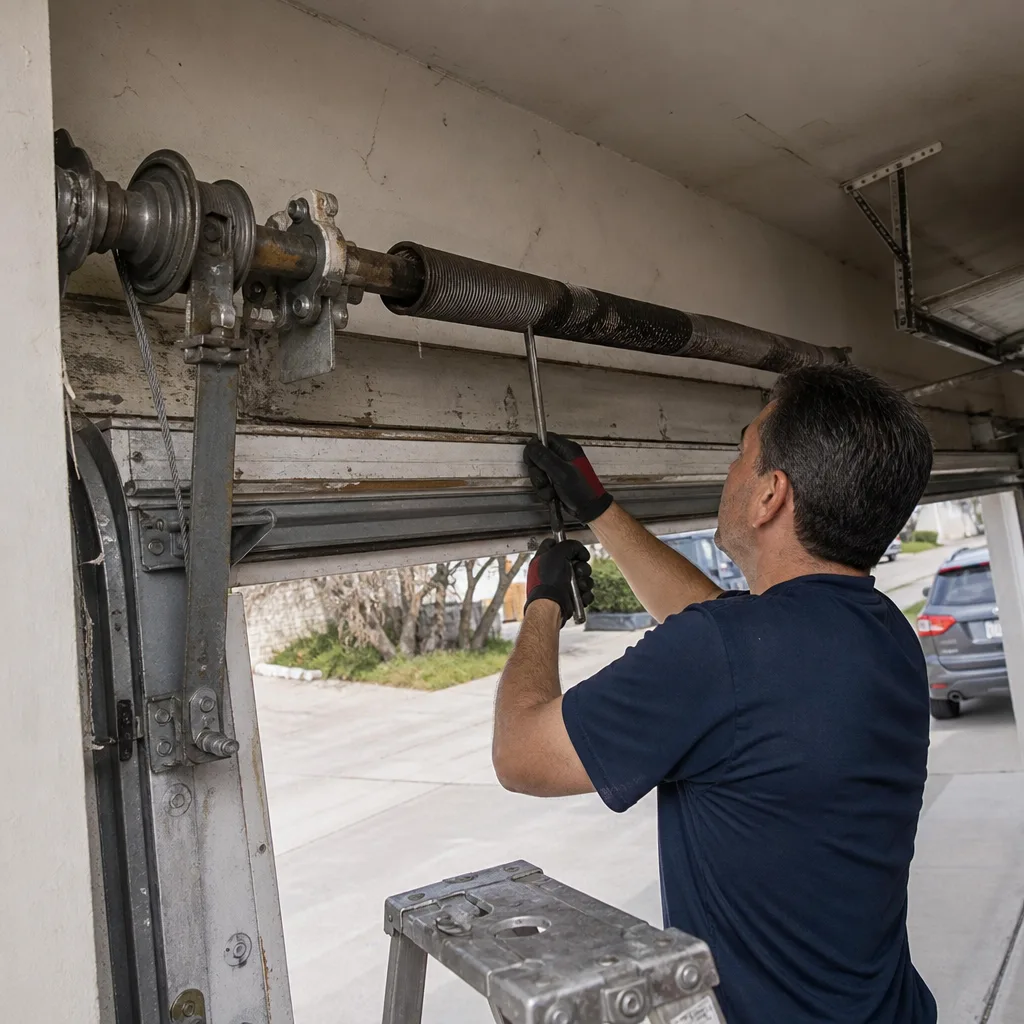 Before
 After
AfterGarage Door Off Its Track
A garage door off its track means the door’s rollers have slipped out of the metal channels – called tracks – that guide the door up and down. This usually happens suddenly and makes the door either stop moving entirely or hang at a visible angle. It needs a professional repair before you use the door again.
The tracks and rollers form the guidance system the entire door depends on. When even one roller loses its seat in the track, the door can’t travel the path it was designed to follow. If you try to force it, you risk bending the track itself, snapping a cable, or – on a heavy door – causing the whole panel assembly to buckle. The safest call you can make right now is to stop operating the door and get a technician out to look at it.
Why It Happens
A Roller Wore Out or Broke
Rollers are the small wheels that ride inside the track on both sides of the door. Most are made of steel or nylon and they take thousands of cycles over the years. When a roller cracks, chips, or loses its stem, it stops rolling and starts sliding – or pops out entirely. You can usually spot a broken roller by looking along the bottom edge of the door: if one wheel is missing, cracked, or sitting sideways, that’s almost certainly the cause.
The Track Got Bent or Knocked Out of Alignment
Tracks can bend from a vehicle bumping the door, a hard impact during a storm, or simply from years of vibration gradually shifting a bracket loose. Even a small kink in the track is enough to derail a roller mid-travel. Look for a visible dent or curve in the vertical section of the track on either side of the door – if the channel isn’t straight, the roller had nowhere clean to go.
A Cable Snapped or Slipped
The lift cables run from the bottom corners of the door up to a drum near the spring assembly. If a cable frays, snaps, or unwinds from its drum, one side of the door loses the balanced tension it needs and drops unevenly – pulling the rollers off their path. You might hear a loud bang followed by a grinding noise as the door tries to move. If you can see a loose cable hanging or lying on the floor, stop everything and call: cables under spring tension are not safe to handle without the right training and equipment.
A Broken Torsion or Extension Spring
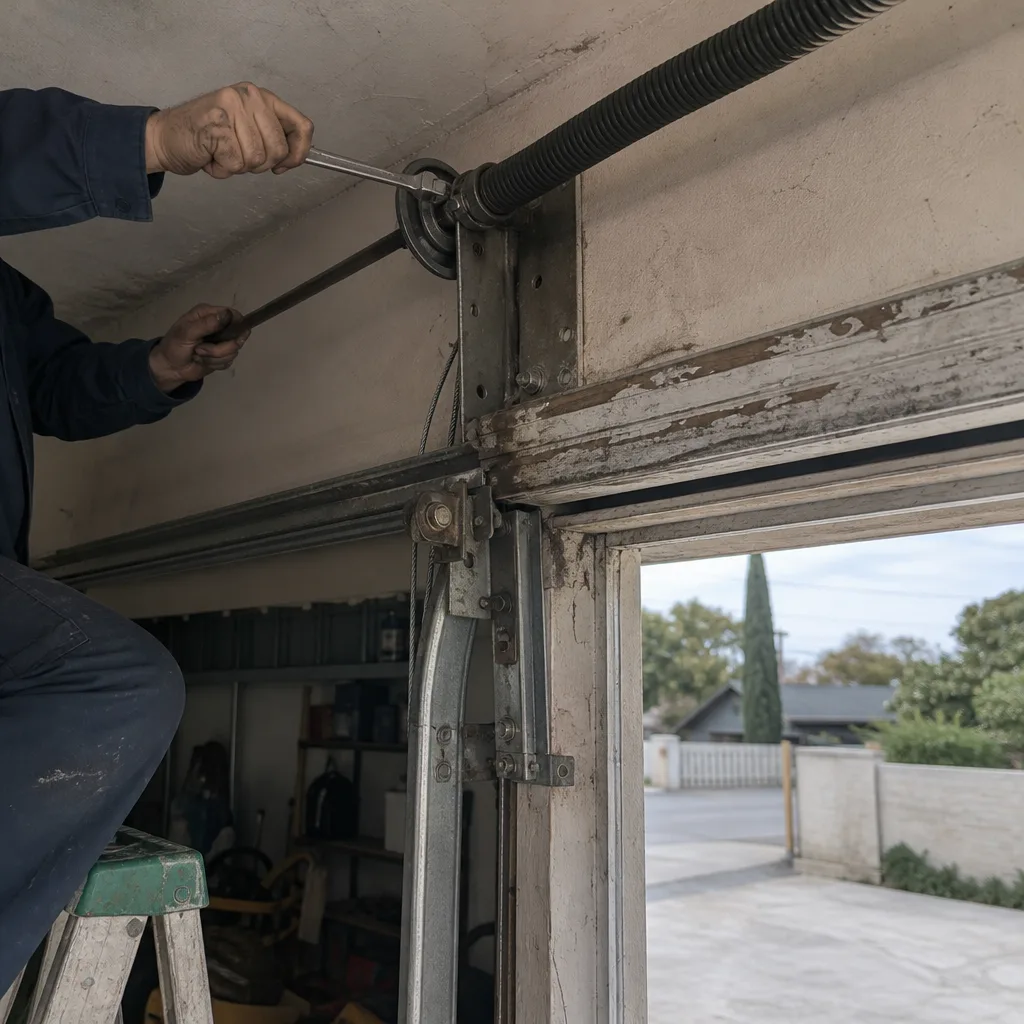
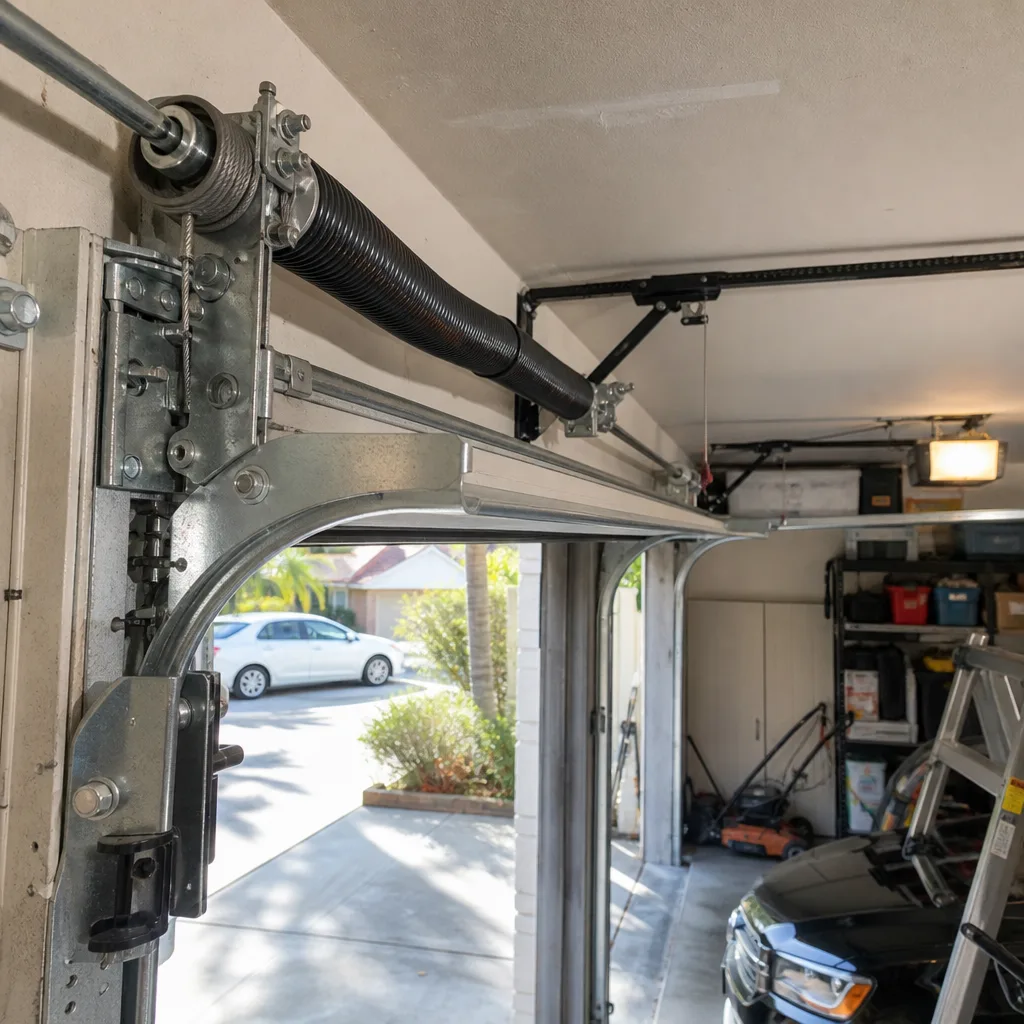
Springs do the heavy lifting on every door cycle, and when one breaks, the door’s weight shifts dramatically and often immediately. A broken torsion spring – the thick horizontal spring above the door – usually makes a sharp bang loud enough to hear from inside the house. An extension spring runs along the horizontal tracks on either side. In both cases the result is the same: the door is suddenly too heavy for the opener to manage and the imbalance can yank rollers clean off their track. Springs are under extreme tension and should only be inspected or replaced by a trained technician – do not attempt to work on them yourself.
What to Do Right Now
- Stop using the door immediately. Do not press the wall button or the remote again. Forcing a door that’s off its track can bend the track, snap a cable, or cause a panel to fold – turning a straightforward repair into a much bigger one.
- Disconnect the opener if you need to move the door manually. Pull the red emergency release cord hanging from the opener trolley. This lets you move the door by hand if you need to get a vehicle out. Move it slowly and only as far as it will go without resistance.
- Take a few photos before anything moves. Photograph the track, the rollers you can see, and any cables or springs that look unusual. These give the technician a head start when they arrive and help document the condition at the time of the problem.
- Keep children and pets away from the door area. A door that’s off its track is structurally unpredictable. Don’t let anyone stand under it or lean against it while you’re waiting for help.
- Do not touch the cables or springs. If you can see a snapped cable or a broken spring, leave them exactly where they are. Both components store or carry significant force even when the door isn’t moving. This is the part where you stop and call a technician.
How We Fix It
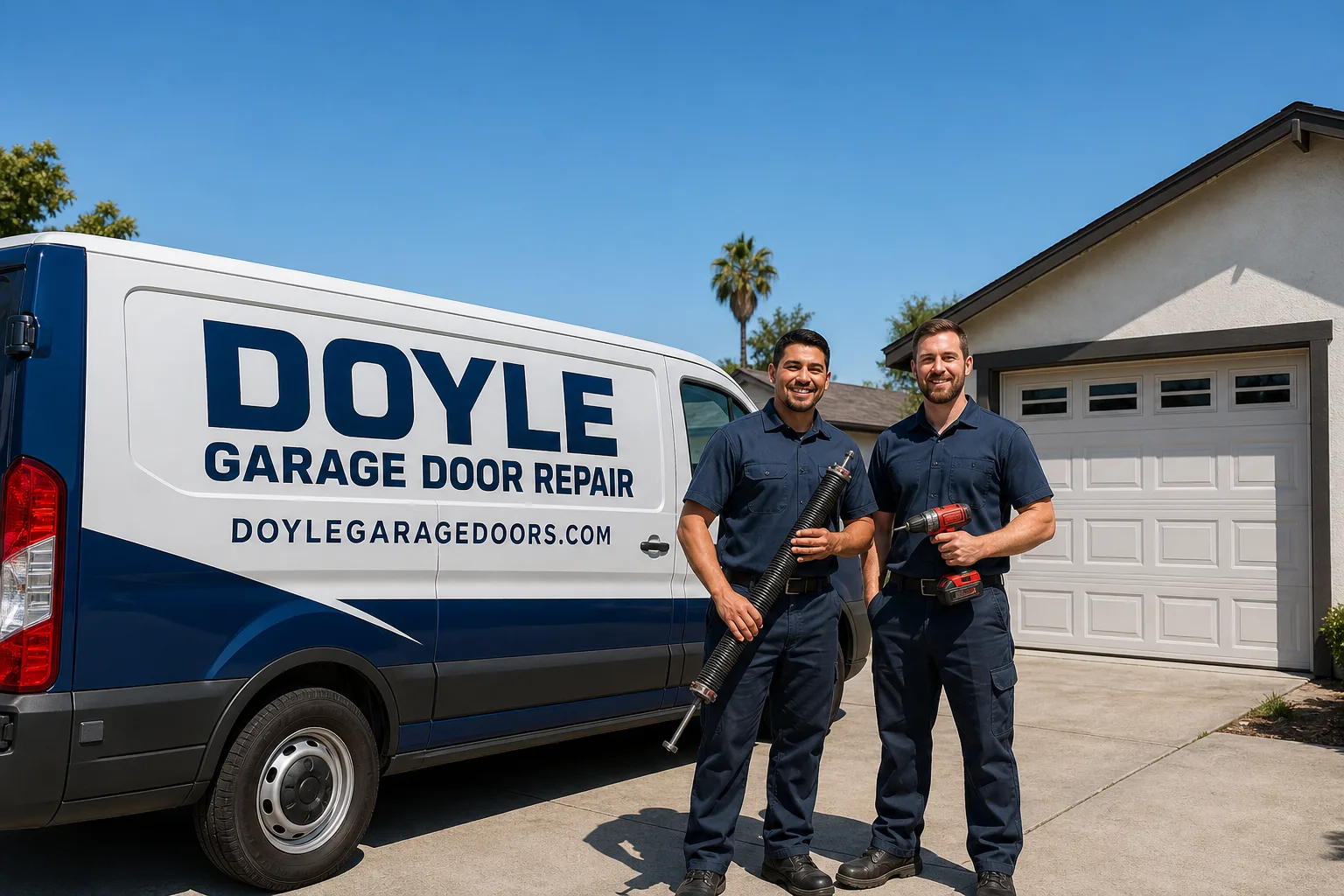
When your local Doyle Garage Door Repair technician arrives, the first thing they do is a full inspection – track, rollers, cables, springs, and the opener itself – before touching anything. That inspection is how we know whether the door derailed because of one bad roller or because something higher up in the system failed first. Treating the symptom without finding the cause is how a door ends up off its track again two weeks later.
Once the technician knows what happened, they’ll write the price down and hand it to you before any work begins. That’s not a verbal estimate – it’s a written number covering the specific repair, on that visit. No surprises when the invoice comes.
The repair itself – reseating rollers, straightening or replacing a section of track, replacing cables, or swapping out a spring – typically takes one to two hours depending on what the inspection turns up. The work falls under our garage door repair service and is covered by the 365-Day Done Right Promise. If the repair doesn’t hold, we come back at no charge – automatically, no argument required.
Frequently Asked Questions
Yes, it is. A door that’s off its track is structurally unstable: it can drop without warning, and in some configurations it leaves the garage – and whatever connects to it – without a secure barrier. If the derailment involved a broken cable or spring, the risk is higher still. Don’t leave it in that condition if you can avoid it. Call (910) 858-8029 and a real person will pick up, any time of day or night, to get a technician scheduled.
You can sometimes reseat a single roller if no other component is damaged – but it’s rarely as simple as it looks, and forcing it wrong can bend the track, snap a cable, or set the door up to come off again quickly. If a cable or spring is involved, stop completely. Those components are under enough tension to cause serious injury. Let a trained technician do the inspection first so you know exactly what you’re dealing with.
In most cases, yes. A door off its track is exactly the kind of repair your local Doyle Garage Door Repair team treats as urgent, and we aim to get a technician to you as quickly as our schedule allows. Call (910) 858-8029 right now – a live person answers 24 hours a day, seven days a week, including weekends and holidays – and we’ll tell you the earliest available time on that call.
No. The written price your technician hands you after the inspection is the price for the job – full stop. That’s how every Doyle job works: a written number, agreed before a single bolt turns, with no upsell pressure and no invoice surprises. If something unexpected turns up mid-repair, the technician stops, explains it, and gets your sign-off on a revised written price before continuing.
Get It Fixed
A door off its track isn’t something to wait on. Call (910) 858-8029 right now – a real person picks up around the clock – or book online and your local Doyle Garage Door Repair team will get a background-checked, uniformed technician to you with a written price in hand before any work begins.
Written by Aaron Teague, Owner and Lead Technician at Doyle Garage Door Repair, part of the Threshold Group family of home-service companies, serving communities across the country since 2001.
What Our Customers Say
"Came out the same week for a bent bottom panel. Replaced just the one section and matched it close to the rest. Saved me from buying a whole door."
- Shawn M."Wall button quit working and the remote was flaky too. He reprogrammed the opener and replaced the button. Short visit, no upsell."
- Nate C."New door installed after a delivery truck clipped our old one. Three panels, new hardware, and the install crew was neat and on time. Looks like it came with the house."
- Tyler B.