
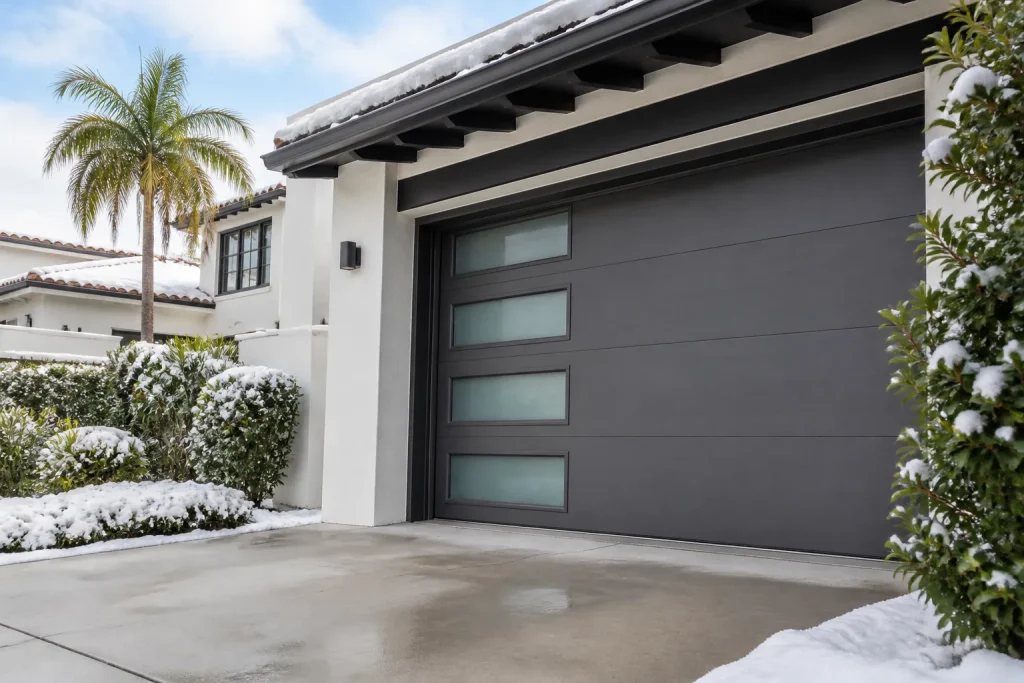
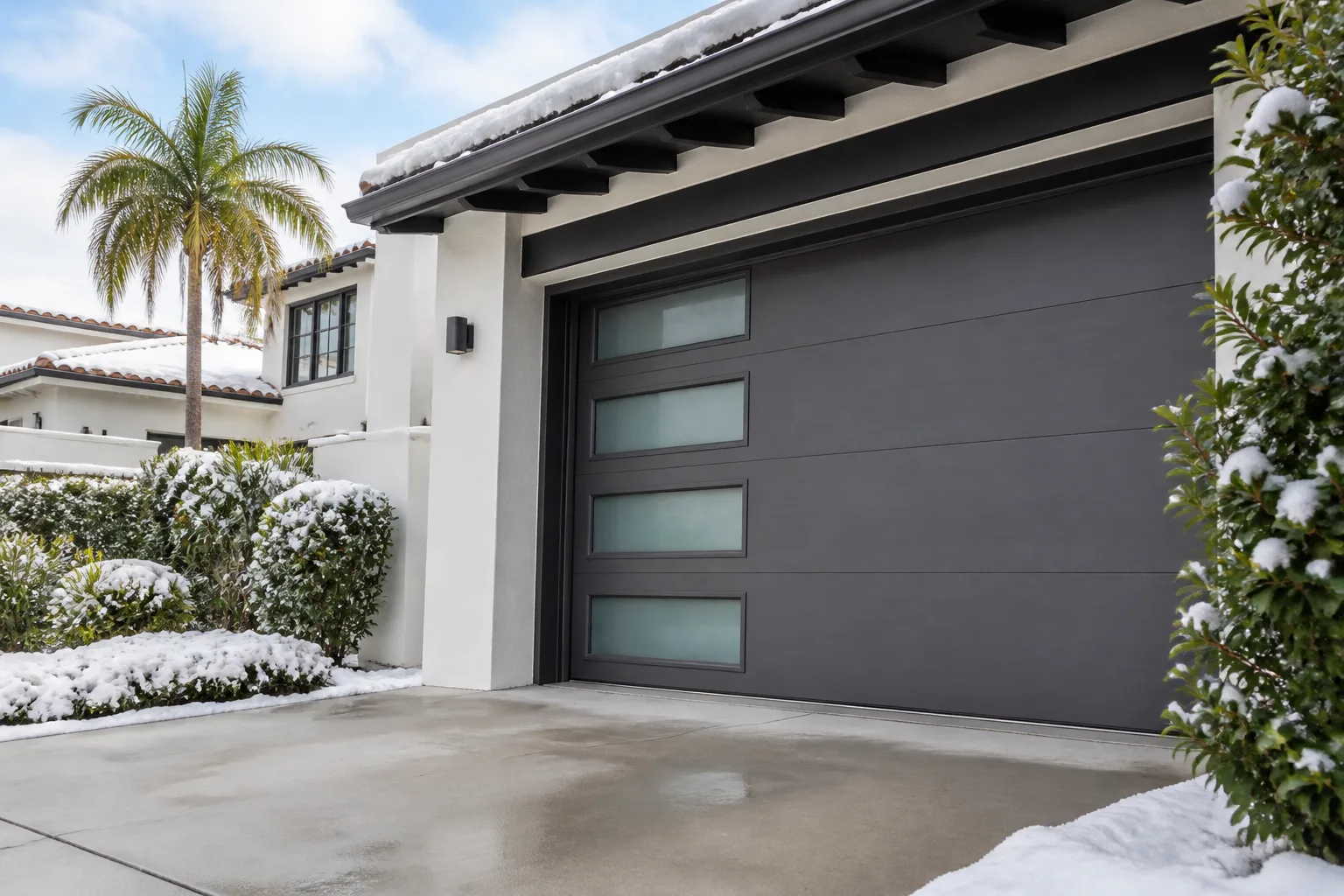
Preparing Your Home’s Garage Door for Winter in Los Angeles
Most Los Angeles homeowners assume winter prep for a garage door means spraying some WD-40 at the hinges and calling it done. That’s precisely why January service calls spike across the city, and it’s almost never the parts people expect. In our experience, the real culprits are lubricant failures during cold snaps, cable tension shifts overnight, and a worn bottom seal that freezes the door to the concrete floor. If you’d rather skip the DIY and have a technician check it all for you, call Doyle Garage Door Repair at (910) 858-8029 for a free estimate.
Why Los Angeles Winter Weather Is Harder on Garage Doors Than You Think
Los Angeles doesn’t have the brutal winters of the Midwest, but that’s the trap. Here’s what actually happens: the city dips below freezing more often than people realize, especially in the San Fernando Valley neighborhoods and against the foothills on the east side. A door that works perfectly in October starts sticking, grinding, or refusing to lift on a January morning because every metal component contracted half a millimeter overnight.
Thermal contraction is the technical term, and it’s a bigger deal for garage doors than most homeowners expect. The steel track that guides the door is secured to the wall with bolts every few feet. When temperatures drop 20 or 30 degrees between day and night, that track shrinks slightly. The door itself shrinks too, but at a different rate, because the door panels are often a different gauge of steel than the track. The result is a door that suddenly binds against its own hardware on cold mornings.
We’ve pulled more torsion springs out of Los Angeles garages after the first winter cold snap than any other time of year. Not because the cold breaks them directly, but because the cold exposes springs that were already worn. A spring under tension is a spring under stress, and temperature swings add another variable to an already fragile system.
- Sub-50-degree nights are enough to change how a garage door behaves, even without a freeze
- Valley neighborhoods like Van Nuys, Encino, and Northridge see more extreme overnight temperature drops than coastal areas
- Thermal contraction affects track alignment, cable tension, and opener fine-tuning
- Most winter failures are predictable and preventable with one afternoon of maintenance
The Lubricant Mistake That Costs Los Angeles Homeowners a New Spring
Here’s the ten-second version: white lithium grease turns thick and gummy below about 40 degrees, and silicone spray doesn’t. If your torsion spring, the large coil mounted above the door that does most of the lifting, is coated in white lithium grease, you’re effectively putting cold-weather drag on the single hardest-working component in the system.
The spring coils need a lubricant that stays thin enough to creep into the gaps between coils at low temperatures. Silicone-based garage door lubricant does that. White lithium grease works fine in warm climates year-round and in cold climates during the summer, but Los Angeles sits in an awkward middle zone where homeowners read a generic maintenance guide and buy the wrong product.
We recommend a dedicated garage door lubricant with a silicone base, applied lightly to the torsion spring coils, the hinge pins, and the roller bearings. Not motor oil, not WD-40, not cooking spray, not axle grease. WD-40 is a water displacer and solvent, not a long-term lubricant, and it strips away the protective film that keeps metal from wearing against metal.
What brand do we use on service calls across Los Angeles? We stock a silicone-based garage door specific formula. Any brand labeled specifically for garage doors and silicone-based will outperform what most people have sitting on a shelf in the garage.
One more thing worth knowing: openers from Chamberlain and Genie both recommend silicone-based lubricants in their owner’s manuals for cold-weather operation. The manufacturer engineers agreed with our field experience.
Thermal Contraction and Your Cables: The Two-Minute Check That Prevents a January Breakdown
Garage door cables are the steel wires running from the bottom corners of the door up to the drums mounted on the torsion bar above. At a comfortable room temperature in Los Angeles, those cables carry a specific amount of tension. When January temperatures drop into the 30s overnight in neighborhoods like Studio City or Sherman Oaks, the steel cables and the door itself contract.
The visual check is straightforward. Open the door about halfway and look at the cables on both sides. They should be straight and tight against the drums at the top. A properly tensioned cable looks almost like a guitar string, no visible slack, no twist, no frayed strands sticking out. If one side has any visible looseness, or if one cable is angled slightly differently than the other, the door is pulling unevenly. Put that off until the coldest week of the year and the cable can slip off the drum entirely, which drops one corner of the door and usually bends the track on the way down.
If you spot a frayed cable, don’t touch it. Cables under tension are dangerous when they snap. That’s a call to a professional, and it’s a quick fix for us. Loose cables are also not a DIY job unless you have the right winding bars and experience; the spring attached to those cables stores enough energy to cause serious injury.
But the visual check itself is safe and worth doing before every cold snap. Most Los Angeles homeowners have never looked at their cables, and it takes two minutes with the door halfway open.
Bottom Seals and Freeze-Thaw Cycles: The $12 Fix That Saves Your Opener Motor
The rubber strip along the bottom of the door, called the bottom seal or astragal, is the most neglected part of a Los Angeles garage door. It cracks. It hardens. It develops gaps. Most of the time that just lets in a little dust and noise. Winter turns it into a real problem.
Here’s the failure mode we see on service calls every January: moisture collects between the bottom seal and the concrete floor during the day. At night the temperature drops below freezing, and that moisture turns to ice. The rubber seal literally freezes to the concrete. In the morning you hit the opener button, and the trolley carriage, that’s the metal arm that pulls the door along the track, starts yanking with full motor force against a door that’s cemented to the ground.
One of two things happens. Either the opener’s built-in safety mechanism trips and the door refuses to open, or worse, the door tears free and the seal rips, the force ripples through the door panels, and you’re left with a bent section and a ripped seal.
The fix is simple and cheap. A universal bottom seal for a standard residential garage door runs about $12 to $20 at any hardware store in Los Angeles. You slide the old strip out of the aluminum channel on the bottom of the door, cut the new one to length, and slide it in. Ten minutes. If the seal you have is still flexible, wipe it down with a silicone spray to keep it from absorbing water. A seal that’s brittle, cracked, or permanently compressed means the door no longer rests evenly on the floor.
Clopay and Amarr doors generally use standard T-style or U-style bottom seals. Check the profile shape before you buy. If you’re not sure, snap a photo of the end of the seal and bring it with you.
When to call a pro: If the door won’t open on a cold morning and the opener is grinding or straining, stop pressing the button. The motor can burn out trying to fight a frozen seal, and opener repair is far more expensive than seal replacement. If you’re anywhere in Los Angeles and your door is strain-shrieking on a cold morning, call (910) 858-8029 and a live person, not a bot, will answer day or night.
Why Limit Switches Drift in Cold Weather (And How to Reset Yours Before January)
A limit switch tells your opener exactly where the door is supposed to stop when it’s fully open and fully closed. It’s normally set once during installation and forgotten. But the rail the trolley carriage travels along shrinks in cold weather, and after years of thermal cycles, the switch’s physical position drifts out of calibration.
Symptoms are obvious once you know what you’re looking for. The door closes and then reverses back up an inch or two for no apparent reason. Or it opens fully but the motor keeps running for a second after the door stops. Or the door slams down harder than it used to instead of settling gently.
On a Chamberlain or Genie opener, the limit control is usually on the side or back of the motor unit. Look for two small plastic dials labeled “up” and “down” or “open” and “close.” Newer models bury the settings in a digital menu. Turn the down limit a quarter turn or one notch in the direction that makes the door stop earlier, and test the close cycle. Once it closes and seals without reversing, you’re set. Repeat for the up limit if the door doesn’t stop cleanly at the top.
The important safety caveat: while adjusting limit switches is a homeowner-friendly task, anything involving the torsion spring is not. If the door is heavy when you disconnect it from the opener, that means the spring is failing and you need a professional. Do not attempt to wind or adjust a torsion spring yourself. That spring is under enough tension to cause severe injury, and it’s the one component in the system that has no forgiving failure mode. We handle those replacements daily across Los Angeles, and every one comes with a written price before any work begins.
A Two-Hour Fall Maintenance Checklist for Los Angeles Homes
Four tasks any homeowner can safely complete in an afternoon, plus one that stays in the pros-only category.
- Lubricate the right parts with the right product. Silicone-based garage door lubricant on the torsion spring coils, the hinge pins, and the roller bearings. Not the track itself. Greasing the track is a common mistake that actually increases friction and collects dirt.
- Inspect the cables while the door is halfway open. Look for slack, fraying, or uneven tension on either side. Anything unusual means a repair call before the cold hits.
- Check the bottom seal along its full width. If you see gaps, cracks, or the seal is hard instead of flexible, replace it now. Less than twenty bucks and ten minutes of work.
- Test the opener’s auto-reverse safety feature. Place a piece of scrap wood or a broom on the floor where the door closes. The door should touch it and immediately reverse. If it crushes the wood instead, that’s a safety failure and an opener repair call.
- Leave spring tension adjustments to a professional. Torsion springs on Los Angeles garage doors are routinely under 100 to 200 pounds of torque. This is not a YouTube tutorial situation. A trained technician with the proper winding bars can rebalance the door safely in about an hour.
At Doyle Garage Door Repair, every technician that shows up in Los Angeles is background-checked and identity-verified under the Threshold Standard. We send you the technician’s name and photo before they arrive, and they show a photo ID badge at the door. The price you’re quoted is written down and handed to you before any work starts. Every repair includes our 365-Day Done Right Promise, meaning if it fails within a year, we come back and make it right at no charge. No arguments, no fine print, no second invoice.
What a Winter Garage Door Service Call Typically Costs in Los Angeles
Homeowners who know the numbers before the technician arrives make better decisions. Here’s the honest range we see across the city:
- Torsion spring replacement: $280 to $420, including parts and labor, depending on spring size and door weight
- Cable replacement or adjustment: $160 to $260
- Bottom seal replacement: $90 to $150 with labor, or $12 to $20 if you do it yourself
- Limit switch adjustment: $80 to $120 as a standalone service call
- Full winter maintenance check with lubrication: $120 to $180
Those numbers are for Los Angeles, and they assume a standard single-car or double-car residential door with major-brand hardware. Clopay, Amarr, Chamberlain, and Genie parts are all readily available and don’t carry a premium. The price you’re quoted is the price you pay, written down before any work begins, because that’s how we’ve operated since 2001.
We pulled a door out of a garage over in Encino a few Januarys ago that had frozen solid to the floor. The homeowner had pressed the opener button three times and the motor was making a sound like a washing machine full of rocks. The seal had ice-bonded to the concrete, and the door had actually started to pull the bottom panel apart from its frame. A $12 seal replacement would have prevented the entire thing. We replaced the seal, realigned the door, and the opener survived. That’s the exact failure sequence we’re trying to help you avoid this winter.
Need help with your garage door opener? We’re factory-trained on Garage Door Opener Repair in Grandview and handle all major brands. For a full door replacement, see Garage Door Installation in Grandview. And for any other repair need, Garage Door Repair in Grandview is our main service page served by the same team from the Doyle Garage Door Repair home base.
The Bottom Line
Winter prep for a Los Angeles garage door comes down to four things: use a silicone-based lubricant instead of white lithium grease, inspect your cables for cold-weather slack, replace a cracked bottom seal before it ice-bonds to the floor, and reset your limit switches so the door stops cleanly when the rail contracts. Two hours of attention in the fall prevents the single highest-volume service call day of the winter. If you’re in Los Angeles and you’d rather have a professional handle any of this, Doyle Garage Door Repair offers free estimates, and a live person answers the phone 24/7 at (910) 858-8029. No voicemail trees, no callbacks, no bots.
Frequently Asked Questions
How much does garage door winter maintenance cost in Los Angeles?
A full winter maintenance visit, including lubrication, cable inspection, bottom seal check, and limit switch calibration, typically runs $120 to $180. If replacement parts are needed, they’re quoted separately and the price is written down before any work begins. Call (910) 858-8029 for an exact quote, free of charge.
Can I use WD-40 to lubricate my garage door for winter?
No. WD-40 is a water displacer and solvent, not a long-term lubricant. It will strip away the existing lubrication and leave metal parts prone to wear. Use a silicone-based garage door lubricant on the torsion spring coils, hinge pins, and roller bearings instead.
Why is my garage door frozen shut on cold mornings in Los Angeles?
The most common reason is a bottom seal that has absorbed moisture and frozen to the concrete floor overnight. The fix is a new bottom seal, about $12 to $20 at any hardware store. If the door won’t open and the motor is straining, stop pressing the button and call a professional to avoid burning out the opener motor.
How do I know if my garage door cables need adjustment before winter?
Open the door halfway and look at the cables on both sides. They should be straight and tight against the drums at the top. Visible slack, fraying, or a difference in angle between the two sides means the tension is off. Cable adjustment is a professional job because the torsion spring stores dangerous energy.
Written by Aaron Teague, Owner at Doyle Garage Door Repair, serving Los Angeles since 2001.
Need Garage Door Help?
Call Doyle Garage Door Repair - licensed & insured, here with fast after-hours help in Los Angeles.
(910) 858-8029