
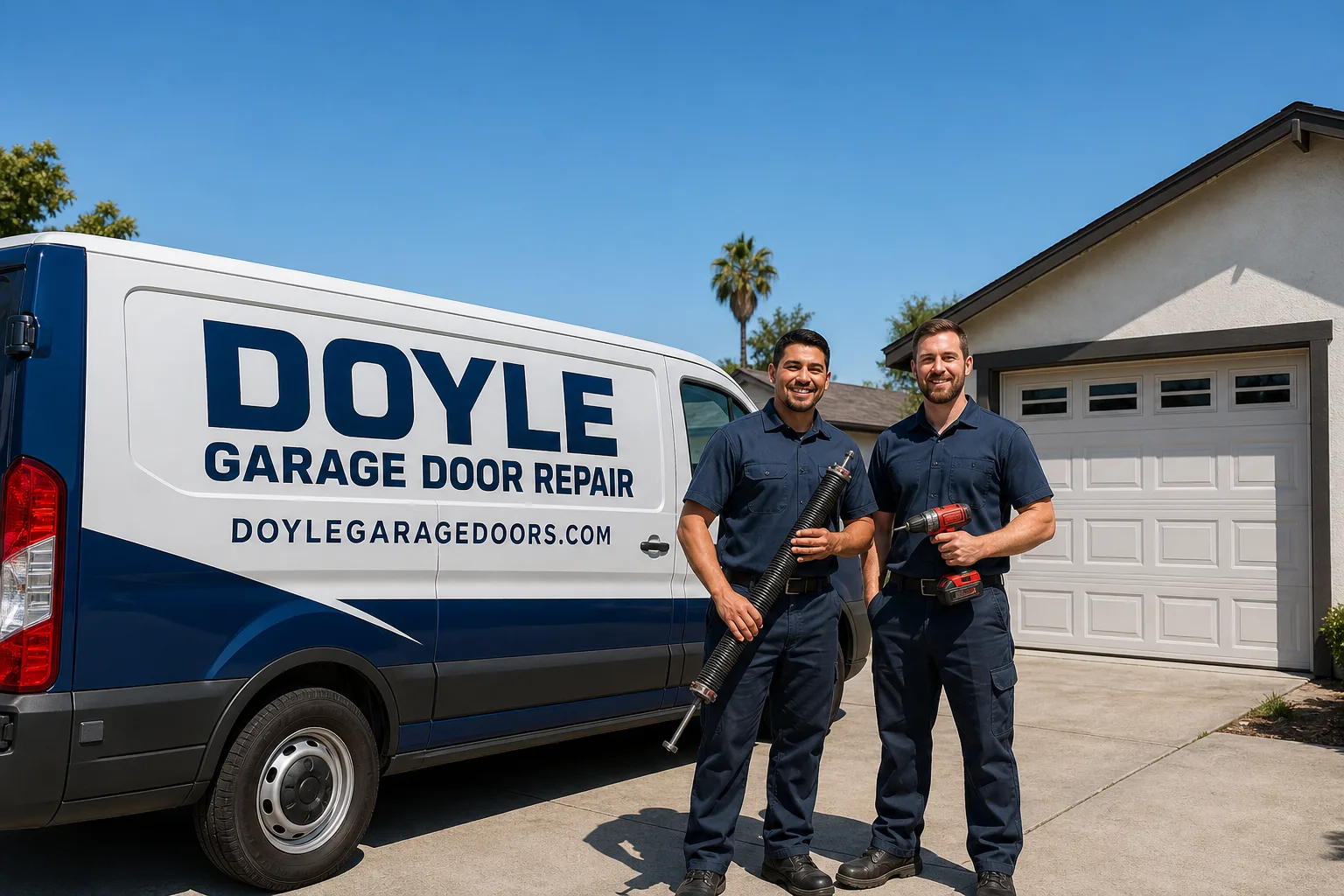
Full 25-point door and opener safety check with every visit - springs, cables, rollers, tracks, and your LiftMaster or Chamberlain opener included
You get a price before we start. It does not change when the truck arrives.
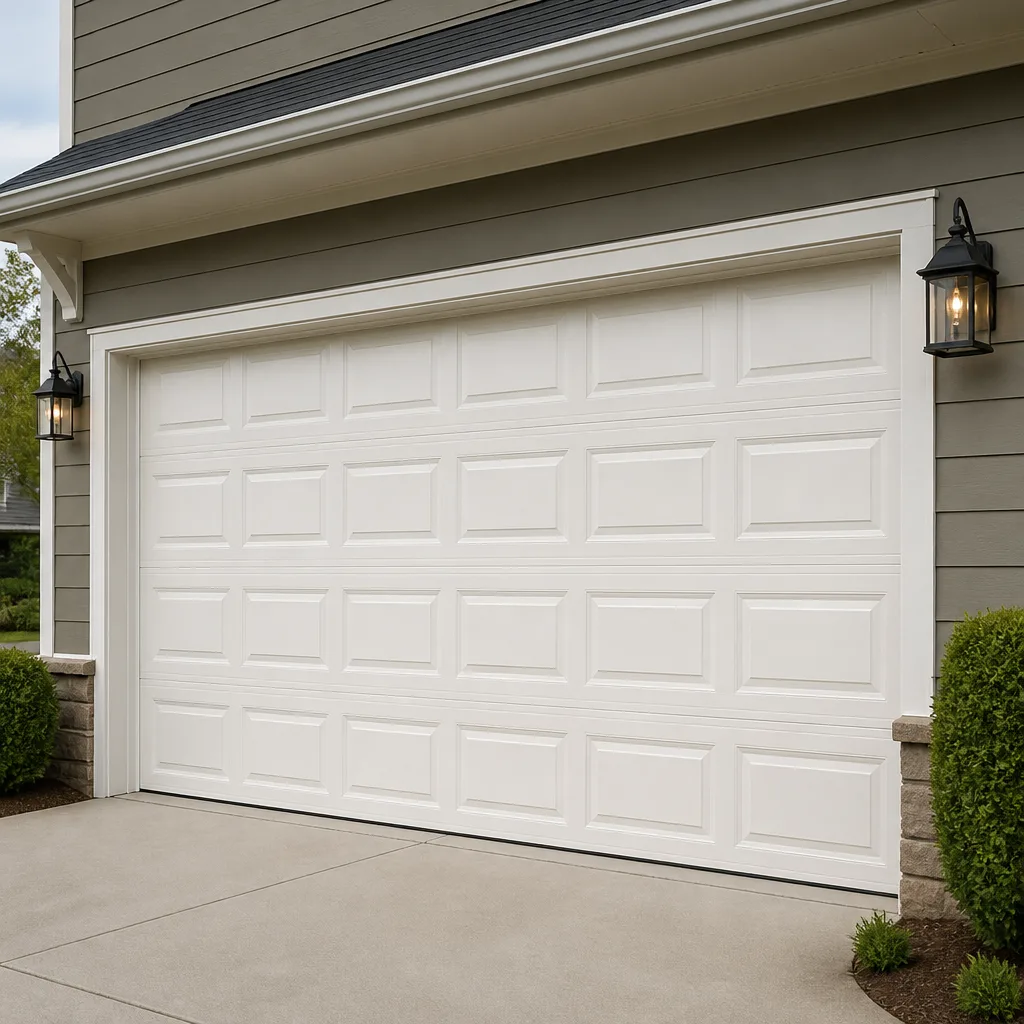
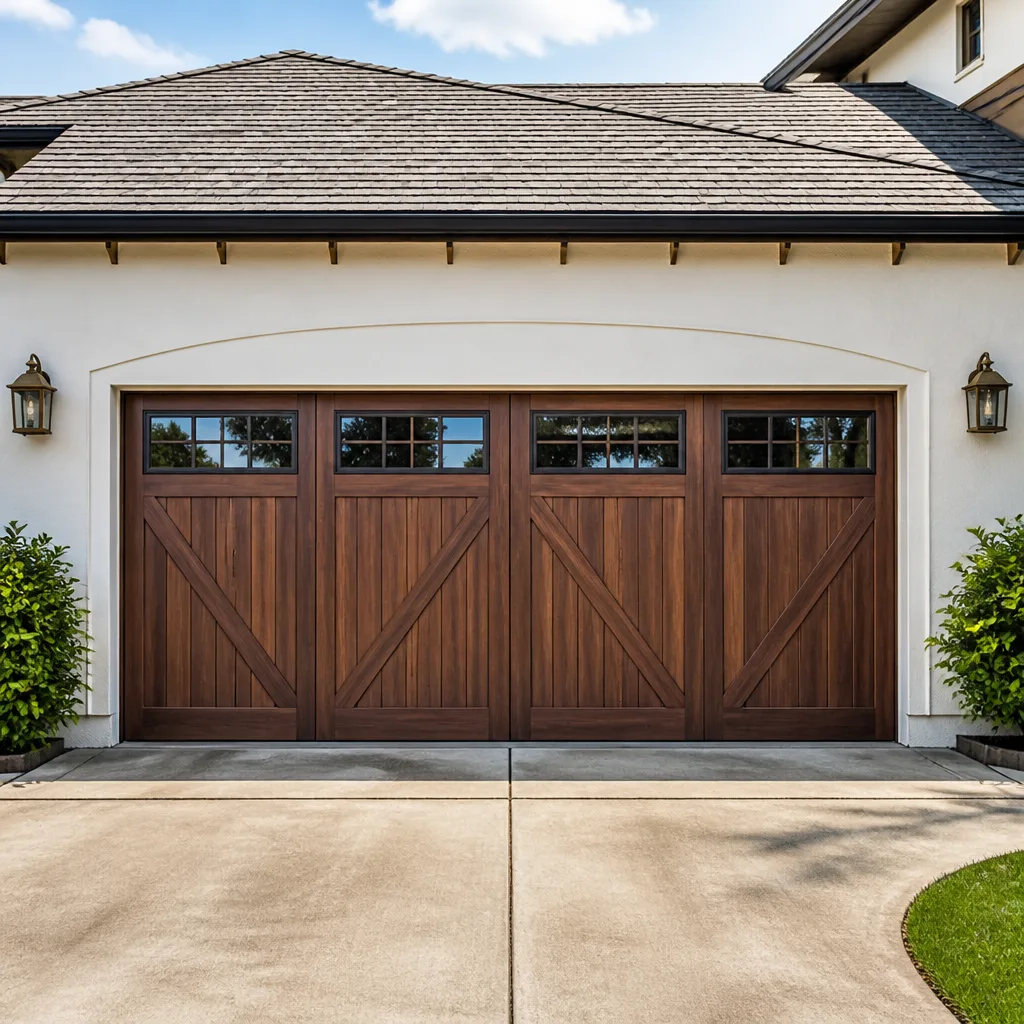
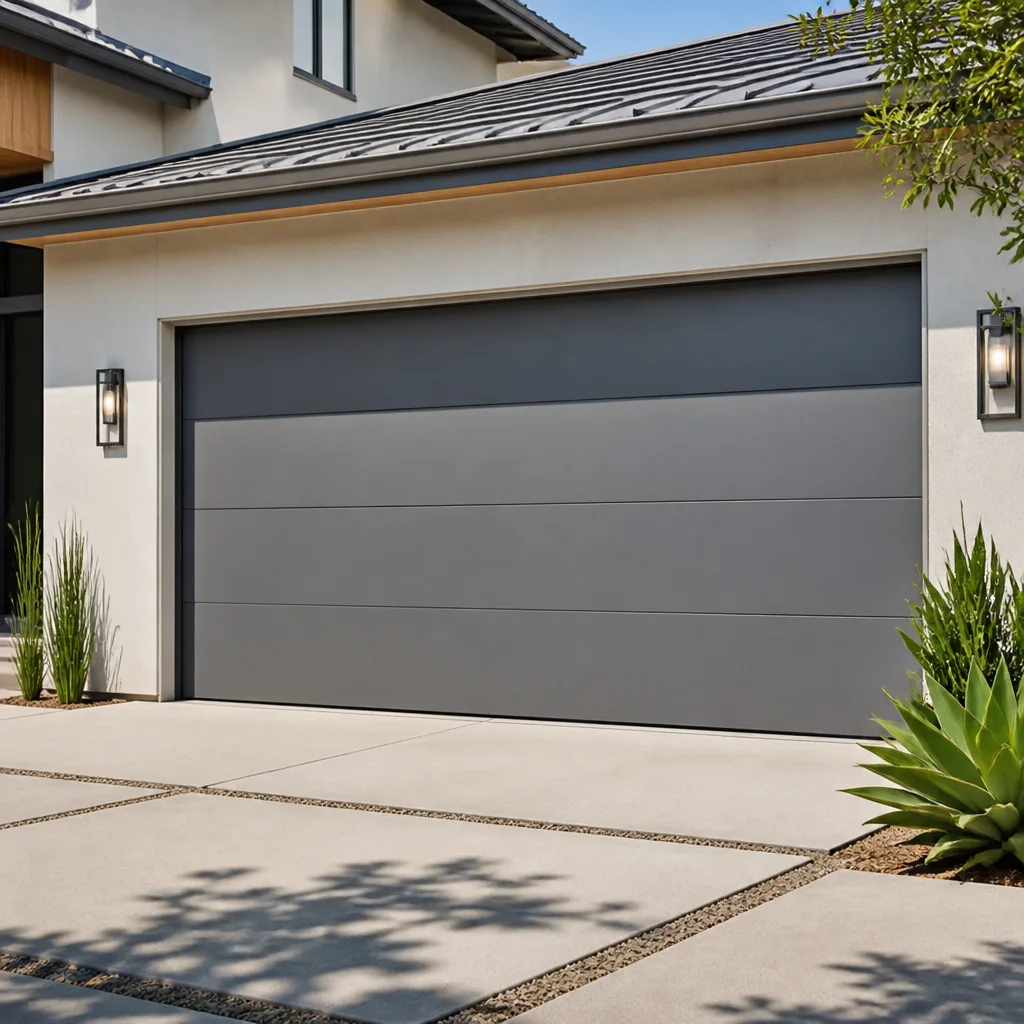
 Before
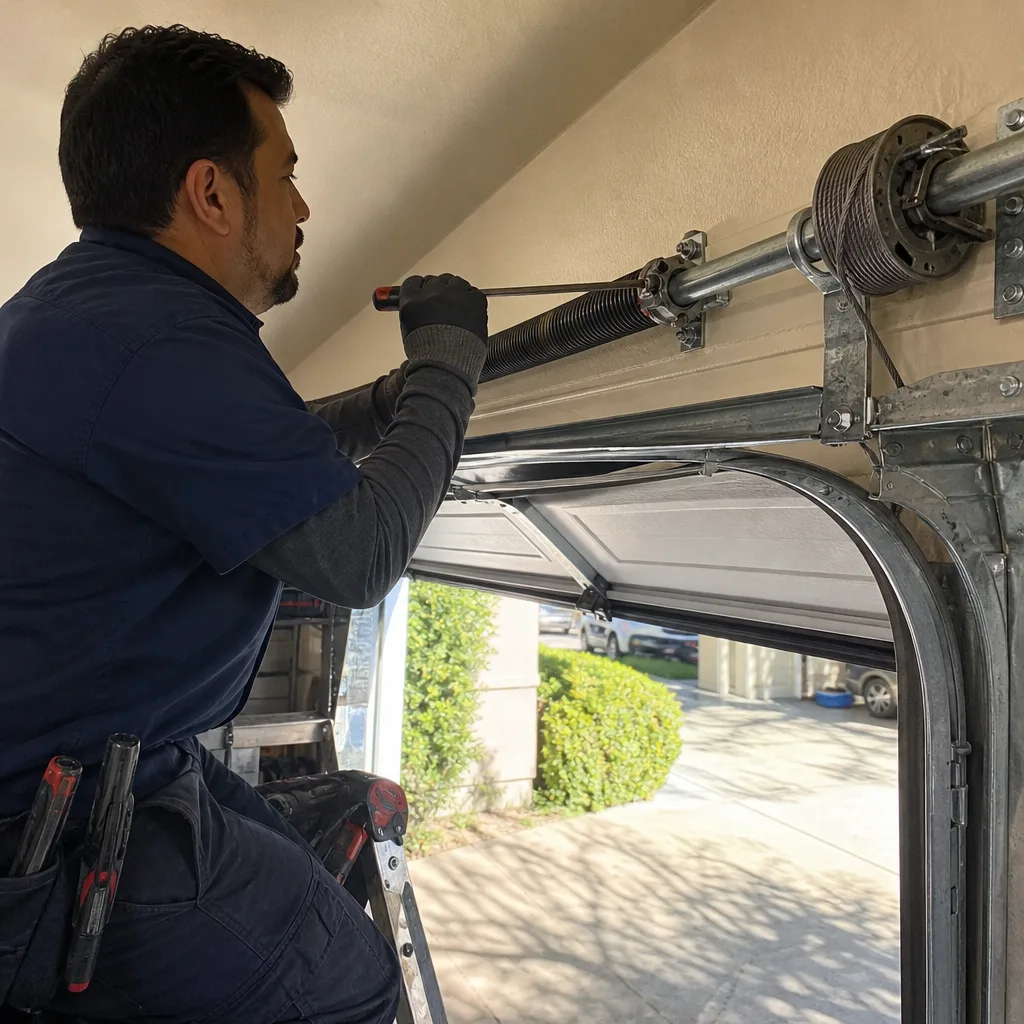 After
After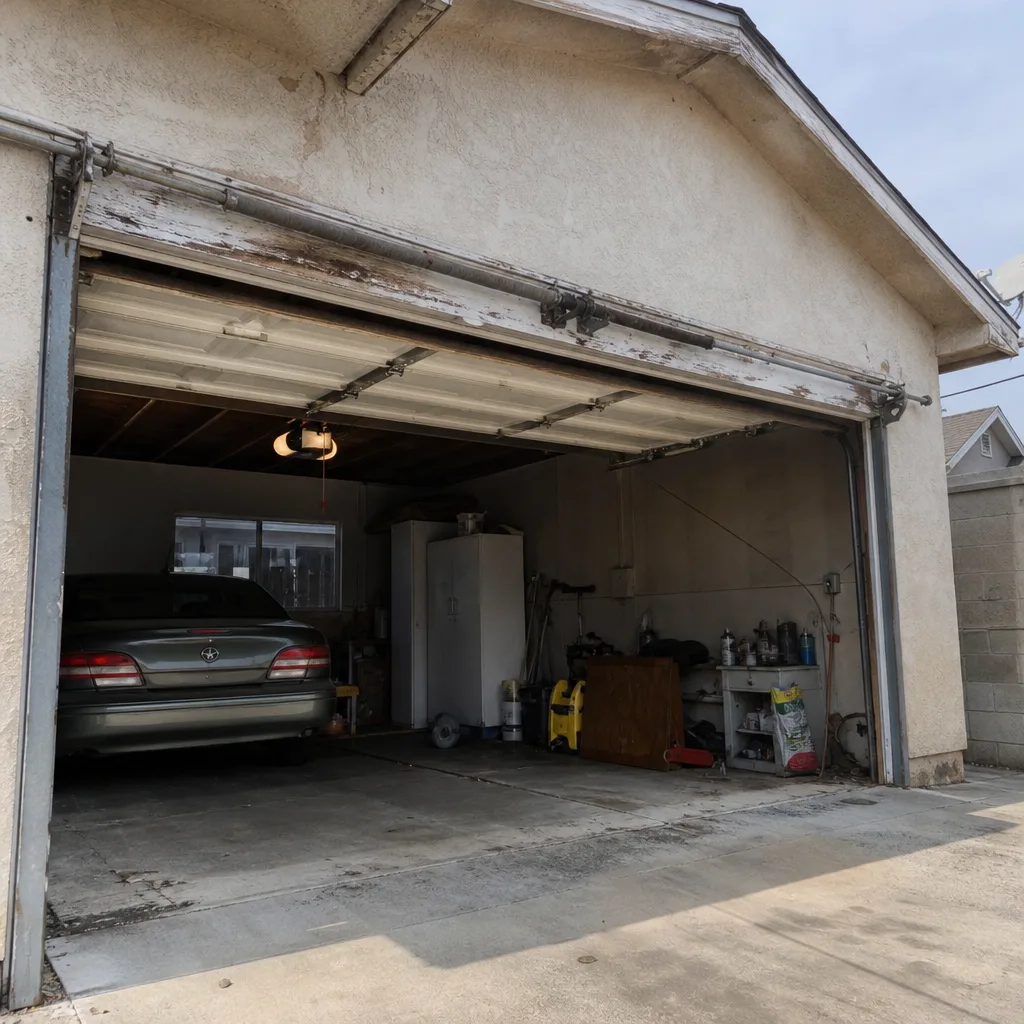 Before
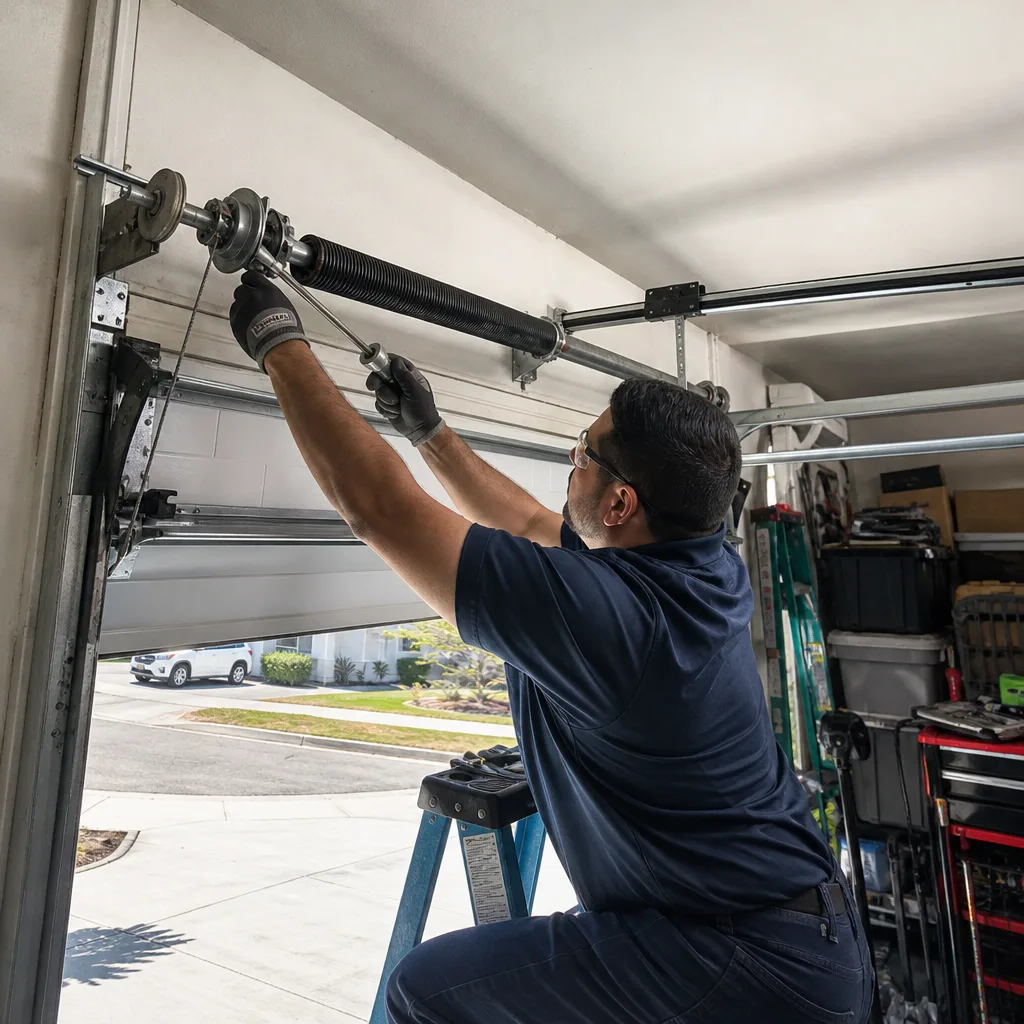 After
After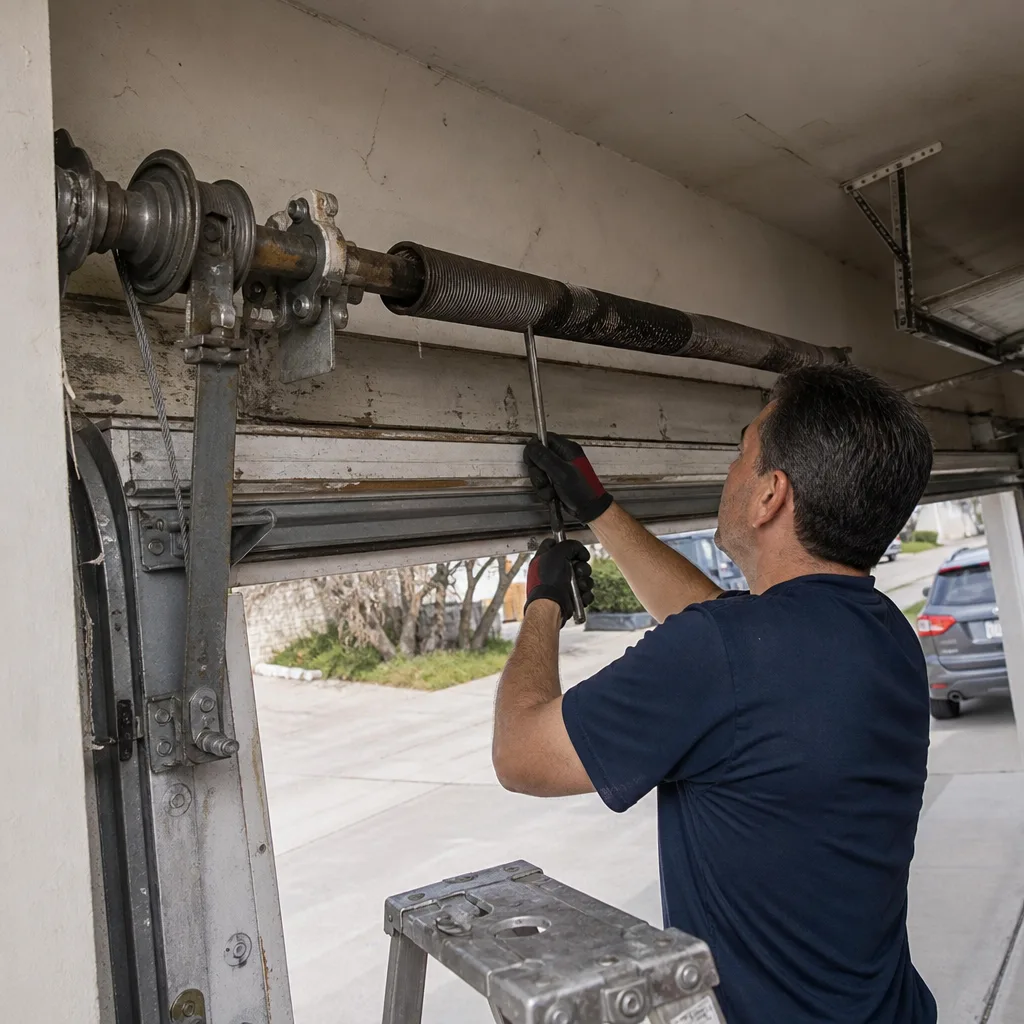 Before
 After
AfterGarage Door Opens Slowly or Unevenly
A garage door that drags, hesitates, or tilts to one side as it moves is telling you something mechanical has changed. In most cases, the problem is a worn or unbalanced spring, a dry or damaged track, or an opener that’s working harder than it should. These causes are diagnosable, and almost all of them are fixable in a single visit.
The door is a system. Springs, cables, rollers, tracks, and the opener all share the load every time the door moves. When one component starts to fail, the others compensate – and that extra strain accelerates wear across the whole system. A door that’s moving slowly today can become a door that stops moving entirely next week, usually at the worst possible moment. The sooner you know what’s causing it, the simpler and less expensive the fix tends to be.
Why It Happens
1. Spring Wear or Imbalance
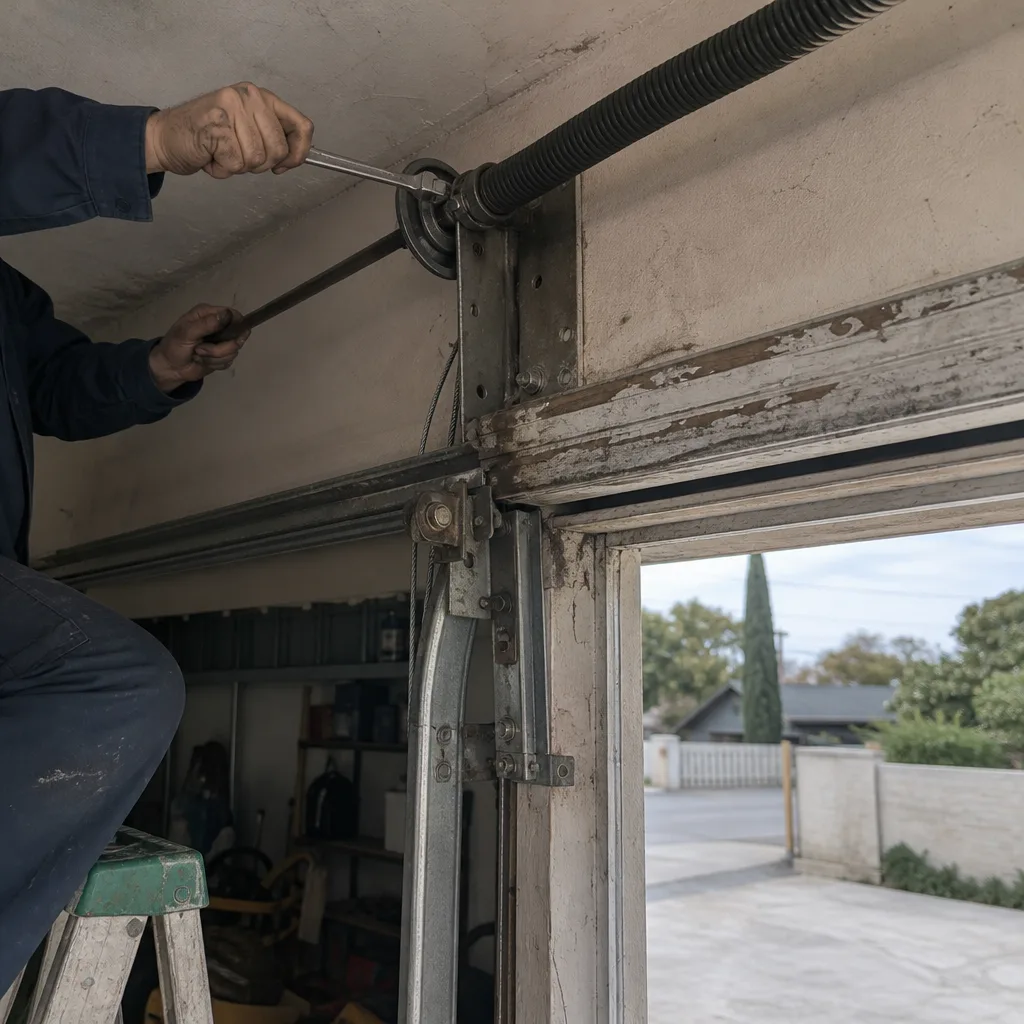
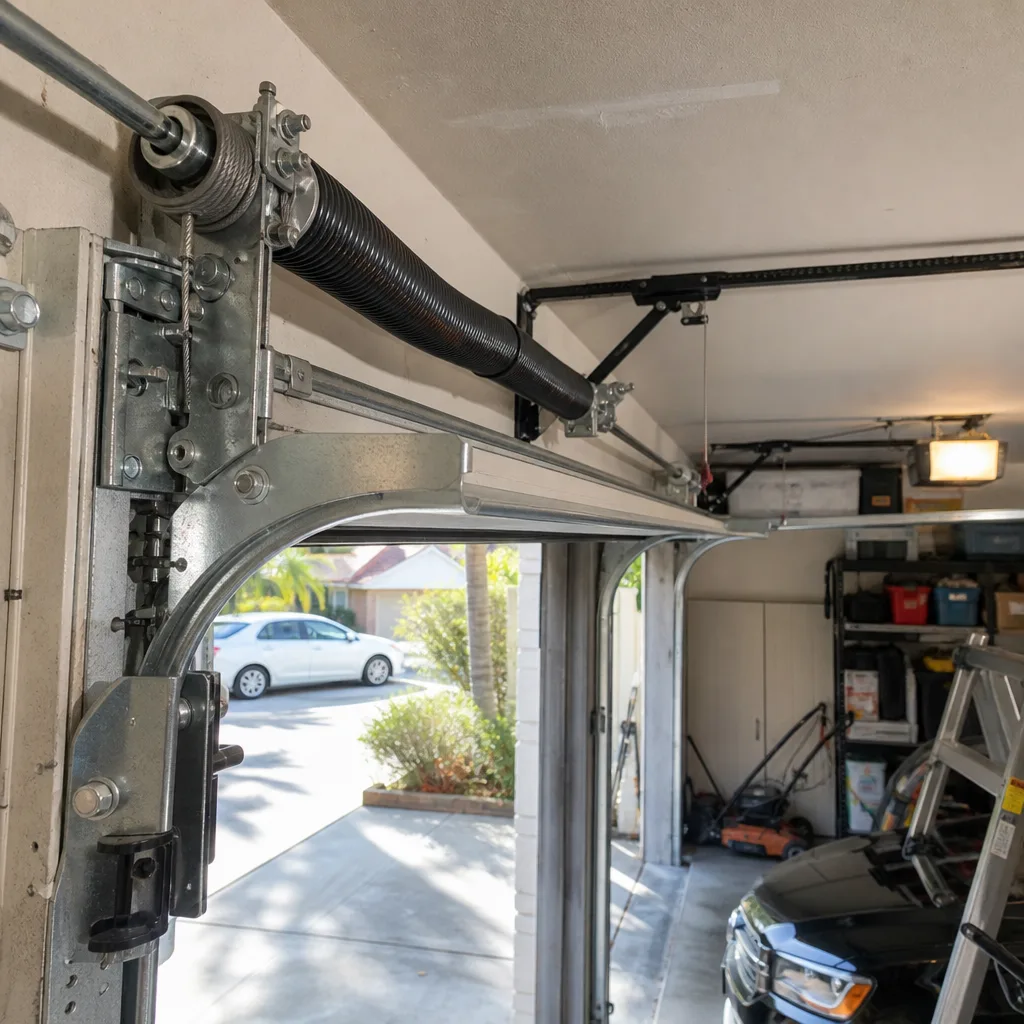
Torsion and extension springs are what actually lift the door – your opener just guides it. Springs are rated for a finite number of cycles, and as they wear, they lose tension unevenly. If your door moves slower on one side, or you can see a gap in the coil of a spring above the door, spring tension is almost certainly the issue. Do not attempt to adjust or replace springs yourself. These components are under extreme tension and can cause serious injury if handled without the right tools and training – stop using the door and call a technician.
2. Dry, Dirty, or Bent Tracks
The steel tracks that guide the door’s rollers accumulate grime, and the rollers themselves wear down over time. You’ll often hear a grinding or squealing sound when this is the cause. Visually, look along the track for any obvious dents, gaps at the wall bracket, or sections that look out of alignment. A bent track is something you can see but shouldn’t try to hammer back into shape yourself – the geometry matters more than it looks.
3. Opener Strain or Programming Drift
Garage door openers have built-in force and speed settings that can drift over time, or get knocked out of calibration after a power surge or hard stop. If the door moves slowly but evenly, and the springs and tracks look fine, the opener is a likely suspect. LiftMaster, Chamberlain, Genie, and Craftsman openers all have adjustable travel and force limits – a technician can read these settings and reset them correctly.
4. Cable Wear or Slack
The lift cables run alongside the door and work in tandem with the springs. A fraying cable, or one that has slipped off its drum, will cause the door to sag or travel unevenly on one side. You can sometimes see cable fraying near the bottom corner brackets if you look closely. Like springs, cables are under load and should not be touched. If you notice a loose or damaged cable, stop using the door immediately and call – a snapped cable under tension is a real safety hazard.
What to Do Right Now
- Stop using the door for regular traffic. A door that’s struggling mechanically is putting extra stress on the opener motor and the hardware. Using it repeatedly before the problem is fixed can turn a repair into a replacement.
- Disconnect the opener and test the door manually. Pull the red emergency release cord (only do this with the door fully closed), then try lifting the door by hand from the center. A well-balanced door should lift smoothly and stay put at about waist height. If it drops, feels extremely heavy, or only rises on one side, the spring balance is off.
- Look at the springs and cables – but do not touch them. Stand back and look for a visible gap in a torsion spring coil, a broken extension spring, or a cable that looks kinked, frayed, or hanging loose. Note what you see and tell the technician when you call. Do not touch, pry, or attempt to rewind springs under any circumstances.
- Check the tracks for obvious debris or damage. Clear out any leaves, gravel, or visible obstructions from the bottom of the tracks. If a track looks bent or separated from the wall, leave it and let the technician assess it.
- Take a short video on your phone. A 15-second clip of the door moving – capturing the speed, any tilting, and any sounds – gives your technician useful diagnostic information before they even arrive.
How We Fix It
When your local Doyle Garage Door Repair technician arrives, the first thing they do is a full mechanical inspection – springs, cables, rollers, tracks, and opener settings – before touching a single component. They’re looking for the actual cause, not just the symptom. From that inspection, you get a written price for the recommended repair before any work starts. That’s not a verbal estimate. It’s the number, in writing, handed to you. If you say go, they go. If you don’t, you owe nothing.
Most slow or uneven door calls are resolved through garage door repair: spring replacement or rebalancing, cable adjustment, roller and track service, or opener recalibration. If the door or a major component is beyond repair, the technician will say so honestly and quote garage door installation instead. The visit typically runs one to two hours for a standard repair. Every repair is covered by the 365-Day Done Right Promise – if it’s not right, we come back and make it right, no argument required.
Frequently Asked Questions
Yes, it can be. A door that’s out of balance or moving on worn hardware is putting abnormal stress on the opener, the springs, and the cables – and those components can fail suddenly. A torsion spring or cable that snaps under load is a serious safety risk to anyone nearby. If the door is visibly tilting, making grinding noises, or feels very heavy when you disconnect the opener, stop using it and call (910) 858-8029 today.
It’s worth getting it looked at sooner rather than later. Mechanical problems in garage doors tend to compound – a spring that’s losing tension puts extra load on the opener motor, which accelerates wear on the drive gear, which can eventually leave you with a door that won’t move at all. Catching it early almost always means a simpler, less involved repair. Call (910) 858-8029 to have someone out quickly – our phones are answered by a real person 24 hours a day, every day of the year.
In most cases, yes. Your local Doyle Garage Door Repair team handles repair calls as quickly as possible, and our line is staffed around the clock by a live person – not a voicemail, not a bot. Call (910) 858-8029 and tell us what you’re seeing. We’ll get someone to you as fast as we can and give you a written price before anything is touched.
No. The price you agree to before work starts is the price on the invoice – that’s a firm commitment, not a soft estimate. Your technician inspects the door fully first, then writes down exactly what the repair involves and what it costs. You approve it or you don’t. There’s no upsell pressure, and no line items appear at the end that weren’t discussed upfront.
Get It Fixed
Call (910) 858-8029 – a real person picks up 24 hours a day, every day. Your local Doyle Garage Door Repair team will get a background-checked, uniformed technician to you, send you their name and photo before they arrive, and hand you a written price before any work begins. Book online or call now.
Written by Aaron Teague, Owner and Lead Technician at Doyle Garage Door Repair, part of the Threshold Group family of home-service companies since 2001.
What Our Customers Say
"Honestly the careful way he checked in at the door and explained each step made the whole thing easy. Door works great and the price matched the estimate."
- Irene J."Came out the same week for a bent bottom panel. Replaced just the one section and matched it close to the rest. Saved me from buying a whole door."
- Shawn M."Wall button quit working and the remote was flaky too. He reprogrammed the opener and replaced the button. Short visit, no upsell."
- Nate C.