
Full 25-point door and opener safety check with every visit - springs, cables, rollers, tracks, and your LiftMaster or Chamberlain opener included
You get a price before we start. It does not change when the truck arrives.
 Before
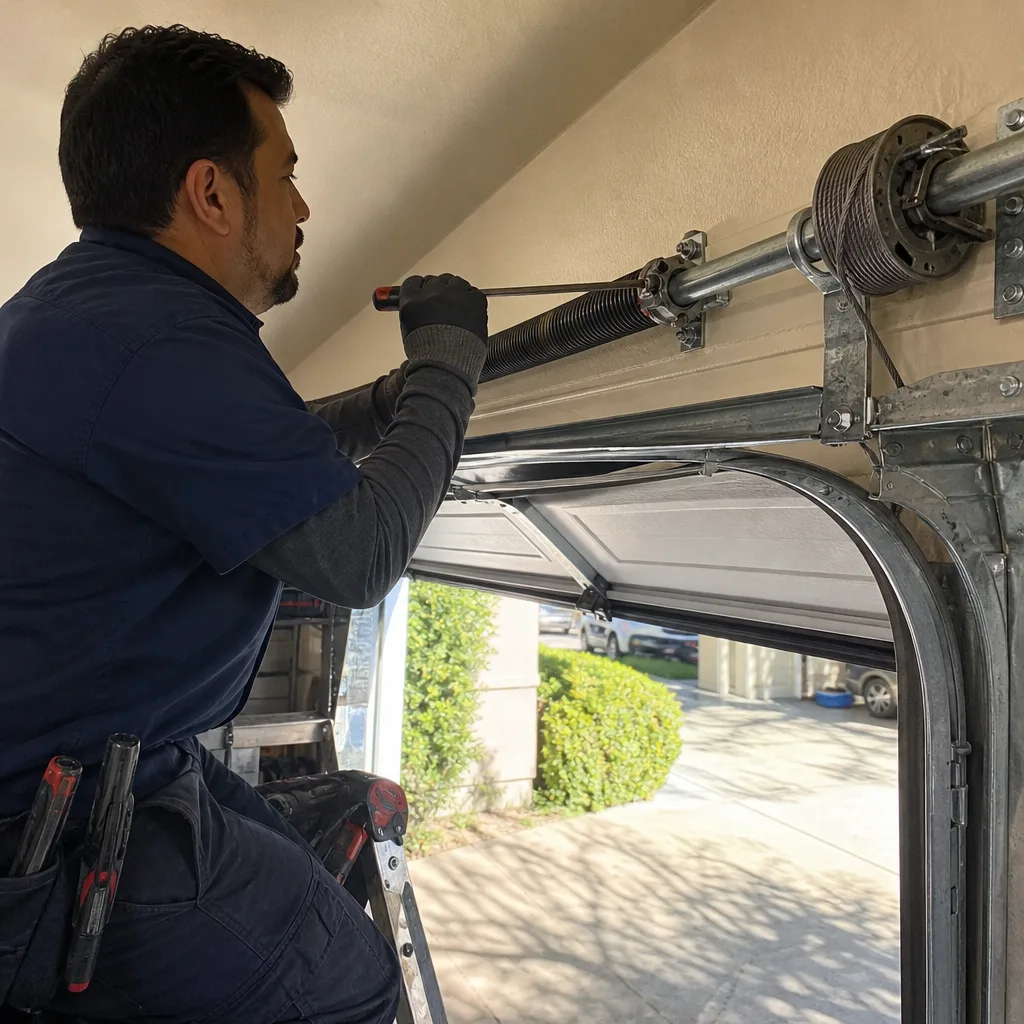 After
After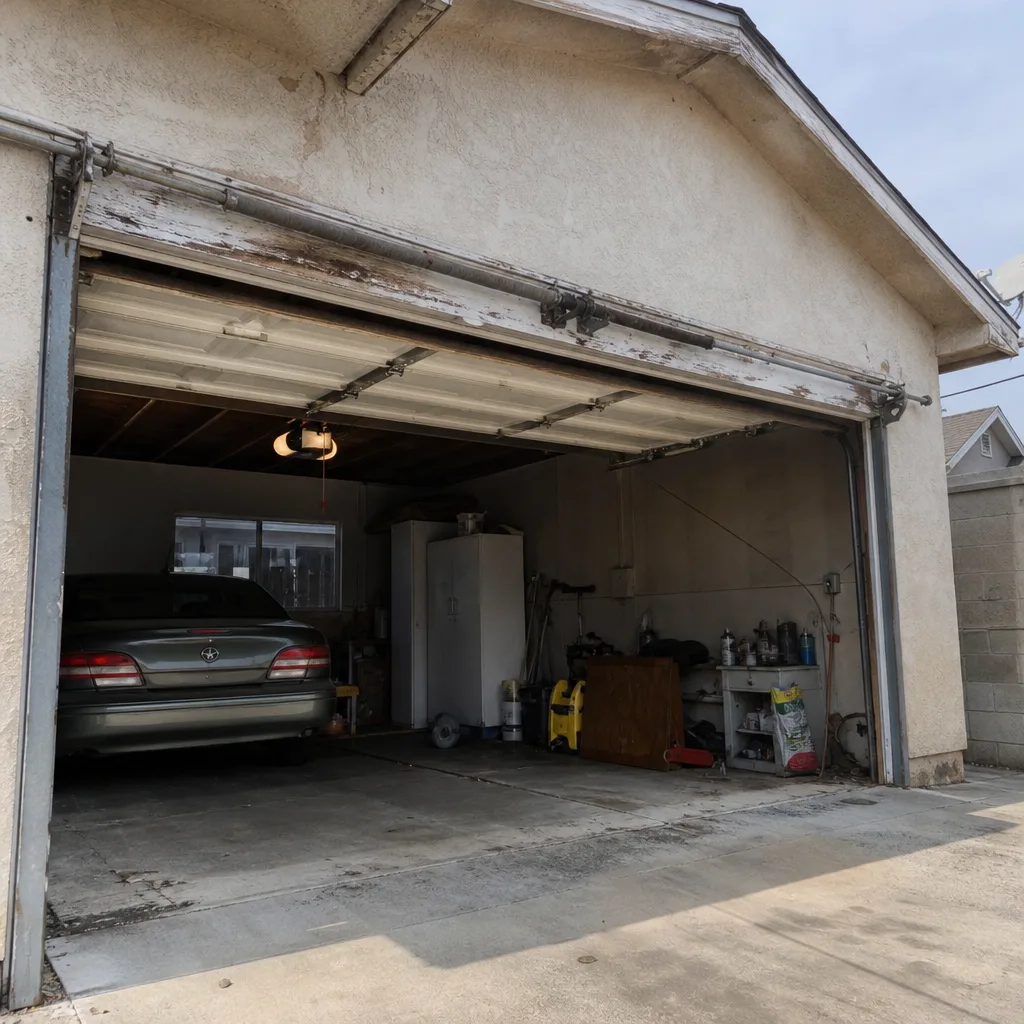 Before
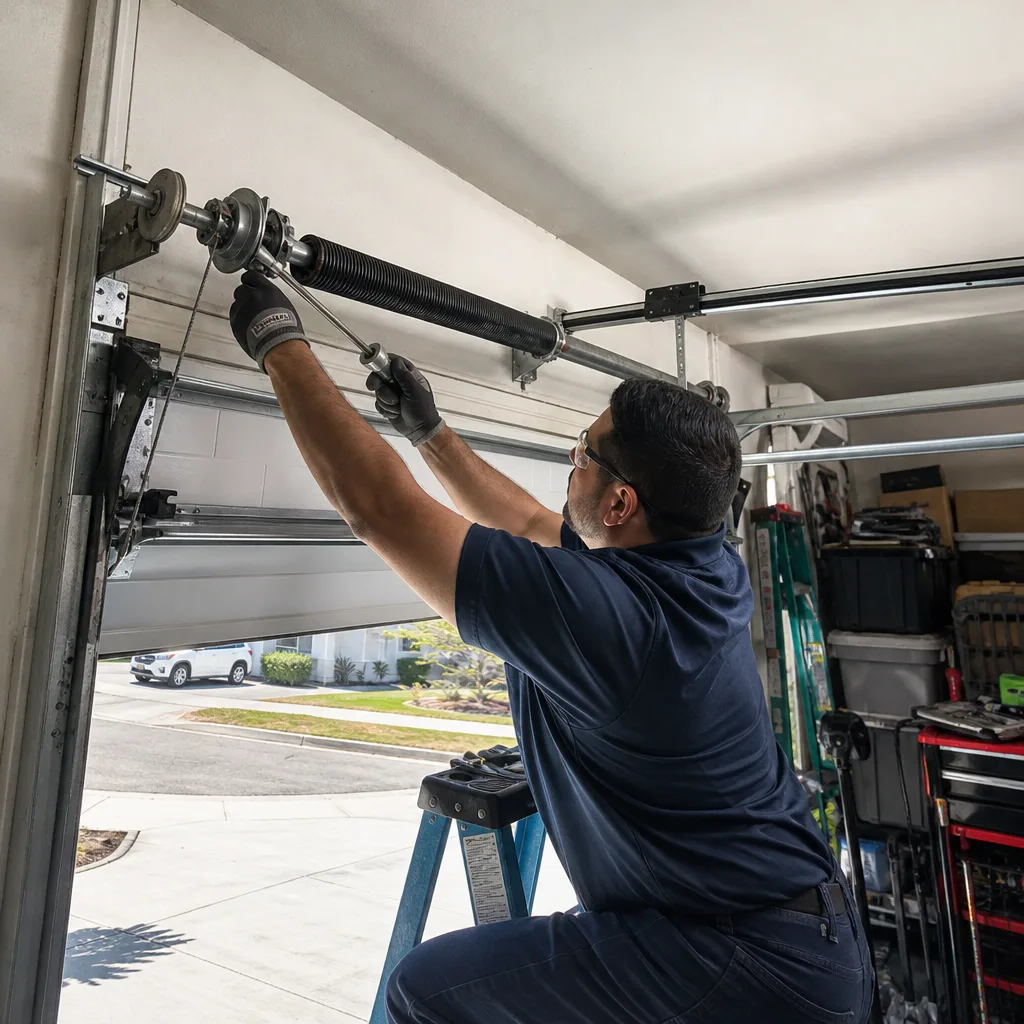 After
After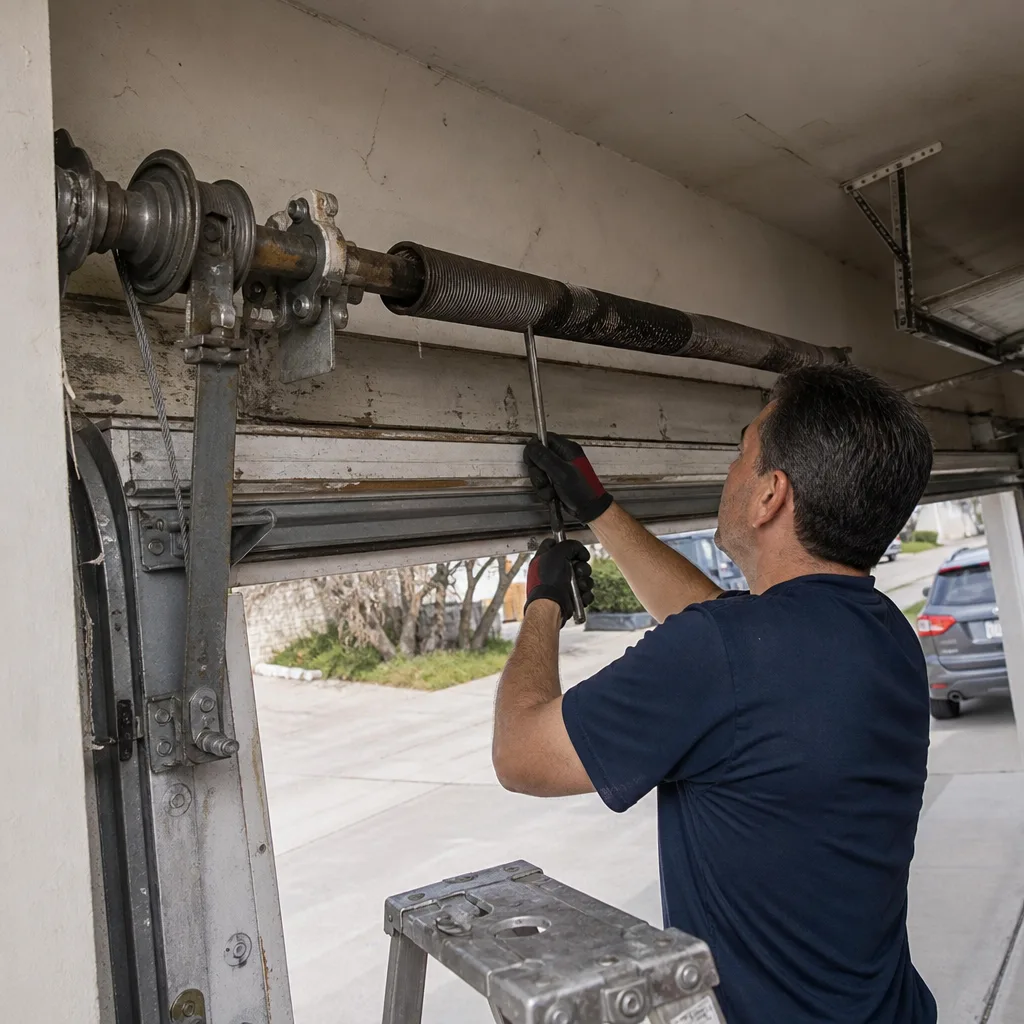 Before
 After
AfterGarage door reverses before hitting the floor
Your garage door drops most of the way, then stops and rides back up before it ever touches the ground. That’s not a mechanical failure in the catastrophic sense – it’s the opener doing exactly what it was programmed to do when it thinks something went wrong. The most common cause is a close-limit or sensitivity setting that’s out of adjustment, but worn rollers, a misaligned safety sensor, or a damaged bottom seal can trigger the same reversal. A technician can usually pinpoint it in the first few minutes on site.
What’s Happening
When a garage door reverses before it reaches the floor, it almost always means the opener has detected – or thinks it has detected – an obstruction or a resistance level it wasn’t expecting. In most cases the fix is a limit or force adjustment, a sensor realignment, or a physical inspection of the bottom of the door.
Modern garage door openers run a continuous check as the door moves. They measure how much force the motor is using and where the door is in its travel path. If the force climbs above a preset threshold – because of friction, a binding roller, or a sensor that’s slightly out of line – the opener interprets that as a safety event and reverses. The same reversal logic that stops a door from closing on your dog’s tail can also trip on a worn roller or a sensor lens that a spider decided to build in. It’s a protective system, and most of the time it just needs to be recalibrated or cleared of whatever is confusing it.
Why It Happens
Misaligned or obstructed safety sensors
Every modern opener has two small sensors mounted about six inches off the ground on either side of the door opening. They shoot an infrared beam across the doorway, and if that beam is broken or misaligned, the opener won’t let the door close. Look at the two sensor units: on most LiftMaster and Chamberlain systems, a solid green light means receiving properly, while a blinking or amber light means the beam is interrupted. If one light is off or blinking, the sensors are the first thing to check – sometimes a rake handle fell against one, or morning condensation fogged the lens.
Close-limit setting too short
The opener has a programmed “close limit” – a travel distance that tells the motor when the door has reached the floor. If that limit is set too short, the door reverses because the opener thinks the door hit something before it reached the ground. You’ll notice the reversal happens at a consistent height – the same distance from the floor every single time, with no variation. That consistency is the tell: it’s a settings issue, not a mechanical one.
Excessive closing force needed – friction in the hardware
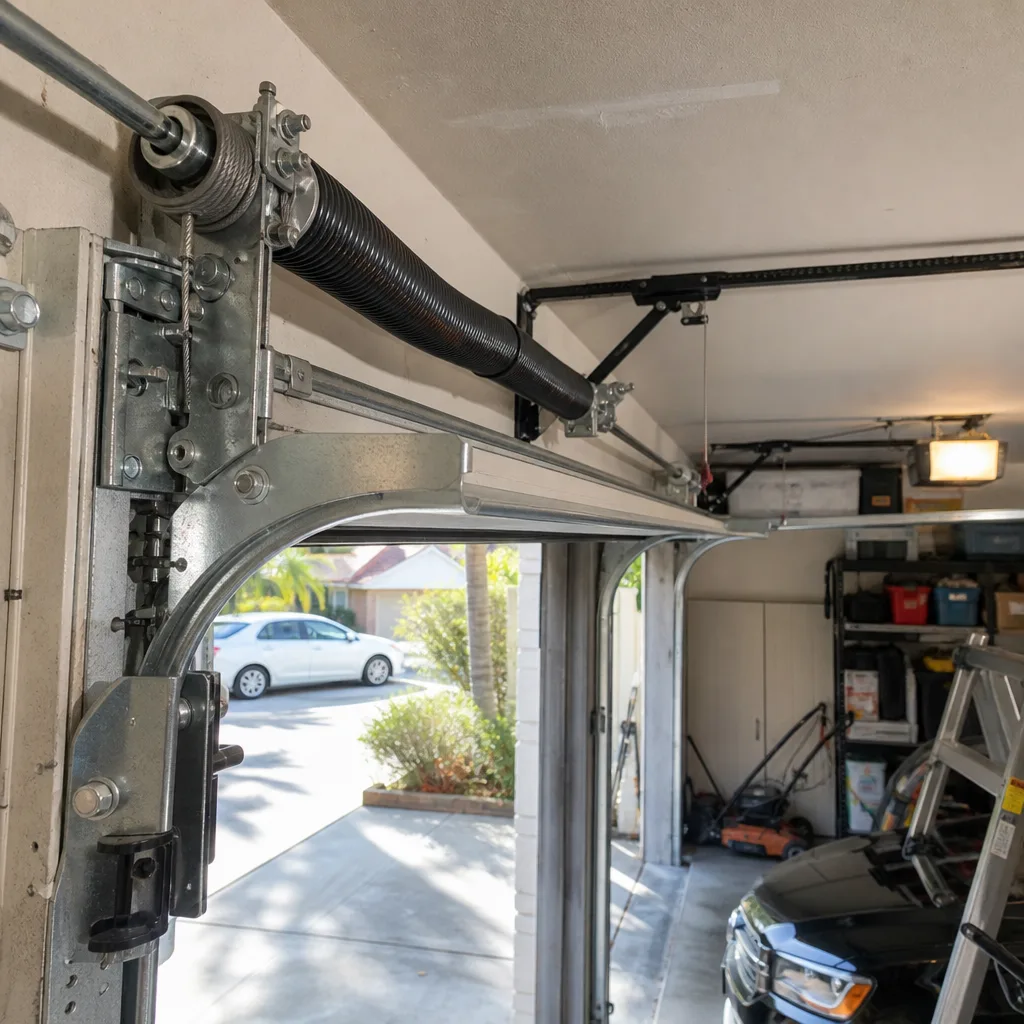
Worn rollers, a bent track section, or dried-out hinges can make the door work harder on the way down. The opener’s force sensor reads that extra resistance as an obstruction and reverses. Listen for grinding or scraping as the door descends. If you can see a roller sitting at an angle in its bracket, or a track that’s visibly kinked or pulled away from the wall, that’s your friction source. Don’t try to bend a track back by hand – a track under a loaded door carries real force.
Damaged or bunched bottom seal
The rubber seal along the bottom of the door is there to keep weather out. If that seal is torn, curled, or has come loose and bunched up, the door physically can’t reach the floor evenly – and the opener’s resistance sensor reads that as a blocked path. Get low and look at the bottom edge of the door when it’s fully closed (or as close as it gets). A seal that’s folded over or missing sections is easy to spot and straightforward to replace.
What to Do Right Now
- Stop cycling the door. Every time you send a reversing door through another open-close cycle you’re putting wear on the opener motor and the drive mechanism. Use the manual release cord (the red handle hanging from the rail) to operate the door by hand if you need it open or closed while you wait.
- Check the sensor lights. Crouch down and look at both sensors near the floor on each side of the opening. Both lights should be solid. A blinking or off light tells you the beam is broken. Clear anything that might have bumped a sensor – a trash can, a piece of trim, debris – and see if the light goes solid. Don’t reach behind or into the sensor mounting if the door is in motion.
- Inspect the bottom seal from a safe distance. Look along the bottom edge of the door. If the rubber is visibly torn, folded, or missing in sections, note it and photograph it – that’s useful information for the technician.
- Look at the rollers and track without touching them. A roller sitting sideways in its bracket, a track that’s bent, or a gap between the track and the wall mounting are all visible without tools. Take a photo if you spot something. Do not attempt to straighten a track or adjust springs or cables – springs and cables on a garage door are under high tension and can cause serious injury if disturbed without the right training and equipment.
- Note the reversal height. Does the door stop at the same point every time, or does it vary? Consistent height suggests a limit setting. Variable height suggests friction or a sensor issue. That detail helps the technician narrow it down before they even touch the opener.
How We Fix It
When your local Doyle Garage Door Repair technician arrives, the first thing they do is watch the door move – once down, once up – before touching anything. That one cycle tells an experienced tech a lot: where the reversal happens, whether there’s noise, and what the sensor lights are doing.
From there, the diagnostic path is methodical. Sensors get checked for alignment and cleaned. The close-limit and force settings on the opener are tested against the manufacturer’s spec for that unit – whether it’s a LiftMaster, Chamberlain, Genie, or Craftsman, our techs are factory-trained on all of them. Rollers, hinges, and the track are inspected for wear or binding. The bottom seal gets checked end to end.
Most of these repairs fall under garage door repair or garage door opener repair, and the majority are completed in a single visit. Before any work starts, you’ll receive a written price – the exact number, not a range, not a verbal estimate. That’s how every job works here. And every repair is backed by the 365-Day Done Right Promise: if it’s not done right, we make it right, in writing, no argument required.
Frequently Asked Questions
No – or at least, not with the opener running it. A door that’s reversing unpredictably can behave differently on any given cycle. Use the manual release cord to move the door by hand until a technician has a look. It’s a simple precaution that protects the opener motor and keeps the door predictable. Call (910) 858-8029 and we’ll get someone out to you.
It depends on your situation. If the door won’t fully close at all, your garage is effectively unsecured, and that makes it urgent. If the door eventually closes on a second attempt, there’s a little more flexibility, but the underlying cause – friction, a sensor problem, a bad seal – will generally get worse rather than better on its own. We’d rather you call now than have a stuck door on a cold night. Reach us at (910) 858-8029, any time of day.
Call us at (910) 858-8029 and a real person will pick up – not a voicemail, not a callback form, a person. Your local Doyle Garage Door Repair team will tell you exactly what’s available today and get you scheduled. We answer 24/7, including weekends and holidays.
No. The written price you receive before any work starts is the price you pay. We don’t do verbal estimates and we don’t add to the bill once the job is open. If the technician finds something additional that needs attention, they’ll show it to you and write a separate price for it – you decide whether to proceed. Nothing gets started without your written approval first.
Get It Fixed
Call (910) 858-8029 – a real person answers 24/7. Your local Doyle Garage Door Repair team will diagnose the reversal, give you a written price before anything starts, and back the repair with the 365-Day Done Right Promise. You’ll know the technician’s name and see their photo before they arrive.
Written by Aaron Teague, Owner & Lead Technician, Doyle Garage Door Repair, serving communities nationwide as part of the Threshold Group family since 2001.
What Our Customers Say
"Came out the same week for a bent bottom panel. Replaced just the one section and matched it close to the rest. Saved me from buying a whole door."
- Shawn M."Wall button quit working and the remote was flaky too. He reprogrammed the opener and replaced the button. Short visit, no upsell."
- Nate C."New door installed after a delivery truck clipped our old one. Three panels, new hardware, and the install crew was neat and on time. Looks like it came with the house."
- Tyler B.