
Last updated October 9, 2026
Full 25-point door and opener safety check with every visit - springs, cables, rollers, tracks, and your LiftMaster or Chamberlain opener included
You get a price before we start. It does not change when the truck arrives.
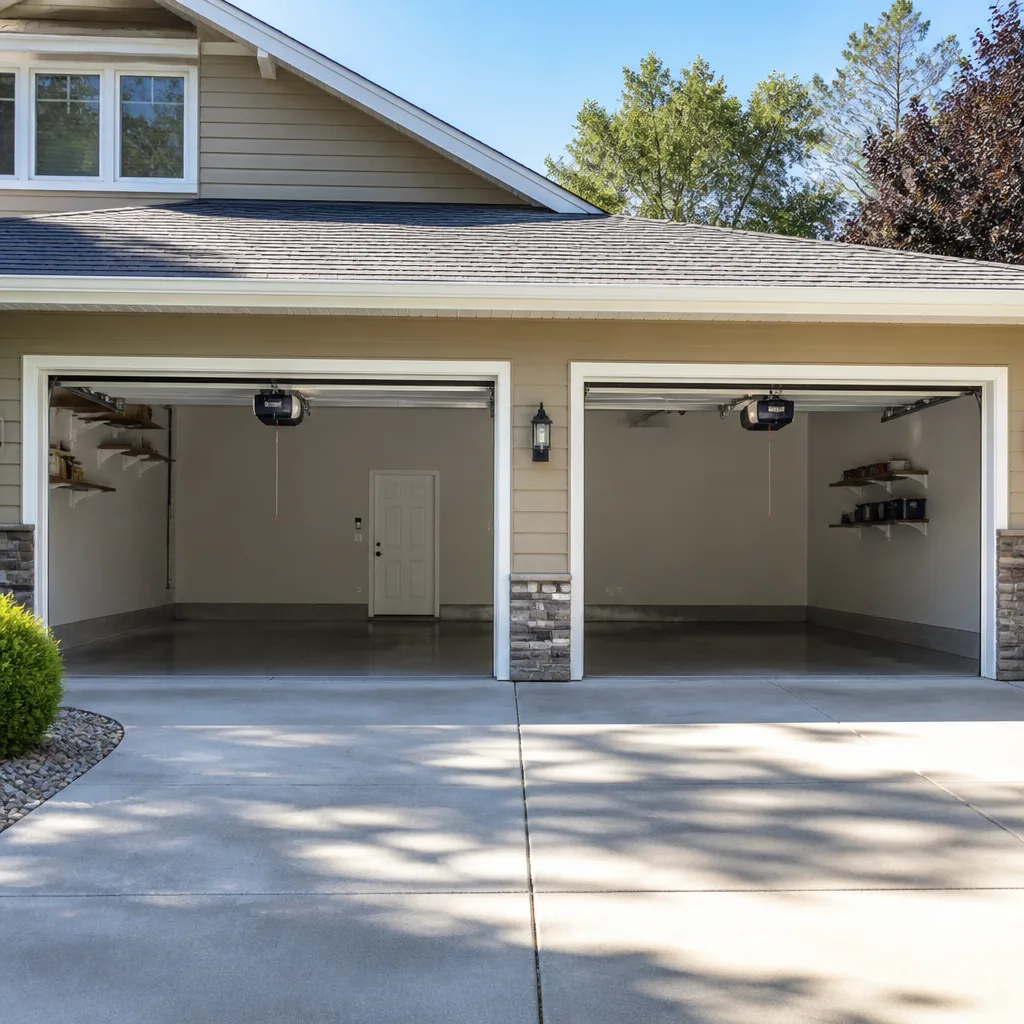
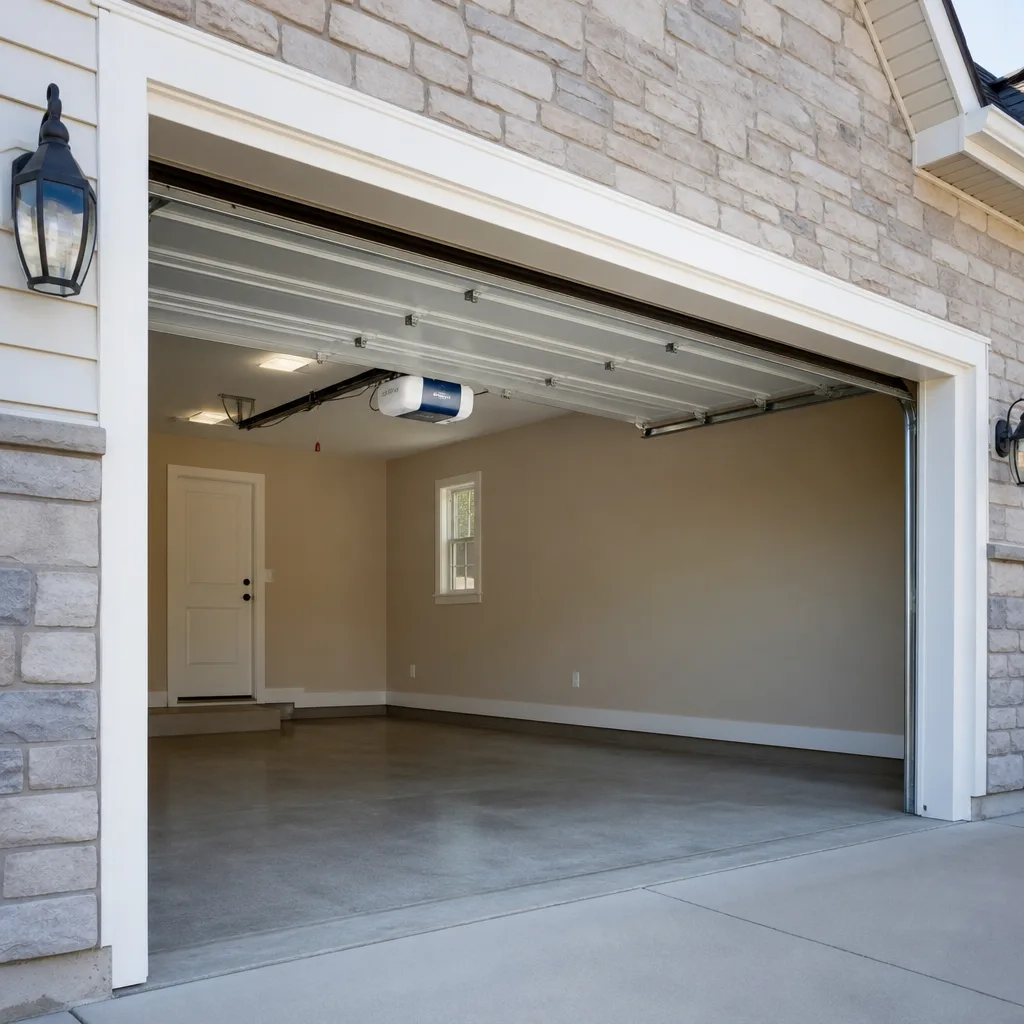
 Before
 After
After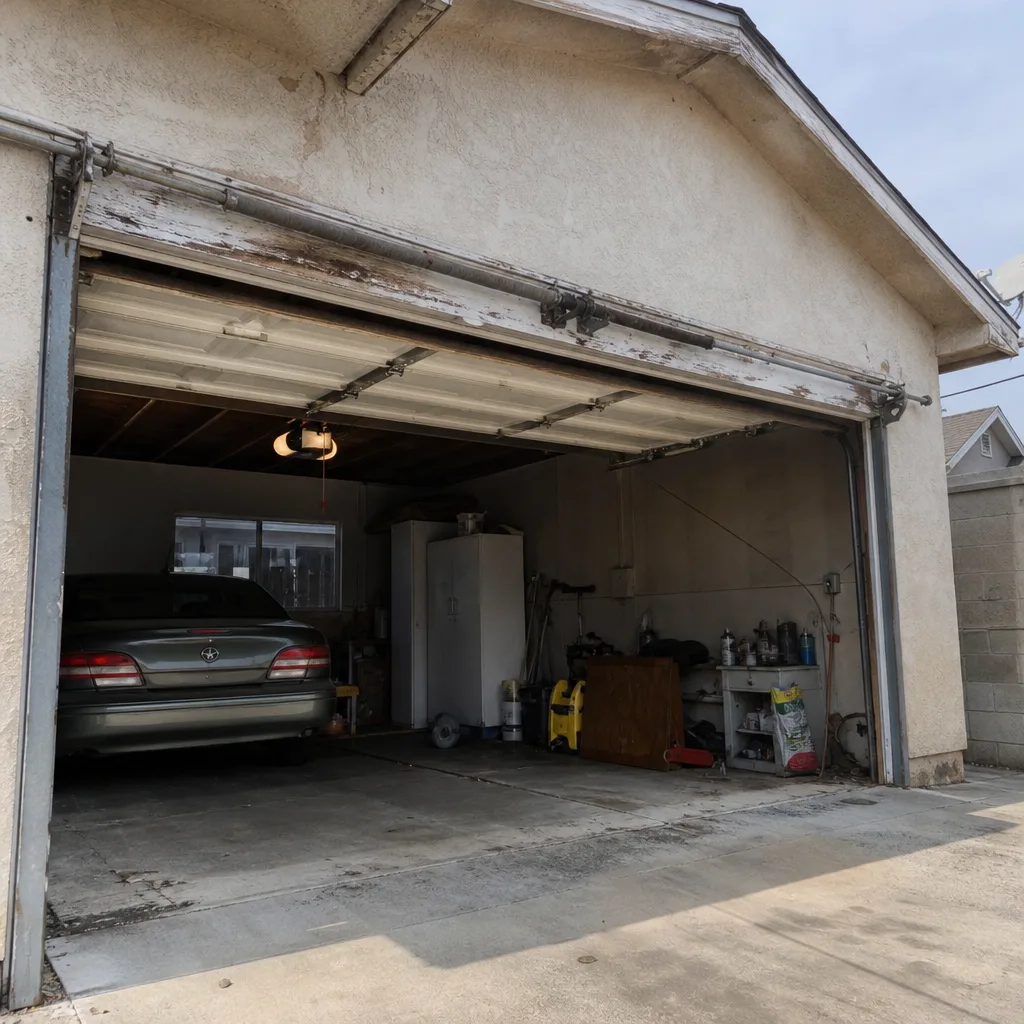 Before
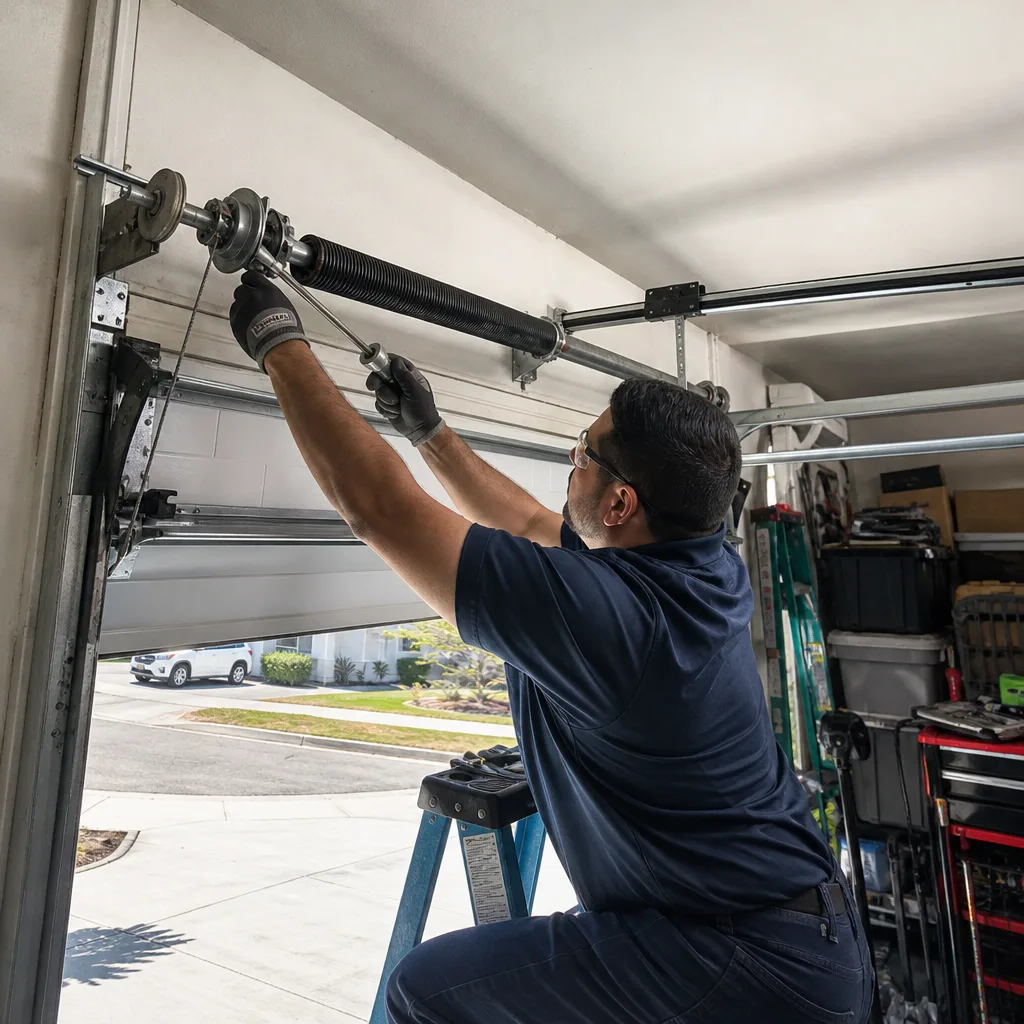 After
After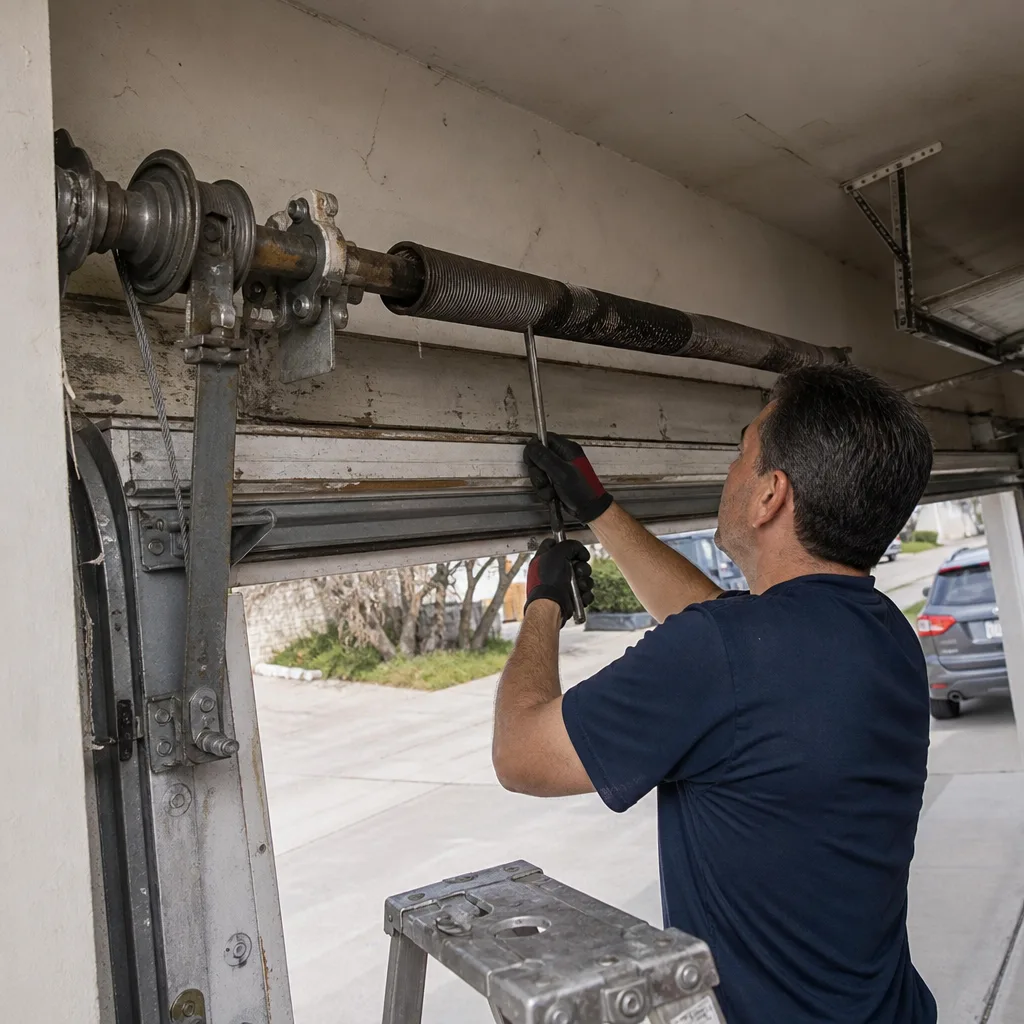 Before
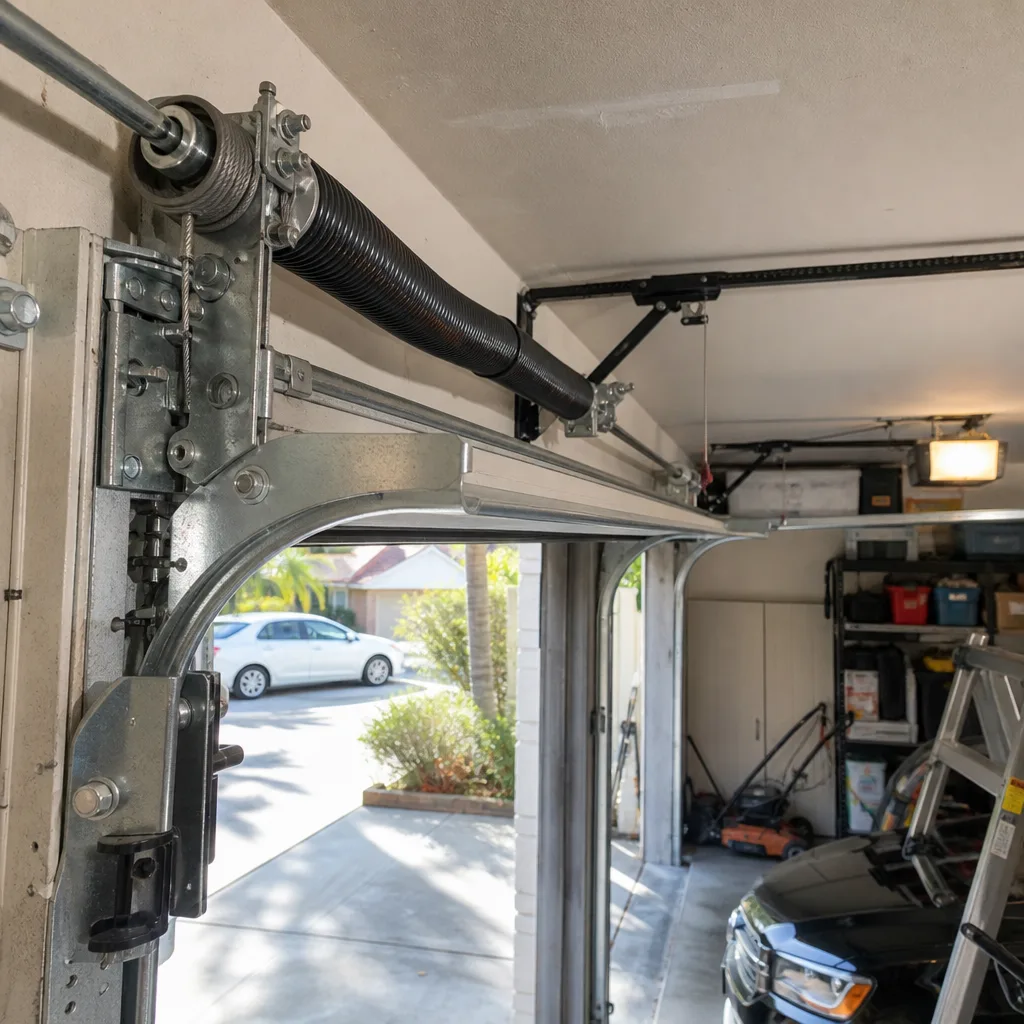 After
AfterThe Complete Garage Door Installation Guide for Los Angeles Homeowners
A new garage door is the largest moving part of your home, and in Los Angeles, the material you choose determines whether that door still looks sharp after five years of intense sun exposure or starts fading and warping in two. Most national installation guides ignore this because they’re not writing for the specific combination of coastal salt air, inland heat, and wildfire-season ash that Los Angeles homeowners deal with every year. This guide covers the decisions that actually matter here: which materials hold up in our climate, what insulation values mean for a garage that often doubles as a workshop or storage space, and how to verify an installer before you sign anything. For professional help, explore our Garage Door Installation services. By the end, you’ll know exactly what a fair installation quote looks like in Los Angeles and which questions separate a real professional from a truck with a magnet on the door.
Quick Answer
Garage door installation in Los Angeles typically costs between $1,200 and $4,500 depending on door size, material, insulation level, and whether you’re replacing hardware like tracks and springs. A standard single-car steel door installation runs about $1,200 to $2,200, while a double-car insulated door with higher-end finish work lands between $2,800 and $4,500 in the current Los Angeles market. Most installations are completed in a single day, and the price you’re quoted should always include haul-away of the old door, new tracks if needed, and labor for at least a year.
Table of Contents
- Door Materials That Survive Los Angeles Weather
- Insulation and R-Value: What It Actually Does in LA
- Permits in Los Angeles: When You Need One and Who Pulls It
- What a Written Installation Estimate Must Include
- The Installation Process: What Happens on the Day
- How to Verify a Los Angeles Garage Door Installer
- How Long Installation Takes and When to Schedule It
- Common Mistakes to Avoid
- When to Call a Professional
- Frequently Asked Questions
Door Materials That Survive Los Angeles Weather
Los Angeles isn’t one climate. It’s at least four, and the material that works in a Pacific Palisades home three blocks from the ocean is not the same material that makes sense for a Sunland-Tujunga house that bakes at 105°F in August. Here’s what we’ve learned installing doors across the city since 2001.
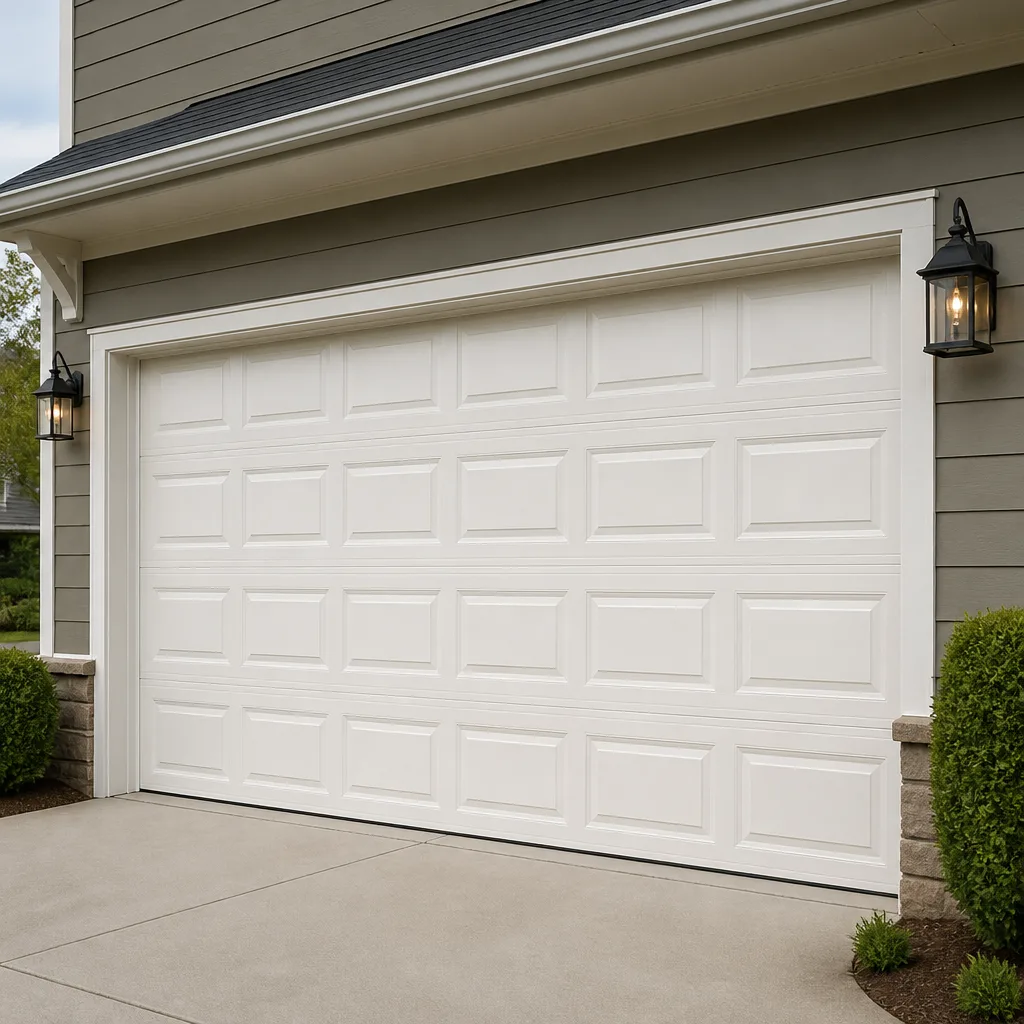
Steel is the most common choice in Los Angeles, and for good reason. A quality steel door with a factory-applied polyester or polyurethane finish resists UV fading better than almost any other material. In neighborhoods like Woodland Hills or Encino where summer sun beats directly on west-facing garage doors, steel holds its color for 12 to 15 years when properly maintained. The tradeoff is dent resistance. A steel door hit hard enough will show it, and in tight Los Angeles garages where cars pull in close, that matters. Modern steel doors come in gauges from 24 to 28, with lower numbers meaning thicker steel. For Los Angeles, a 26-gauge or thicker door is worth the additional $200 to $400 over 28-gauge.
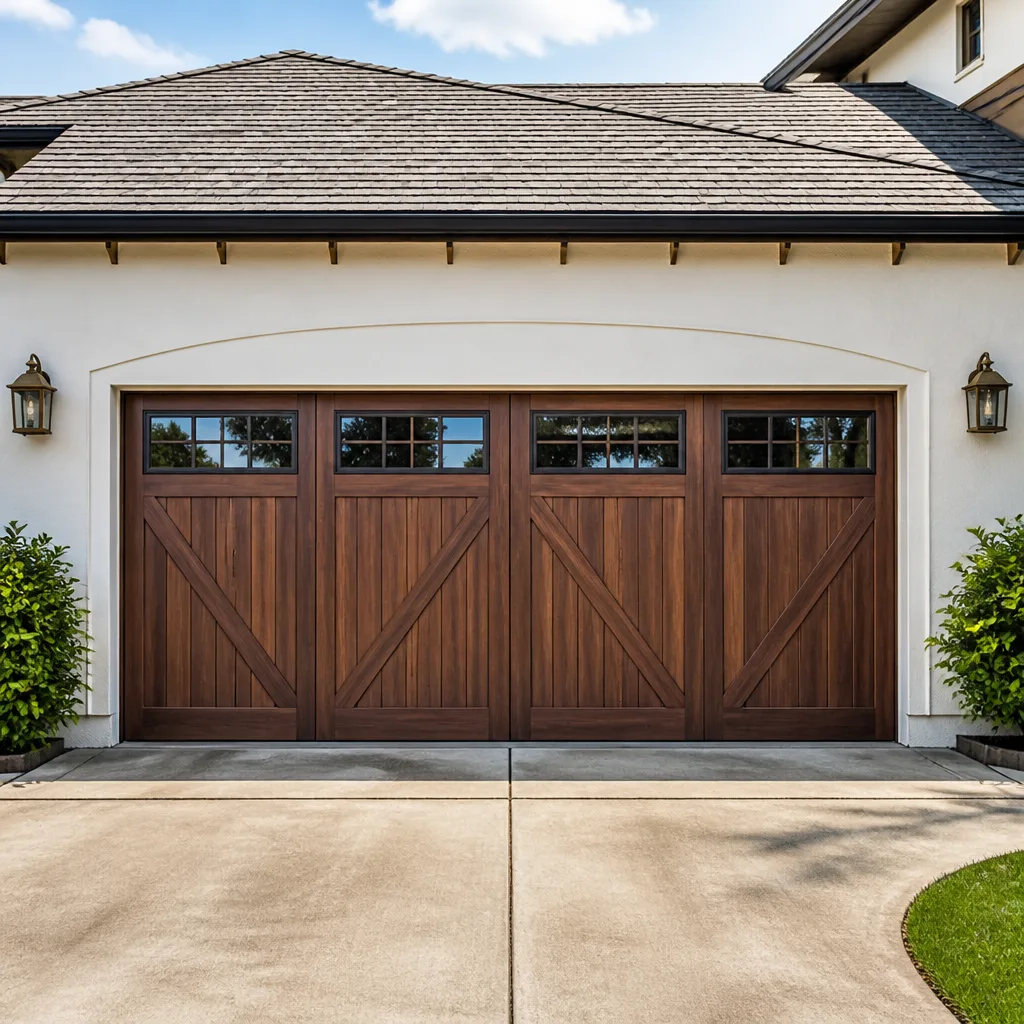
Wood composite doors look beautiful against Spanish and Mediterranean architecture, which is why you see so many in neighborhoods like Hancock Park and Pasadena. They insulate well naturally and can be repainted when they fade. The downside is maintenance. In Los Angeles humidity, wood composite absorbs moisture and expands, then contracts during dry Santa Ana periods. That cycle causes cracking and paint failure faster than in more stable climates. Budget $200 to $400 per year in maintenance for wood composite, or accept that you’ll be refinishing it every 3 to 5 years.
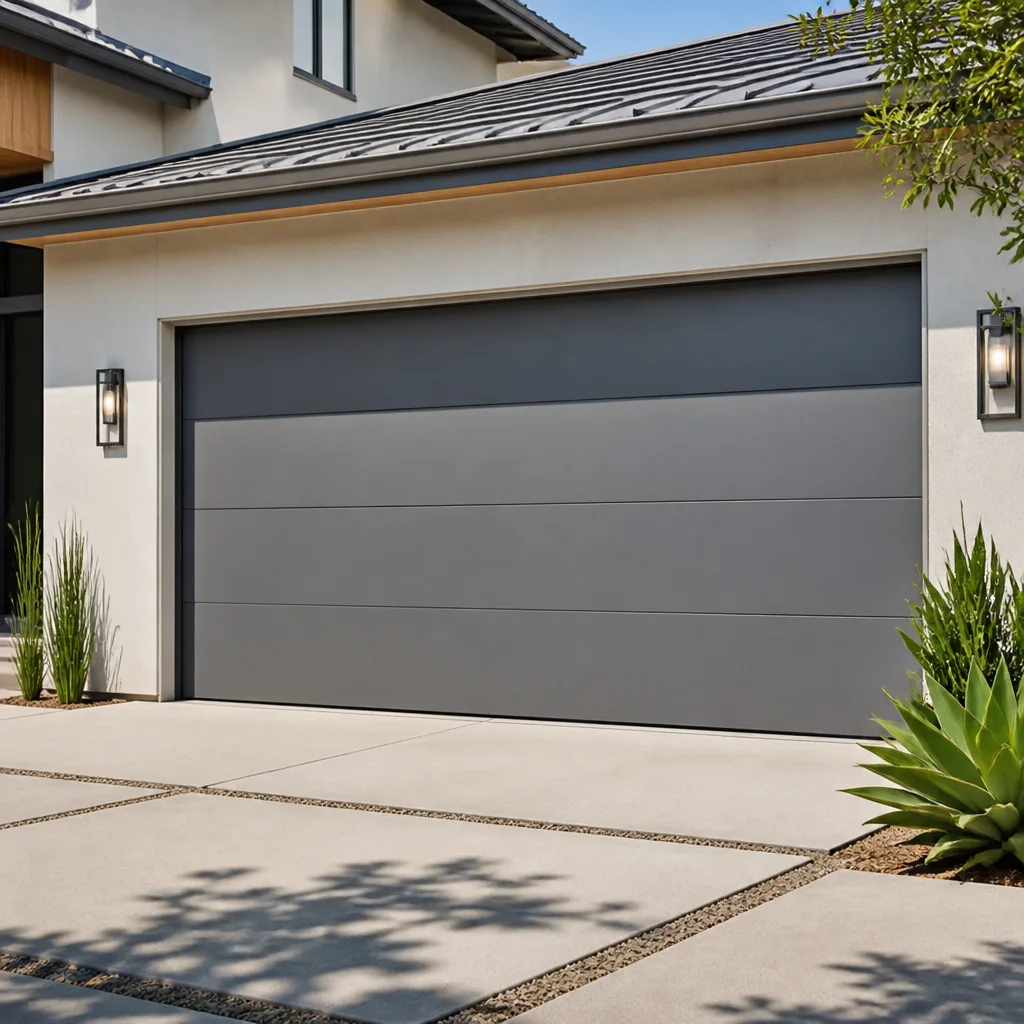
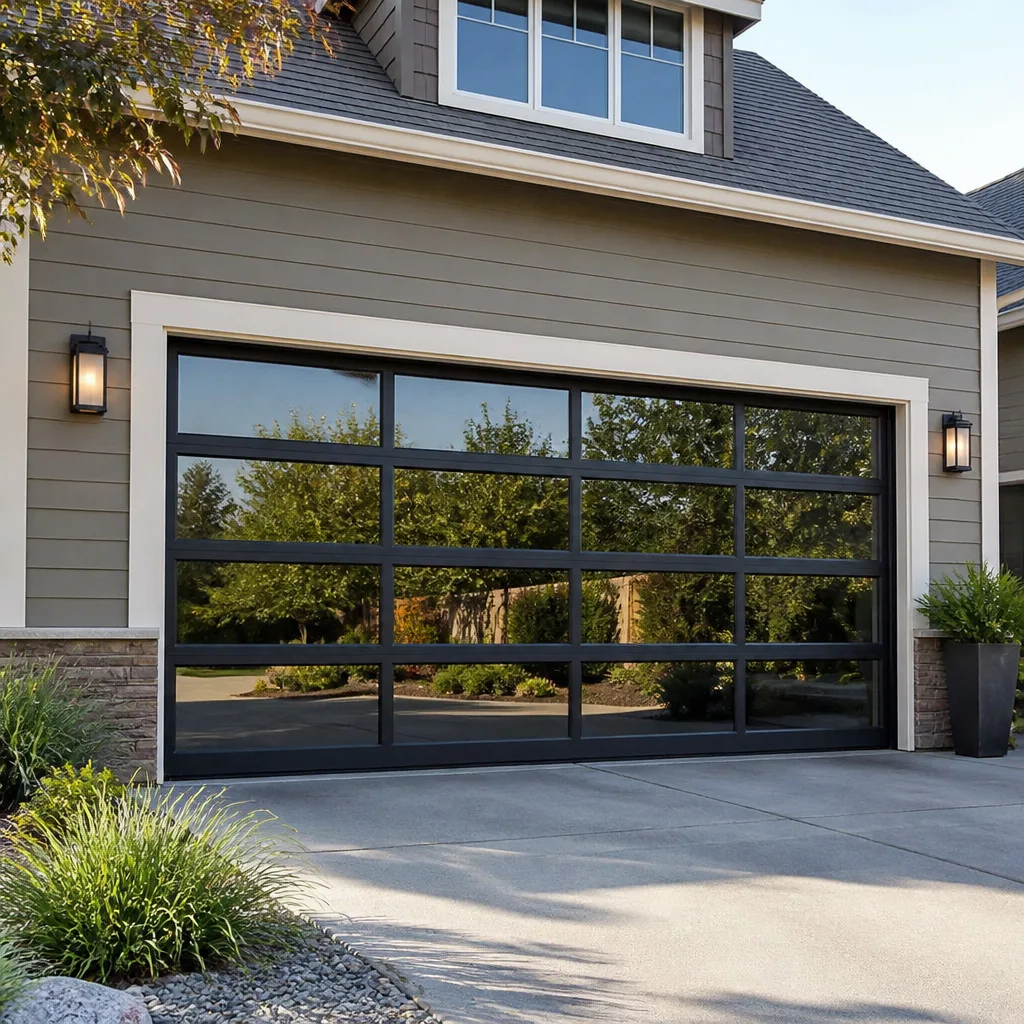
Aluminum doors are lightweight and won’t rust, which makes them a reasonable option for coastal Los Angeles communities like Marina del Rey or San Pedro where salt air attacks steel. But aluminum dents easily, and in hail-prone areas near the San Gabriel foothills, that’s a real liability. A single quarter-sized hailstone can leave permanent dents in an aluminum panel. For most Los Angeles homeowners, aluminum only makes sense if you’re within a mile or two of the coast, or if you want a full-view glass door and accept the tradeoffs.
Fiberglass deserves a mention because it’s growing in popularity in Los Angeles. Fiberglass doors resist salt air better than steel, dent less easily than aluminum, and can be finished to look like wood grain. The catch is price. A quality fiberglass door runs 15 to 25 percent more than comparable steel, and the material is still less common, which means fewer installers have deep experience with proper frame reinforcement. If you’re in a coastal area and want the look of wood without the maintenance, it’s worth considering.
Insulation and R-Value: What It Actually Does in LA
When we talk about garage door insulation in Los Angeles, we’re usually not talking about keeping a garage warm in winter. We’re talking about keeping heat out in summer, and there’s a measurable difference that shows up in your energy bill and in how comfortable rooms above or beside the garage feel.
R-value measures resistance to heat flow. Higher R-value means better insulation. A standard non-insulated steel door has an R-value around 2 to 3. A polyurethane-insulated door has an R-value between 12 and 18, depending on thickness. That difference translates to a measurable temperature change inside the garage.
In our experience installing doors across Los Angeles, an uninsulated garage in the San Fernando Valley routinely hits 110°F to 120°F on a 100°F day. The same garage with an R-13 insulated door stays between 90°F and 100°F. That 15 to 20 degree difference matters for three reasons. First, if you have a bedroom or living space above the garage, that heat transfers through the ceiling and forces your air conditioner to work harder. Second, if you store anything in the garage (paint, tools, wine, holiday decorations), heat degrades those items faster. Third, if you use the garage as a gym, workshop, or band practice space, a 20-degree difference is the line between usable and miserable.
For Los Angeles, we recommend a minimum of R-13 for attached garages, and R-6 to R-9 for detached garages that don’t share a wall or ceiling with living space. The cost difference between uninsulated and insulated is usually $400 to $1,200 depending on door size, and in an attached garage, that investment typically pays for itself in reduced cooling costs within 3 to 5 years. If you want to understand more about how installation specifics affect your home, our Garage Door Installation in Grandview page walks through additional considerations.
Permits in Los Angeles: When You Need One and Who Pulls It
This is where Los Angeles homeowners get confused, because the answer depends on what you’re actually doing. The City of Los Angeles Department of Building and Safety (LADBS) treats garage door replacement differently depending on whether it’s considered a repair or a structural change.
If you’re replacing an existing door with a new door of the same rough opening size, and you’re not modifying the framing, header, or surrounding structure, in most cases no permit is required. This covers the vast majority of Los Angeles garage door replacements. You’re swapping a door for a door, the opening stays the same, and the job is classified as a finish-level repair. No permit, no inspection, no additional fees.
If you’re enlarging the opening, changing from a single door to double doors, adding a new door where none existed, or modifying any structural framing, you need a permit. These jobs trigger plan review and inspection requirements, and the permit is generally pulled by the contractor performing the work. In Los Angeles, the cost for a basic garage door structural permit typically runs between $150 and $500 depending on scope, and inspection scheduling adds 1 to 3 weeks to the timeline.
Here’s what matters for you as a homeowner: make sure your installer knows which category your job falls into and can clearly explain why. A professional who tells you “we handle all that” without being able to explain whether your specific job requires a permit is not someone you want doing structural work. If your job does require a permit, the installer should be the one pulling it, and the permit number should appear on your written estimate. Our team handles permit questions daily for Los Angeles homeowners, and we always provide the permit determination in writing before any work begins.
What a Written Installation Estimate Must Include
You would not believe the estimates we see. Hand-written numbers on a business card. A text message that says “door installation $2,800” with nothing else. A verbal quote followed by an invoice that’s $900 higher because “the springs needed upgrading” or “the tracks had to be replaced.” Los Angeles homeowners deserve better, and the law requires better.
A legitimate written installation estimate includes the following line items, separated clearly:
- Door model and manufacturer – the exact brand (Wayne Dalton, Raynor, LiftMaster for openers, etc.) and model number, not just “steel door.”
- Door size – width and height in feet, verified against your actual opening.
- Material and gauge – steel gauge or material type, plus finish color.
- Insulation level – R-value of the door you’re buying, not just “insulated.”
- Spring type and size – torsion or extension, and the correct size for the door weight.
- Track configuration – standard lift, high lift, or vertical lift, especially relevant for Los Angeles garages with limited headroom.
- Opener model and features – if you’re adding or replacing an opener, the exact model with horsepower and drive type.
- Haul-away of old door – explicitly stated, with any landfill or disposal fees broken out.
- Hardware and reinforcement – hinges, rollers, struts, and any reinforcement for hurricane or seismic bracing where applicable.
- Labor warranty period – stated in writing, with both parts and labor coverage durations.
At Doyle Garage Door Repair, the price is written down and handed to you before a single bolt is turned. That’s not a policy we advertise for marketing. It’s how we’ve worked since 2001, and it means the number on your estimate is the number you pay. If we discover additional work is needed once we open up the project, we stop, explain what we found, and get your written approval before proceeding. No invoice surprises. Ever.
The Installation Process: What Happens on the Day
Here’s the step-by-step of a professional garage door installation in Los Angeles, so you know exactly what to expect and when to ask questions.
- Confirmation call the day before – a real person calls to confirm your appointment window and answer any last questions. You should also receive your technician’s name and photo before they arrive. At Doyle Garage Door Repair, this is standard: every customer knows exactly who to expect at the door before they open it.
- Arrival and ID verification – the technician arrives in a marked uniform and shows a photo ID badge at the door. No exceptions. If someone shows up claiming to be from a garage door company and won’t show ID, do not let them in.
- Pre-installation walkthrough – the technician inspects the existing door, tracks, springs, and opener, and confirms the scope matches the estimate. Any discrepancies are addressed before work begins.
- Old door removal – the old door is removed carefully, with the technician watching for hidden wiring, framing damage, or pest intrusion that might need attention.
- Track and hardware installation – new tracks are installed and aligned, brackets are anchored to framing, and the door is positioned in the tracks.
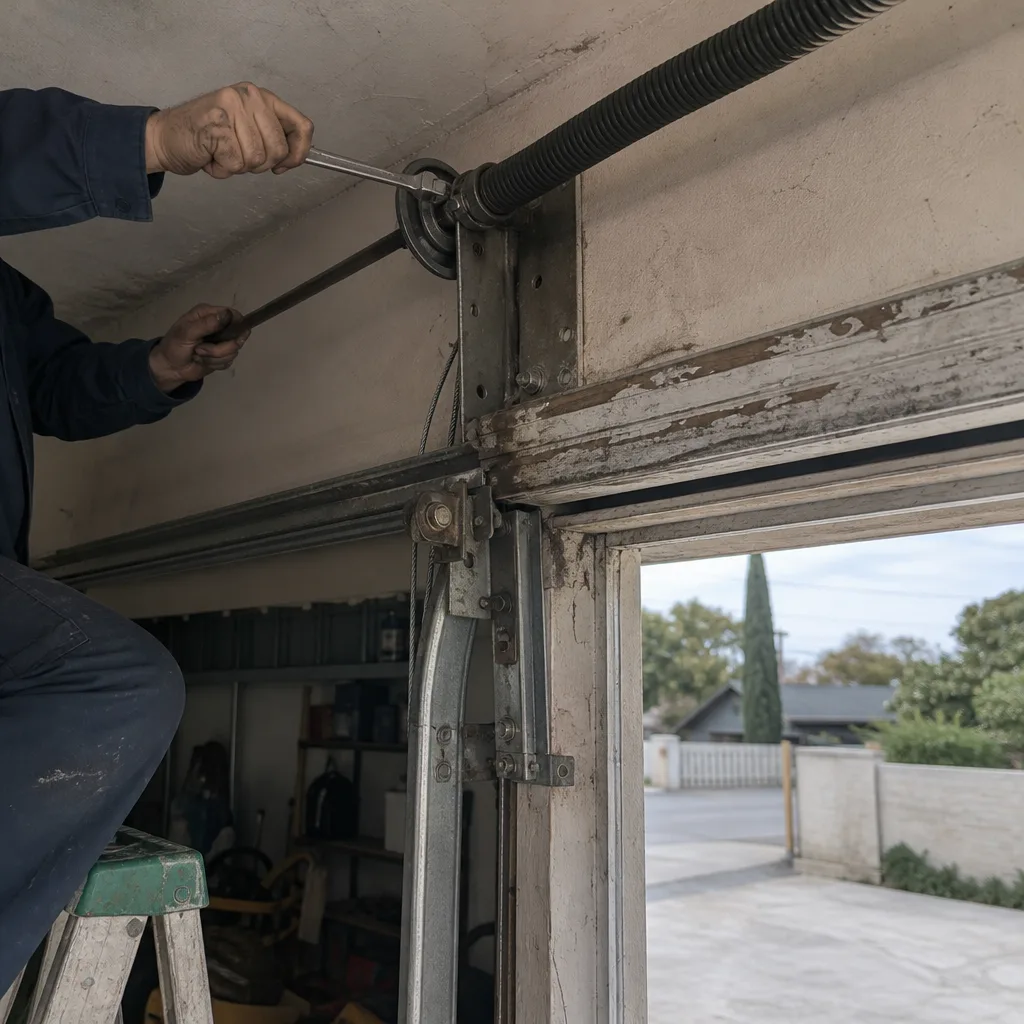
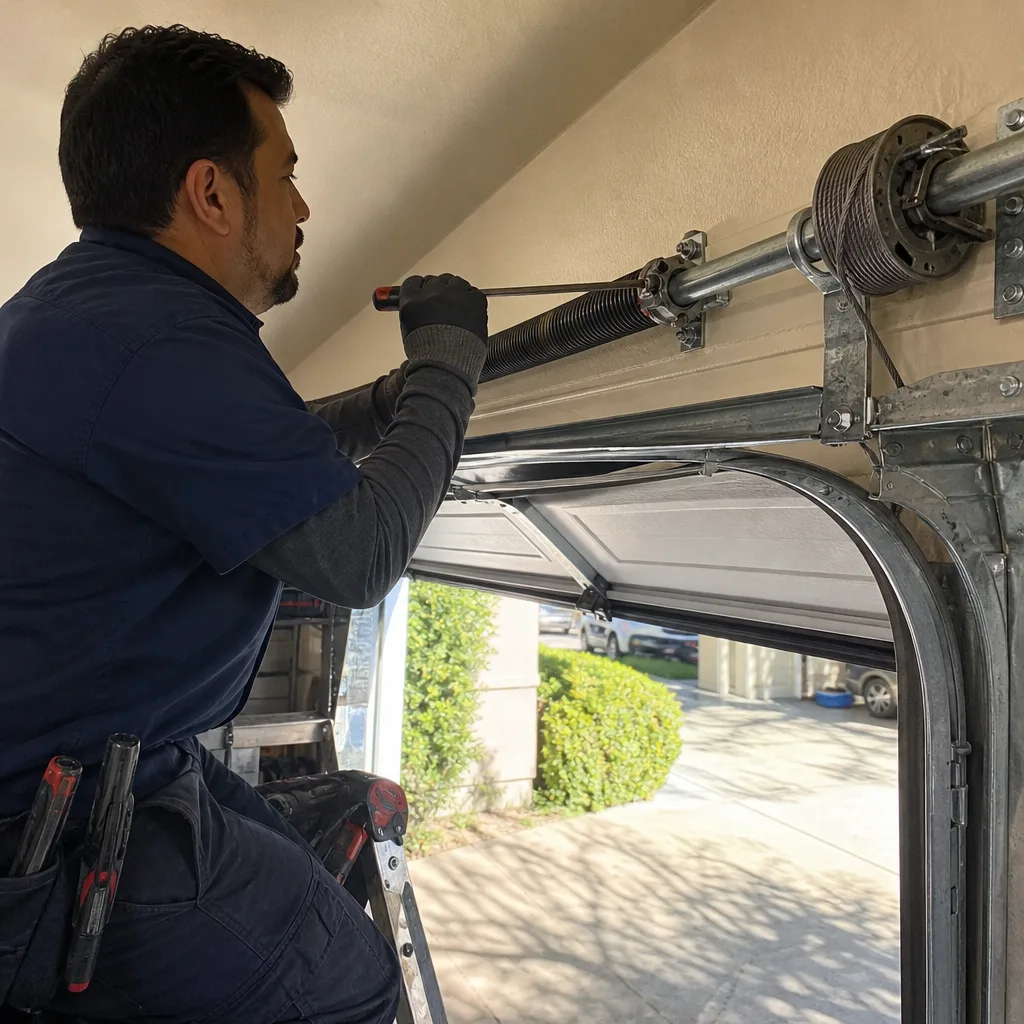
- Spring installation and tensioning – this is the most dangerous part of the job, and the step where you want a trained professional who does this daily. Torsion springs are tensioned with calibrated tools and the balance is tested repeatedly.
- Opener installation and programming – if a new opener is part of the job, it’s mounted, the safety sensors are aligned, and the travel limits and force settings are programmed.
- Full testing and safety check – the door is cycled through multiple open-close runs, the auto-reverse safety feature is tested, and the balance is checked to ensure the door stays put at mid-height.
- Cleanup and haul-away – the old door, old hardware, and all packaging are removed from your property. You should never be left with debris to dispose of.
- Final walkthrough and warranty documentation – the technician walks you through the new door’s operation, explains maintenance basics, and hands you written warranty documentation covering parts and labor.
A standard single-day installation takes 3 to 5 hours from arrival to final walkthrough. Heavier custom doors or structural modifications can run 6 to 8 hours, and those jobs may require a second day depending on complexity.
How to Verify a Los Angeles Garage Door Installer
Opening your door to a stranger is a genuine concern for many Los Angeles homeowners, and it should be. A garage door installation means someone is in and around your home for hours, often while you’re away at work or home alone. Here’s what to check before you book anyone.
Ask for a name and photo before the appointment. This single step eliminates a huge category of risks. A legitimate company knows who is showing up at your home and can tell you. At Doyle Garage Door Repair, every customer receives their technician’s name and photo before the visit, and every technician is identity-verified and background-checked under the Threshold Standard. That process is the same for every job, every day, no exceptions.
Verify licensing. In California, garage door contractors must hold a valid license from the Contractors State License Board (CSLB). Ask for the license number and verify it on the CSLB website. It takes ninety seconds.
Check that insurance is current. A professional carries liability insurance and workers’ compensation coverage. If a company can’t or won’t provide proof of insurance, walk away. If a worker is injured on your property and the company doesn’t carry workers’ comp, you can be held liable.
Get everything in writing. A professional provides a written estimate before any work starts. A professional provides a written warranty after the work is complete. If either of those is missing, you’re dealing with a contractor who has not committed to honoring their work. Our no-hassle upfront pricing commitment means the price is written down and handed to you before a single bolt is turned, and our 365-Day Done Right Promise means if it’s not done right, we make it right, in writing, every time.
Read the warranty period carefully. A standard industry labor warranty is 30 to 90 days. A strong one is 365 days or more. Doyle Garage Door Repair backs every installation with a written 365-day guarantee: 365 days from the date of installation, if the door fails due to our workmanship, we come back and fix it at no charge. That’s the guarantee you want, and you should ask every company you’re considering what their exact warranty period is, in writing.
For homeowners in the Doyle Garage Door Repair home service area, these verification steps are built into how we work. For anyone else, use them as a checklist to protect yourself.
How Long Installation Takes and When to Schedule It
Most garage door installations in Los Angeles are completed in one day, and the total timeline from first call to finished installation is usually 1 to 2 weeks depending on door availability and scheduling. Custom doors with non-standard sizes or specialty finishes can take 3 to 6 weeks because they’re manufactured to order.
Here’s what the typical timeline looks like for a standard door from a major manufacturer like Wayne Dalton or Raynor:
- Day 1: You call and describe what you need. A real person answers and schedules a measure appointment.
- Day 2-3: A technician visits, measures the opening, inspects existing hardware, and provides a written estimate on the spot.
- Day 3-5: The door is ordered from the manufacturer. Standard sizes ship quickly.
- Day 7-14: Installation day. The old door comes out, the new door goes in, and everything is tested and cleaned up.
The best time to schedule garage door installation in Los Angeles is spring or fall, when the work isn’t competing with urgent repair calls from summer heat failures or winter opener breakdowns. That said, our team installs doors year-round, and our call center is answered by a live person 24 hours a day, 7 days a week, including weekends and holidays. If you call at 2 a.m. with a question about your upcoming installation, you’ll talk to a human being, not a voicemail tree.
One Los Angeles-specific scheduling tip: avoid scheduling installation for a day when a heatwave is forecast if you can. The installers are working in your garage, which may not be climate-controlled, and the adhesives and lubricants used during installation perform better in moderate temperatures. A 70-degree day is ideal. A 100-degree day still works, but a 75-degree day is better.
Common Mistakes to Avoid
- Choosing a door by looks alone. Los Angeles sun exposure varies dramatically by neighborhood. A west-facing door in Sherman Oaks gets hit with 8 hours of direct afternoon sun in summer. Choose a material and finish rated for UV resistance for your specific exposure, not just a color you like.
- Skipping insulation to save money. The $400 to $1,200 you save on an uninsulated door disappears into higher cooling bills and an unusable garage within a couple of Los Angeles summers. If your garage is attached to your living space, insulation is not optional.
- Not asking about haul-away. Some installers leave the old door at the curb and expect you to figure out disposal. In Los Angeles, the old door, old hardware, and all packaging should be removed by the installer as part of the job. Get it in writing.
- Hiring based on the lowest price. A suspiciously low quote in Los Angeles usually means corners are being cut somewhere: uninsured labor, no workers’ comp, no written warranty, or a door of unknown origin. The cheapest door installation often becomes expensive within a year.
- Not verifying the installer’s identity. Every legitimate garage door company in Los Angeles should be able to tell you in advance who is coming to your home. If they can’t or won’t, that’s your answer. Doyle Garage Door Repair sends a name and photo before every visit, and every technician shows a badge at the door.
- Accepting a verbal quote. If it’s not written down, it didn’t happen. In California, contractors are required to provide written estimates for jobs over $500. A garage door installation is almost always over $500. Insist on paperwork.
- Not checking the warranty on labor specifically. Many door manufacturers offer 10-year or lifetime warranties on the door itself, but the installer’s labor warranty is often only 30 to 90 days. Ask about labor warranty separately and in writing. A 365-day labor warranty is a strong signal of installer quality.
When to Call a Professional
Garage door installation is not a DIY project for the vast majority of Los Angeles homeowners. The torsion spring alone, the large coil mounted above the door that does most of the lifting, is tensioned to hold hundreds of pounds of force. If it releases unexpectedly, it can cause serious injury. That’s not a cautionary exaggeration. It’s the reason every professional installer spends years learning proper tensioning technique. Beyond the spring danger, installation involves precise track alignment, opener programming, safety sensor calibration, and often electrical work. If any of that goes wrong, you have a door that doesn’t operate safely, falls unexpectedly, or damages your vehicle. Doyle Garage Door Repair offers free estimates in Los Angeles, call (910) 858-8029 for honest guidance on whether a repair or full replacement is the right call for your situation. See The Complete Garage Door Repair Guide for Los Angeles Homeowners for more details.
Frequently Asked Questions
Garage door installation in Los Angeles typically costs between $1,200 and $4,500 depending on door size, material, insulation level, and hardware replacement needs. A standard single-car steel door installation runs about $1,200 to $2,200, while a double-car insulated door costs between $2,800 and $4,500. Call (910) 858-8029 for a free, exact quote for your specific opening size and material preferences.
Most standard garage door installations are completed in a single day, typically 3 to 5 hours from arrival to final walkthrough. Custom doors with non-standard sizes can take 3 to 6 weeks from order to installation because they’re manufactured to your specifications. The total timeline from first call to finished installation for a standard door is usually 1 to 2 weeks.
No permit is required for most Los Angeles garage door replacements where the existing opening size stays the same and no structural framing is modified. If you’re enlarging the opening, adding a new door where none existed, or changing the structural framing, a permit is required and the installer should pull it. A professional can determine your specific situation during the initial consultation.
Steel with a factory-applied UV-resistant finish is the best all-around material for Los Angeles heat, holding its color for 12 to 15 years even with direct afternoon sun exposure. Wood composite insulates better but requires refinishing every 3 to 5 years in Los Angeles humidity. Aluminum is best for coastal areas with salt air but dents easily in the hail-prone foothill communities.
For attached garages in Los Angeles, a minimum R-value of 13 is recommended for meaningful temperature regulation. An R-13 insulated door can reduce garage temperature by 15 to 20 degrees on a 100-degree day compared to an uninsulated door. For detached garages without living space above, R-6 to R-9 is usually sufficient.
At Doyle Garage Door Repair, the answer is no. Your written estimate is the price you pay, and if hidden issues require additional work, we stop and get your written approval before proceeding. Many Los Angeles homeowners have experienced invoice surprises with other installers. Our no-hassle upfront pricing policy means the number on the paper is the number on the final invoice. Call (910) 858-8029 to get your free written estimate.
The Bottom Line
Garage door installation in Los Angeles is a decision that affects your home’s energy efficiency, security, curb appeal, and safety for 15 years or more. The material you choose needs to match your specific Los Angeles microclimate, whether that’s salt air in San Pedro or intense inland heat in the Valley. Insulation matters more here than most guides admit, because a 20-degree temperature difference inside your garage shows up in your energy bill and in the comfort of every room that shares a wall or ceiling with that space. And the installer you choose matters more than any single feature on the door itself. Verify licensing, insurance, and identity before anyone steps through your door. Get everything in writing, including the warranty period on labor. A door is only as good as the installation behind it, and in Los Angeles, a written 365-day guarantee from a verified professional is essential. For related reading, check out The Complete Garage Door Opener Repair Guide for Los Angeles Homeowners and the standard you should accept for your home.
Written by Aaron Teague, Owner at Doyle Garage Door Repair, serving Los Angeles since 2001.