
Last updated October 9, 2026
Full 25-point door and opener safety check with every visit - springs, cables, rollers, tracks, and your LiftMaster or Chamberlain opener included
You get a price before we start. It does not change when the truck arrives.
 Before
 After
After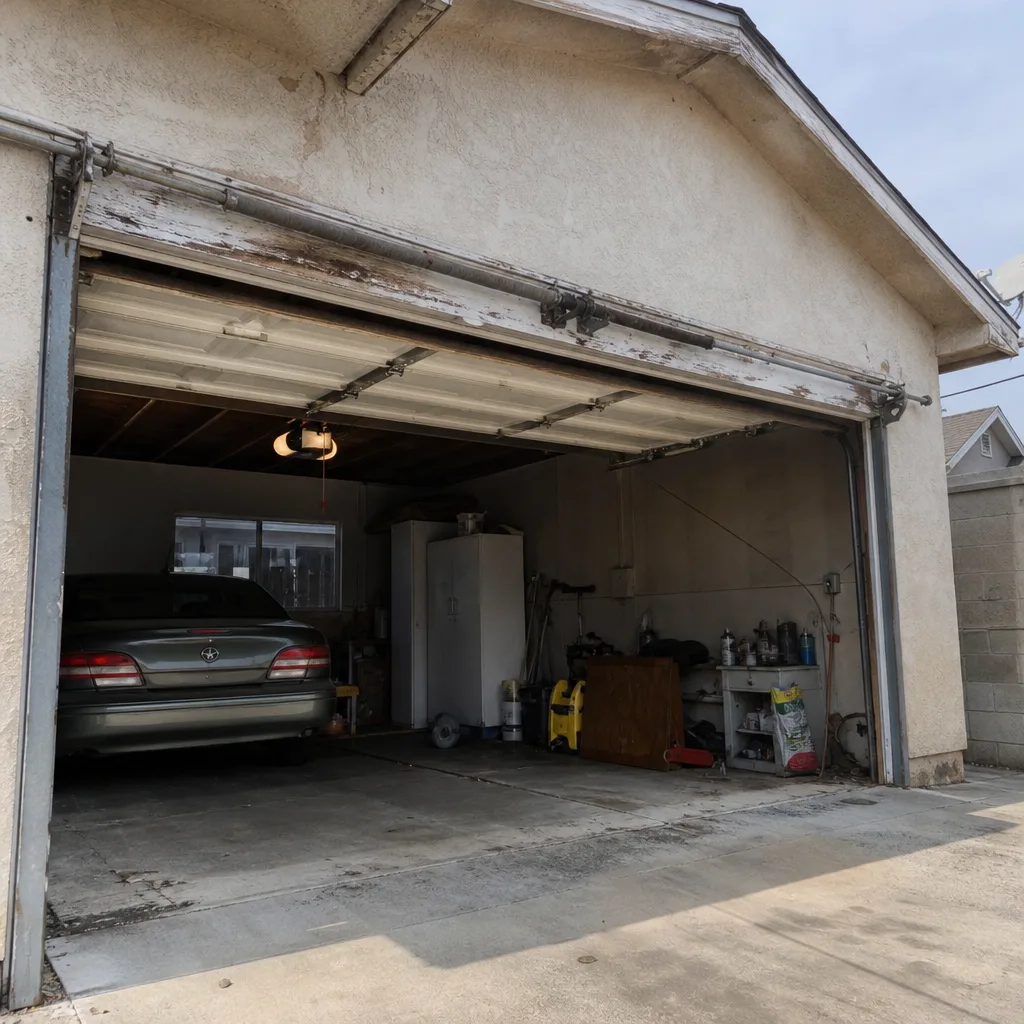 Before
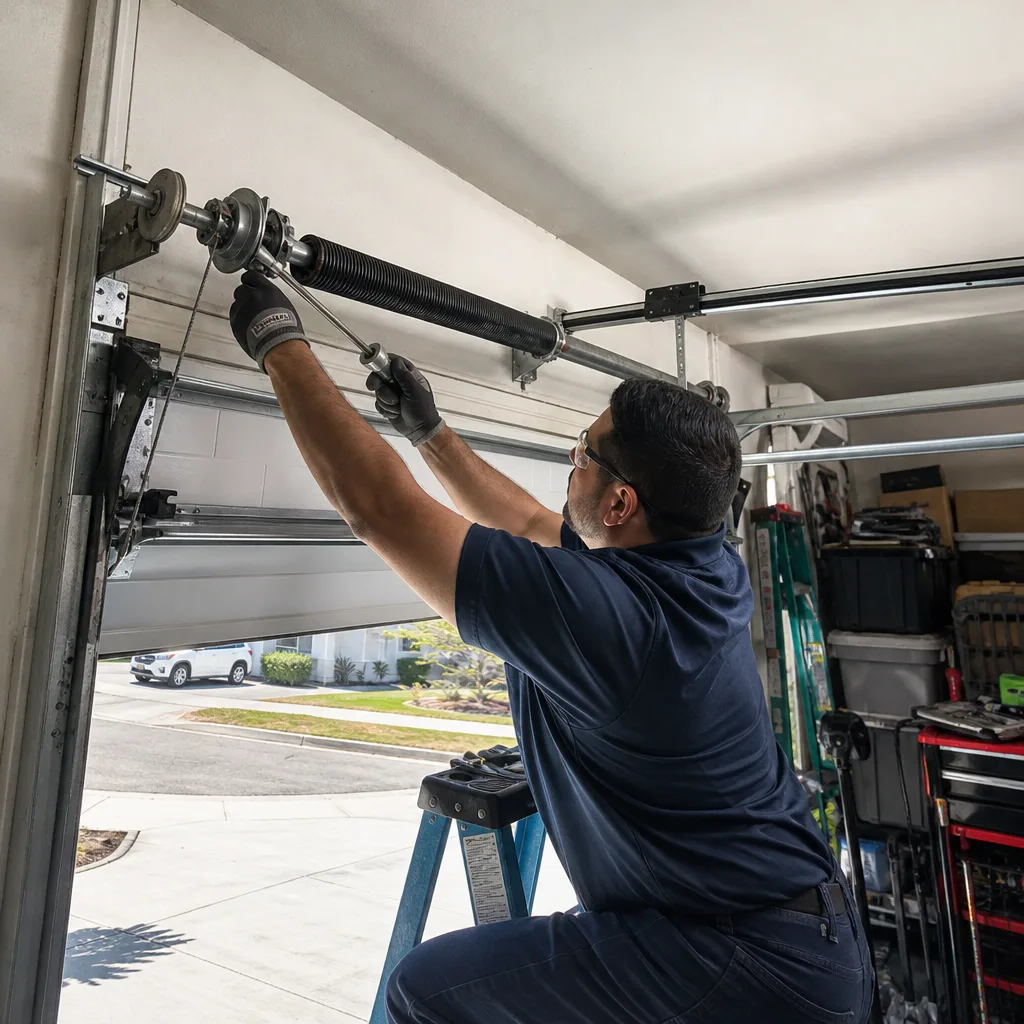 After
After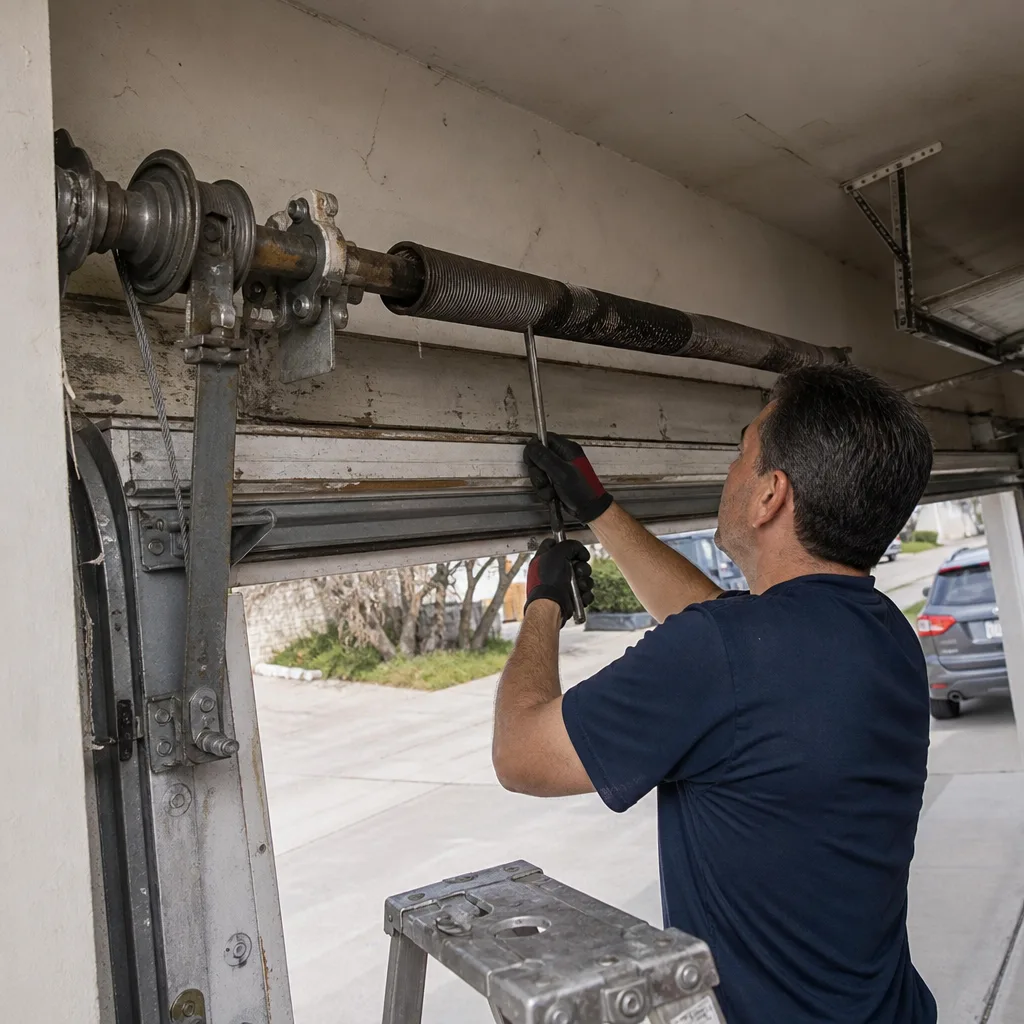 Before
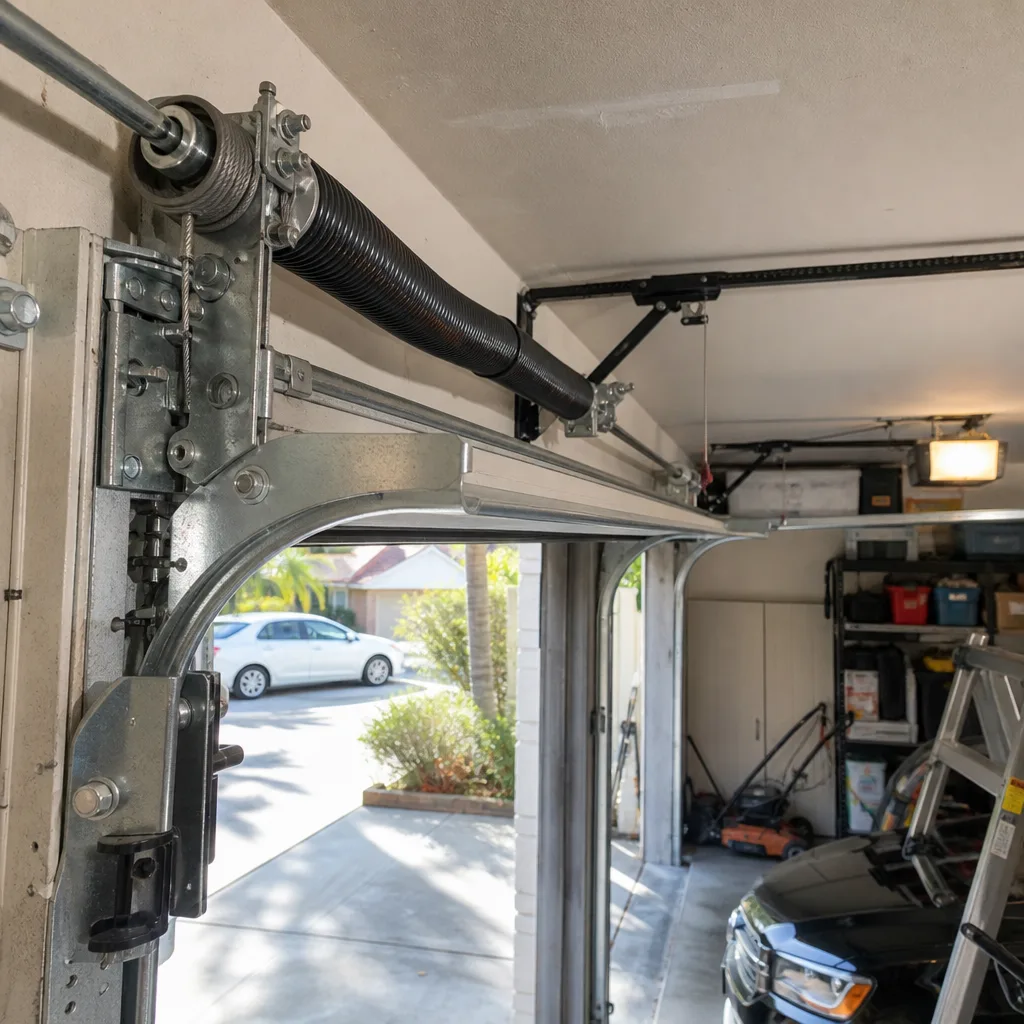 After
AfterSeasonal Garage Door Care for Los Angeles: Year-Round Homeowner’s Guide
Los Angeles doesn’t freeze its garage doors shut in January. What it does instead is sneakier: it warps panels in August, coats bottom seals in ash in October, and drives salt air into torsion spring coils all year long. None of that fits the standard “lube the hinges every spring and fall” advice you’ll find in generic garage door guides. This guide is written for the actual climate of Los Angeles, and it covers what genuinely damages doors here, when each threat peaks, and exactly what to check so a $40 seal replacement doesn’t become a $600 track realignment or a ruined section of flooring. For a deeper dive into protecting your investment, see our Complete Garage Door Installation Guide for Los Angeles Homeowners.
Quick Answer
Garage door care in Los Angeles should follow the city’s real seasons, not a generic spring-and-fall calendar. In marine layer season you’re fighting rust, in July through September you’re watching for heat-related panel warp, and during Santa Ana and fire season you’re clearing ash from sensors and cable drums before it causes phantom stops or grinding wear. A 20-minute visual inspection each month, plus a quarterly finish check on sun-exposed doors and a pre-rain seal test, prevents almost every seasonal failure we see in Los Angeles homes. For more guides & resources on keeping your door running smoothly, visit our blog.
Table of Contents
- Marine Layer Season (May-July): The Rust Months
- Peak Heat Season (July-September): When Doors Warp
- Santa Ana & Fire Season (October-December): Ash, Grit, and False Stops
- Winter Rain Events: The Seal Test Los Angeles Forgets
- Year-Round UV Exposure: The South-Facing Door Problem
- A Monthly Inspection Routine That Actually Fits LA
- Common Mistakes to Avoid
- When to Call a Professional
- Frequently Asked Questions
- The Bottom Line
Marine Layer Season (May-July): The Rust Months
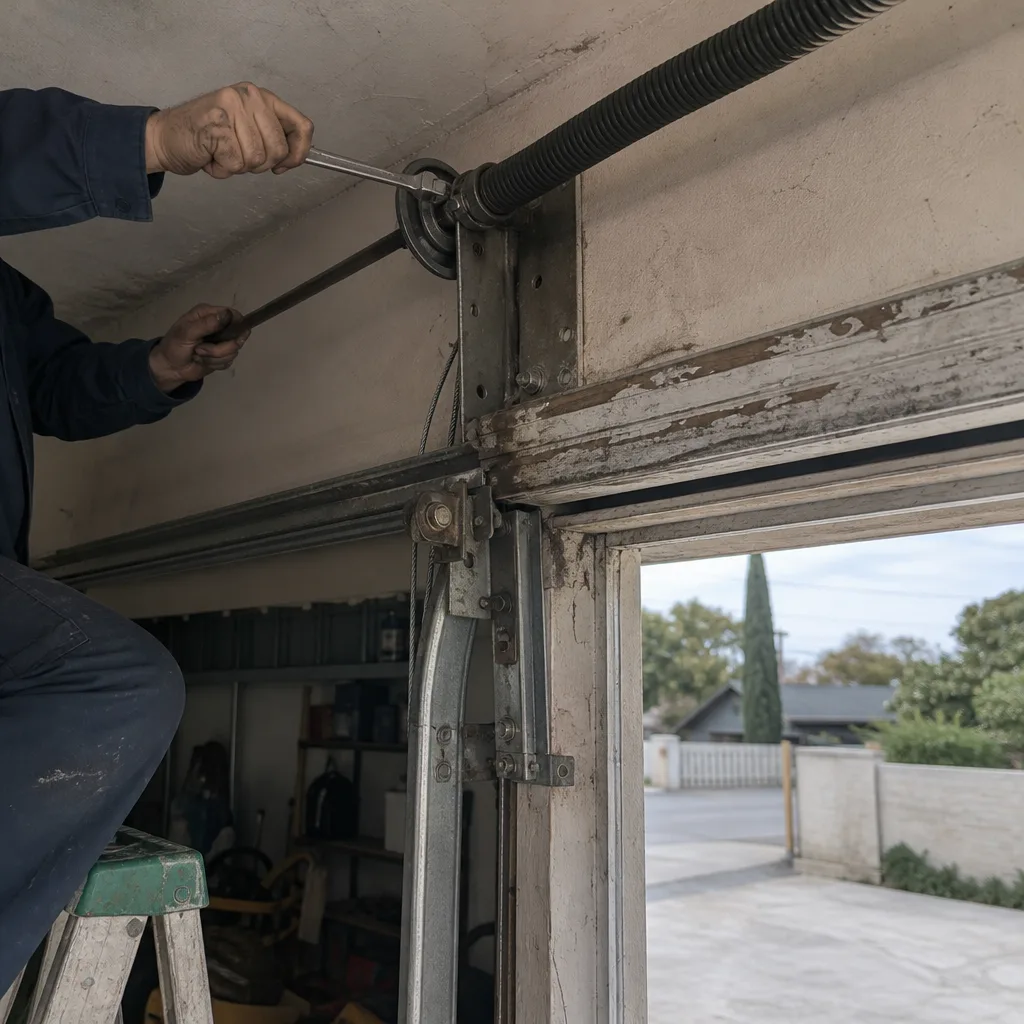
From May through July, the marine layer sits over much of Los Angeles until mid-morning, and in neighborhoods like Venice, Mar Vista, Playa del Rey, and San Pedro it sometimes never fully burns off. That persistent moisture is the single most underrated threat to garage door hardware in this city. The torsion spring, the large coil mounted above the door that does most of the lifting, is typically made of oil-tempered steel. When salt-laden coastal air sits on it day after day, the outer coating breaks down and surface rust begins forming in the gaps between coils.
Here’s what a weekly visual check during marine layer season should look for:
- Torsion spring coils: Look for reddish-brown speckling or flaking along the coil faces. Early rust looks like a dusting of cinnamon. That’s the time to address it. Once rust creates pitting, the spring’s fatigue life shortens measurably, and a snapped spring in Los Angeles typically costs $180 to $340 to replace.
- Cable condition: The lifting cables run along each side of the door and wrap around drums at the top. Look for dark discoloration near the bottom of the cable where moisture collects. Frayed cable strands mean replacement is needed immediately, and that is not a DIY job. A cable under tension can cause serious injury if mishandled.
- Hinge and roller hardware: Hinges at the door’s edges are the first place coastal rust shows up. Light surface rust on a hinge face is cosmetic. Rust bleeding into the pivot point means friction is increasing every time the door moves.
- Track brackets: The L-shaped brackets that hold the vertical track to the wall collect condensation along their bottom edge. If you see rust streaks on the drywall below a bracket, moisture has been pooling there.
For doors within about three miles of the coast from Long Beach up through Malibu, we recommend wiping down exposed springs and cables with a dry microfiber cloth once a week during May, June, and July. Spraying any lubricant directly on a spring is a common mistake that accelerates dust buildup. If rust is already established, have a professional evaluate whether the spring needs replacement. A rusty spring does not get better on its own.
Peak Heat Season (July-September): When Doors Warp
Every August in Los Angeles, we get calls from homeowners in the Valley, Pasadena, Glendale, and the Inland-adjacent neighborhoods describing the same thing: the garage door was fine in June, and now it’s making a grinding noise and hesitating halfway up. If your opener is the culprit, our Complete Garage Door Opener Repair Guide for Los Angeles Homeowners explains what to watch for. The cause is usually heat-related expansion. When outdoor temperatures push past 100 degrees, the air inside a garage can hit 120 to 130 degrees, and that heat does two things to a door. First, metal panels expand slightly. Second, and more importantly, the door’s weight balance shifts as the temperature differential between the sun-baked exterior face and the shaded interior face pulls panels into a very slight curve.
Early signs of heat-related panel stress, before the door goes off-track, include:
- A door that scrapes or rubs against one side of the track only during afternoon hours.
- Daylight visible through a panel gap that was not there in March.
- A door that closes fully but leaves a 1/8-inch gap at the bottom corner on the sun-facing side.
- Increased noise from the opener motor as it works harder against a binding track.
Steel doors with darker paint colors absorb more heat, and they show warp earlier. The panel gap issue is not cosmetic. A panel that pulls away from the track even slightly changes the geometry of the entire door, which puts extra load on the opener and wears rollers unevenly. If you catch it at the “slight scraping” stage, a technician can often adjust the track and rebalance the door for around $125 to $200. If the door jumps the track entirely, you’re looking at $250 to $450 plus the cost of any bent rollers or damaged panels.
For homeowners in hot areas like Woodland Hills, Sherman Oaks, or North Hollywood, we recommend checking the door’s balance once a month in August and September. Pull the red emergency release handle and lift the door manually about halfway. It should stay in place without drifting more than a couple inches. If it sinks or rises on its own, the spring tension has changed with the heat, and it’s worth a professional adjustment before the opener takes the punishment.
Santa Ana & Fire Season (October-December): Ash, Grit, and False Stops
Santa Ana winds do not just dry out the hillsides. They drive fine dust, ash, and sand into every crevice of a garage door system, and the three components that suffer most are the photo-eye sensors, the cable drums, and the bottom seal. Fire season adds a nastier version of the same problem, because wildfire ash is finer than construction dust and contains compounds that are mildly corrosive when they combine with the moisture in morning dew.
A specific ash protocol for Los Angeles homeowners makes a measurable difference:
- Photo-eye sensors: The two small sensors sit near the floor on each side of the opening, about 6 inches up. Ash coats the glass lens, and a coated lens can cause the door to reverse for no reason or refuse to close. Wipe each lens with a dry microfiber cloth every week during October and November. Do not use glass cleaner unless the cloth alone fails, and if you do use a liquid, spray it on the cloth, not the sensor.
- Cable drums: The grooved drums at the top of each side that wind the lifting cables collect grit in their grooves. A gritty drum makes the cable ride unevenly, which causes the door to creak or bind. Blowing compressed air through the drum grooves once a month during Santa Ana season clears most of it.
- Bottom seal: The rubber strip along the bottom of the door picks up ash and fine sand on every open-close cycle. Wipe the seal with a damp cloth once a week during heavy ash periods. Grit embedded in the seal acts like sandpaper against the driveway and eventually tears the rubber.
- Track interior: Use a damp cloth to wipe the inside channel of each vertical track after a serious Santa Ana event. Do not use WD-40 or any liquid lubricant on the tracks. Tracks must stay dry, or they collect more debris.
- Opener housing: The square metal box that mounts to the ceiling above the car has ventilation slots. In heavy ash conditions, those slots pull in particulate. A gentle vacuum with a brush attachment around the housing keeps the motor cooler and extends its life.
False stops, where a door reverses halfway down for no apparent reason, are the most common symptom of a dirty sensor lens in Los Angeles during fire season. If you’ve ruled out an obstruction in the door’s path and the sensor lenses are clean but the problem persists, the issue may be wiring or the sensors themselves, which a professional can diagnose quickly.
Winter Rain Events: The Seal Test Los Angeles Forgets
Los Angeles goes months without meaningful rain, which means the bottom seal under a garage door is almost never tested. Then an atmospheric river arrives, drops 2 inches of water in 24 hours, and suddenly every gap that has been silently widening for years becomes a visible problem. Water gets under the door, follows the slope of the garage floor, and soaks into drywall, stored boxes, or the bottom edge of an interior door.
The threshold seal, the rubber strip at the floor where the garage door closes, is the primary defense. In Los Angeles, because the ground is so dry for most of the year, homeowners often don’t notice that their seal has hardened, cracked, or pulled away from the door until rain has already damaged something. A deteriorated threshold seal lets water in, but so does a misaligned door. If the door doesn’t meet the floor evenly because the track is slightly out of level, even a perfect seal won’t close the gap.
Test before the next rain event:
- Close the door fully and look along the bottom from the inside with the light off. Daylight sneaking under means water will also get in.
- Run a hand along the seal. If it feels hard, brittle, or cracked, it’s due for replacement. A new bottom seal for a standard residential door in Los Angeles typically costs $80 to $150 installed.
- Check the garage floor itself. Some older Los Angeles homes have garage slabs that slope toward the house rather than toward the driveway. If water pools near the interior wall after rain, the fix may be a taller threshold seal or a drainage channel, not just a seal replacement.
For garages in hillside neighborhoods like Echo Park, Silver Lake, and Mount Washington, runoff from the slope above can overwhelm a standard seal during the heaviest storms. A taller than standard seal is a simple upgrade that prevents most of those issues.
Year-Round UV Exposure: The South-Facing Door Problem
No other city in the country exposes garage doors to as many days of direct, high-angle sun as Los Angeles. A south-facing or west-facing garage door in this city takes 6 to 8 hours of direct sun most days, every month of the year. In our experience, those doors degrade 30 to 40 percent faster than identical installations on north-facing or shaded garages. The mechanism is straightforward: UV radiation breaks down the paint’s binding agents, which then allows moisture, however occasional, to reach the metal or wood underneath.
A quarterly finish check for sun-exposed doors should include:
- Chalking: Run a hand across the painted surface. If a chalky film comes off on your palm, the paint is breaking down and needs a fresh topcoat before bare metal shows through.
- Fading: Uneven color between the top panel (which gets the least reflected sun) and the bottom panels (which get the most) is a sign the finish is thinning.
- Blisters or bubbles: Small bubbles in the paint, especially on the lower panels, mean moisture got into the paint layer and expanded in the heat. This is the earliest warning sign of eventual panel rust or rot.
- Edge peeling: Peel-back along the top and vertical edges of each panel is where UV damage typically starts, because edges get direct sun at oblique angles.
The practical fix for most Los Angeles homeowners is a high-quality exterior acrylic latex repaint every 5 to 7 years for south-facing doors, versus 8 to 10 years for shaded installations. Clopay and Amarr both publish paint and finish guidance for their steel doors, and the key point is the same: a garage door is the largest painted surface on most Los Angeles houses, and treating it with the same repaint schedule you use for exterior trim prevents panel replacement later. Not sure which brand suits your home? Our guide to Choosing the Right Garage Door Brand: A Buyer’s Guide for Los Angeles breaks down the options.
A Monthly Inspection Routine That Actually Fits LA
The standard national advice is “inspect your garage door twice a year.” For Los Angeles, that’s not enough for the parts of the year when the marine layer is present, heat is peaking, or ash is falling. But a monthly routine doesn’t need to be long. The whole thing takes 15 to 20 minutes, and it catches nearly every problem we see.
- Open and close the door fully twice. Listen for any new sound you did not hear before: a scrape, a rattle, a rhythmic thump. New sounds mean something changed. The most common causes are a worn roller, a loose hinge bolt, or debris in the track.
- Check balance. Pull the red emergency release handle, lift the door halfway by hand, and let go. It should hold position. If it falls, the springs are weakening. If it rises, the springs are overpowering the door. Both mean the opener is working harder than it should.
- Inspect springs visually. Torsion springs above the door should look clean and unbroken. Extension springs along the sides should have safety cables running through their centers. Never touch either type of spring. The visual check is enough.
- Wipe photo-eye sensors. A dry microfiber cloth on each lens takes 10 seconds and prevents the most common phantom reverse problem in Los Angeles.
- Clear the tracks. Visually inspect both vertical tracks and the horizontal sections near the ceiling. Remove any obvious debris with a cloth or brush. Do not spray anything into the track.
- Test the auto-reverse safety feature. Place a 2×4 flat on the floor in the door’s path and close the door. It should reverse within a second or two of contacting the board. If it doesn’t, stop using the door and call a professional. This is the primary safety feature that prevents crush injuries, and it must work every time.
If this routine turns up anything that worries you, the next step in Los Angeles is a professional inspection. The team at Doyle Garage Door Repair home has been fixing garage doors in this city since 2001, and a seasonal check costs nothing to book when you’re already scheduling a repair.
Common Mistakes to Avoid
- Scraping rust off a spring. It seems helpful, but scraping removes the remaining protective coating and can create stress risers, which are weak points where the spring will eventually snap. A rusted spring needs professional evaluation, not amateur polishing.
- Lubricating tracks with WD-40. Garage door tracks should stay completely dry. Any liquid in the track attracts dust, and in Los Angeles, dust is always in the air. Lubricate only the rollers, hinges, and the spring’s end bearings with a garage-door-specific silicone or lithium grease, and only in very small amounts.
- Ignoring a door that scrapes in the afternoon but not the morning. Heat expansion is the message. The door is telling you it’s out of alignment. Waiting until it’s fully off the track in a 110-degree August heat wave turns a $150 adjustment into a $400+ repair.
- Replacing the bottom seal without checking door level. If the door doesn’t meet the floor evenly, a new seal won’t fix water intrusion. In Los Angeles, years of soil movement and occasional seismic activity shift garage floors and track level. Check alignment first.
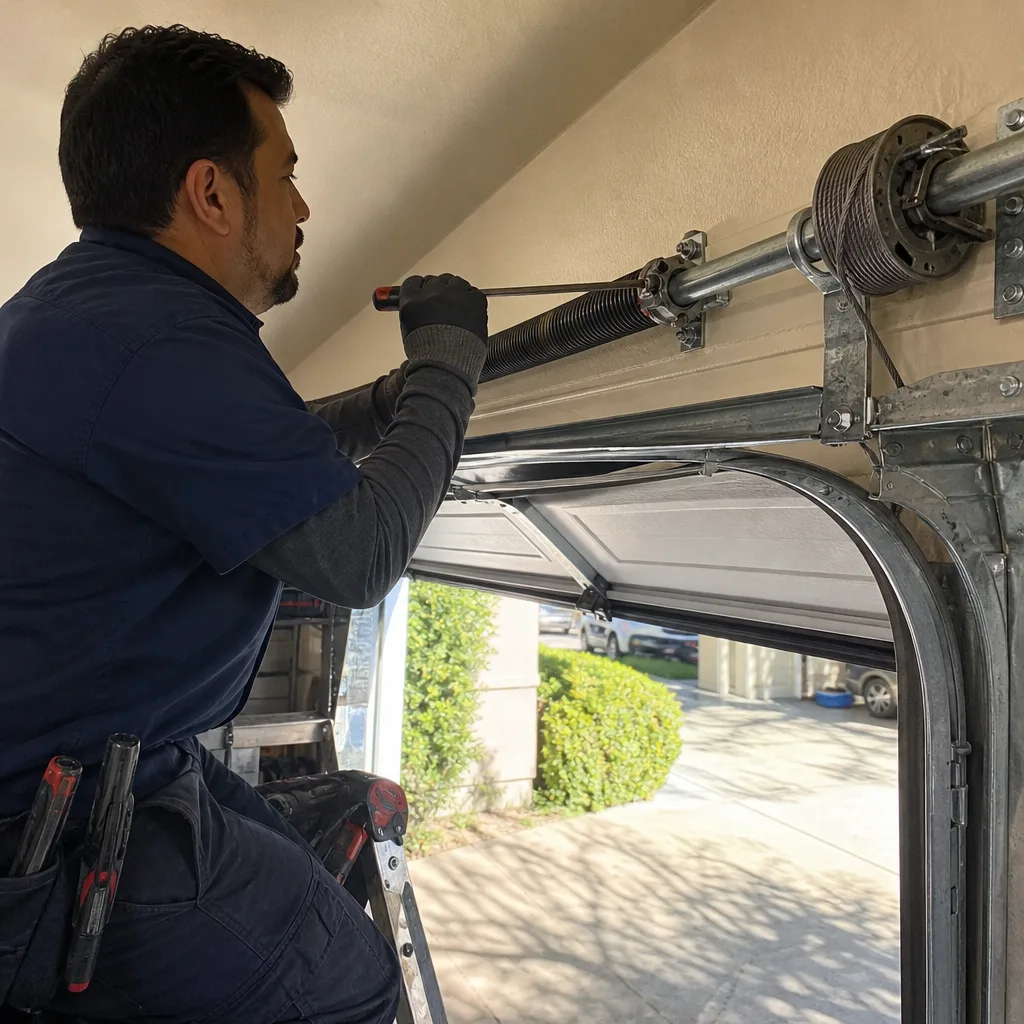
- Doing a spring replacement as a DIY project. Torsion springs are under hundreds of pounds of tension. The winding and unwinding process has a very narrow margin for error and is one of the few genuinely dangerous home repair tasks. A trained technician has the right winding bars and the right sequence. This is not a YouTube tutorial project.
- Using the door as a test after seeing a problem. When a Los Angeles homeowner notices a new issue, the instinct is often “let me just open and close it a few more times to see if it keeps happening.” Each additional cycle with a failing part compounds the damage. One cycle to confirm, then stop.
- Waiting until fall to do “annual maintenance.” The national calendar says inspect in spring and fall. But by November in Los Angeles, a coastal door has already spent five months in marine layer moisture, and a Valley door has already been through the heat that causes warp. The schedule should follow the city’s seasons: May, August, October, and January.
When to Call a Professional
Call a professional when the torsion spring shows rust or any visible gap, when the door scrapes against the track at any point, when cables look frayed, when the auto-reverse fails the 2×4 test, or when you notice panel gaps that change with the temperature. Any of those signals means the door is no longer operating safely. A snapped spring is loud and obvious, but most Los Angeles garage door failures announce themselves quietly first, through the small signs this guide describes. Catching them early keeps a repair in the $125 to $250 range instead of the $400 to $800 range. If you’re in Los Angeles and want a free estimate on anything seasonal inspection turned up, the team at Garage Door Repair in Grandview can walk you through what we’d check and what it would cost before any work starts. Call (910) 858-8029.
Frequently Asked Questions
A basic professional inspection and tune-up in Los Angeles typically costs $89 to $150, while repairs like spring replacement run $180 to $340 and bottom seal replacement $80 to $150. Prices vary by neighborhood and door type. The team at Doyle Garage Door Repair puts every price in writing before any work begins, so you’ll know the exact number before you agree to anything. Call (910) 858-8029 for a free estimate.
Monthly, with deeper attention during marine layer season (May through July), peak heat (August and September), and Santa Ana season (October through December). The 15-minute routine described above catches most problems before they turn into repairs.
Ash and dust coating the photo-eye sensor lenses is the most common cause, and a dry microfiber wipe usually fixes it. If the problem continues with clean lenses and a clear path, the issue is likely in the wiring or sensor alignment, and a professional should inspect it.
Yes. The marine layer carries salt-laden moisture up to about three miles inland from the coast in Los Angeles, which means neighborhoods from Westchester to Culver City and parts of Mid-City see measurable corrosion on exposed steel hardware over time. The closer you are to the ocean, the more frequently you should do the rust check described in the marine layer section.
If chalking, bubbling, or edge peeling is present, yes. Those are signs the protective coating is failing, which means the underlying metal or wood will start degrading long before the door looks structurally bad. For sun-exposed south-facing and west-facing doors in Los Angeles, repainting every 5 to 7 years is the standard preventive interval.
Heat-related panel expansion is the usual answer for mid-summer sticking, and Santa Ana-driven grit in the tracks can cause fall sticking. Both are early warning signs that the door’s track alignment or roller condition needs attention. For same-week scheduling in Los Angeles, call (910) 858-8029 and tell us exactly what season the door acts up, so we know what to look for first.
The Bottom Line
Los Angeles garage doors don’t fail on a national maintenance schedule. They fail on the city’s schedule: rust in June, warp in August, sensor failures in October, and water damage in January. The fix for each is specific, and none of them require a full replacement if caught early. A monthly 15-minute inspection, a quarterly look at sun-exposed finishes, and a call to a professional the moment something changes are what keep an LA garage door running for 15 to 20 years. For questions about what you’re seeing, a free estimate, or a door that’s already acting up, call Doyle Garage Door Repair at (910) 858-8029. A live person answers, day or night, weekends and holidays included.
Written by Aaron Teague, Owner at Doyle Garage Door Repair, serving Los Angeles since 2001.